
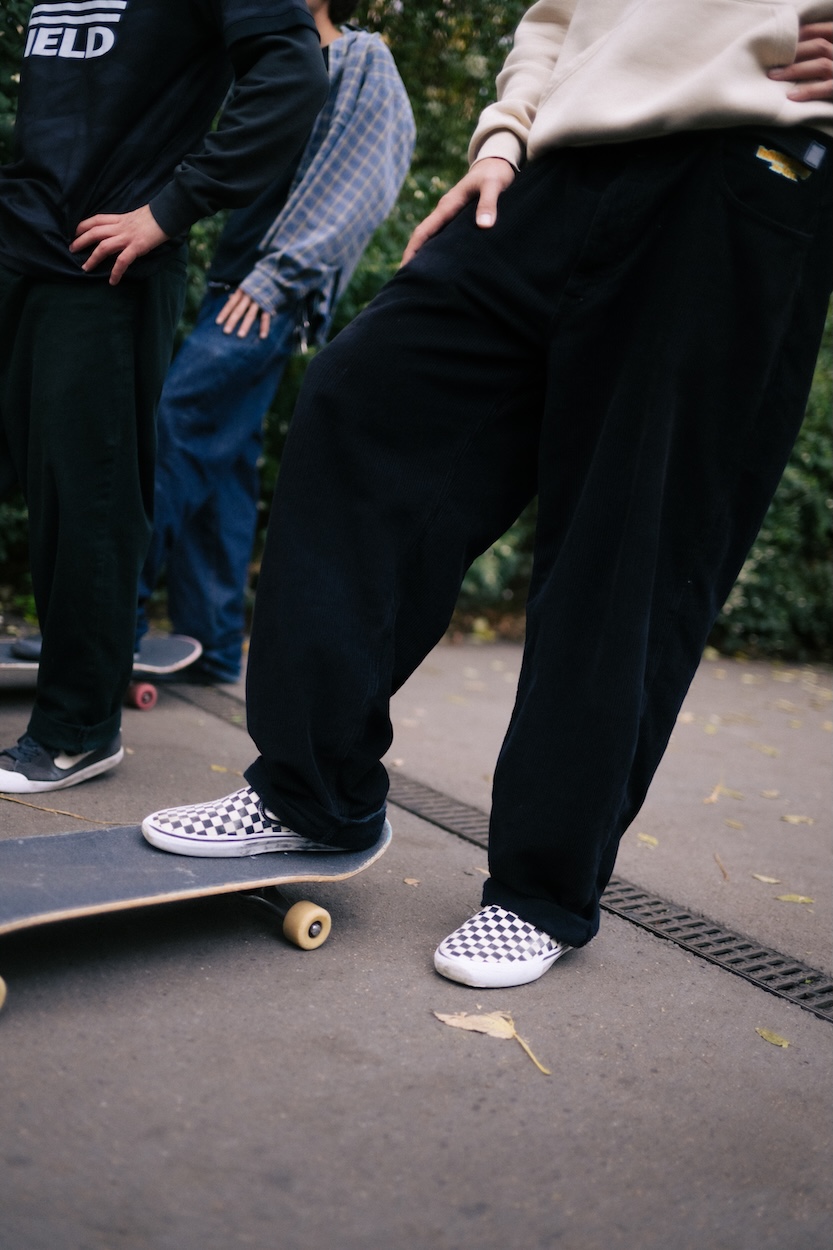
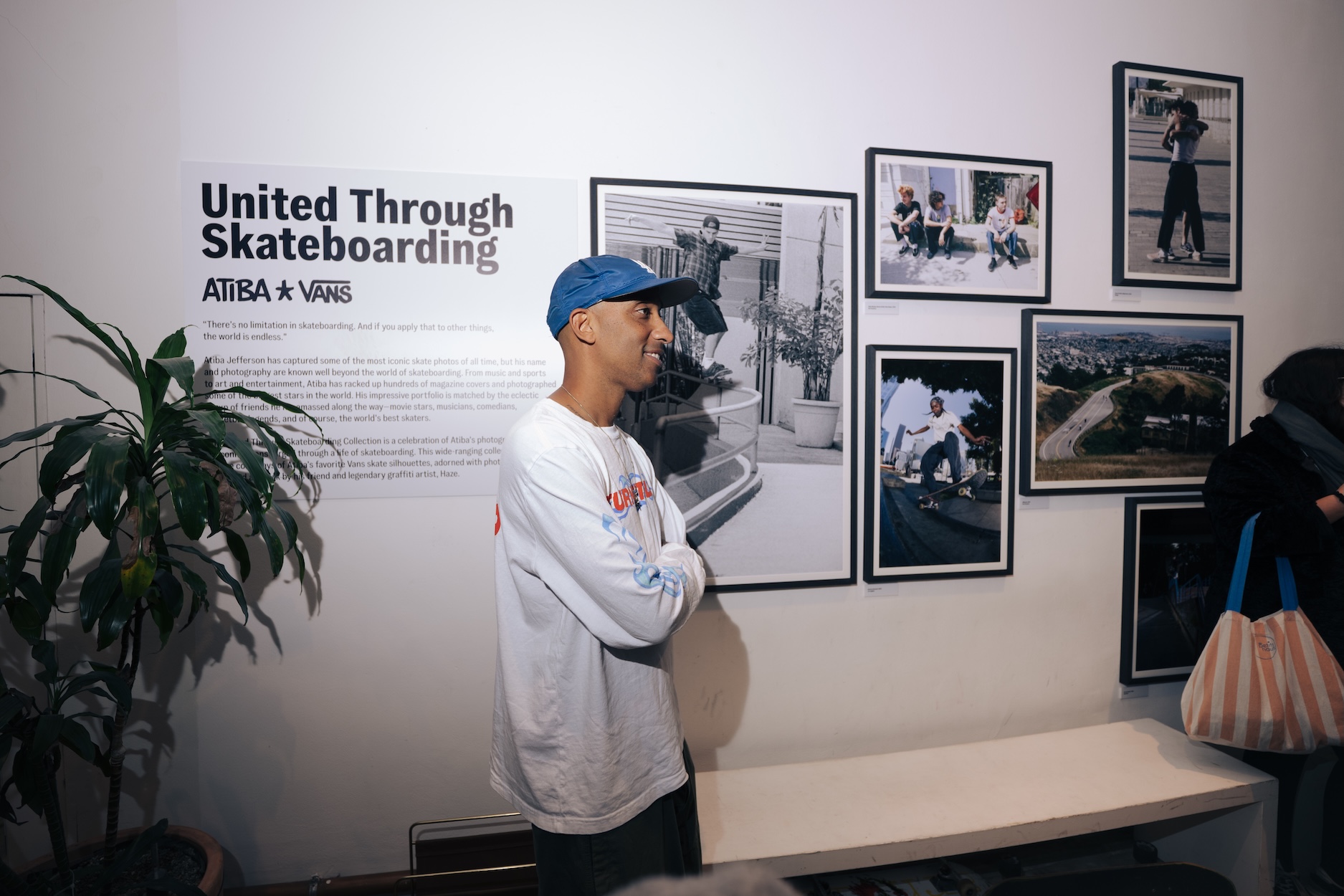
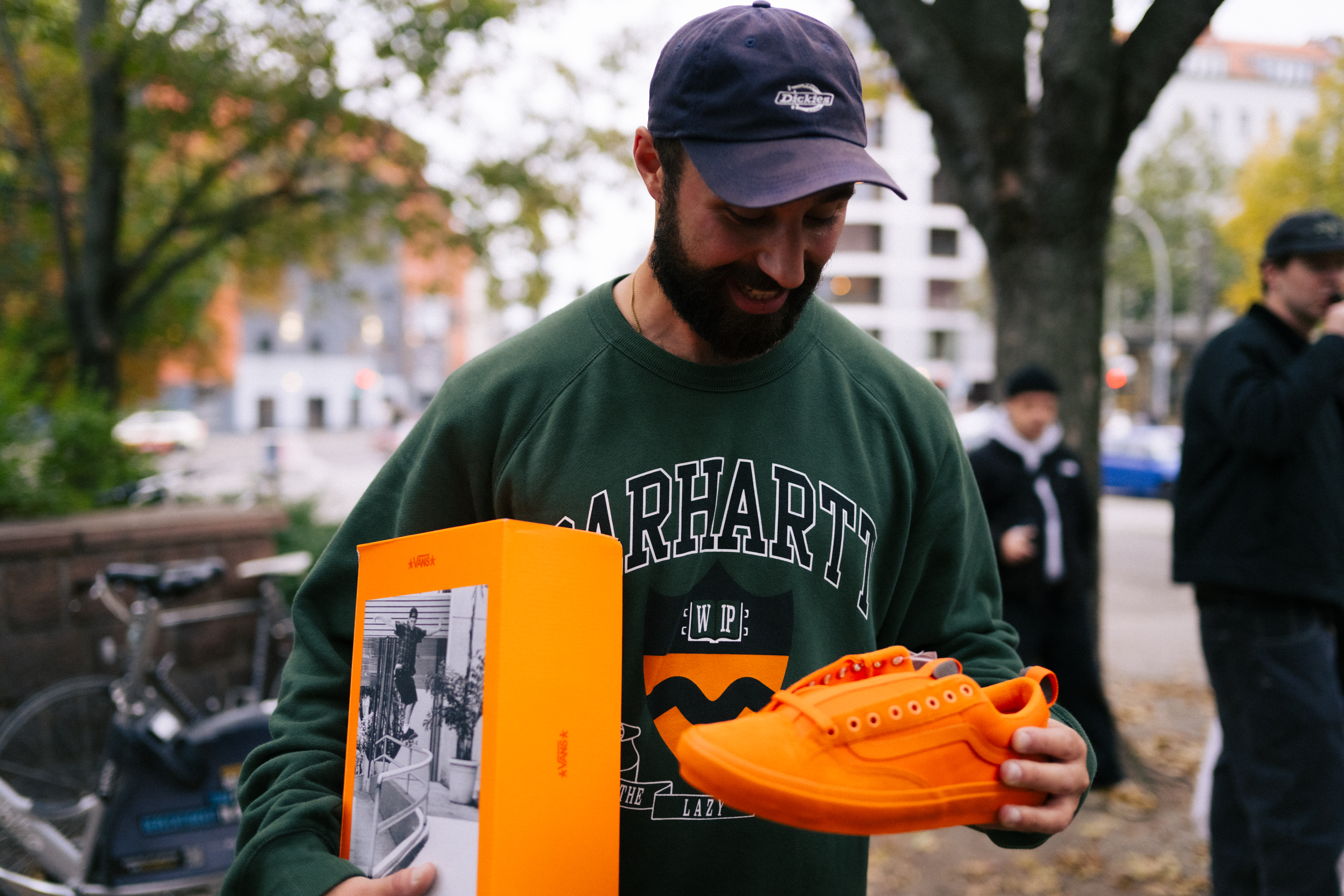
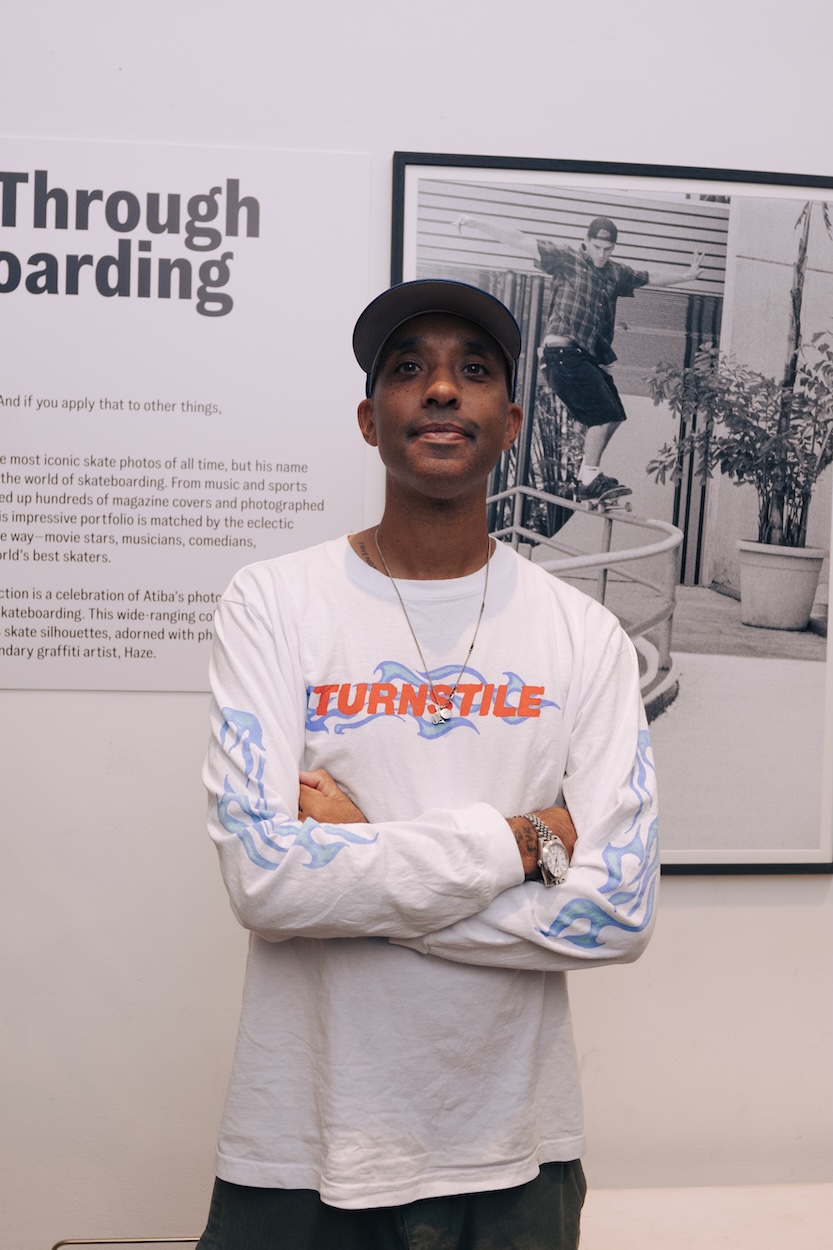
Few photographers have captured the evolution of skate culture like Atiba Jefferson. Open a copy of Transworld or Thrasher and you just know— that’s Atiba. His iconic visual language helped shape the way an entire generation saw the sport. From Tony Hawk riding the bullring, to Tyshawn kickflipping the subway and everything between— that’s Atiba. His latest project, the Vans “United Through Skateboarding” collection, celebrates the community that created him.
Atiba Jefferson:
I would say the reason why I make things work is because I grew up really poor. I started work age 12 as a busboy. Skateboarding is all about failure and figuring it out. That work ethic is built in, if you want something, you’ve got to work for it. Growing up with a single mom and three kids wasn’t easy. But that survival mode shaped who I am.
When I found something I loved and started working in a skate shop instead of bussing tables, it hit me: Find what you like, and you’ll never work a day in your life. That’s true.
AJ:
Both. Skating was a huge escape from being poor and everything else. But it was also a community where none of that mattered. I wasn’t trying to escape home, my mom was just busy working, but I found people who were like-minded and into the same things I was. That’s what I loved.
AJ:
There’s a difference when the person shooting is also a skater. I know the tricks, I study the magazines and videos, and that gives me a different view. I can say, “You’re leaning back too much, lean a little forward,” because I know what it takes to do it. That perspective gives my photography a different kind of passion. There’s no right or wrong way, it’s just a different way.
AJ:
There’s a big difference. I was not a great filmer. Filmers have one chance, they can’t mess up. With photography, especially back in the film days, you never knew what you had until you developed it. That was stressful. Now, with digital, you can check the back of your camera and know immediately you got it.
AJ:
The first time I wasn’t living check to check, that was it. Working for Transworld gave me that.
There are so many big moments: the Tony Hawk bullring photo, Tyshawn’s kickflip over the subway, Andrew Reynolds’ frontside flip with all the kids watching, Chris Joslin’s 360 flip down El Toro. But the thing about skateboarding is progression—tricks that once felt massive become ordinary later. Still, Tyshawn’s kickflip is timeless.
AJ:
By challenging myself. If I see something, I try to go with my first instinct. Photography is driven by technology, film will always have my heart, but digital pushes us to progress.
Like skateboarding, it’s all about moving forward. I don’t necessarily need challenge, but I love finding it. Everything I have comes from skateboarding. It gave me a diverse group of friends and endless opportunities—from shooting Kobe Bryant’s championships to photographing Adam Sandler for Happy Gilmore 2. None of that would’ve happened if I wasn’t a skateboarder.
AJ:
It’s what happens before and after the trick that makes a moment timeless. Back in the film days, you had to save every frame. Now, with digital, I can shoot more freely. The portraits are just as important as the trick itself.
AJ:
I’ve been a fan since I was a kid. Check Your Head by the Beastie Boys, that cover was iconic. I didn’t have a logo, so when I was asked about one, I wanted it done by someone like Haze. His design fits perfectly.
We’re both visual storytellers from the streets who’ve moved into galleries. He’s not just a graffiti artist, he’s an artist, period.
AJ:
Someone once said it only takes a hundred years for no one to remember who you are. That stuck with me. I don’t care about having a personal legacy. What I learned from photographing people who are no longer with us is that their memory lives on through the image.
It’s an honor to inspire other photographers, especially people of color, to dream big. That’s what I hope to leave behind.
AJ:
That was one of my proudest moments. The timing was right, and Thrasher gave me the freedom to shape the issue. We also made a film for ESPN called Monochrome, which focuses on the Black experience in skateboarding. I wanted to do that back in ’96, the story is much longer now, but I’m proud to have been part of it.
AJ:
Skateboarding has always been inclusive. I’ve never experienced racism within skateboarding, only outside of it.
Today, we’re seeing the culture fully embrace everyone: women, transgender skaters, people of color. It’s always been a safe space, and that’s why I love it so much.
AJ:
Skateboarding is my identity. It’s not just community, it’s the boards, the artwork, the magazines, the videos, the music. It’s my everything.
When people wear my work or Haze’s artwork, I hope they feel that vibe. It’s a huge honor to be a photographer within skateboarding. It’s not like being a pro skater, but it’s still an incredible privilege.
FIGHT ISSUE VOL B: OLIVER ZAHM
OLIVER ZAHM: THE RELENTLESS PURSUIT OF BEAUTY
DEMNAS OWN LENS DEFINES GUCCI
A collection that moves effortlessly between heritage and contemporary style, showcasing…

TO WATCH: “SENTIMENTAL VALUES” BY JOACHIM TRIER
An emotionally charged portrait of a family learning to confront inherited silence, where…

FIGHT ISSUE VOL. B – Glen Martin Taylor
Glen Martin Taylor: TENDERING THE FIGHT

“VISION MEANS TRUSTING THE UNKNOWN”— A CONVERSATION WITH HANNAH HERZSPRUNGBY ANN-KATHRIN RIEDL
"CREATIVITY OFTEN…

Celebrating the launch of “Vanille Caviar”: In Conversation with bdk
Last month, for the launch of their new scent "Vanille Caviar", Paris-based perfume house…