


“AH YOU HAVE TO TEACH PEOPLE HOW TO RESPECT YOU, BECAUSE THEY MIGHT NOT KNOW.”
War Baby is the title of Aus Taylor’s upcoming first book and exhibition visual piece symbolizing a crucial changing point in the life of the Balti-more-born filmmaker and visual artist. After having collaborated with Ye for more than four years, creative directing his latest Vultures tour amongst many other projects, and working with artists such as Paris Texas and Steve Lacy, Taylor now wants to fully dive into his storytelling passion, while working on a movie, too. His last video artwork, which he directed in collaboration with Ye, sheds a light on societal issues and the reality of sex workers and gang members in Los Angeles, where Taylor mainly lives with his daughter. The work of the 30-year-old Amer-ican is honest, pure and surrenders to the beauty found in pain. For Numéro Berlin, Taylor sat down with his two close friends, Swedish art-ist and creative director Ellen Nielsen and Baltimore-born director Alon-zo Hellerbacht. Would we know who we are if we were the only person on earth? Why is real power to be found in refusing attachment and embracing non-judgmental observation? A beautiful, reflective moment about life, creation and the beauty of scarification.
AUS TAYLOR
Someone really close to me asked me this, a few times. It’s not that I romanticize pain, but I feel like I’m more comfortable in pain, probably, because I’ve seen a lot of it. But my mom gave me a lot of love as a child, you know. I’m not gonna be one of those guys that’s like: “I came from nothing!” I do think that if I submerge myself in the pain, you can’t hurt me. It’s like a defense mechanism – like, I’m already swimming in the water, you can’t pour water on me, I’m already wet. But I do think pain is beautiful, though. I think scars are beautiful. Me and Alonzo are also super into scarification. It’s not that I’m romanticizing what hap-pened to cause the scar, it’s more like opening a floor to speak about it openly because I do think, especially in the Instagram era, everything is a highlight reel of people’s best moments. No one is really talking about their scars.
AT
The control you have is more like a pacifier to help you feel better.
AT
I think the biggest war is within yourself. Always. There’s obviously re-al world wars happening outside, actual tragedies, but I do still think the biggest battlefield is the mind and the soul, which I feel is always under attack for a lot of reasons. Without trying to romanticize it, but with the actual war, there is an enemy that you can identify and fight physically. The war within yourself is one you first have to even know about. A lot of people don’t even know that there’s a war to be fought there. And it’s not something that you could just put a Band-Aid on. I feel like I’m always at war with myself. I’m at war with my past. I’m at war with how I’m perceived. I’m at war with identifying with certain things, like my pain. And sometimes, just because I’m speaking about my pain candidly, it doesn’t mean that it’s a cry for help. It doesn’t mean
that I want you to come and save me or anything. I’m just speaking about it candidly. We talk about everything else that doesn’t even mat-ter, but I think it’s also important to talk about the war you’ve been through, which looks different for a lot of people.
AT “THERE’S OBVIOUSLY REAL WORLD WARS HAPPENING OUTSIDE, ACTUAL TRAGEDIES, BUT I DO STILL THINK THE BIGGEST BATTLEFIELD IS THE MIND AND THE SOUL, WHICH I FEEL IS ALWAYS UNDER ATTACK FOR A LOT OF REASONS.”


AT
I’m reaping what I’ve sown.
AT
Yeah, sometimes you just want to enjoy life. Man, it’s not even that deep.
AT
It’s been a long road. I remember when you and me did the show in Korea,
we were walking out to the middle of the stadium. It was just me
and you and you were snapping some photos of me. I had just achieved
a childhood milestone. But I was like, to be honest, the thing that is the
craziest about this moment is that my best friend of 20 years is here
with me. It’s having people along the journey. I asked myself if it is the
journey or the destination or the company that I love the most. First, I
was gonna say the journey, but no, it’s the company. Because even
when you think about the journey, you only remember it with the company
you were with. The only reason the whole tour was really bearable
is because we had somebody to laugh with. I think that’s what makes
even this conversation so special. It’s three people that understand
each other, deeper than just the surface. I always say: If you were the
only person on earth, I don’t even think you would know who you are.
We need other people to experience ourselves. People confirm reality
for you.
EN “I THINK THAT BEING IN PAIN IS HEALTHY BECAUSE YOU FEEL SOMETHING, WHICH IS A RESPONSE TO YOUR EXPERIENCE. I THINK WHEN WE SHOULD BE TRULY CONCERNED IS WHEN WE’RE DESENSITIZED OR NUMBED.”
EN
I think in order to be a good artist, you need to know yourself and what
you need. Because if you don’t, you can’t create the environment that
you thrive in to be able to create. It’s your responsibility.
AT
Yeah. For me, I have to almost brainwash or gaslight myself into thinking
that everything I do is a passion project because I’m putting soul
into it. I love to create from a place of a child, and when you’re creating
from that place, you’re not thinking about compensation or judgment.
Ellen and I, since we met, have probably sent each other 200,000 images,
could even be a million, I feel we both speak visually. Sometimes
I might send something over that I’m working on, but I might tell Ellen
that I don’t want her opinion on it. Even though I value her opinion probably
more than most people on the whole earth, creatively speaking,
but a part of my process is that judgment is secondary to creation.
Separating the judgment aspect from a project is obviously a hard thing
to do. As an artist, you’re gonna want to judge it. But I honestly think
this is just our professionalism and our skill talking to us because we’re
trying to be so good at what we do.
AT
I think there’s two different kinds of judgment: One that reflects our insecurity,
thinking we are not good enough, and then there’s the professional
judgment, when the perfectionist is speaking.
EN
I often think about how musicians spend so much time with one another
in a studio, whereas visual artists work less collectively. The process
is more isolated. Aus is one of, if not the only person that I can lean on
artistically because of our life experiences, but also, the things he has
done bring a lot of experiences that not a lot of people around me
share. Something you taught me, Aus, is to really ask yourself if something
looks like an accident or like something a person really intended
to create.
EN
You made me be aware of being responsible with my opinion, but perhaps
even more so looking at the intention. You and I had this conversation
when we were in Italy with Ye working together: My subjective
opinion on someone else’s art really doesn’t matter. It’s about what the
person intended to do and about the values. I think opinions actually
distort the ability to see something for what it is.
EN
It’s like a projection of yourself. I think this world is actually propelling
us towards being opinionated. That’s how polarization happens…
EN
No, for sure – which really honestly brings us back to the idea about
being detached to be connected, because that’s really what observing
is. One of the teachers of this Yogi school that I’m in, in India, she wrote
to me today that if your mind, mood, emotions, or perceptions are shifting
because of what’s happening outside, “Understand this clearly: you
are being swept away. You’ve lost your center. Remember none of it is
yours, none of it defines you in that moment. Be nothing, own nothing.
When you witness from that space of absolute emptiness, real power
begins.”


AT “IT IS BEAUTIFUL TO SEE THE CONFIDENCE THAT KIDS HAVE, AND THE LACK OF INSECURITY, WHICH PROVES THAT INSECURITY IS TAUGHT THROUGH WHAT YOU GO THROUGH IN LIFE.”
AT
I think right now I’m really annoyingly, unapologetically passionate about
doing solo work. One of my main trades is, I’m a filmmaker first, before
a spatial designer or a stage designer or creative director. My bread
and butter is storytelling and filmmaking. And in order for me to pull
this off, I have to be a bit selfish with my time, being an artist but also
a single father, which a lot of people don’t understand. I think the reason
I was feeling like that is because my cup had run dry, I was in service
of artists for basically 12 to 15 years, which I always, obviously,
loved doing. But when an artist has ideas in his or her head that are
not created or explored, I think the artist dies inside. It’s really just about
getting the ideas out. And as creators, we already have so much fucking
accumulation, it feels good to get things off the list.
AT
I think it’s like when you see a beautiful, confident girl walking down the
street, she’s gonna emit a certain aura that’s gonna put a field of protection
around her, in a way, you’re not just gonna come up to her and
say some dumb shit. It’s like that being an artist, too, I feel like you need
to have such a strong identity in your own work that when people come
to you, they’re already gonna come with a certain respect.
AT
I think when you become a parent, I guess everyone’s always focused
on their
mortality. When you have a kid, you hyper focus on time and your age,
it’s a very reflective thing every single day. And also, you get to relearn
the world all over again.
It is beautiful to see the confidence that kids have, and the lack of insecurity,
which proves that insecurity is taught through what you go
through in life. Every single day that I look into my daughter’s eyes, I’m
taught something. I’m changed. She reminds me how simple life could
be, too. You really have to enjoy small things. It’s also preserving my
inner child too, and teaches me to be gentle – she reminds me that the
five-year-old I’m looking at, I also have that five-year-old inside me, and
I gotta be gentle to him, too. Being a dad is the best shit in the world,
to be honest. You also experience that the internet is an interesting
concept. It’s like this window that you can look into, but you can’t really
see all the way through. You get just a peek of people’s lives, and it
makes us feel like we know each other but we actually don’t. I think
that’s why it feels like we’re in Babylon right now. There’s so much miscommunication
and everyone’s just looking into everyone’s house, but
the sheer curtain is up. You can only see the bokeh of what’s going on
in people’s lives and then we judge off of that.

EN “WE DON’T KNOW WHAT WE ARE SUPPOSED TO GO THROUGH TO EVOLVE INTO OUR HIGHER SELF OR THE ELEVATED BEING. I THINK A LOT OF THE TIMES, THEY ARE BLESSINGS IN DISGUISE.”


FIGHT ISSUE VOL. B – BORIS BECKER
Photography by Francis Delacroix
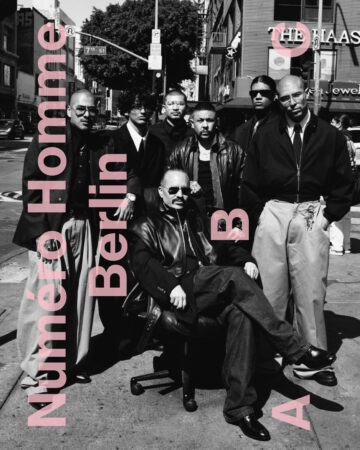
FIGHT ISSUE VOL. B – WILLY CHAVARRIA
Photography by Carlos Jaramillo
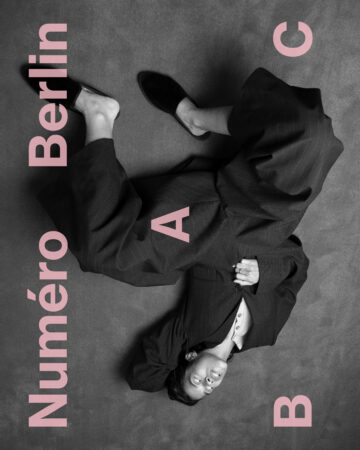
FIGHT ISSUE VOL. A – ASGER CARLSEN
Photography by Asger Carlsen
FIGHT ISSUE VOL B. AFRICAN ARTISTS
African Artists by Mandla Sibeko; Words Marcus Boxler
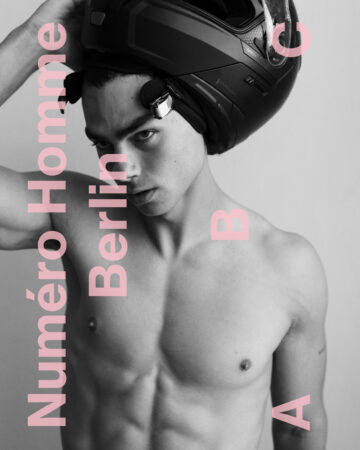
FIGHT ISSUE VOL. B – JACOB ROTT
Photography by Markus Pritzi
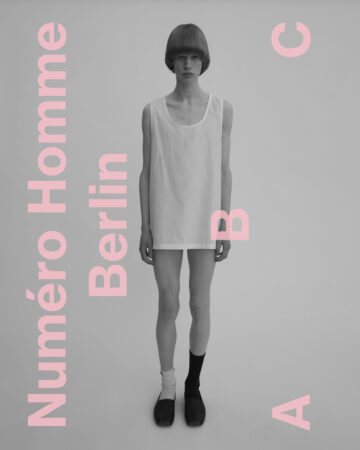
FIGHT ISSUE VOL. A – DAVID LINDERT
Photography by David Lindert