
GENDER IN PERFORMANCE IS ALWAYS FLUID. IT’S ALWAYS SHIFTING, WHETHER IT’S ACKNOWLWEDGED OR NOT.


THE BEAUTY IN THE STRIVE FOR EXCELLENCE
ANNE IMHOF AND DANIIL SIMKIN IN CONVERSATION WITH MARCUS BOXLER
From the vast, cavernous expanse of the Park Avenue Armory, Anne Imhof’s DOOM unfolded as a multilayered performance that blurred the linesbetween ballet, contemporary movement, (distorted) music and installation art. The collaboration between Imhof, known for her radical deconstructionof performance, and Daniil Simkin, a principal ballet dancer whose virtuosity is synonymous with precision, introduced a new vocabulary ofmovement—one that oscillated between rigor and rupture, discipline and dissolution. Days after the final performance, Imhof and Simkin reflect ontheir experience, the role of ballet in DOOM, and the broader implications of hierarchy, collaboration, and embodiment in contemporary performance.
AI It’s a mix of emotions. There’s the high of having created something that felt incredibly intense, but also the inevitable melancholy that follows – this sense of loss.
DS Yes, bittersweet is the word. For me, it was a once-in-a-lifetime experience. Working with Anne was a dream. I’ve admired her work for years. Being part of her world, in this particular space, with this specific group of people, was overwhelming in the best possible way – it’s something I’m still processing.
AI New York carries weight. It’s a city that has rewritten the history of performance, ballet, and fine arts multiple times. To bring something like DOOM here was daunting. The legacy of this place, the artists that have shaped it – there’s an immense responsibility. Before coming, I felt that weight. But once we were here, I felt something else, something deeply welcoming. It reminded me of when we performed Angst and Faust – there was this same sense of stepping into something bigger than oneself.
AI Ballet has always fascinated me – its extreme form, the control over the body, the discipline embedded in every gesture. I’ve worked with dancers trained in ballet before, but never with ballet as a structured element within a piece. Daniil, Devon Teuscher and the team of dancers from ABT tapped me into a world that was both foreign and familiar. Their presence brought something incredibly precise yet vulnerable into DOOM. The performance had three acts, of which the ballet was the final act—a moment of distilled clarity within the chaos. Daniil opened the third act to the music of a live guitar performance by James Schaffer on the first two nights. The following nights, the guitar solo was performed by Eliza Douglas. For me, working with ballet felt very pure, untouched by the confines of the visual art world. At the same time, this form of movement felt almost like an anonymous language to me. That freed me from any preconceived notions. In DOOM, the ballet was the story within the story. So while the third act was its own story, it also retold the entire piece of DOOM within that story. I fell in love with ballet on a much deeper level through the process. I was walking into a space that was very new for me, which felt like a dream world. It didn’t feel prepossessed for me,so while I was learning so much from Daniil and Devon, I approached it from a very different angle.
DS And what struck me most was Anne’s determination and obsession with understanding ballet’s vocabulary. She didn’t just incorporate it – she studied it, dissected it. That kind of deep engagement isn’t common. It made the collaboration feel real, not just conceptual.
DS It was humbling and exhilarating, especially as the ballet was the climax of the piece. Ballet within DOOM wasn’t about showcasing technical prowess in the traditional sense – it was about exposing the mechanics behind it. The discipline, the repetition, the sheer physicality of ballet became a narrative in itself. One of the most striking moments for me was performing my daily training routine as part of the piece – an exercise my mother taught me, which I’ve done for over two decades. It was surreal to see it integrated into this vastly different context.
AI Yes, the piece starts with the training that Daniil does every single day. Something most people aren’t usually privy to. For me, this had to do with the discipline required and the effect that this discipline has on the body. From there, we see the ballet performance in reverse. It begins with the final bows of a curtain call and the story is told in reverse, from the end to the beginning. And then there was Lenski. I wanted to bring something from Daniil’s classical repertoire into DOOM. The solo of Lenski, the poet in Onegin, was

NEW YORK CARRIES WEIGHT. THE LEGACY OFTHIS PLACE, THE ARTISTS THAT HAVE SHAPEDIT – THERE’S AN IMMENSE RESPONSIBILITY.
that element. Cranko first staged Onegin in New York, and it was a moment of arrival for him. It felt meaningful to have that lineage echo through our work.
DS And funnily enough, the man who reviewed Cranko’s Onegin back then, Clive Barnes, was also one of my first critics before he passed. That connection, that continuity – it was uncanny.
DS We don’t want to care, but we do. Critique shapes the discourse, whether we admit it or not. And the best critiquesreveal something you didn’t even realize about your own work. When that happens, it’s invaluable.
DS Ballet is inherently hierarchical. The structure of the performance builds towards a climax, often centering around the principal dancer’s variation. That’s a deeply ingrained tradition. But hierarchy doesn’t necessarily negate democracy. The way DOOM was structured – where the audience could choose what to focus on, where no single vantage point was privileged – introduced a kind of democracy within the experience. And yet, as the third act began, the scattered and decentralized attention of the audience was drawn to the ballet.
AI And that’s the paradox. The ballet’s presence justified the stage. Their contribution made the stage make sense. At the same time, I discussed with Daniil a lot the idea of getting closer to the audience, being visibly in and out of performance mode and toward a pedestrian mode… showing the exhaustion that comes with this level of excellence of movement. And yet, even when revealing the execution of that movement, that it is still elegant enough to maintain its form and beauty.
MB And in terms of movement, identity – gender fluidity was something that also emerged in DOOM.
AI I’m not working very conceptually, I’m working more intuitively. But gender in performance is always fluid. It’s always shifting, whether it’s acknowledged or not.
DS Completely. Coming from classical ballet, I’ve always been trained to perfect a role, to execute within a rigid framework. DOOM disrupted that. It forced me to reconsider my relationship with movement, to let go of certain expectations, to embrace a different kind of authorship. I don’t see myself purely as a dancer anymore. I see myself as a producer, someone who constructs, who creates environments for dance to exist within.
AI It wasn’t planned at all. I was just watching, and what I saw was so beautiful. I wanted to capture it, to share it. So I started streaming, instinctively. But as it happened, I realized it was opening up another layer of reception, a different kind of audience. It extended the space beyond the Armory, turning it into something simultaneously intimate and expansive. The idea of a performance existing in multiplerealities at once. I’ve always been interested in how performance translates to different mediums, how the presence of a camera alters perception.Live-streaming makes everything immediate and ephemeral at the same time. It amplifies intimacy while flattening the experience. DOOM was already built on fragmentation, on multiple perspectives. The stream became another extension of that.
DS And for us as performers, it was another form of exposure. In a theater, the audience’s gaze is collective; in a live stream, it’s singular, personal, direct. It changes the stakes. It also made me think about the way ballet has been disseminated historically –through recordings, through critics, through retellings. This was just a contemporary version of that.
DS I certainly hope so. DOOM was just the beginning.
AI If it does, it won’t be a repetition – it’ll be something new. That’s the only way forward.


FIGHT ISSUE VOL. B – BORIS BECKER
Photography by Francis Delacroix
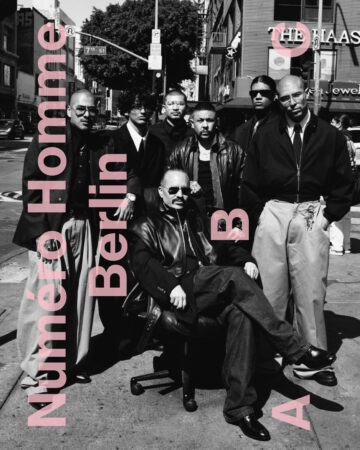
FIGHT ISSUE VOL. B – WILLY CHAVARRIA
Photography by Carlos Jaramillo
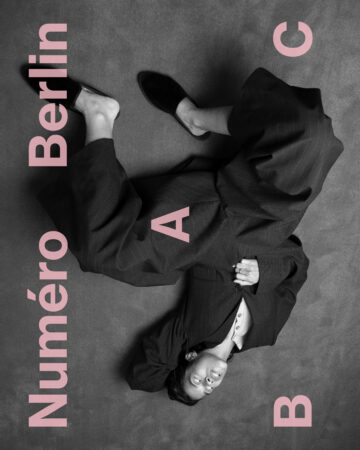
FIGHT ISSUE VOL. A – ASGER CARLSEN
Photography by Asger Carlsen
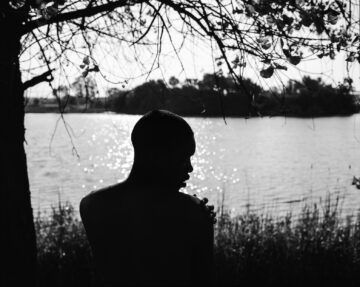
FIGHT ISSUE VOL B. AFRICAN ARTISTS
African Artists by Mandla Sibeko; Words Marcus Boxler

FIGHT ISSUE VOL. B – JACOB ROTT
Photography by Markus Pritzi

FIGHT ISSUE VOL. A – DAVID LINDERT
Photography by David Lindert