
Temple of Love: Rick Owens’ Sacred Rebellion
Words by Nicole Atieno
Images by OWENSCORP/HARRY MILLER
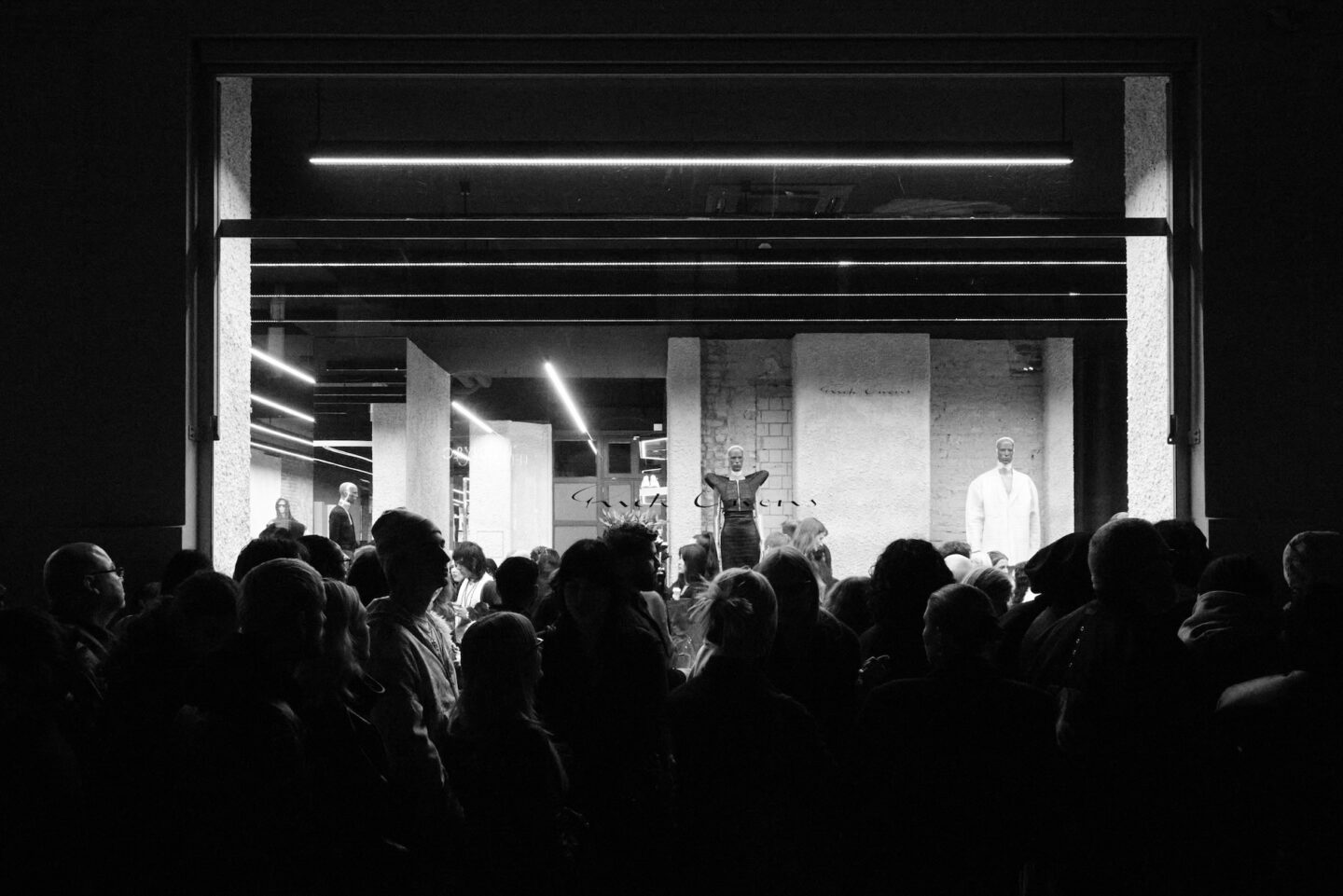
Berlin is showing its usual cold and dark winter side this October evening, but inside the newly opened Rick Owens store, the energy shifts. The line is long, a steady stream of fans, each waiting for Rick to sign their copy of Temple of Love, techno music shakes the walls, while topless male models in towering boots glide through the crowd, serving drinks like ceremonial attendants. It feels less like a book signing and more like a ceremony, something between a club night and a sacred gathering.
Even in the noise, time seems to slow around Rick. Calm, deliberate, magnetic. He’s here for the launch of Temple of Love, the book released alongside his exhibition at the Palais Galliera in Paris (June 28, 2025 – January 4, 2026). But when we sit down to talk, he doesn’t start with the book. He starts with a story.

“My friend Christeene was performing at Berghain one night,” he says. “Before the music started, I was just wandering around alone, taking pictures. Then the DJ began sound-checking and played Detroit Rock City by KISS. I was alone on the dance floor, dancing to KISS. That was the only time I ever went to Berghain. It was perfect.”
It’s an image that could only belong to Rick Owens. Alone, euphoric, caught between the spiritual and the surreal. I ask if he’s ever been tempted to go back; he simply says, no.
“Why would I? I love dancing sober, sometimes in Paris, I wake up at 2 a.m., have an espresso, and go out dance for a bit. Dancing is the simplest expression of joy. I almost feel a moral duty to do it.”
Inside the book, Courtney Love recalls how she met Rick, like a scene from a lost 90s film: she remembers walking past his Hollywood studio and seeing him “like a sorcerer at his cauldron.”
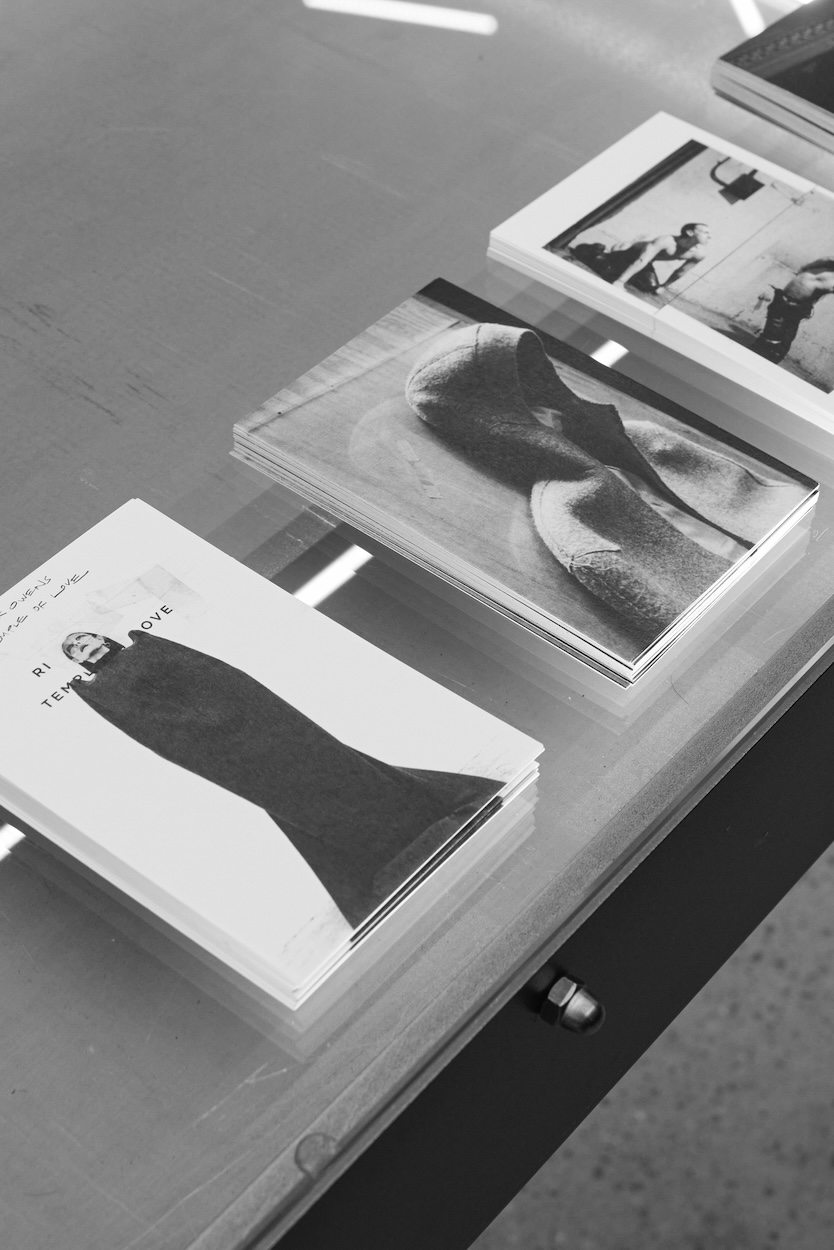
That moral duty to express joy sits at the heart of Temple of Love. The book unfolds less like an archive and more like a journey, tracing not just the evolution of Owens’ work, but the process behind it: the experiments, the inspirations, and the stories shared by those closest to him.
Each section maps a different facet of his world; Sacrality, Hollywood, Fortuny, The Joy of Decadence, Paradox of the Sexes, Tenderness, Sculptural Confrontation fragments of an ongoing search for beauty and meaning.
Inside the book, Courtney Love recalls how she met Rick, like a scene from a lost 90s film: she remembers walking past his Hollywood studio and seeing him “like a sorcerer at his cauldron.” Jo-Ann Furniss follows with A Manifesto for Subversion, tracing his journey from underground L.A. to the cinematic chaos of his 2025 Hollywood show.
The older I get, the more I realize my purpose is to reject disapproval and celebrate spaces free of malicious judgment
“I had every page of Temple of Love pinned to my gym wall at home for a year,” he tells me. “I’d move them around between workouts. It became a living map of my life. I don’t think I’ll ever take it down.”
For Rick Owens, creation is never separate from daily life. The gym, the studio, the book, they’re all extensions of the same ritual.
When I ask what drove him to make this book now, his answer turns philosophical:
“The older I get, the more I realize my purpose is to reject disapproval and celebrate spaces free of malicious judgment. That’s why I use pentagrams, they represent otherness that’s been condemned. Malicious judgment is what creates wars. I try to counterbalance that by being exuberantly decadent, exuberantly perverse.”
For Rick Owens, rebellion is an act of care, a refusal to participate in shame.
“I love beauty,” he continues. “Even traditional beauty. I just like to make it flexible, maybe even grotesque. I’m not trying to destroy beauty. I’m trying to expand it.”
“People might think it’s odd when I have these models topless here at this occasion but it’s not about sex, I want that feeling of a riot.”
That brought us to the question that has been at the center of this conversation: what does love mean in Temple of Love?
“Love is energy,” he says. “When you push a word like love into the world, it’s good energy. People assume my world is dystopian, but it’s not, it’s realistic. The title also comes from that Sisters of Mercy song I loved when I was young. Fashion, to me, is communication. It’s how we connect.”

“I love beauty,” he continues. “Even traditional beauty. I just like to make it flexible, maybe even grotesque. I’m not trying to destroy beauty. I’m trying to expand it.”
That idea of connection as sacred, radiates through the book. Beneath the stillness of Owens’ work lies tenderness: the quiet joy of self-expression, the courage to be unashamed.
“I love book signings,” he smiles. “It’s like having a huge birthday party every few months.”
In the end, Temple of Love is Rick Owens’ journey of form, beauty as resistance, vulnerability as strength.
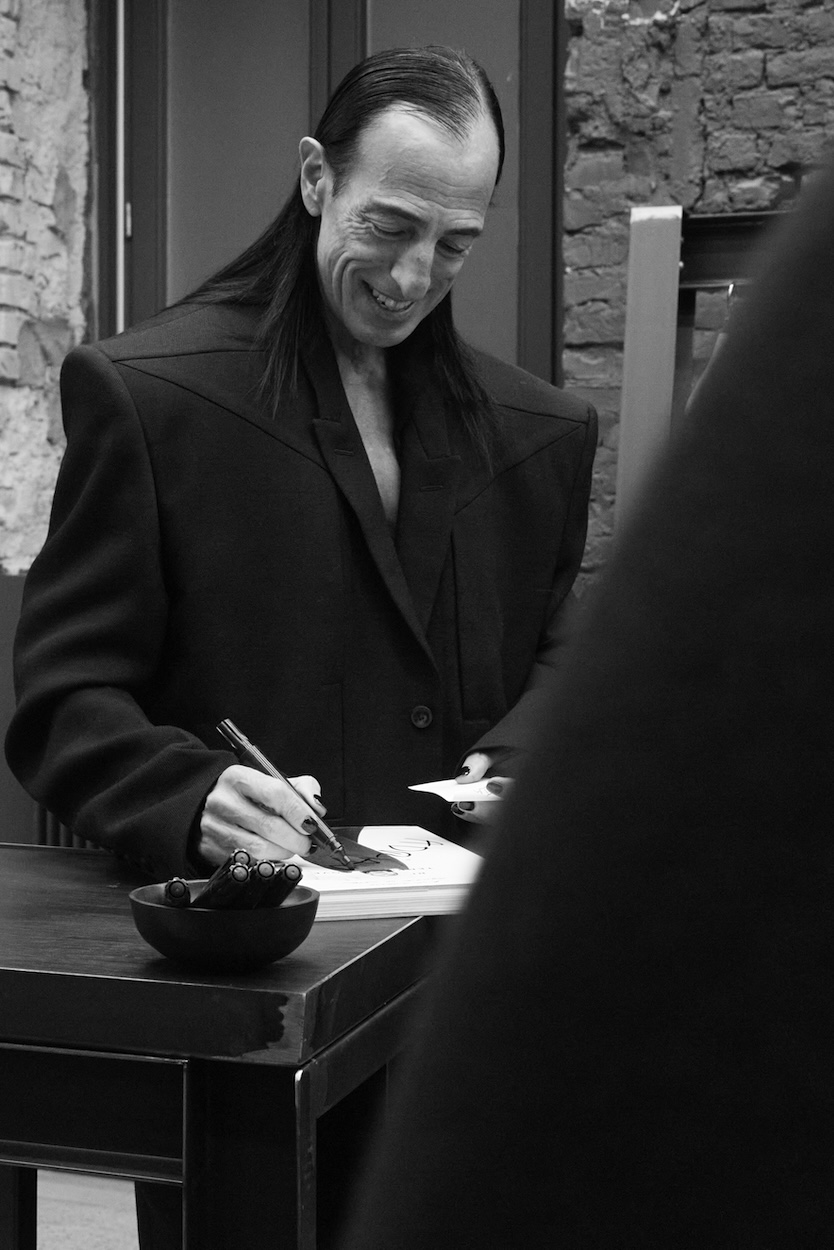

“Love is energy,” he says. “When you push a word like love into the world, it’s good energy. People assume my world is dystopian, but it’s not, it’s realistic.”
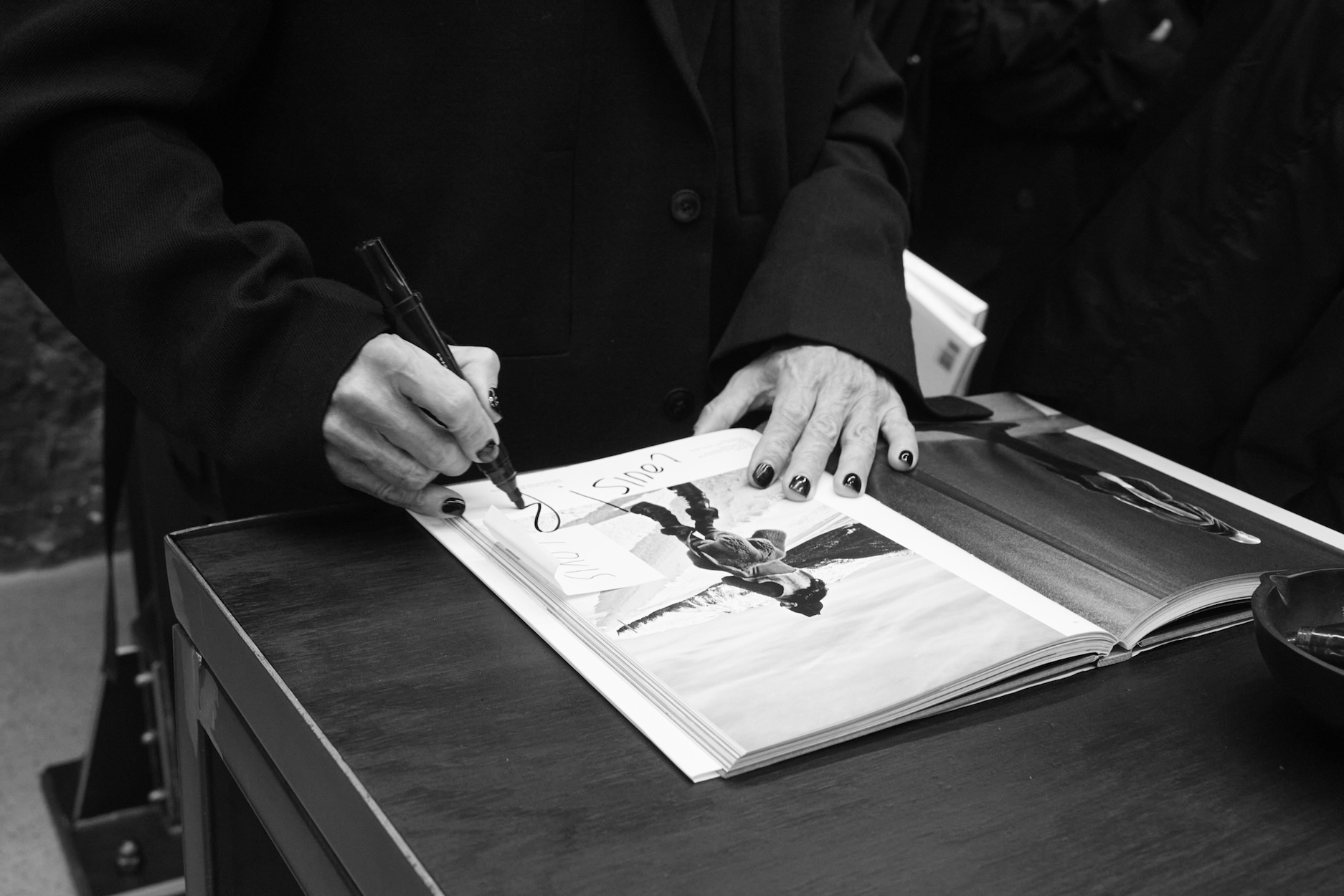
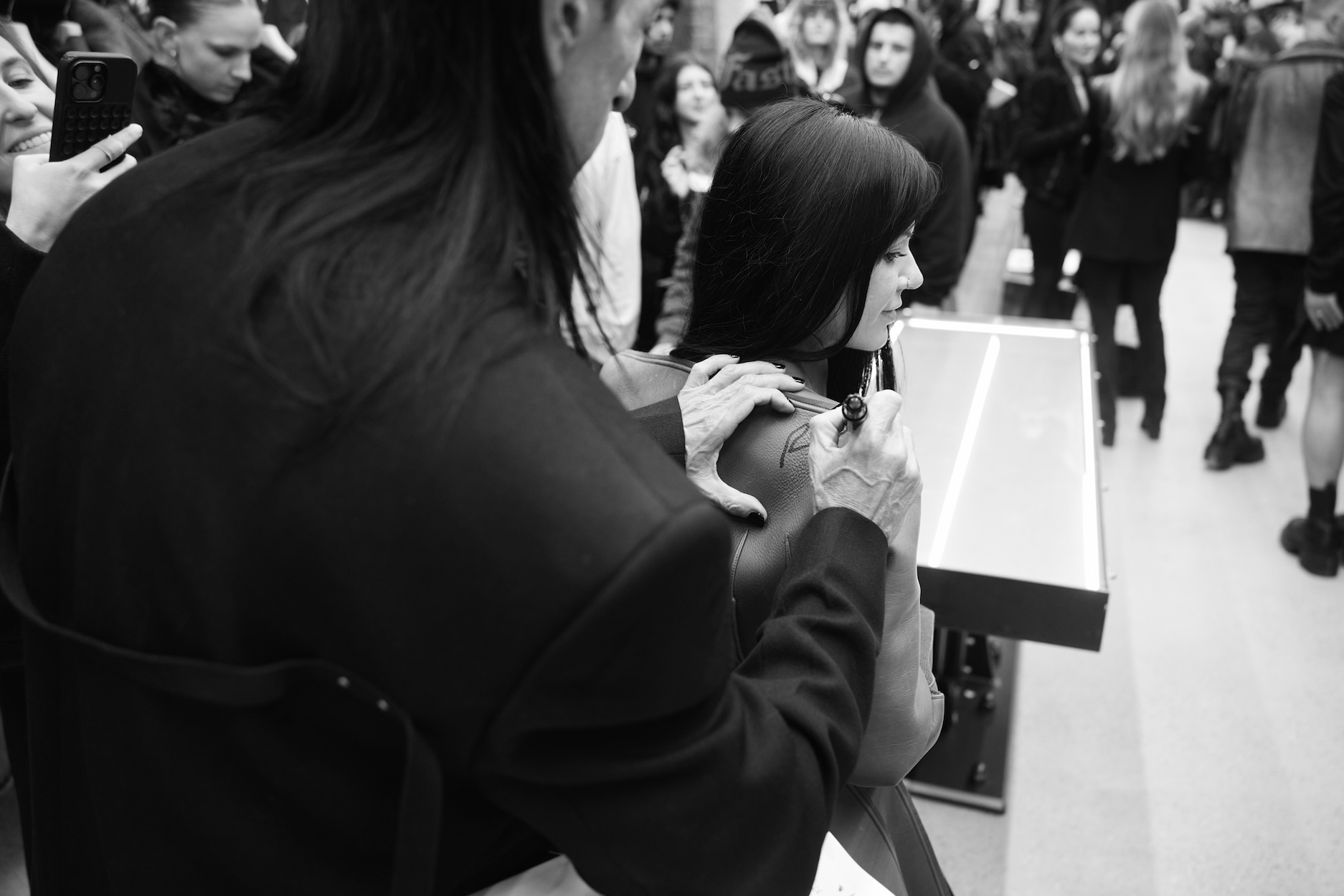
As Rick steps out to begin the signing, the energy in the room shifts. His community is already lined up, a long queue of devotees clutching the same white book, Temple of Love with Michèle Lamy gazing the cover. Michèle herself moves through the crowd with her usual magnetic grace. Some fans manage to steal a quick selfie with her, others share a few whispered words as she signs their copies too.

ON TOP OF THE WORLD: HOW YE’S CONCERT REFRAMED ALBANIA’S CULTURAL FUTURE
Few artists have shaped 21st-century culture as profoundly as Ye. The Tirana performance…
WEEKEND MUSIC TIP PT 102 LAVENDER
He has quietly worked his way up through Germany’s underground rap scene, but recently…
W COSTA NAVARINO: A PLACE BETWEEN MYTH AND MODERNITY
Numéro Berlin explored the luxury resort that became one of the filming locations for…
Poetic Narratives: Franka Marlene Foth on Dance, Creation and Authorship
For Franka Marlene Foth, dance was never a decision – it was a condition. In…

HOSTED BY NUMÉRO BERLIN AT TYLKO SPACE: TYLA’S A*POP LISTENING SESSION
South-African Grammy winner Tyla’s new album A*POP is set for release, and Numéro…

TO WATCH “FJORD“ BY CRISTIAN MUNGIU
Palme d’Or laureate Cristian Mungiu’s return to Cannes with Fjord (2026), starring…