
WEEKEND MUSIC PT. 84 – ROCHELLE JORDAN
Rochelle Jordan: In this interview, the British-Canadian artist talks about 15 years of…

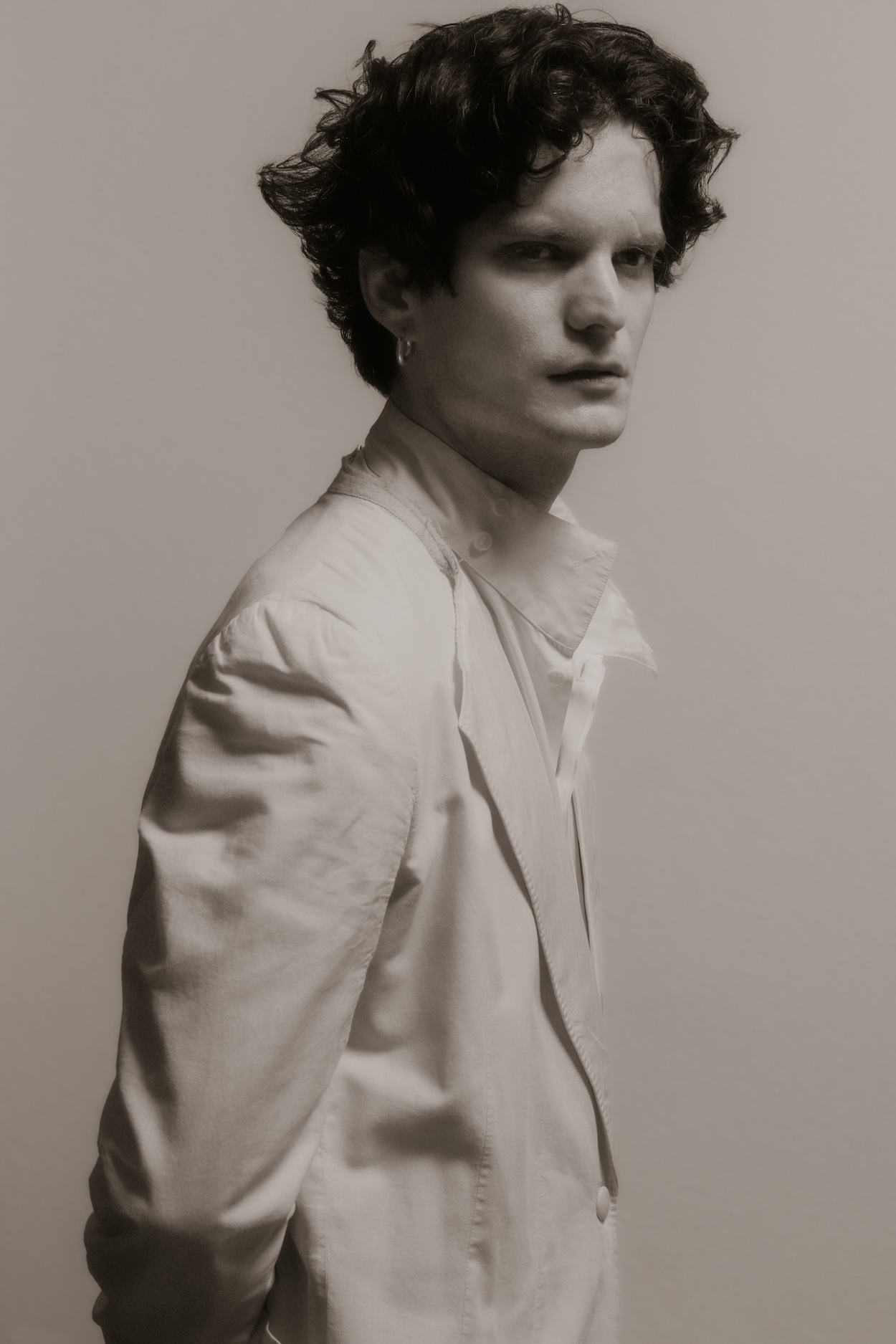
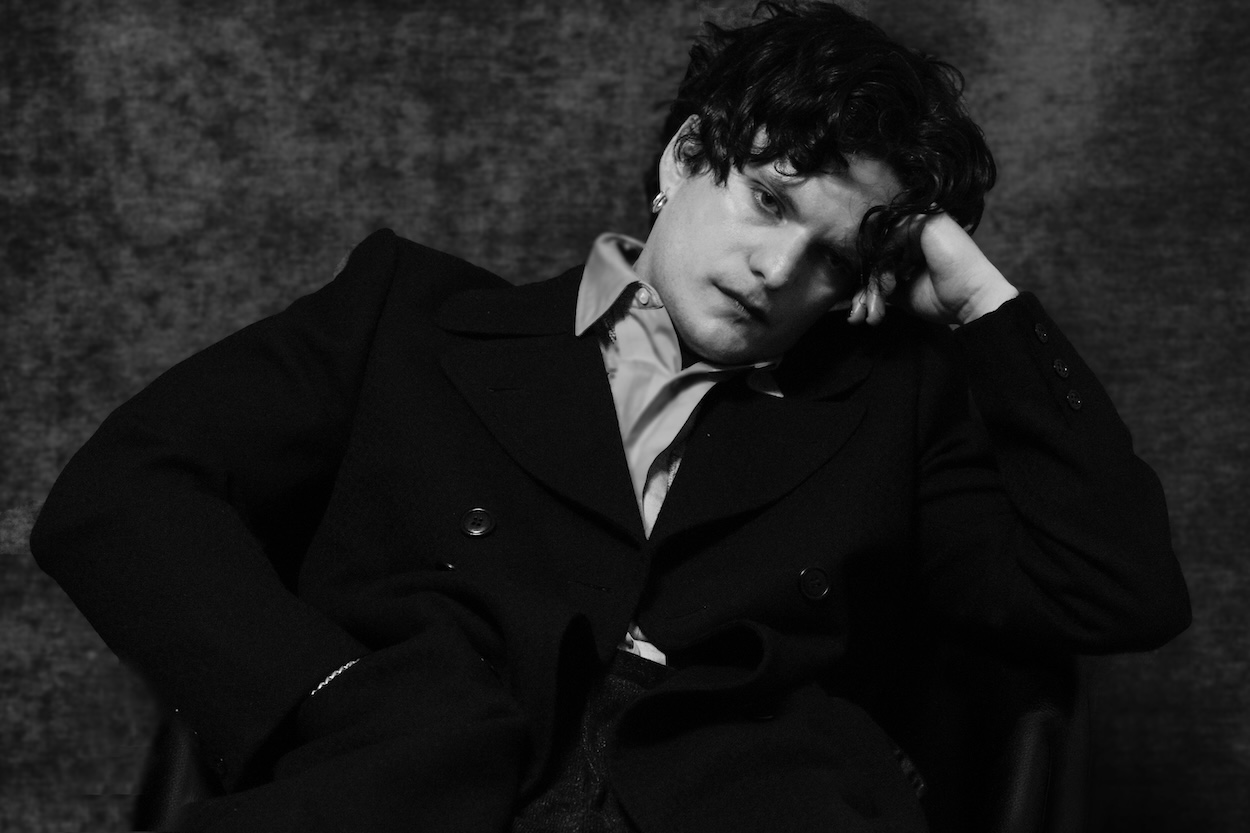
Simone Antonionis’ work sits somewhere between eerie electro, music performance art and sound design. While he would still be considered underground by some people, the Berlin-based artist has worked with brands such as Miu Miu and The Attico, while simultaneously co-managing the self-proclaimed “interdependent” music label Verlag. Numéro Berlin sat down with him to talk about his approach to music and his relationship to the intersection of fashion and sound-design.
Simone: I don’t have so many memories of being a kid; but in my house there was a very good sound system. With a record player, cassette player, CD-player, and so on. I started making mixtapes as a child, using songs from the radio. I wasn’t aware of what I was doing, I was just collecting music – which I guess connects to DJ-ing. It was a nice way to spend my time, it made me feel accomplished. Like writing, or drawing. But with drawing I’ve always been too self-aware. Music, on the other hand, was something I never felt judged with.
S: I think, yes. I think I could do it very intimately, too. I could do it wearing headphones, so I could be in my own universe quickly. It’s something very immediate, like when I am skipping the guitar, or with Ableton. You can do something and are immediately in its feedback loop.
More than not feeling judged I felt that music was a language I could share more easily with people. Something they could understand. I felt like no one would like, for example, the books I liked to read when I was young. De Quincey, Oscar Wilde,… With literature, paintings, and drawing also, I am more into abstract, dark things. With music, I felt like I could share that aspect more easily.
S: Like Isolationism? Nowadays I think more about Isolationism, I think because I am more aware, maybe. I think I also got more into it because of Raf Simons. Last year I got more into his work again. I felt that Isolationism was an interesting culture, in its own right. Especially when contradicted with big-city life.
S: I completely agree. Nowadays we also have many more ways to distract ourselves, technologically speaking.
S: I revisit images from the past. I also dream a lot, especially recurring dreams; which I hate. They’re torturous. So some themes also stem from these recurring dreams that I elaborate on and get rid off in that way. I think another theme right now is avoidance. About not seeing things the way they are and looking the other way.
As an artist – and I use this word because it can mean many things – in this case, in the context of music, it’s best if the vision comes to you without you deciding on it. It’s great, when this atmosphere simply comes to you. Usually these themes consider a suspension of sorts, a certain type of mystery and oddity. When you feel like things are fine but not quite the way they’re supposed to. Eerieness is definitely a good way to describe what influenced the atmosphere of my music, from time to time.
And on the other hand, there are quite simple moments, too. When I am watching a movie and can easily translate what a scene wants into music – without making a clear reference, it’s just for me.
“I always thought fashion would be a good place for the way I think about music and sounds.”
S: A lot of my interest also comes from musique concrete. It’s a tradition of doing sound recordings, from the fifties in Paris. The group called GRM, which still exists today, started to record the sound of objects. It’s really inspiring to me, because it approaches music from a different angle. They used to record conversations and opera singers and sounds of objects, and put that together.
This is definitely an influence. But sometimes I also work without thinking about anything. That was the case for the sound design of the fashion film “Work Drains My Soul But I Love It” that I worked on – we actually won the “Best Sound Design” Award from ASVOFF 16 in 2024.
I think a lot of how I see music is about doing it as much as possible. Ideally every day, Ideally all the time. I can’t, obviously.
S: When I studied sound design at the fine arts academy in Milan – NABA – my department was connected to the fashion department. At the end of a year, we got to do the sound design for the Antonio Marras show. In the end, it didn’t work out as well as we hoped – there were too many people working on it. One teacher and seven students… but there definitely was this idea of putting sound and fashion together. It intrigued me. I always thought fashion would be a good place for the way I think about music and sounds.
For me and my friends, fashion was always very important. We started with skate culture when we were teenagers. Then at some point the electronic French Touch thing came in. And more than French Touch, French Electro. So things got more sleek. I started wearing skinny jeans when no other man in the village was wearing skinny jeans. So it goes back a long time. I was also making clothes with a friend of my mothers, she was repairing clothes as a job. And I still make some clothes. I also got into clothes because of magazines. When I was eleven, I bought magazines and cut out the advertisements to put on my wall. I thought it was art like any other. Back then, I didn’t know that it was fashion, or that you could buy these clothes.
Talking about sound design: It’s not something you can really apply for. Most of the time, someone in the team knew my work already. I think as a sound designer you can not really have strategy. If someone tells you the opposite, they’re lying.
S: I thought it was a great name! But to be honest, I never chose to be underground. If what I did were mainstream, I wouldn’t mind. I think there is a lot of misunderstanding with being underground in general. I think in the past the underground scene was so important; in the eighties for example. New wave, punk, etc. But that also became mainstream at some point. But nowadays it’s very difficult to understand what’s underground, when everything is online already.
Still, underground is not a choice. I’ve been to hundreds of underground events and most of the people I interacted with there would like to be recognized. Which artist doesn’t want to be seen?
Rochelle Jordan: In this interview, the British-Canadian artist talks about 15 years of…

DJ Maara talks about her life as a DJ, her new album "Ultra Villain" and her various…
As one of the featured artists on the new Houndstooth album Quantum Sound, Ruthlss brings…