
TO WATCH: “MARTY SUPREME BY JOSH SAFDIE
"I have a purpose. And if you think that's some sort of blessing, it's not. It means I…



“If you were dead, you wouldn’t matter to me anymore. That’s just how it is.”
To exist in a life without great changes. A life shaped by indifference toward others and toward oneself. Meursault moves through his days without resistance, without the need to hold on to anything. The world unfolds around him, and he registers it without assigning it meaning.
He lives in Algiers. Between work and acquaintances, who consider themselves closer to him than they truly are, he seeks the presence of the sea. The only place capable of drawing something from him that resembles emotion. Relationships fail to take root, conversations pass without leaving a mark, and gradually he drifts into a situation that no longer concerns only himself but begins to carry weight in the world around him.
François Ozon, who brings Albert Camus’ novel The Stranger to the screen, does not dwell on psychological depth. His focus rests on a single question: what remains of a person when language and emotion no longer align?
The film’s world is sharp and uncompromising, ruled by a logic of black and white. And yet it does not dwell on inner turmoil but on distance. A man observes the world without adjusting to it. Decisions arise not from drama, but from moments, and each of these moments carries consequences that cannot be undone.
Perhaps the power of this film lies in the fact that it does not tell us how a person should feel but asks why feeling matters at all. It presents an existence without judgment, leaving the viewer to find their own meaning within it.
"I have a purpose. And if you think that's some sort of blessing, it's not. It means I…
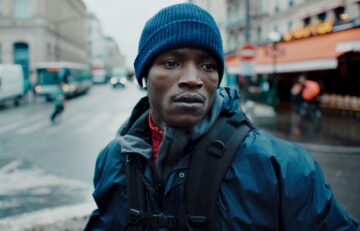
A man trapped in a system that only values humanity when it can be used

No Other Choice is not about losing a job, but about losing the self in a system that…