
IN CONVERSATION WITH LABRINTH

Words ALEXANDRA SCHMIDT
Image Courtesy of Sony Music & Columbia Records
“I literally look completely nuts, but that’s kind of the method of the madness.”

Labrinth is a musician, composer, and producer. The kind of artist who has, thank goodness, never fit neatly into a box. Born Timothy Lee McKenzie in Hackney, London, he grew up in a deeply musical household, surrounded by voices and instruments. For him, music was never just something to do; it was a way of living, feeling, and telling stories. Many people know his sound from the series Euphoria, where his songs hit straight in the chest.
With his new album Cosmic Opera Act I, he is not taking the traditional album route. If you are looking for tidy choruses and a “normal” song structure, this is not it. Instead, you get raw thoughts that are just as striking as they are beautiful to listen to. In our interview, we talk about inner demons, the music industry, and why Labrinth regularly has conversations with himself.
“Am I walking into the studio just to get someone to talk about me?”

Labrinth: I’m coming out of the chaos of 2025. And I’m feeling positive about what’s to come.
I think what I mean by “what’s coming” has more to do with my perception, my perspective of it. The way I’m looking at life now is different, and that leaves space for things to feel fresh, new, and exciting. I feel like my eyes are more open to seeing those things than they were last year.
I come from a very musical family. Everyone has some kind of talent, and even if they’re not in the music industry, everyone can sing or play an instrument or something like that. So, music was always around me as a kid. I was really into art back then and wanted to make comics. I used to invent stories, and somehow music just pulled me in that direction. I think I’ve been obsessed ever since, maybe since I was around ten.
Since I had kids, they got me right back into it.
“I wasn’t trying to give anyone choruses or hooks or any of that.”
One half of it is that I love school music and I love film music, and I wanted to use that sound in an album. That was the playful five-year-old child in me wanting to play with toys and have fun. The other side of it was that I was going through the process of developing as a father, as a person, as a human, and the music, especially the lyrical content, was very much about that process.
My personal favorite is a song called Running A Red. There’s a band called Booker T. and the M.G.’s, and they really inspired the overall vibe of that track. As for a fan favorite, I honestly don’t know. I didn’t really care on this album in that sense. I wasn’t trying to give anyone choruses or hooks or any of that. I was just like, I’m going to make whatever is in my head. I’m sure some people might be like, ‘what the hell is this?‘But I felt like I just had to do it.
Oh, I appreciate that. I feel like we’re in a new age. And by that, I mean I love the idea of artists, creatives, or anyone really trying to find and express things that aren’t just culturally inspired. A lot of that is basically peer pressure. Creative work driven by peer pressure often ends up being about writing what people expect you to write.
My process is absolute insanity, total madness. My wife is always like, Babe, do we have to do this every single time? At first, I was like, babe, maybe I’m bipolar. And she said, You’re not bipolar, you’re just an artist. You go through doubt, you go through excitement, and you go through all these emotions while creating a record or even just one song. You literally lose your mind and then you kind of gain it back again. It’s kind of like having a baby. That’s probably the worst thing I could say and I’m going to get slaughtered for it, but it really feels like that. [laughs]
You’d probably think I’m nuts. I talk to myself, I talk to people who aren’t there. I talk to the inspiration I’m getting. It’s like I’m looking into this sphere of ideas and they’re kind of talking to me. I literally look completely nuts, but that’s kind of the method of the madness.
No, only when I’m insecure or internally chaotic. I can always write music, but it’s really about my perception and how I receive the music, because that’s a big part of creating for me. I want to feel it, and if I’m emotionally unstable, I can’t feel the music. That’s where the block comes from.
I allow myself to feel it. I let myself be uncomfortable and sit with it, and then I allow it to pass. If I try to fight it or kill it, it usually just gets bigger. You kind of have to pat the monster on the head and say, it’s okay.
Otherworldliness. That childlike sense of magic. That feeling always gets me. I think that way when I’m writing music or trying to express something. It always comes back to the same question: how can I be on another planet while still being on this one?
Maybe from the movies I watched as a kid. One that comes to mind is The Big Friendly Giant, the cartoon version from the 1970s. It always made me feel emotional, or magical. There were also little things, weird things, like certain songs, that gave me this ambient, euphoric energy. That feeling has stuck with me.
Yeah, it really is. And I can be serious too, but there’s always this whimsical silliness that’s there.
My heart, all the time. It doesn’t always work out very well, but for me it’s just inbuilt. I can’t even think before my heart gets involved

“How can I be on another planet while still being on this one?”
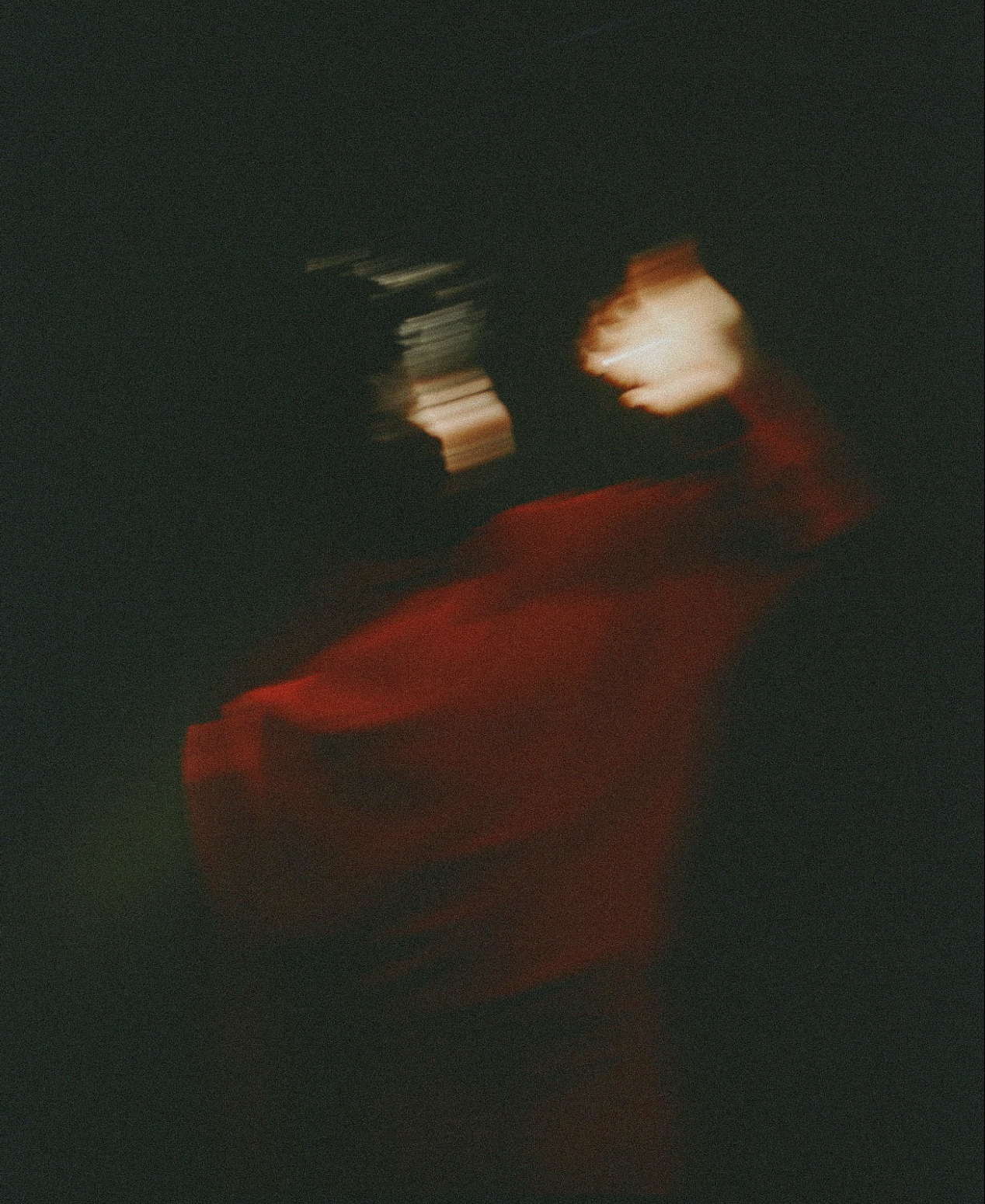
“It’s kind of like having a baby.”
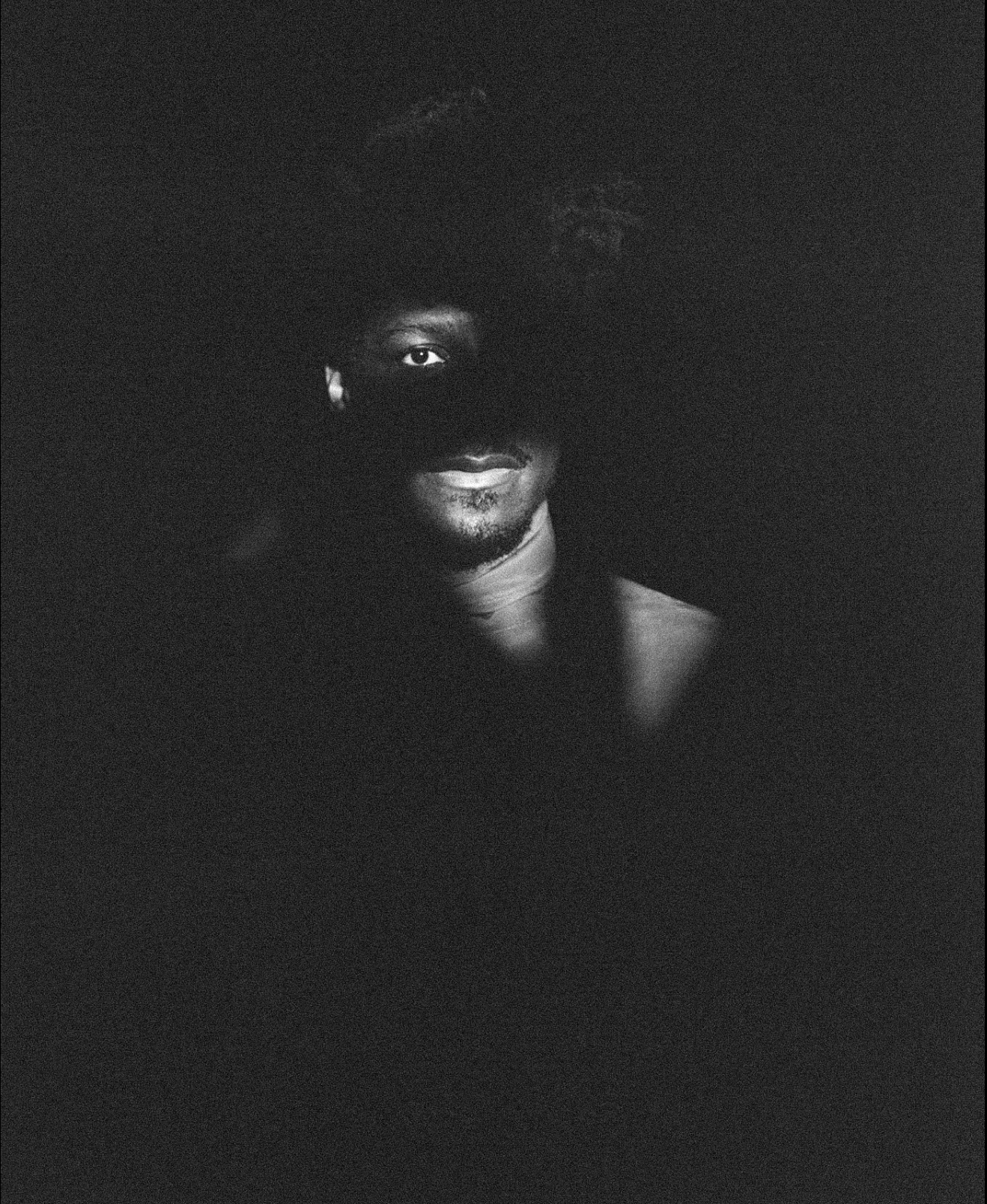
“If you’re treated like a product, like a Coca-Cola can filled with emotion, trouble is almost inevitable.”
The Problem has been around forever. A big part of it is that artists are constantly walking a tightrope between business and creativity. Business manages product, art manages creativity. Between those two languages, artists can lose themselves. If you’re treated like a product, like a Coca-Cola can filled with emotion, trouble is almost inevitable.
You know what I mean? In business it’s like, if something’s off or past its sell-by date, you just throw it away. But I’m a person.
I think you have to see reality for what it is and respect it as such. Like I said, I’m a very dreamy person. I live in otherworldliness, and sometimes I project my own ideals and perspective onto the world.
But the world is reality. You can put out a song and maybe no one’s going to care, and that’s okay. That’s part of the process. The moment you accept a reality beyond your own, you can find more peace.
I guess the first song that comes to mind is a single I released called Implosion. It came from that feeling as an artist when you have success and it’s really easy to get attached to what it was and what it meant. And then you want to replicate it. It kind of wakes up the toddler in you, the little cute child everyone tells, “You look so beautiful, do that thing again.” You really have to break away from that need for praise, for excitement, for people to care about what you’re doing, and repair your relationship with yourself and your creativity.
Implosion was kind of about that for me, losing your mind a little, not to kill your old ego but to quiet it. It’s like saying, “It’s not about me. It’s about what we have to contribute to the world, what we can take away from it.” That was a demon for me because I felt like I needed success, I needed validation for what I was doing. And if that flips a little, or someone isn’t talking about you as much as you want, you start asking yourself, “Am I walking into the studio just to get someone to talk about me?” That’s when you know you’re lost.
Another one was Still In Love With The Pain. That song is basically about being addicted to the industry, addicted to success, and not just success but things like Instagram. I would say it’s the devil. It’s ruining communities, connectivity, and creativity. And yet I was the same guy online, checking how many likes I got on a picture. It’s like a drug addict having an opinion about their own addiction. That was a demon for me, caring so much about something I knew was pretty toxic for me and my peers.
You know what’s beautiful? You can almost learn to enjoy the other side of life. That wouldn’t bother me. I’ve already kind of gotten over the hurdle of a challenging audience. But some of it is more the feeling of silence. It’s like tear gas, slowly creeping in before you even notice it. You’re breathing in this intoxicating energy of success, of being connected to a celebrity, or being a celebrity. Those things can almost become more important than what you wanted to contribute as a creative. For me, the most sacred thing is remembering what you want to contribute, not what you want to take from the world.
Yeah, and that’s why I made Still In Love With The Pain. I’m still coming back to the same thing. I see how it’s ruining me and my peers, but we’re all still in it, obsessed with it, and still trying to find ways to be valuable in it.
You never really know. You just have to shut your mouth and let it go. Have someone literally pull it out of your hands. I’ve had millions of deadlines. It’s always good to have someone around to say, that’s enough, just take it and stop.
By the end, you can hate it. You can be like, this is terrible. Or you can go full circle, where you think, I really hate this, it’s the worst thing I’ve ever done, this is horrendous. And then you get to a place where you can appreciate the process you went through. It’s almost like a photo album of the last two years. You see yourself with no makeup, all the little moments, and once you have some time, you can listen back and value the journey. It’s like your old skin. Most people don’t want to put that old skin back on, but it’s part of the process.
Get lost and get found. You cannot control it. No one can control this experience of living. You are going to be an asshole one day. You are going to think you are the world’s gift to everyone. You will have a Jesus complex. And then there will be a moment where you wake up and realize it is not about you. It is bigger than you.
At the end, it becomes very simple. I want to do what I came here to do, what I love. But you have to go through the chaos to find the person you are going to become.
Why am I here? I am not supposed to know why I am here. I am supposed to know how I am meant to contribute. If I asked a cat why it is here, it would just say, I am a cat. I do what a cat does. And maybe, in the grand scheme of things, when you look at the ecosystem, you suddenly see why that matters. You see its value in the bigger picture. Hopefully, I am just a speck of paint in the grand painting.
No. Anyone who believes they have a higher meaning than anyone else is trash. I believe that even the janitor who spoke to me after school, when I was leaving the studio, or the teacher that was going through depression, is part of the journey.
If you remove all the notes from a symphony nobody cares about, you are left with one single note. And it is not as powerful. There is no symphony without every note. Even the ones that think they are insignificant. To me, they are all important.
If I have to go through that shit again… [laughs]

WEEKEND MUSIC PT. 79: Chaze Sharp
Chaze Sharp makes music born from rupture and reflection, weaving German and Nigerian…
words by Jill Plumbohm
VISIONARY ISSUE VOL. B – TING TING LAI
Photography by ANTJE PETERS
WEEKEND MUSIC PT. 79: JUDELINE
Judeline’s music blends poetic, introspective lyrics with atmospheric soundscapes,…

“IT CAN FEEL ALMOST RELIGIOUS” JEREMY SCOTT IN CONVERSATION WITH HENDRIK LAKEBERG
Photography THOMAS HAUSER
VISIONARY ISSUE VOL. B – LEN FAKI
LEN FAKI: THE PULSE OF PURE VISION BY ANN-KATHRIN RIEDL PHOTOGRAPHY DANIEL ROCHÉ
WEEKEND MUSIC PT.75: CHELO
WEEKEND MUSIC PT.75: CHELO