
WEEKEND MUSIC PT. 86 – LAUREL HALO
Laurel Halo soundtracks Julian Charrière’s exhibition Midnight Zone, following a lens…



Chaze Sharp makes music that lingers. His songs grow out of moments of rupture, times when everything felt heavy, but also out of a conscious decision not to break under that weight. Moving between Nuremberg and Berlin, between everyday German life and Nigerian roots, between R&B, hip-hop, and electronic club culture, he isn’t searching for a role to play, but for honesty. In the interview, he speaks openly about how his artist name was formed during his time in juvenile detention, about a single week that fundamentally changed his life, and about how studying sociology brought new calm and new perspectives into his music. With Atilodub, he weaves together Igbo culture, dance, and dub techno into a sound that doesn’t just describe community, but makes it tangible. A conversation about rupture, growth, and the courage to stay true to yourself.
“Not living in a hamster wheel, not just functioning, but having a daily life that feels meaningful.”
Chaze Sharp: The name actually came up when I was in juvenile detention. I was already making music back then and kept a small notebook where I wrote down creative ideas. I always liked the name “Chaze,” even though it’s usually spelled with an S. “Sharp” came from my sister, who used that name on Facebook, and I wanted to show that connection between us. After trying out a few names, I eventually stuck with Chaze Sharp.
CS: It’s a pretty wild story, and I even mention it in my latest song. I was at a local fair in my area, basically like a small Oktoberfest. Two guys started racially insulting me. I stepped closer and told them that you don’t say things like that. They immediately punched me, completely out of nowhere. My nose started bleeding instantly. I defended myself, pretty aggressively.
Later, the police showed up, and I actually went to them myself because I genuinely thought I hadn’t done anything wrong. The whole thing ended up in court. The other side had three completely different versions of the story, while my friend and I told the truth. Still, important evidence photos suddenly disappeared. In the end, I was sentenced to one week in juvenile detention and had to pay fines. An appeal was possible, but I was told it could get worse, so I didn’t risk it. I served the week, even though it felt extremely unfair. It was one of the most intense experiences of my life.
CS: Looking back, it was actually the best time of my life. That week alone in a cell gave me the first real space to think. At first there was a lot of anger, but after a few days that completely shifted. I decided I wanted to be a good person and grow into that. That also changed my music. Before, I was making more party tracks and “cool” songs. After that, I started writing honest, deeper music that was much closer to my emotions.
CS: The driving force was really my entire environment. Everyone around me knew how much I loved music. Even as a kid, I was constantly listening to music, long before streaming became normal. Through my parents, I grew up with a lot of hip-hop and R&B, and I always knew deep down that I wanted to make music. I just didn’t really dare to go for it for a long time.
When I was 13 or 14, I started DJing a bit, singing, and writing lyrics, but the real turning point came during my training as an industrial clerk. In the very first week working in an office, I realized how unhappy it made me. I was feeling really low and started questioning what I actually wanted to do with my life.
Out of that feeling, I started making music seriously, not with the goal of making money, but because I needed something meaningful. Music became the strongest way for me to express myself and process my emotions.
CS: I think I handle it pretty well by now, even though it was a long journey to get there. Those sad songs didn’t come out of nowhere. I was often sad because of my own experiences, but also because of what you see happening in society.
At some point, especially through studying, I gained a healthy distance from it all. Today, I feel very much at peace with myself. I’ve worked through a lot, and I can even approach things with humor. Not because I don’t take them seriously, but because I see them with more lightness.
I try to look at people from a bird’s-eye perspective. In the end, we’re all just tiny dots in the universe. That’s exactly why I try to make the most of every day and be a positive person. For me, that’s the strongest impact anyone can leave behind.
CS: I think it comes from my own experiences. I know what it feels like to grow up with less money and to constantly feel different. Today, I’m doing very well, and from my perspective, I live a really beautiful life. But I originally started all of this as a form of therapy, simply to give my emotions space.
The fact that it also gives strength to other people is incredibly meaningful to me. When, for example, a 40-year-old father from London writes to me and tells me that my music helps him with his depression, it really reinforces what I’m doing. It shows me that I can put something positive into the world, and that’s what matters to me.
I used to think I just wanted to earn a lot of money, because I didn’t have much growing up. But I quickly realized that money alone doesn’t make me happy. What truly fulfills me is seeing other people feel better. In the end, it’s a win-win situation: therapy for myself and fulfillment through what I’m able to give to others.
CS: That’s an incredibly complex question, and it’s hard to fully answer in a short interview. But the first things that come to mind are definitely related to social inequality within our system. We need mechanisms that counteract this, ways to distribute income, power, and resources more fairly.
Many people see democracy only in a political sense, but for me, democracy is also economic. It’s about who owns what and who gets influence through that ownership. That’s why I don’t see the main responsibility on individuals, but rather on society as a whole.
We need to fairly pay the jobs that are essential to keeping our system running, especially people working in care homes, hospitals, and healthcare in general. For me, that’s one step toward a more life-friendly world, even though there are obviously many other things that would need to change as well.
CS: It changed everything, how I think, how I see the world, and how I make music. After my 2022 album, I took a break because I wanted to grow and had spent years doing almost nothing but music.
Through my studies, I found my way back. Reading about society and inequality gave me new inspiration. I realized I didn’t want to just write sad songs about myself anymore. I had something to say again. Overall, studying has had only positive effects on my music.
CS: 2025 has been the most beautiful year of my life so far. I learned to be grateful and to really acknowledge what I’ve achieved with music, especially childhood dreams. I traveled, learned new things, and met my girlfriend. I was genuinely happy.
That happiness was the biggest shift in my music. The project before was thematically very heavy and dealt a lot with racism. This time, I wanted to make happy music. That was difficult for me in the past, because I always found it easiest to write when I was sad.
For the first time, I managed to translate those happy feelings into songs, and I was truly satisfied with the result. I was happy with the tour, with myself, and with life overall. And I think you can really hear that on the EP.
CS: “Closing” wouldn’t be the right word. I’m cautious with that. In 2022, after Helltown Fantasy, I thought I’d never release music again, and then a lot still happened.
Right now, though, I feel drawn toward electronic music. I’ve been listening to it since 2022, and I want to dive deeper. Music has always been about self-fulfillment for me. R&B brings in money, but doing it only for that would feel like an office job, and you’d hear that in the quality.
Atilodub feels like a good closure for past themes. Everything else I’m letting grow naturally.
CS: For a long time, I barely thought about my Nigerian roots. I was born and raised in Germany and always felt more German. Being in Nigeria often felt unfamiliar to me.
It was only through my studies that I started engaging more deeply with my heritage, not so much with the country itself, but with the Igbo people. When I began reading about them, I saw myself reflected in their beliefs, their way of life, and their deep connection to nature.
At the same time, my family is very Christian, and talking about older spiritual traditions or pre-Christian ways of life is often frowned upon. I never really identified with that, so I kept searching on my own. That’s how I came across the term Atilodub.
Atilogwu was a youth dance in Igbo culture, and dancing has always been an important form of expression for me. Especially in Berlin, dancing to techno, I felt a strong sense of community and fulfillment. “Dub” comes from dub techno, which I heard there for the first time and immediately fell in love with. The album connects these two worlds: dance and music. For me, both are deeply unifying and communal, and I believe they deserve a much greater place in our society
CS: Dance and singing have become incredibly important parts of my life. For a long time, I didn’t even realize how much I was missing movement. I’m not talking about “cool” dances, but about freely moving to rhythm, like you do in a techno club. Everyone dances for themselves, yet something collective emerges.
Especially in a time when society feels increasingly divided, dancing is deeply connecting for me. On the dance floor, it doesn’t matter who you are or what you believe in. Only the moment matters.
That’s the message I want to share: stand by who you are, even if you sometimes feel out of place. I spent a long time feeling neither German nor Nigerian enough, and still, I am exactly right the way I am.
At the same time, I want to show that change requires effort. Whether it’s personal or societal, being dissatisfied alone isn’t enough. My call is to take action.
“Go out, dance, do your thing, and fulfill yourself.”
CS: I’ve thought about it a lot. Moving from a small village to a big city already felt like a form of emigration to me. I can definitely imagine actually leaving the country someday with my girlfriend. We’ve talked about it many times, but we don’t have a specific place in mind yet.
What matters to me isn’t the location itself, but the people who live there. I’m looking for a community that shares similar values: a simpler life, less focus on capitalist mechanisms, and more emphasis on togetherness. Maybe working in a garden, growing food, building something together. That might mean less material wealth, but more connection and meaning.
In Germany, I don’t really see that as realistic right now, especially because of property prices. A warmer climate with the sea nearby would be a nice bonus, but the most important thing for me is finding a community that aligns with my values.
That’s a difficult question, because I’ve already fulfilled many of my dreams and I’m genuinely happy with myself and my life. I’ve also learned that fulfilled dreams often feel very different from how you imagine them beforehand, which is why I’m more cautious with the idea of dreaming today.
If I had to name one, it would be a simple, self-determined life. Starting a family with my girlfriend and being part of a community where people understand each other and share similar values. Not living in a hamster wheel, not just functioning, but having a daily life that feels meaningful.
Wealth isn’t what matters to me. What matters is the feeling that the life I’m living is truly my own.
JP: Of course.
CS: That’s exactly what the album reflects, especially the track that’s coming out on January 30. It’s about how we, as the working class, try to live self-determined and meaningful lives. Not everything will always be easy or beautiful, but hard phases are bearable when you know what you’re going through them for.
The real problem is being stuck in things that feel meaningless, jobs or routines that don’t make the world better and don’t make you feel better either. That’s the moment where you have to start asking yourself what you really want. And then you need the courage to break out.
A lot of people are afraid of letting go of control, but trusting the unknown can be exactly what helps you escape negative cycles and reconnect with your inner voice.
Thank you Chaze Sharp
Laurel Halo soundtracks Julian Charrière’s exhibition Midnight Zone, following a lens…
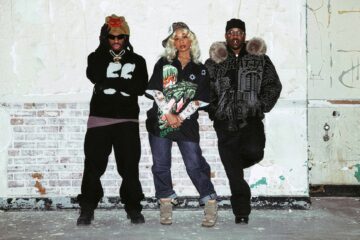
Denzel Curry discusses the formation of the hip-hop supergroup THE SCYTHE and the release…
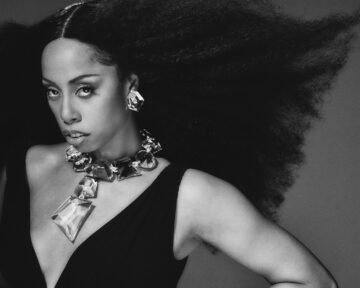
Rochelle Jordan: In this interview, the British-Canadian artist talks about 15 years of…