
IN CONVERSATION WITH NICLAS HASEMANN
PLATTE NEXT GEN positions itself as a central platform within Berlin Fashion Week FW26/27, dedicated to the visibility and support of emerging design voices. From January 30 to February 14, 2026, PLATTE. Berlin serves as the kick-off location of the fashion week, hosting the NEXT GEN Pop-Up and Exhibition curated by photographer Sven Marquardt. Selected by an interdisciplinary jury from the fields of fashion, design, sustainability, business, and media, six up-and-coming designers are presented in an experience-driven retail and exhibition format. For the first time, NEXT GEN is expanded through a curated exhibition concept that brings fashion into dialogue with motion, space, and identity. Over the course of two weeks, the PLATTE Store is transformed into an immersive visual showroom, in which new design approaches become more accessible and visible to the public. By connecting designers with customers, media representatives, and the Berlin fashion community, PLATTE NEXT GEN establishes a framework that combines retail, mentorship, and curatorial practice, thereby setting a progressive standard for the future of Berlin fashion.
As part of this platform, the NEXT GEN Pop-Up and Exhibition is conceived as a space of encounter and exchange. The curation by Sven Marquardt brings together distinct creative positions and translates them into a cohesive spatial narrative. Strong individual perspectives are placed in conversation, allowing contemporary fashion to be experienced beyond the runway context. The event format emphasizes innovation, sustainability, and craftsmanship while offering direct access to industry professionals and audiences alike. In this way, NEXT GEN functions not only as a presentation format, but as a structural instrument for fostering long-term visibility and relevance for young designers within the fashion system.
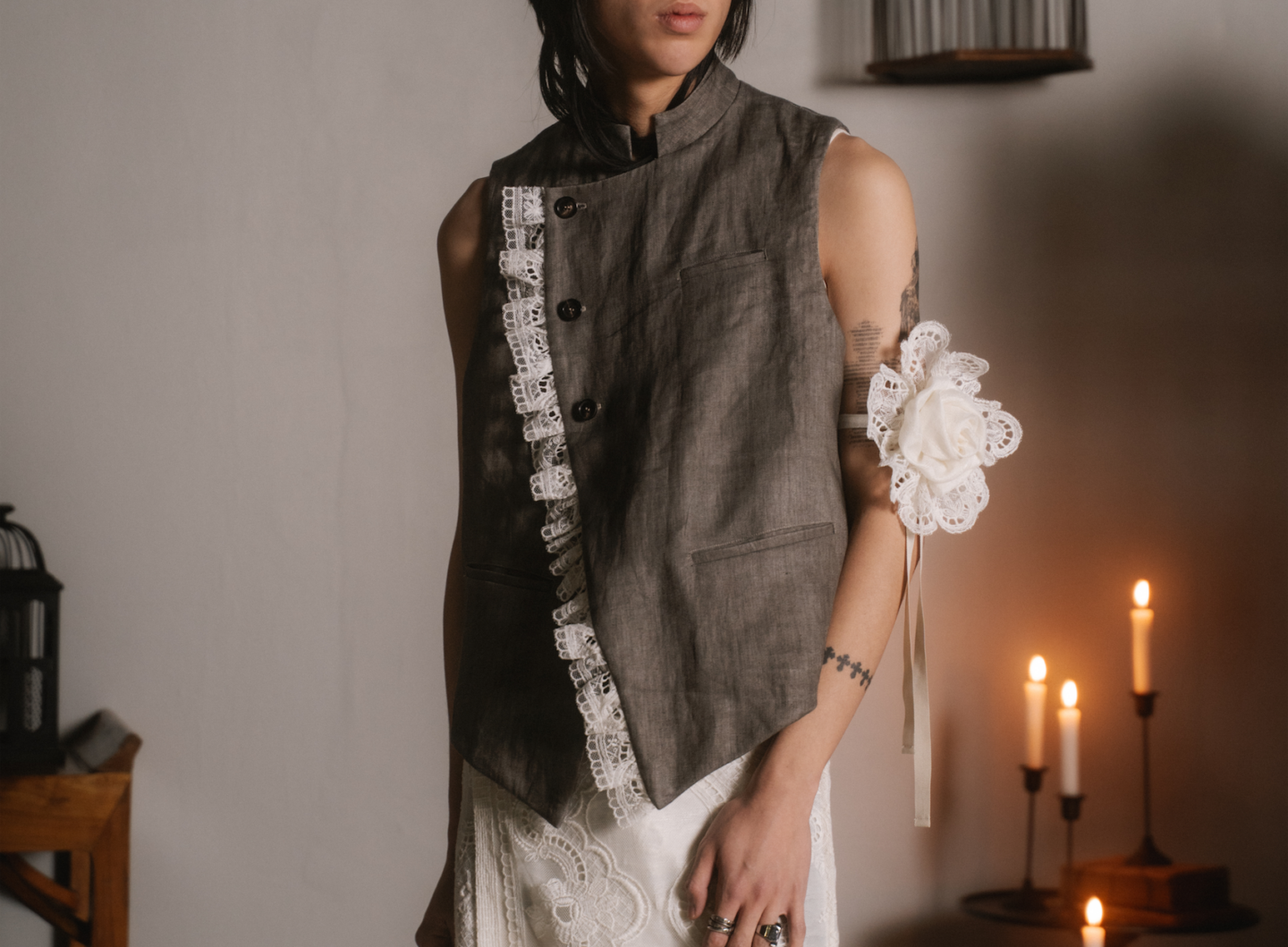
Within this context, the work of Niclas Hasemann is situated at the intersection of fashion and film. His practice examines how the combination of these two disciplines can contribute to social change by encouraging a stronger sense of community and a more conscious approach to clothing. Through a slow, process-oriented design methodology and a strong focus on craftsmanship, materiality, and narrative imagery, his work proposes an alternative to the speed-driven dynamics of the contemporary fashion industry. Fashion is thereby understood not merely as product, but as a medium for reflection, emotional resonance, and responsible engagement with garments over time.

“Moving on quiet paws means acting a bit more consciously, a bit more calmly, becoming aware of one’s own influence and how one uses it.”

Niclas Hasemann: The most important thing, in just a few words, is my guiding principle, which is “on quiet paws.” In German it’s “auf leisen Pfoten,” and I also like the English version a lot. It reflects my way of working: how I approach things, how much thought and time I give them, and how I try not to rush anything in the design process. At the same time, it expresses an attitude that I want to convey to the people wearing my clothes. Moving on quiet paws means acting a bit more consciously, a bit more calmly, becoming aware of one’s own influence and how one uses it. It’s not a call to be passive or to step aside, but rather to think before speaking—about what one really wants to say and whether it’s actually necessary.
Yes, on the most obvious level it does come from my last name. But it’s also because I didn’t really think much about my surname before. It was just there. As I got older, moved out, and started to consciously use and engage with my last name, I really began to like it. I also like the hare visually, as an aesthetic symbol, but also because of the way hares move. At some point I started drawing this logo myself.
Actually, I draw my inspiration almost exclusively from outside of fashion. I don’t do much specific research into historical garments or fashion history. Of course, you absorb certain things as background noise, but my concrete inspirations always come from outside fashion—especially from films. I’m a big film nerd and watch a lot of movies, and I draw a great deal from them. For each project I usually have a few films that accompany it. Beyond that, there’s a lot of experimenting. I put together a rough mood board or notes about themes that interest me, and then I start working with fabric and draping on the mannequin. I think that’s where all my influences come together at a given moment, and something emerges from that.
I wouldn’t say it’s strictly divided into phases. It’s more that things accumulate. Sometimes it’s a sketch, sometimes ten pages of notes before the next sketch appears. It also depends on the project and the time frame. If I know there’s a deadline, things automatically become a bit more focused. But at the beginning there’s usually a lot of collecting, which is probably the case for everyone. Once it comes to actual implementation, though, it becomes very structured for me—when it’s about making patterns, sewing, and prototypes. Once I’ve reached that phase, I don’t really go back. I stay fully immersed in it and really dive deep.
That was actually clear to me fairly early on. Toward the end of school, I knew I wanted to go either into fashion or into film, but I was very unsure which one to study. I then did a preliminary internship for my studies in Pforzheim at a small label in Stuttgart, where I was asked to create the video for their collection. That’s when I realized that I could do it well enough for it to be a realistic option, and that working on videography within a fashion context—especially for a small label—made a lot of sense. I decided to study fashion and keep film in the back of my mind. The other way around would have been much harder, because once you fully commit to film, you usually have to specialize much more. It would have been difficult to just sew on the side. So this way felt like the right decision. Throughout my studies I always kept both in mind and increasingly started working freelance alongside them. My bachelor collection ended up being half fashion and half film.
The experience I gained from that still carries me today, because the project felt very complete in its overall approach. Thinking fashion and film together and letting them complement each other made total sense to me and suited me very well. That’s why I believe it’s definitely a viable path to pursue both. And since I chose to focus on my own projects instead of working for a big Parisian fashion house, I now have the freedom to decide how I want to spend my time. This combination really suits me, and it’s probably also what I can do that others maybe can’t—bringing both together. That’s why it would feel very difficult to completely turn my back on one of them.
A lot, really—whether it’s the people I met there, whom I still spend a lot of time with and collaborate with. Before Pforzheim, I didn’t have much to do with fashion at all. My entire approach developed through the course of my studies, including figuring out what works for me and what doesn’t. In the last two semesters, I became fairly certain about the direction I wanted to pursue, and I feel like I’m still more or less on that same path. Some of the images I had on the mood boards for my bachelor collection are still on my wall today. That never really let go of me, and I never felt the need to make a hard break.


“Thinking fashion and film together and letting them complement each other made total sense to me and suited me very well.”

Probably the biggest role. Beyond all the visual and conceptual aspects, craftsmanship is my main focus. In the end, I want to create things that are very well made on a technical level. That’s extremely important to me.
I also think material is not the place where compromises should be made. I spend a long time searching for materials from different sources—whether it’s deadstock, vintage, or materials I weave and dye myself. A lot of time, work, and care go into material processing before it even becomes a garment. I also feel a growing desire to surround myself with objects that are made with love. I personally enjoy doing long hand-stitching, and I deeply appreciate seeing that care in other objects as well.
I think there’s an increasing societal awareness around fashion and what clothing should represent. It feels important to return to something more fundamental and to recognize the value of well-made garments that can be worn for a long time and age well. Craftsmanship also leads to ideas and forms that you wouldn’t necessarily find through sketching alone. I don’t particularly enjoy drawing, and I’m not especially good at it, so my sketches are very rough. The complete idea really emerges through the making process. For me, fashion can’t exist without this craftsmanship aspect—otherwise the results would be entirely different.
I think that’s a process I’m still in. Plate is the first time I’m really offering multiple pieces for sale; before that, everything was commission-based. Now they’re actual garments. I’m very curious to see how it develops. I think it’s important to continue with the values you’ve set for yourself and to find the right people who appreciate them—I believe they exist. You have to keep communicating how you work and then see where it leads. I can’t give a definitive answer yet because I feel like I’m just at the beginning of that journey.
During my studies, I did an internship with Jan-Jan Van Essche, a relatively small label that has been working for over ten years with a strong focus on high-quality materials and craftsmanship. They’ve remained small and didn’t aim to become huge or extremely wealthy. Seeing that this approach can work if you stay true to your own path was very encouraging. Of course, it’s important to stay realistic about what’s possible in today’s fashion industry, but I don’t feel discouraged. I believe there is space for this approach and that the extreme speed we’ve created can be counteracted, at least to some extent.
Being selected and invited to participate together with the others is very affirming on a personal level. For young creatives, it’s incredibly valuable when people believe in you and give you the opportunity to show your work. That means a lot to me.
Although it’s an exhibition, it also offers a step toward retail, which is quite unique. I think the overall package that Next Gen provides is very strong and came at exactly the right moment for me.
The communication with Plate was excellent from the very beginning—very clear about what the project is. Everyone involved, whether in PR or leadership, made you feel valued right away, which I really appreciated. We didn’t have much direct contact with Sven initially, but I found that interesting. It wasn’t a collective process of deciding what the exhibition should look like; rather, he created his exhibition and selected aspects of our work that fit into it. He chose one look from each of us, as well as from the jewelry designers, and integrated them into the exhibition. I find it fascinating which look he chose from my work.
Not for any specific reason—it’s not that I find it unusual. I just generally find it interesting to see what others notice in my work and which aspects they focus on.
I’ve never really thought in terms of key looks, but the look he selected for the exhibition is definitely very expressive. It’s a large coat, probably the most elaborate piece among all the looks shown. It includes the hare ears, a lot of handwork, complex tailoring, and beautiful materials. Many of the core aspects of my work come together in that coat. I wouldn’t be unhappy if that were the only piece people saw from me—it’s a good choice.
Going to the cinema is a huge emotional support for me. When I have a really bad day, I know that if I decide to go to the cinema, sit down in the back, and the lights go out and the first studio logos appear, I can finally breathe again. I’ve had so many moments where a cinema visit completely pulled me out of my own head. That’s been a support for me since my youth, and it’s always good to have it as a backup.


“Material is not the place where compromises should be made.”