



BERLIN FASHION WEEK FAVOURITES AW26/27
From variety theater to the underground: Berlin Fashion Week AW 26/27 delivered moments that stick. While brands like MARKE and Kasia Kucharska explored the season’s intellectual and emotional depths, newcomers like DAGGER brought a necessary dose of street attitude back into focus. These are the labels and shows we need to talk about right now. The ones that demonstrate just how diverse the identity of the Berlin fashion scene has become.
At M60, Kasia Kucharska presented a collection born from a state of emotional extremes. It is a deeply personal exploration of motherhood and its inherent contradictions. Kucharska makes visible the emotional and physical labor of the domestic sphere, a space defined by both overwhelming love and profound frustration. The designs are intended for women who navigate multiple roles and are constantly on the move. The collection thrives on sharp breaks and innovative tailoring. Full-latex looks reinterpret childhood memories and cinematic heroes, serving as symbols of protection and guidance. Classic shirts were transformed into modular, quick-to-don pieces; tie elements dominate over buttons. The harsh contrasts, created by black latex and pink plush, or structured pinstripes paired with fluid fabrics, mirror an internal turmoil. Joy and rage coexist here as an expression of female power.
From the private, often invisible effort of motherhood, the journey leads to a battle played out in digital spaces and our own minds. While one collection centers on female strength and emotional labor, MARKE focuses on the preservation of our critical judgment.
However different these approaches may seem, their shared analysis of our present is deeply profound. At Berlin Fashion Week 2026, fashion became a space for reflection on what challenges us as human beings at our very core.
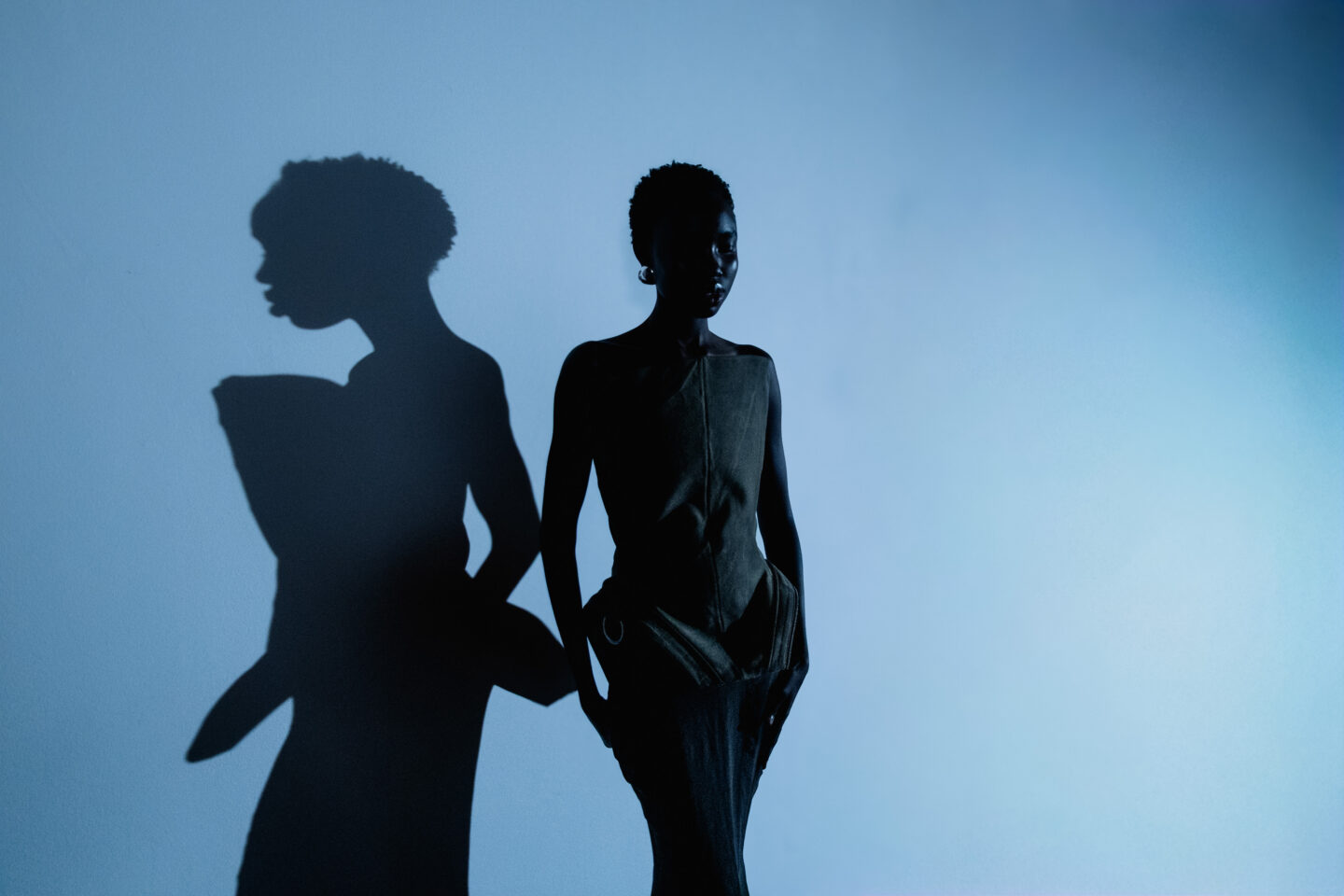
The collection by MARKE, titled „The Owl,“ critically examines our contemporary relationship with information, truth, and critical thinking. In an era of digital overstimulation and the tension between knowledge and disinformation, fashion here functions as a kind of anchor. The collection draws parallels between the present and historical periods, such as the Enlightenment and the Late Rococo. The designs are characterized by refined, yet restrained silhouettes and sober volumes. These are complemented by subtle, poetic details. MARKE relies on carefully crafted materials and a muted, reduced color palette. „The Owl“ does not view fashion as an escape from reality, but as a tool for clarity and focus. Amidst social and digital overload, the collection stands for a conscious reflection on intellectual depth and artisanal precision.
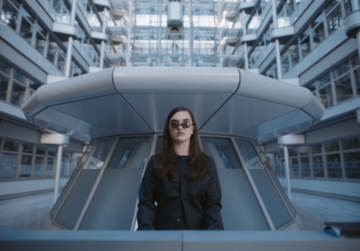
While MARKE sought the answer to the digital flood in internal clarity and conscious focus, Sia Arnika found it in a radical breakout. The show, titled „OVERTIME,“ took place on the 6th floor of an office building, situated among desks, fluorescent lights, and running printers. Sia Arnika staged a compelling transition from the rigid daily work routine to the freedom of the night. While printers continuously ejected white pages, a symbol of the infinite repetition of working life, models walked like employees whose classic, rigid clothing transformed into fluid, nocturnal looks throughout the show. Sculptural tailoring met soft jersey fabrics, mesh, and tactile surfaces.
Clothing is not understood here as a means of function, but rather as a site of liberation.
Earthy, industrial tones formed the foundation, accompanied by resource-saving Tencel Lyocell fibers as well as crystal mesh and accessories by Swarovski. The show was accompanied by Kylie Cosmetics as the exclusive beauty partner, a continuation of the creative relationship between Kylie Jenner and Sia Arnika. Supported by deadstock specialists such as Beglarian Fabrics and Fabric House, the focus was placed on conscious production and material reuse. With „OVERTIME,“ Sia Arnika solidifies her design language, which is based on tension and material experimentation. It reflects modern life by maintaining the balance between structure and pleasure, control and desire.
From the bright sixth floor of the office building, the path led directly into the Berlin underground. The Berlin-based label UNVAIN was founded in 2020 by Robert Friedrichs and presented its first runway show at Berlin Fashion Week 2026 at the Feuerle Collection, a former World War II telecommunications bunker. The collection marks a milestone for the label and defines its identity through a blend of brutalism and elegance. The surroundings, consisting of Southeast Asian sculptures and imperial Chinese furniture, formed the perfect frame for the brand’s aesthetic. UNVAIN stands for beauty beyond perfection. The collection is a pure concentration on the essence of the brand, characterized by contradictions within the designs. The silhouettes moved between sharp minimalism and striking, architectural forms. Robert Friedrichs deliberately avoided focusing on a specific theme, creating an immersive fragrance installation in collaboration with Ryoko instead. Models carried incense burners across the runway, which gradually dispersed the specially developed scent throughout the room and expanded the visual presentation by a sensory dimension.
The DAGGER show provided a radical contrast to this almost ceremonial staging. Instead of incense and elegance, the label relied on raw honesty. Like the label UNVAIN, DAGGER was founded in Berlin in 2020 and presented its first runway show this year. Deeply rooted in street style, DAGGER brought an entirely different energy to the runway. Designer Luke Rainey started his fashion label after receiving a termination letter from his job in 2020, which concluded with the words “We wish you all the best”.
He took the impersonal sentence literally, printed it onto the back of his first T-shirt, and turned „All the Best“ into the brand’s slogan. This shirt marked the beginning, and today, it is the centerpiece of the brand. The design language of DAGGER is rooted in Rainey’s youth in Northern Ireland during the early 2000s, a time when money was tight, but skateboarding was the measure of all things. The fashion appears raw and authentic. It is meant to look lived-in and worn, a tribute to the beauty of a life full of stories. DAGGER symbolizes the cycle of endings and new beginnings. It is a dedication to the stories that life writes between these two points, and it brings a very raw, authentic streetwear component to the mix of the previous shows.
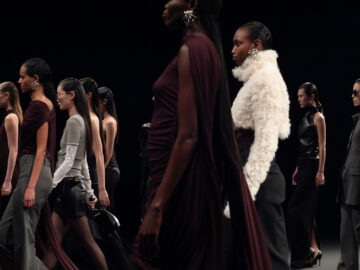
While DAGGER focuses on the raw, real life on the streets, Haderlump looks back at the elegance of Marlene Dietrich. Two Berlin labels, two different bows. The Berlin label Haderlump presents its new collection, „VARIUS,“ at the historic Wintergarten Varieté. In front of approximately 350 guests, a fashion evolution was presented, which appears significantly more elegant and refined than before. The collection is a tribute to Marlene Dietrich, and it explores identity, freedom, and the power of androgyny. The name of the collection is no coincidence, but rather a thoughtful play on words. It is a direct reference to the venue, the Wintergarten Varieté, where Dietrich herself performed at the beginning of her career. She herself represents uncompromising determination and a drive for freedom, and she used her presence to subvert expectations and make diversity visible.
„VARIUS“ stands for the importance of spaces where diversity is allowed to be lived. Velvet curtains and a central mirror defined the stage design. The models moved slowly and deliberately, to an exclusive soundscape by Grammy winner John Carlsson. The collection featured a mix of flowing evening dresses, sharply cut tailoring, and the iconic „Marlene trousers.“ Lace was used for the first time, combined with typical Haderlump elements such as leather, denim, and heavy wool. To complete the look, the label collaborated with well-known brands such as Liebeskind, Converse, Wempe, and Le Specs. The collection marks a turning point for the label, moving away from the purely avant-garde and rustic, towards a refined, elegant aesthetic that realizes the full potential of the brand. Accompanied by a string ensemble, the models formed an impressive „tableau“ on stage for the finale. Haderlump understands fashion as a collaborative project. For the AW26 collection, the label relied on a mixture of established partnerships and new, high-profile collaborations. What remains from this year’s Berlin Fashion Week? The realization that this week’s collections are not mere designs, but visual statements that practically demand a substantive engagement.
When clothing becomes a response to digital overstimulation, or makes the invisible labor of mothers visible, the word ‘lifestyle’ loses its significance, making room for true relevance.
Between the historical heritage of the Wintergarten and the hard asphalt of DAGGER’s founding years, Berlin has found a language that resonates internationally. A loud, honest ‘All the Best’ for a fashion scene that has truly come into its own.