
The Perfect Candidate, Film directed by Mischa Gurevich

Balletshofer’s Turn Toward Film as a Space for Reflection
In an industry driven by visibility and constant performance, Balletshofer chooses to slow the pace. For AW 2026, designer Alan joins director Mischa Gurevich to present the collection through a short film rather than a runway show. Set within a dystopian corporate interview, the project explores authenticity, identity under pressure, and the quiet tension between who we are and who we perform to be. Numero Berlin in conversation with Balletshofer designer Alan and film director Mischa Gurevich on casting, craft, and why film is a powerful medium for asking the questions we rarely do.
Words by Nicole Atieno
Talent Relations Usman Latif
Image Courtesy of Balletshofer
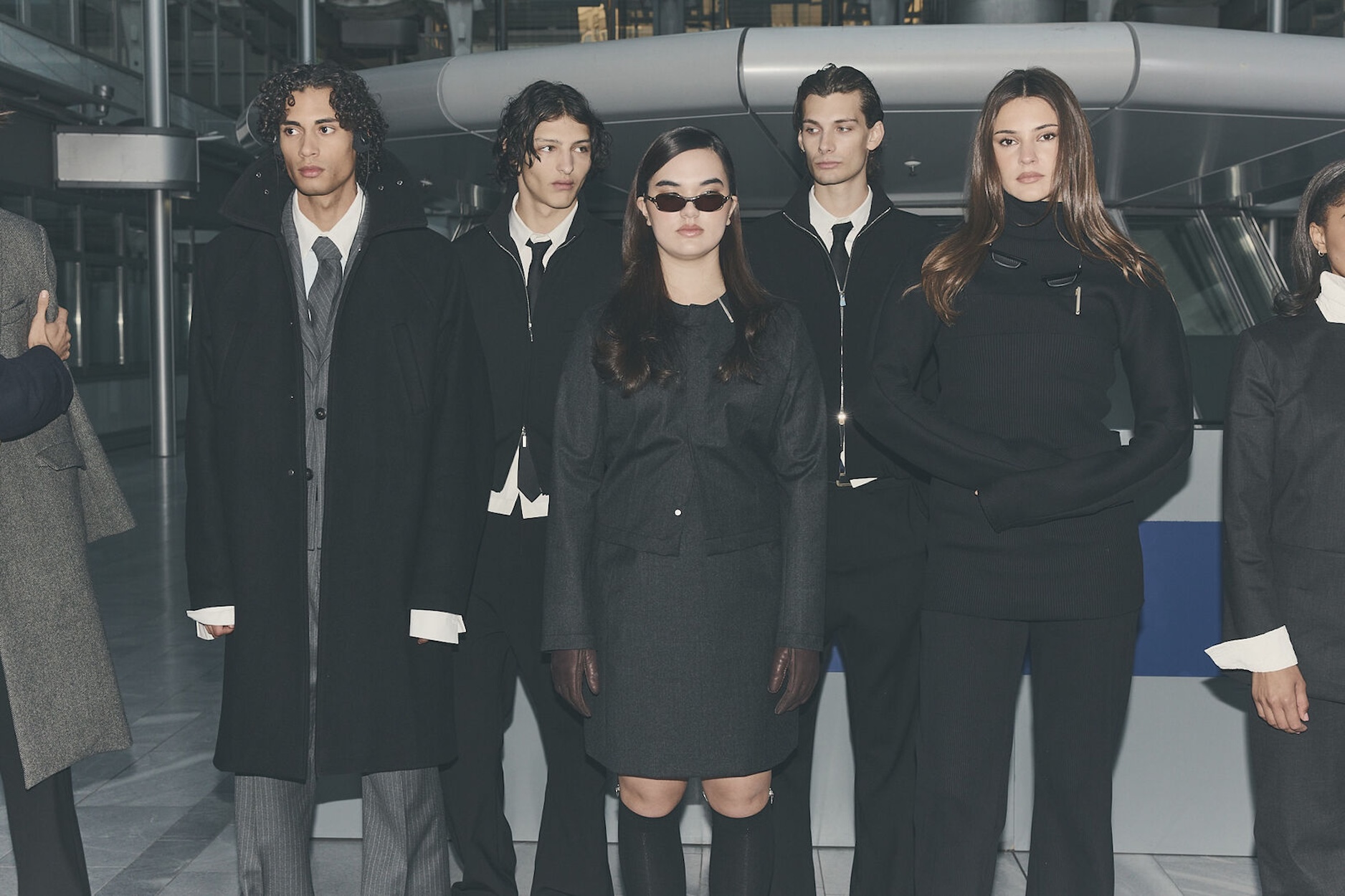
Alan: We originally connected through the industry, but I had long wanted to present the brand through a narrative format rather than a traditional runway show. Film always felt like the right medium, even though I hadn’t explored it deeply before. I grew up reading scripts and directors’ notes, but never had the chance to work that way. When I met Mischa, we started talking, writing, and developing ideas very intuitively.
Mischa: We met in Berlin while I was directing a narrative film, and Alan was part of the styling team. That project already revolved around authenticity, moving away from performance and toward something more associative and emotional. I’m not interested in explaining films too much; I want them to be felt before they’re understood. That mindset became the foundation of this project.
Alan: Film allows you to start from a blank page. Even though the project is connected to the brand, it opens a completely new space. You can create moments of pure cinema. It was exciting to work with well-known actors like Emma Schweiger, Philip Günsch, Sira- Anna Faal, Stefanie Giesinger, Evgenia Gurevich, Zethphan Smith-Gneist but place them in an anonymous environment, removing their public identities and allowing something new to emerge. Film allows us to explore gestures, tailoring, in details like, how clothes behave when someone moves or sits. Those details mirror how character develops beneath a clean surface.

Mischa: I cast the film myself. I don’t work with traditional casting directors on projects like this because I want to meet people as humans, not just as profiles. The story centers on four young adults entering a dystopian corporate office in Berlin for what appears to be a job interview.
The interviewer, played by Stefanie Giesinger, is deliberately cold and mechanical. Her styling reflects that dark and structured Balletshofer look. The questions begin very generic, almost rehearsed, and are answered in a similarly mechanical way. Words like commitment and endurance are repeated rapidly. But then the rhythm shifts. The questions slow down and become personal: Can you imagine working late? On weekends? And finally: How would you describe yourself? As the film progresses, the characters move from rehearsed answers into personal territory. That’s where everything collapses, insecurity, individuality, humanity.
We limited each actor to one take. That created real tension and presence, which you can feel on screen.
Alan: I chose actors with very different energies and experiences. I asked them not to approach the roles technically, but emotionally to draw from their own insecurities and internal conflicts. That’s where the authenticity comes from.
Film allows us to explore gestures, tailoring, in details like, how clothes behave when someone moves or sits.

Mischa: It represents identity under pressure. The interview becomes a mirror. That final question, How would you describe yourself? is something we’re rarely asked so directly. Watching them sit in silence, unable to answer, felt very honest.
Alan: They’re places of urgency and transition. People pass through them quickly, rarely stopping to reflect. In this film, the office is isolated and quiet, which heightens the tension. In earlier collections for example at the coffee shop we explored trust, slowness, and physical presence. The office extends that idea: is reflection possible in a space designed purely for productivity?
Moving into footwear opened a new perspective. Shoes affect posture, movement, and the overall silhouette.
Alan: The collaboration felt very natural. Both our brands value craftsmanship and heritage. Moving into footwear opened a new perspective. Shoes affect posture, movement, and the overall silhouette. We avoided visible branding and focused instead on construction, pattern, stiffness, and fluidity. These are details you discover slowly.
Mischa: From a film perspective, that idea of wholeness is essential. If an outfit doesn’t feel coherent, sound and rhythm feel disconnected too. That thinking carried directly into sound design and editing.
Alan: Authenticity is something you keep questioning throughout life. Clothing is often the first signal, but it’s only the surface. The real tension is between fitting into a group and staying true to yourself. Ideally, the look comes from who you are not the other way around.
Alan: We don’t design for trends, and I wouldn’t even label the brand as “slow fashion.” It’s more about precision and handwork. Relevance comes from continuously reinventing ourselves and doing projects we genuinely believe in.
Mischa: This project breaks familiar systems no runway show, casting outside fashion, working intuitively. Authenticity is letting things happen naturally, without forcing meaning.
Relevance comes from continuously reinventing ourselves and doing projects we genuinely believe in.
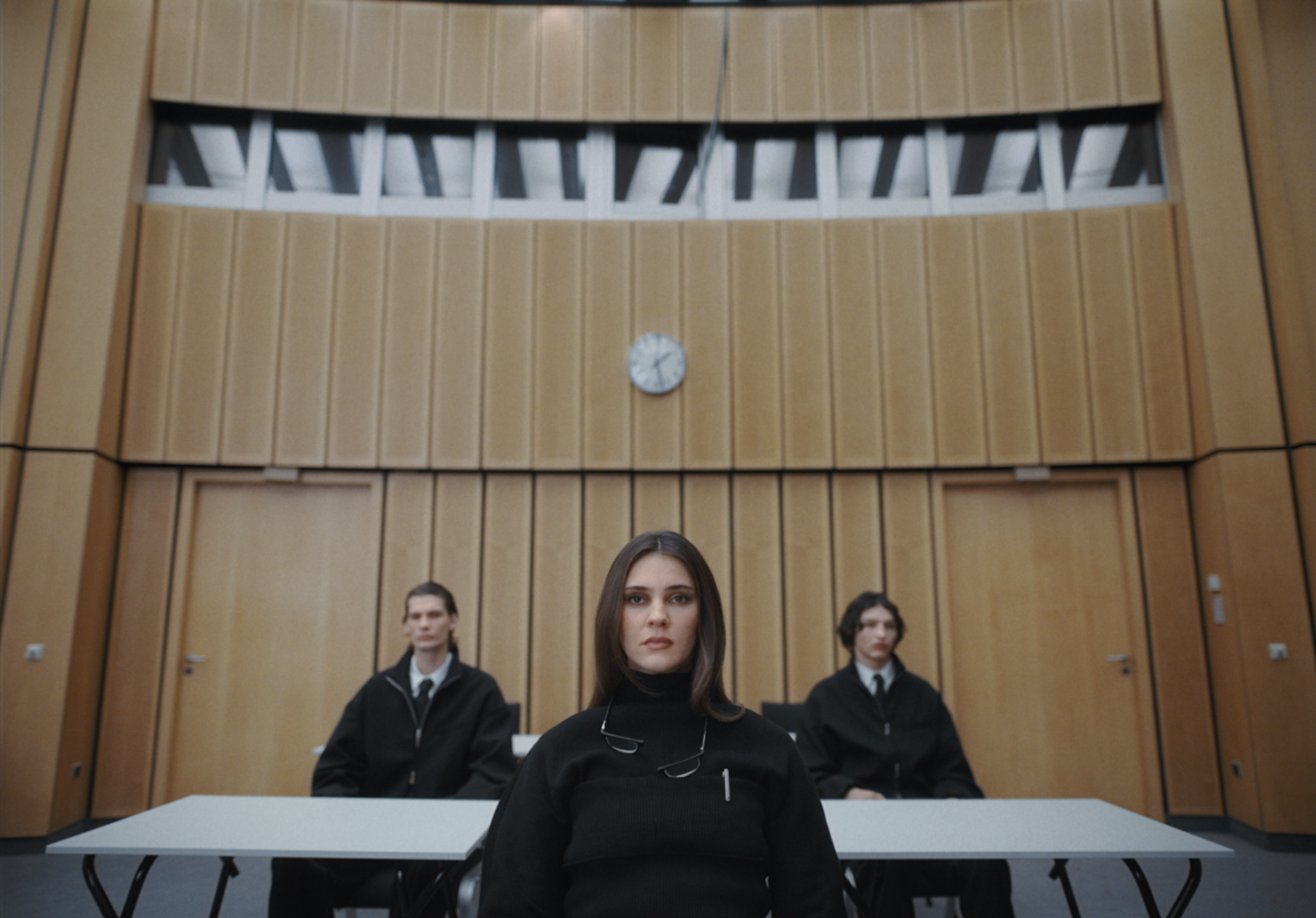
Alan: Definitely. Film allows for depth and subtlety that a runway doesn’t. A show is fleeting, while a film stays with you. If this resonates with people, we want to continue exploring it.
Alan: Yes, small behavioral patterns, like code-switching or adapting language to please others. If something doesn’t feel genuine anymore, I’m choosing not to do it.
Mischa: For me, it’s about listening more to myself and to others. That’s ultimately why I make films: to create space for attention and reflection.
BERLIN FASHION WEEK FAVOURITES AW26/27
From the intellectual depth of MARKE and Kaisa Kucharska to the raw authenticity of…
IN CONVERSATION WITH JOHANNES BOEHL CRONAU
Johannes Boehl Cronau about his new collection at Berlin Fashion Week, his take on the…
IN CONVERSATION WITH LABRINTH
Labrinth on inner demons, the music industry, and why he regularly has full-on…
VISIONARY ISSUE VOL. B – TING TING LAI
Photography by ANTJE PETERS

“IT CAN FEEL ALMOST RELIGIOUS” JEREMY SCOTT IN CONVERSATION WITH HENDRIK LAKEBERG
Photography THOMAS HAUSER
VISIONARY ISSUE VOL. A – YIS KID
Photography YIS KID