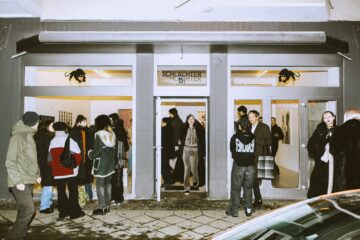
“I’VE MISSED OUR CONVERSATIONS” AT SCHLACHTER 151
I’ve Missed Our Conversations examines how artificial intelligence is reshaping emotion…



JULIAN CHARRIÈRE’S BIGGEST SOLO EXHIBTION YET: ‘MIDNIGHT ZONE’
The exhibition Midnight Zone by French-Swiss artist Julian Charrière at Kunstmuseum Wolfsburg presents a fascinating exploration of the infinite vastness of the sea. In his works Charrière links artistic visions with scientific findings about our environment, with water serving as the central focus. It is the basis of all life and, at the same time, a fiercely contested resource. The exhibition illuminates both the impressive side of the element and the crises of our time, ranging from the climate catastrophe and melting glaciers to the threat to the oceans from pollution and industrial mining on the seabed. In science, the “Midnight Zone” refers to the area of the ocean lying between 1,000 and 4,000 meters below the surface, where no ray of sunlight penetrates. It is the namesake of the current exhibition.
To create the feeling of being underwater, the entire hall is completely darkened and accompanied by the actual soundscape that occurs at this depth. Contrary to popular belief, the underwater world is by no means a place of silence. The theme of phonography, acoustic recordings, guides visitors through the first three rooms of the exhibition. Behind this lies the overarching concept of porosity. The recordings of coral reefs make audible how countless organisms, such as snapping shrimp and fish, create a dense fabric of sound. Each reef possesses its very own characteristic acoustic note, which was captured for this work.
A central aspect of the exhibition is rooted in a personal experience of the artist: the so-called “drift dive” in the open ocean. In a drift dive, one allows oneself to drift suspended with the current until, in the monotony of the deep blue, any sense of space and direction disappears. Charrière describes this state as being carried by the water, a physical merging with the environment.
„You can no longer tell what’s up and what’s down. You don’t even feel yourself moving. Instead, you are being cradled by the oceans, held like a child and moved slowly.“
Reemerging far from the starting point illustrates the power of invisible currents and the blurring of the boundary between the individual and the environment. This idea of porosity and merging with the biosphere runs like a common thread through his works.
For a photo series in the exhibition, Charrière collaborated with two breath-hold divers who let themselves glide into the depths without breathing apparatus. The shots show an astounding natural phenomenon: an undersea layer, the halocline, which appears like a second water surface or a “sea beneath the sea.” The works show how human bodies sink into this dense layer and are, in a sense, swallowed by the water. This scenery serves as a metaphor for diving into the unconscious, a state of total suspension in which the boundaries of the physical world seem to blur. A central feature of Julian Charrière’s work is the deliberate use of ambivalence.
“I believe art is ambivalent. The works that truly resonate with me are those that have a certain tension built into them, something that can be unsettling.”
Charrière’s works often possess a very appealing aesthetic, paired with uncanny and hidden elements. This interplay of beauty and unease runs through many of his works.
The video installations show the impressive biodiversity in the dark regions of the ocean. The gaze follows a lamp from the sky down into the midnight zone of the Pacific, making the life hidden there visible. Since this abundance of fish is acutely threatened by the mining of manganese nodules, the artist succeeds in drawing attention to this endangered habitat in a subtle and aesthetic way. These video installations are accompanied by field recordings from the filming location, layered with sounds by Californian musician Laurel Halo.
Through a photo series in which the artist attempted to melt an iceberg for hours with a blowtorch, a reversal of the Romantic understanding of nature occurs. While humans are traditionally often portrayed as reverent but distanced observers of nature, Julian Charrière makes them visible as active participants and causes of global change. Even if the physical effect of the burner on the massive ice mass remained minimal, the images capture the point that Julian Charrière wants to make: We are not just guests on this planet, but intervene massively in its vital cycles.
A project that occupied Julian Charrière for over three years, and which he himself describes as perhaps the most complicated project he has ever worked on, arose from the vision of literally reversing the carbon cycle. Carbon, which had been stored in the ground for millions of years and released into the atmosphere by humans, was to be transformed back into the hardest material in the world: diamonds. This process is understood as an “act of reconciliation” with the Earth’s melting ice caps and glaciers.
The creation of the work resembled a scientific and global odyssey. In collaboration with ETH Zurich, the artist used special membranes to extract CO2 directly from the ambient air. When the COVID-19 pandemic made travel impossible, the focus shifted to the human community. Nearly 2,000 balloons with breath donations from people all over the world reached the artist by mail. This collected carbon was metabolized with the help of microorganisms from the deep sea and finally grown into diamonds in a solar-powered plasma reactor. The goal was not the creation of a material object of value, but rather the return of these stones to the receding glaciers, as a symbolic gesture.
“I wasn’t looking to create value, the idea emerged as an act of reconciliation.”
Julian Charrière meets criticism of the ecological footprint of his art practice with remarkable openness. He describes his life as being in a state of constant ambivalence. The awareness of his own carbon footprint through travel and transport stands in contrast to the goal of creating visibility for endangered places through highly aesthetic works like Midnight Zone. Midnight Zone is Julian Charrière’s largest solo exhibition to date. In cooperation with Museum Tinguely, a space was created for Wolfsburg in which one can dive deep into the sea and experience and understand it in a new way. The exhibition makes the beauty and the threat to our oceans, as well as the biodiversity in the depths, physically tangible, bringing the element of water into focus in a completely new way.
Exhibition opening on March 13, 2026, at 7 p.m.,
Open 14.3.–12.7.2026
I’ve Missed Our Conversations examines how artificial intelligence is reshaping emotion…
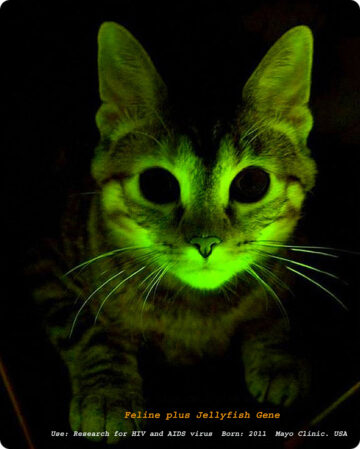
LYNN HERSHMAN interviewed by ANIKA MEIER

Love is about respect.