

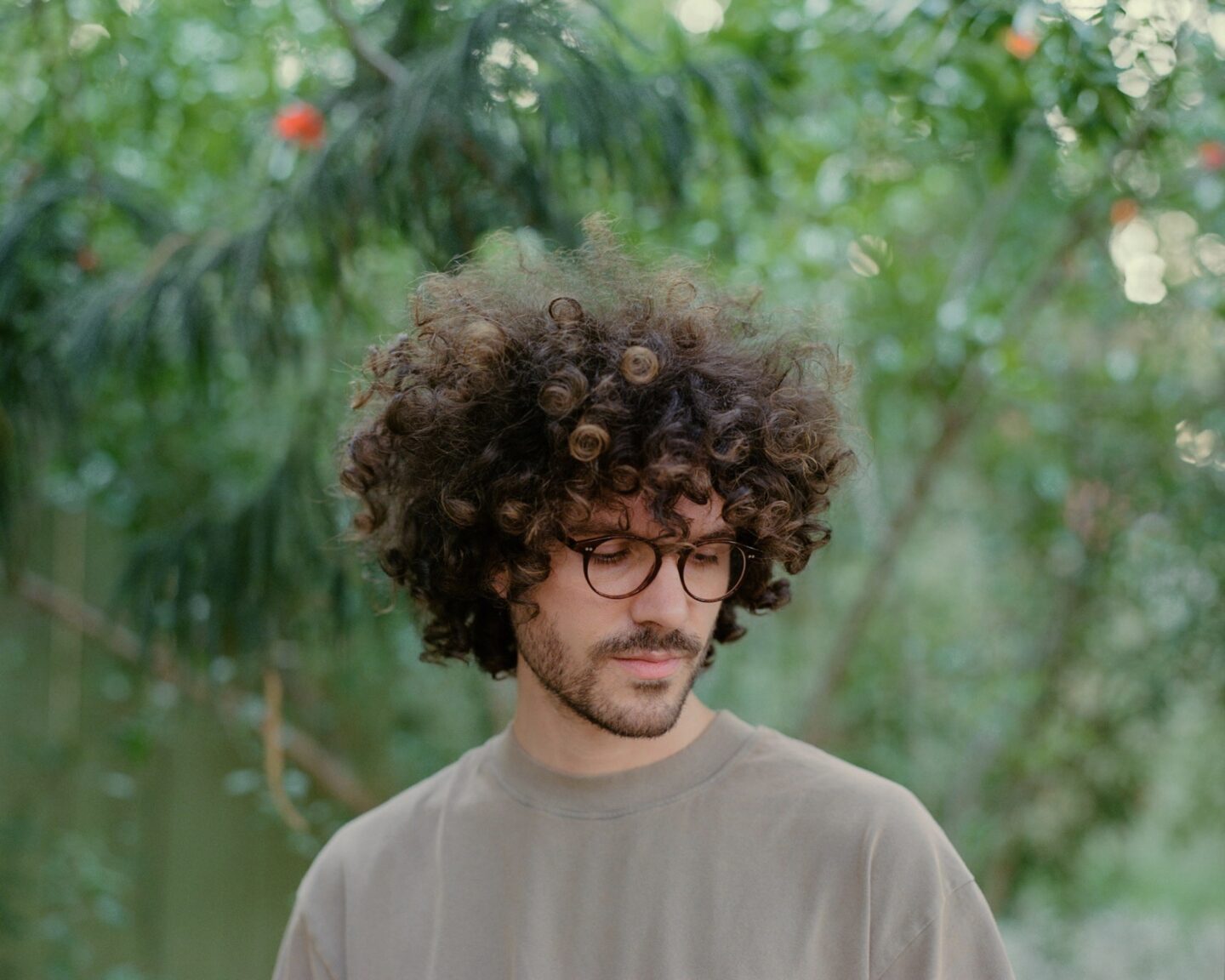

WEEKEND MUSIC TIP PT 105 FKJ
MUSIC AS A PLAYGROUND: FRENCH KIWI JUICE ON HIS NEW ALBUM
FKJ has a unique approach to music: he plays at least five different instruments, in addition to providing his own vocals, live looping and fine-tuning with a synthesizer.
No wonder his impro (!) session with singer Masego hit over 500 million views on YouTube. In said video, the viewer gets to witness both multi-instrumentalists building an entire musical landscape, layer by layer, using saxophone, guitar, bass, looping and their own vocals. The result is “Tadow”: a soulful yet groovy song merging the incredible talent of both. This was almost 10 years ago.
Ever since, FKJ has successfully established himself in the industry, releasing four albums, multiple singles and features, performing a COLORS Show and playing at festivals like Coachella.
The loose and colorful arrangements jump effortlessly between French House, Soul, Jazz, Funk, R&B and Pop, making it seem almost easy to move through music as a vibrant playground.
Recently, FKJ sought calm and balance in the Philippines, where the musician now lives with his partner and child. Away from the hectic pace and surrounded by nature, a new album was born: Tyber. It is set to be released on 11 September of this year.
In conversation with Numéro Berlin, FKJ gives context to his new album, talks about the big shifts and how “childlike innocence” is crucial for making music.
French Kiwi Juice: Tyber is the name of a being I incarnated during a dreamlike state and it carried a level of serenity beyond anything I had ever known. Specifically, it was a tree. I like to think of it as a higher version of myself existing in a different reality. Since that experience I have looked to it as an ideal state of being, one I aspire to embody in daily life, even though the world we live in constantly makes it challenging to do so.
FKJ:
Every album or EP I’ve made so far has been quite autobiographical. I look back at them like photo albums, each one representing a period of my life.
I haven’t yet been the type to lock myself away for weeks at a time to record an album around a preconceived concept. My process tends to be more organic : ideas emerge through thinking, playing, writing and I often discover the themes and meaning of a project after the music has already begun to reveal itself. I often change environments, and my identity evolves with them, so all of these projects end up sounding different.
Tyber, as an album, represents the bumpy shift that began when I turned 33 and continued until this chapter came to a close, when the incarnation happened.
FKJ:
The big shifts. The ones in our lives and the ones in our world. The answers to how we deal with them. Sonically it oscillates between sun and rain, bright and shadowy.
FKJ:
I wrote “Little Little Voice” during a pretty low moment in this period. It was originally called “Reach The Bottom.” I love hearing that my music helps people and uplifts them, but that one definitely wasn’t meant to. I still wanted to share that moment though. Having Labrinth take the lead on it helped to immortalise it without making it feel obviously like mine. Now it’s one of my favorite tracks on the album.
FKJ:
Not a masterpiece but we knew something happened. We did about 10 one-off takes that day and Tadow was one of them. I remember we looked at each other at the end of it and said “that one was special”. Then we moved on to the next one.
FKJ: Being observed, recorded, or having a time limit can make me think more. Free playing, with the right people, often makes me more careless. But at the end of the day there’s no magic trick. Thinking about exactly what to play next or letting my imagination take over and visualising a scene for example can both lead me somewhere interesting while improvising. Some days it’s effortless, some days i’m too much in my head, some days I need something or simply some time to get somewhere interesting. There are so many variables and i’m not really in control of what matters most.
FKJ: I was quite fascinated by that idea while making my previous album, V I N C E N T. Playing until I would let loose was one way of getting there. Using psychedelics was another. But this new record is also more about seeing all the good sides of growing up. I started with a shift when i was 33, where things began falling apart, and I realized that I was mainly resisting that process. Then the crumbling stopped when I met Tyber. I still love the idea of reaching that innocence when you need it as an artist, but I love combining it with the wisdom we gain as we grow.
FKJ:
I let him freeplay with whichever instrument is at home. I guess because I never had teachers myself, I’m not really trying to tell him how to do things or even tell him that he should be playing music at all. Music is present everywhere around him, from the records we play to the music we make. I believe he’s already learning the language without even really trying.
FKJ: I honestly can’t choose they’re all special for different reasons and moments.
FKJ: Long-lasting friendships, building a family, and curating these special spaces where people can create and live.