
OBJECTS THAT SHAPE SPACE
Gonzalez Haase AAS is one of the most recognizable names in architecture and design out of Berlin, though their reputation extends internationally. Since founding the studio in 1999, Judith Haase and Pierre Jorge Gonzalez have moved from designing spaces for Berlin’s gallery scene, working with next to no budget in the city’s early-2000s art world, to shaping projects for international names spanning art, design, and fashion, from Robert Wilson’s Watermill Center to Acne Studios and Ferrari.
On the occasion of Currents, a new Berlin design platform launching its first edition from September 10 to 12, the duo will present their Spatial Objects series for the first time at OUVERTURE Studio: an ongoing project focusing on objects built entirely from recycled marble offcuts, produced by Munich-based studio Marbledworks. “There has been a natural dialogue between our worlds ever since [Gonzalez Haase AAS designed a display for OUVERTURE in 2023],” says Kris of OUVERTURE, “and a shared interest in how objects can move between different scales — from something worn on the body to something that defines an entire space.”
We spoke with founders Judith Haase and Pierre Jorge Gonzalez about how a studio historically defined by raw, humble materials arrived at marble; about working entirely with materials left overs; and about the Baton Wardrobe, the newest and most architectural piece in the series, shown here for the first time.
“Our approach was to use small pieces of marble.”
Judith Haase: We come from different cultures – Pierre is French, I’m German – and different education. That’s our way of working: bringing disciplines together into a shared language that’s always about space, and space is about light. No one discipline is more important than the other; the thinking is more global. We work more like showrunners, moving from the room to the object, from the object to the space, from the space to the light.
Pierre Jorge Gonzalez: For us it’s mainly about art in a broader sense. When someone says “I’m an artist,” people ask if they’re a painter or a sculptor, but that doesn’t really make sense anymore. Being an artist is more a way of thinking, rather than what ends up shown in a gallery or art space.
JH: It came from people approaching us in Milan. Maximilian Huber had taken over his father’s company in Bavaria – producing mostly kitchens and bathrooms – and there were many leftover pieces of marble. He started collaborating with Dominic Kim, who comes from the design side, and together they founded Marbledworks to use up those offcuts. They asked us to collaborate and design pieces for them. We have no real favorites in terms of materials; what matters to us is that it ages well. So we took the challenge.
PJG: Marble is not something we’d worked with much – it’s expensive and shaping it takes a lot of work. Our approach is also about sustainability, so we try not to use materials that demand too many resources. We prefer techniques that are easier to process, which are also economically more viable. But of course, this was some sort of evolution.
“We have no real favorites in terms of materials; what matters to us is that it ages well.”
JH: We never work with trends. Mies van der Rohe used marble the same way when he created the Barcelona Pavilion with Lilly Reich in 1929 as a material that gives color to the space itself. For an architect, it’s fundamental.
PJG: It has always been the classic thing.
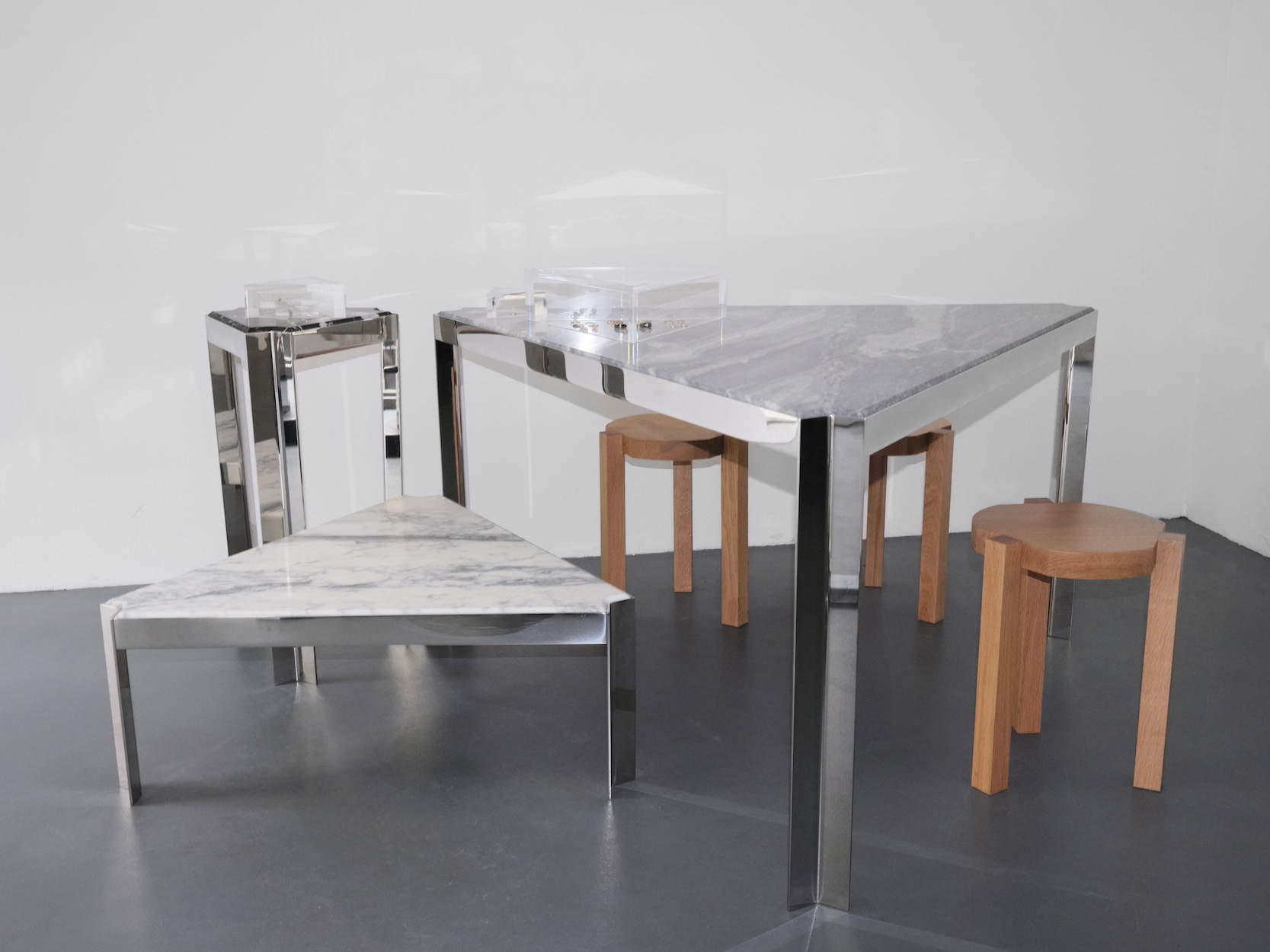
JH: We’re always producing, and when a new challenge comes along, we like to take it. This was one too: working with rests that would otherwise be thrown away, to design new pieces out of them. One of the first was the Garden Bonkers. “Bonkers” means crazy: little pieces made from offcuts, on which you can put a flower pot and let the water drain down. For the triangular Hot pieces, sometimes we used one full piece and removed material to get the shape; other times we joined three colors with a specific detail.
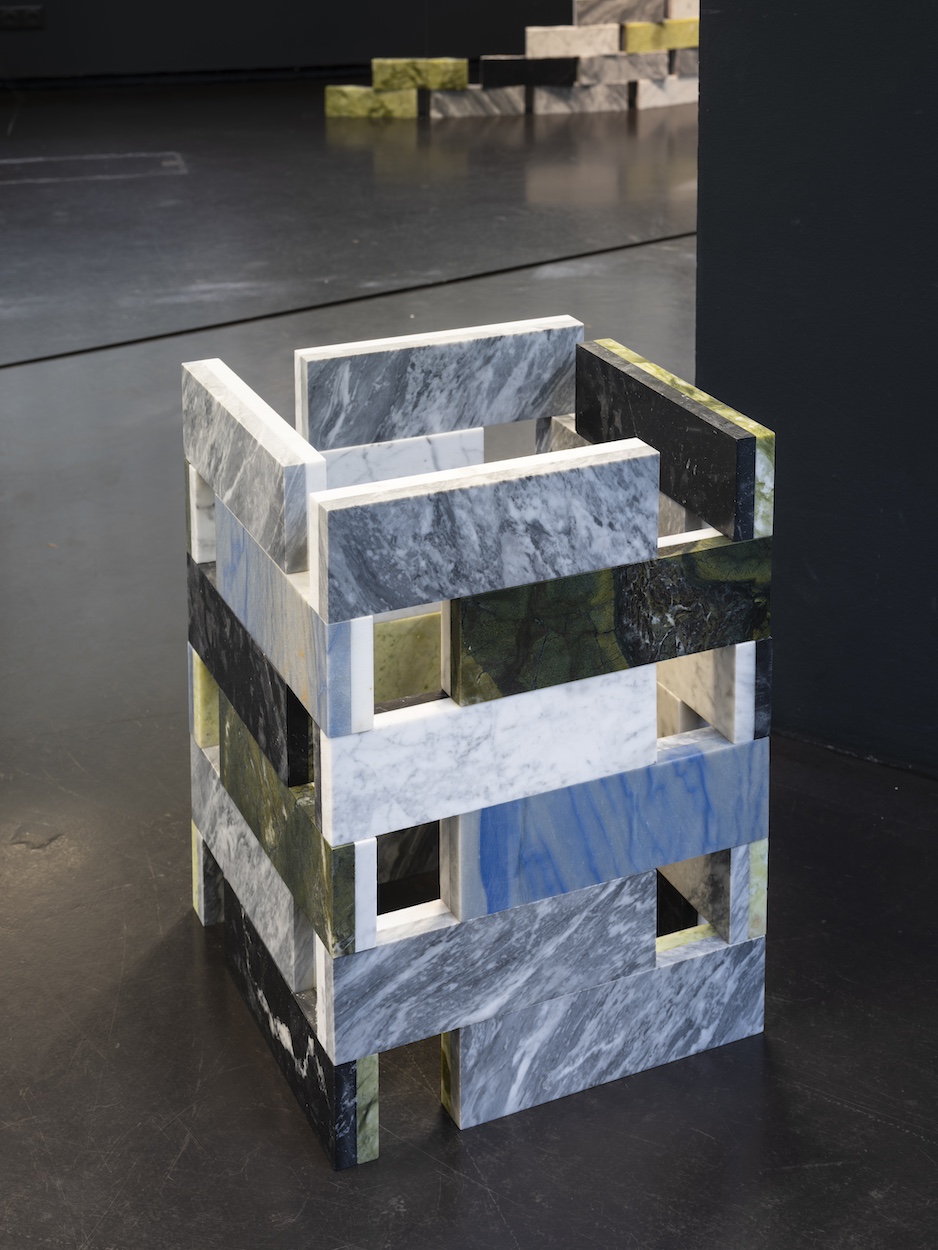
PJG: Our approach was to use small pieces of marble. The first object was The Brick – with that one you almost can’t choose a color, because it only comes from what’s left. When an architect does a flooring or a full bathroom in marble, there’s always some rest they can’t reuse, maybe two square meters nobody needs. That was the idea behind these objects.
PJG: Designers and architects rarely say anything interesting about color – it’s always about the emotion of the moment, always trend-driven, always the same safe classics: black, white, maybe a few more. That’s why we wrote Catastrophe Colours, to reverse that emotional approach. For instance, with The Brick, the idea is that you almost can’t choose: it will be stone, and it will come with a color already defined. Not choosing becomes part of the design, a different way of thinking.
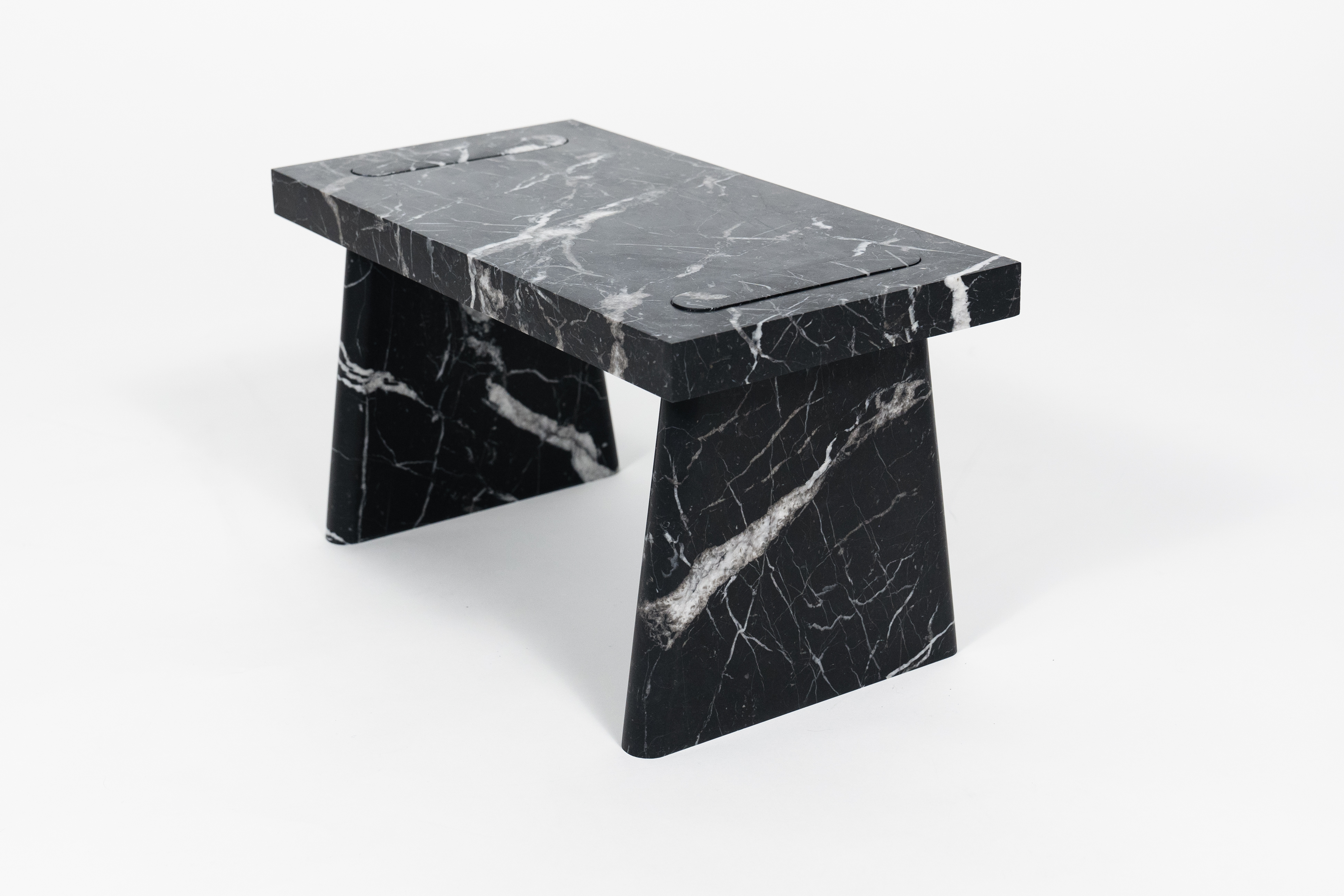
JH: [For The Brick] the thickness is twice the 2-centimeter plate, glued together so each side is a different color, entirely determined by what’s left over. With the Sporadic Table we’re freer: we’ve made it in several colours and you can mix them. It’s three plates that assemble by hand through a plug-in joint, so with two tables you can combine colors however you like
“Not choosing becomes part of the design, a different way of thinking.”
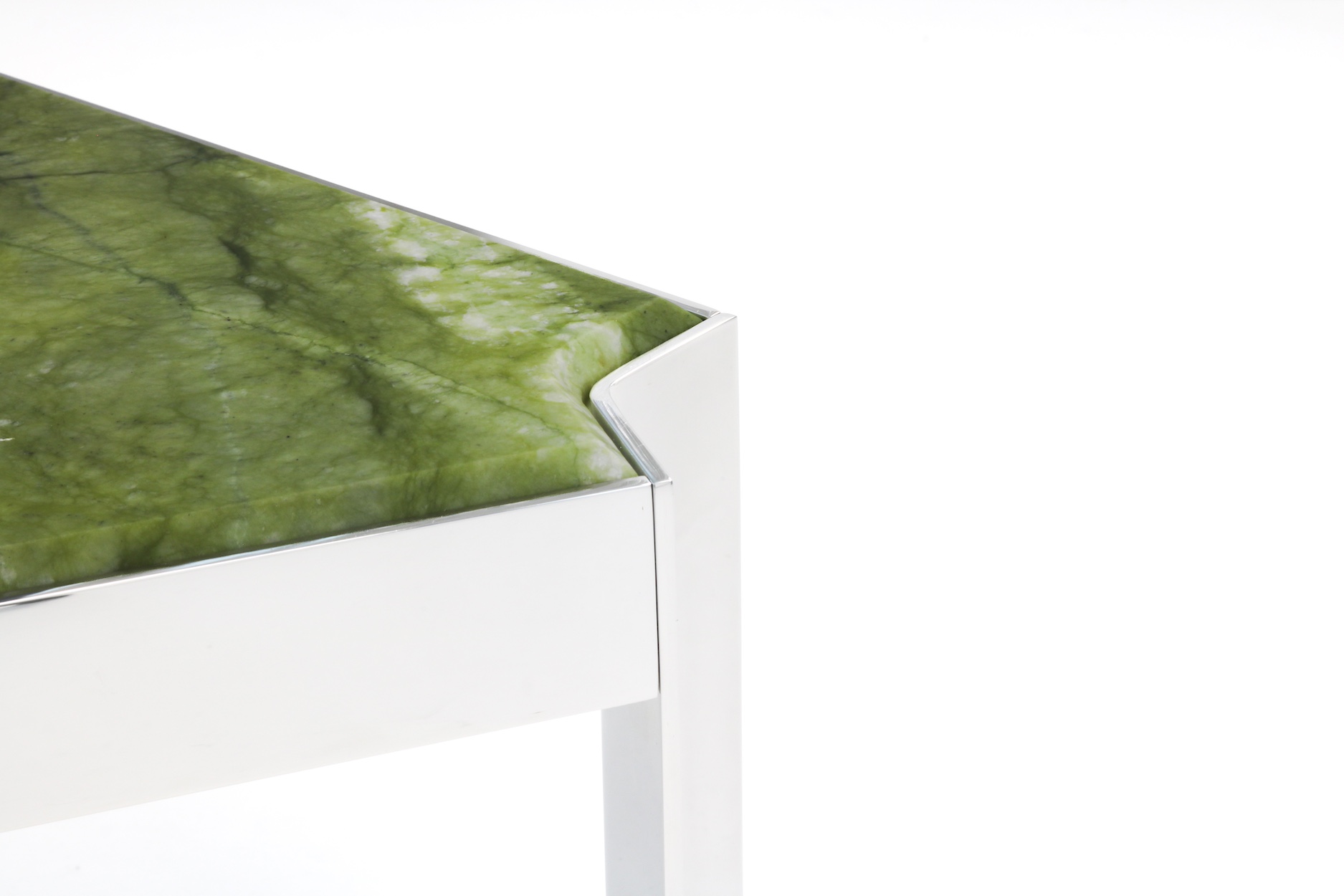
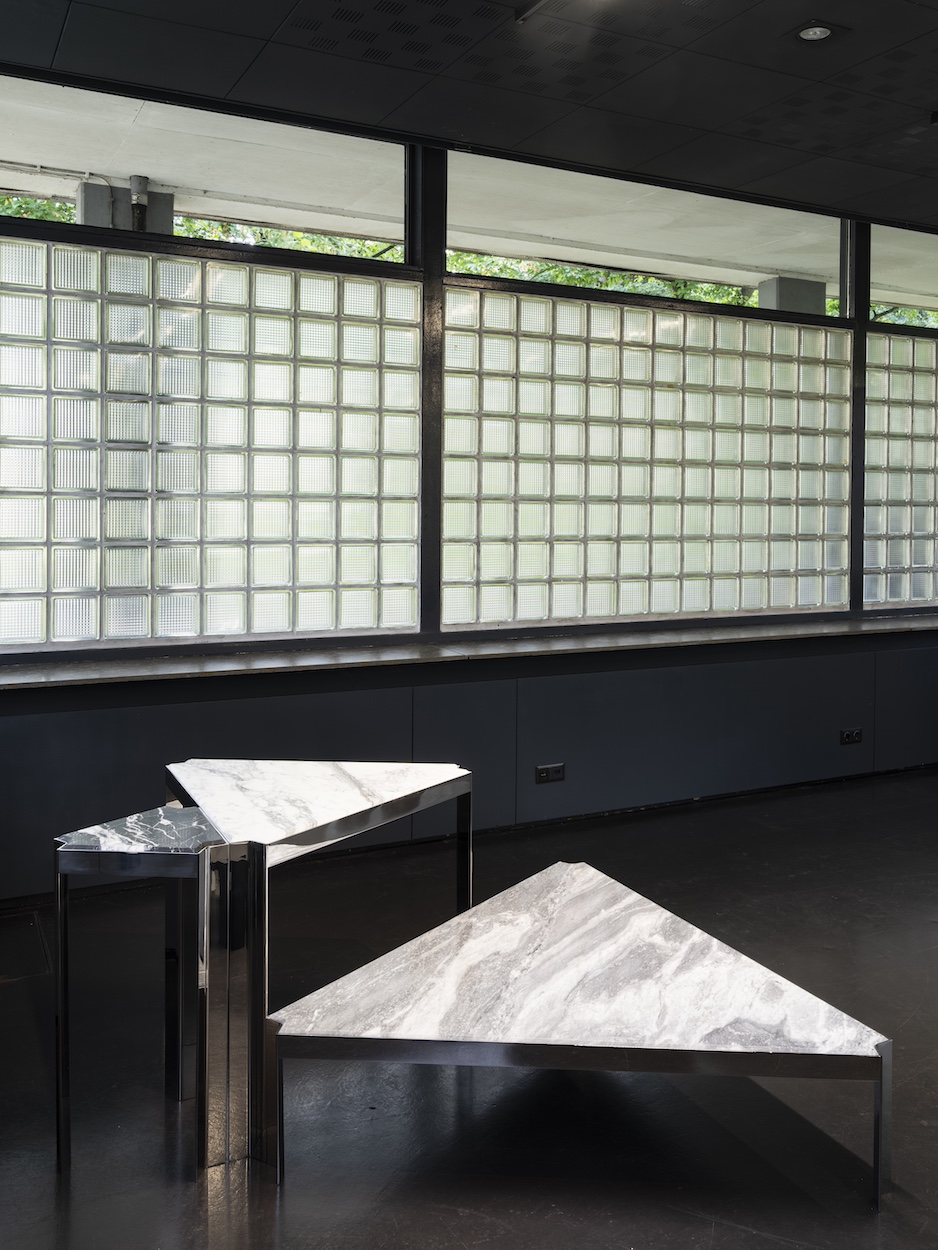
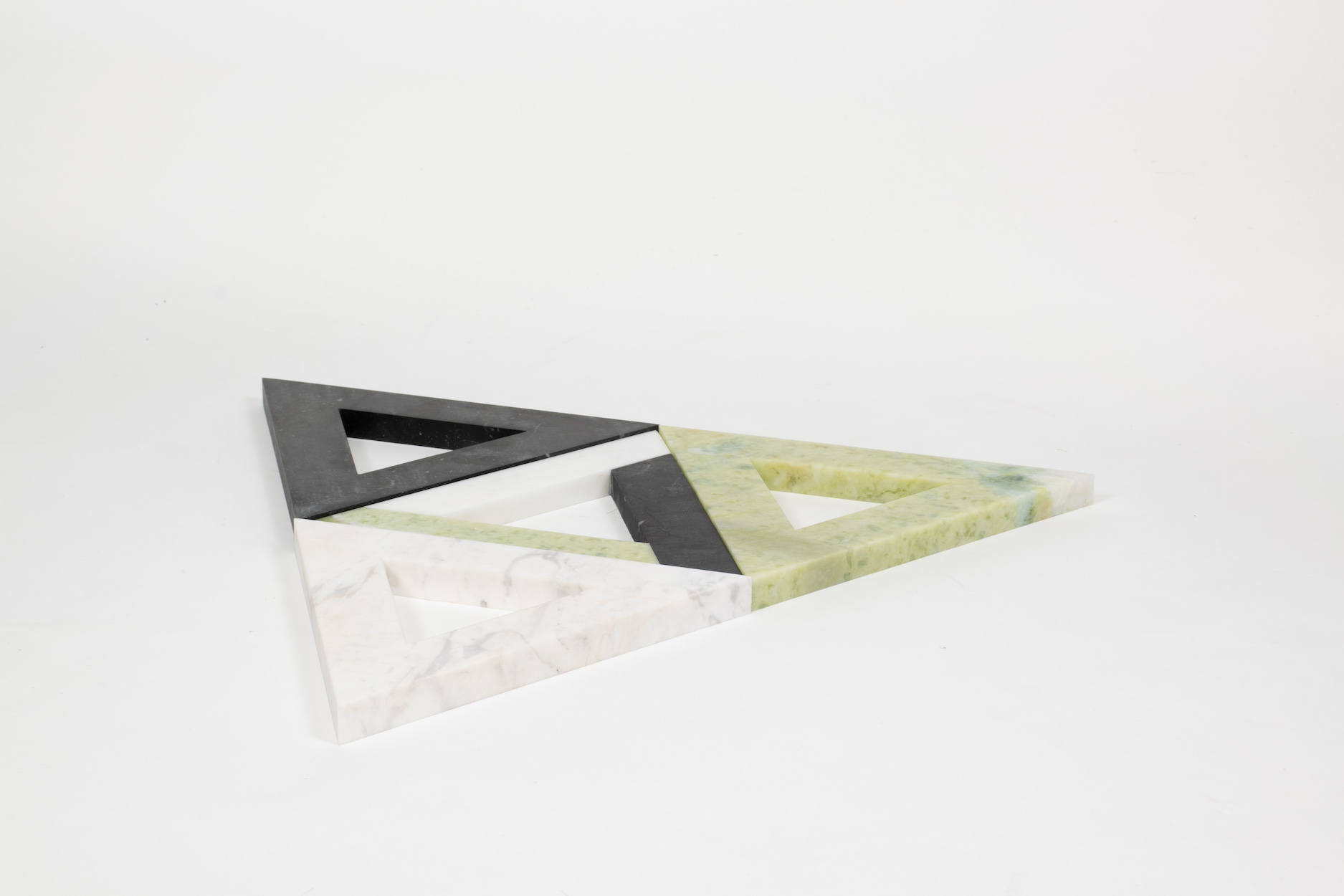
JH: I love moving objects around, creating different configurations with the same piece, changing the space I’m in. That comes from being a scenographer, from stage design, and wanting to create a completely different situation. With marble it depends on scale: you can’t move a big table by yourself, so we kept the objects relatively small. The Sporadic Table is a good example: it’s called sporadic because you can put it down anywhere – on a carpet for tea, in the kitchen as a cutting board, in the bathroom for your perfumes. You take it apart yourself – it’s three pieces – and put it back together wherever you need it.
PJG: Important buildings were once built with stone – not necessarily marble, just stone – through demanding, expensive labor. Then the brick came along: not invented by the Romans, but perfected by them, to the point of an almost industrialized construction. Our idea was to reverse that logic: to make a brick, but out of stone. It’s a kind of reversal of what beauty can be, and the brick becomes contradictory in an interesting way: multiplication and industrialization applied to a material that resists both. That’s the point of friction we find compelling.
JH: We made the Isosceles Table in three different heights: a low coffee table, a kitchen-height table, and a bedside table, each also in three different sizes. You can combine them however you need: a small apartment calls for a smaller size, a huge living room could take a big coffee table, a large dining room could combine several triangles into one big surface. It’s playful. When we talk about Spatial Objects, we think of them almost as architecture: you can scale them, choose the colors and sizes you need, and a single object becomes a spatial object by combining it with others. We’ve grouped the Hot pieces into one continuous surface, and we did the same with The Brick, arranging them to create a kind of sculpture in the space.
JH: No, it’s not symbolic – it comes from the fact that you can assemble it. With the Baton Wardrobe, for instance, a second piece can sit along one side of the triangular base without using extra space. It’s the same idea behind the Lola light: a single cable lets you attach a second triangle, a third, up to five or six, each controlled individually from your phone, building up images on the wall depending on the size of the space.
PJG: The triangle is something we’ve worked with for many years, also as a way to direct lighting. It’s the fragment, maybe the smallest unit you can create in space, and these triangles start from something small and multiply, like with the Baton Wardrobe, as Judith said. It’s an important touch point across all our elements.
JH: It’s made of three different materials, three different pieces, and you can move them – that’s the starting point: there are no nice wardrobes out there, so we designed one. The baton itself is oak, tinted black, and you can position it differently along the profile – for an umbrella, a short jacket, a long jacket – which is why there are holes at different heights. The heavy marble base holds it in place as a counterweight, and that’s also where the triangular form comes in: for a dinner, you might need three at the entrance to give guests more space. You can add one, two, three, create a long line for an event, or keep just one at home. It’s flexible and functional, but also beautiful: the steel profile is highly polished, so you can mirror yourself in it and put your lipstick on before you go out. Even without a jacket on it, it’s a lovely object on its own, and we’re happy to be showing it for the first time.
“It’s a kind of reversal of what beauty can be, and the brick becomes contradictory in an interesting way: multiplication and industrialization applied to a material that resists both.”
JH: Kris from OUVERTURE has a new gallery space, and she asked if we’d like to do something there. It felt like the right opportunity to show our collaboration with Marbledworks in full, for the first time – all the objects we’ve designed for them so far, which hadn’t really been visible until now. This is us finally saying, this is our collaboration with Marbledworks, this is what we’ve created.