
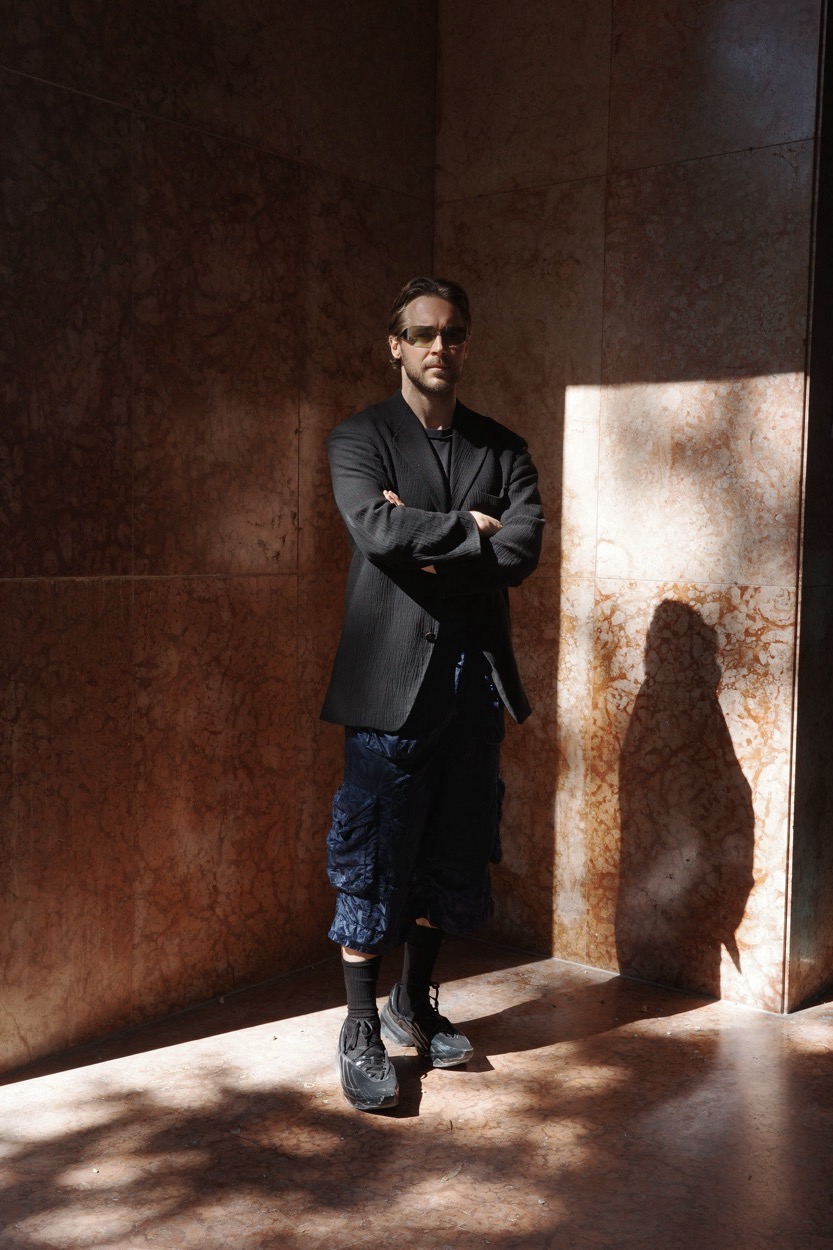
THERAPY THROUGH ALTER EGOS: How Jakub Jansa turns class awareness into vegetables
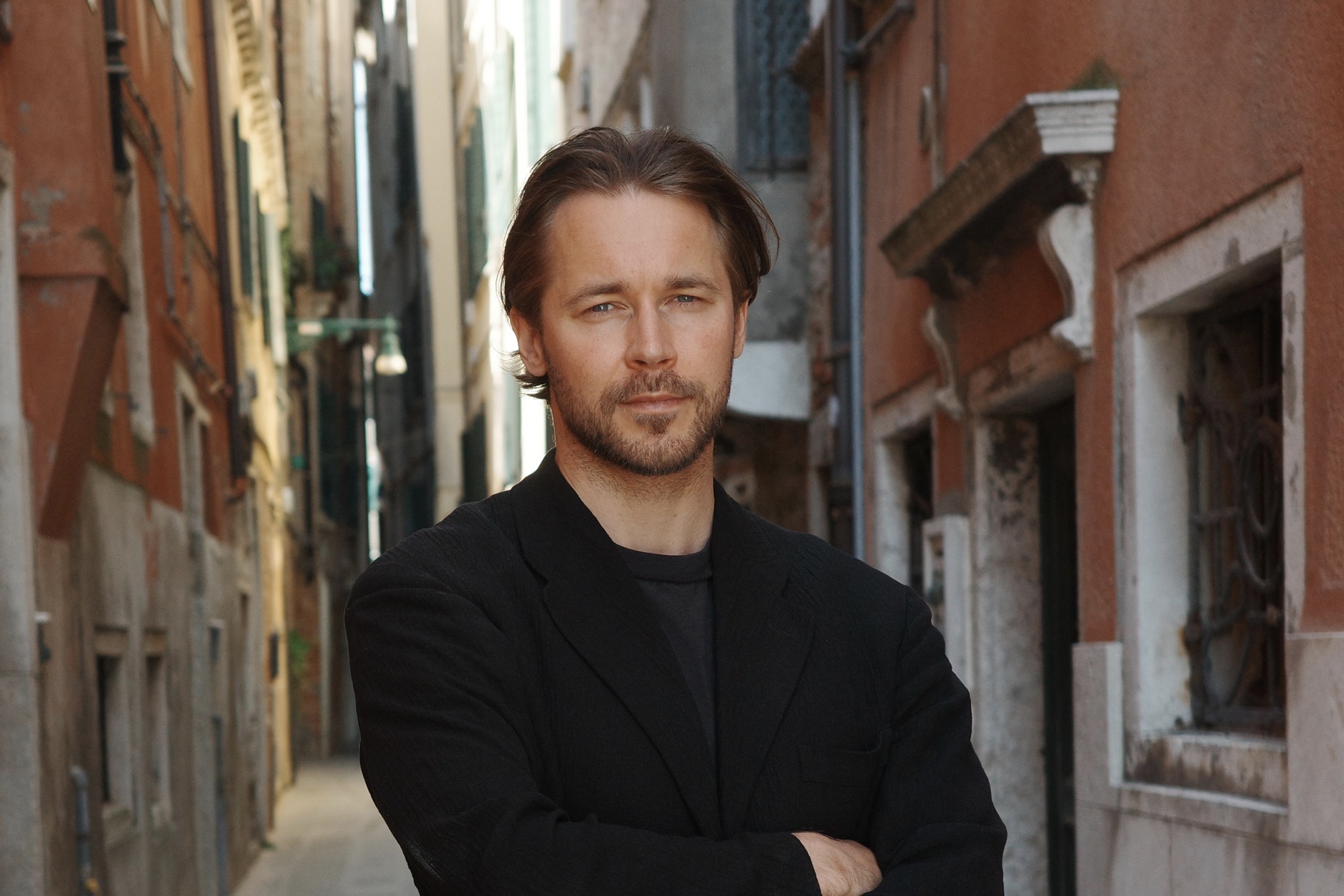
The artist who contributed the Czech half of this year’s “Czecho-Slovakian” Pavilion — the first ever conceived as a mutual concept, for a country that has not existed since 1992 — is now bringing his first solo exhibition to Berlin, or as he calls it: “the capital of dark nostalgia”. A conversation with Jakub Jansa about class, technology, Eastern European legacy and the celeriac.
Jakub: From the Prague perspective, Berlin was always this capital of dark autumn nostalgia and post-rave depression. There is definitely a romanticisation. It was the nightlife we wanted to have in Prague, but maybe we were just afraid to go that deep into the darkness full-time.
J: This whole year was so overwhelming that it’s honestly difficult for me to leave room for any emotions. I was travelling a lot, I was absorbed by socialisation, by the stress connected with the Venice project. All the feelings and emotions I could have towards Berlin are now completely wasted in that cloud of the exhausted myth of ’26.
J: Visual art is not rock music, you don’t get unfiltered feedback from an audience. Nobody’s clapping their hands every day for you. There’s an opening, and that’s it. Some best friends are going to give you their real opinion, and some wider audience is going to give you something you want to hear. But, there is one thing: Since the opening I’ve been constantly receiving messages from people I never met, over social media, giving me feedback on the work in Venice. Mostly, they’re really nice messages about how they relate to the topic and how they relate to the work itself. This is, of course, really encouraging and super supportive. What else has changed? I have a gallery now (Kodl Contemporary), and I can really feel the support of a whole team of people behind me. It’s a huge relief.
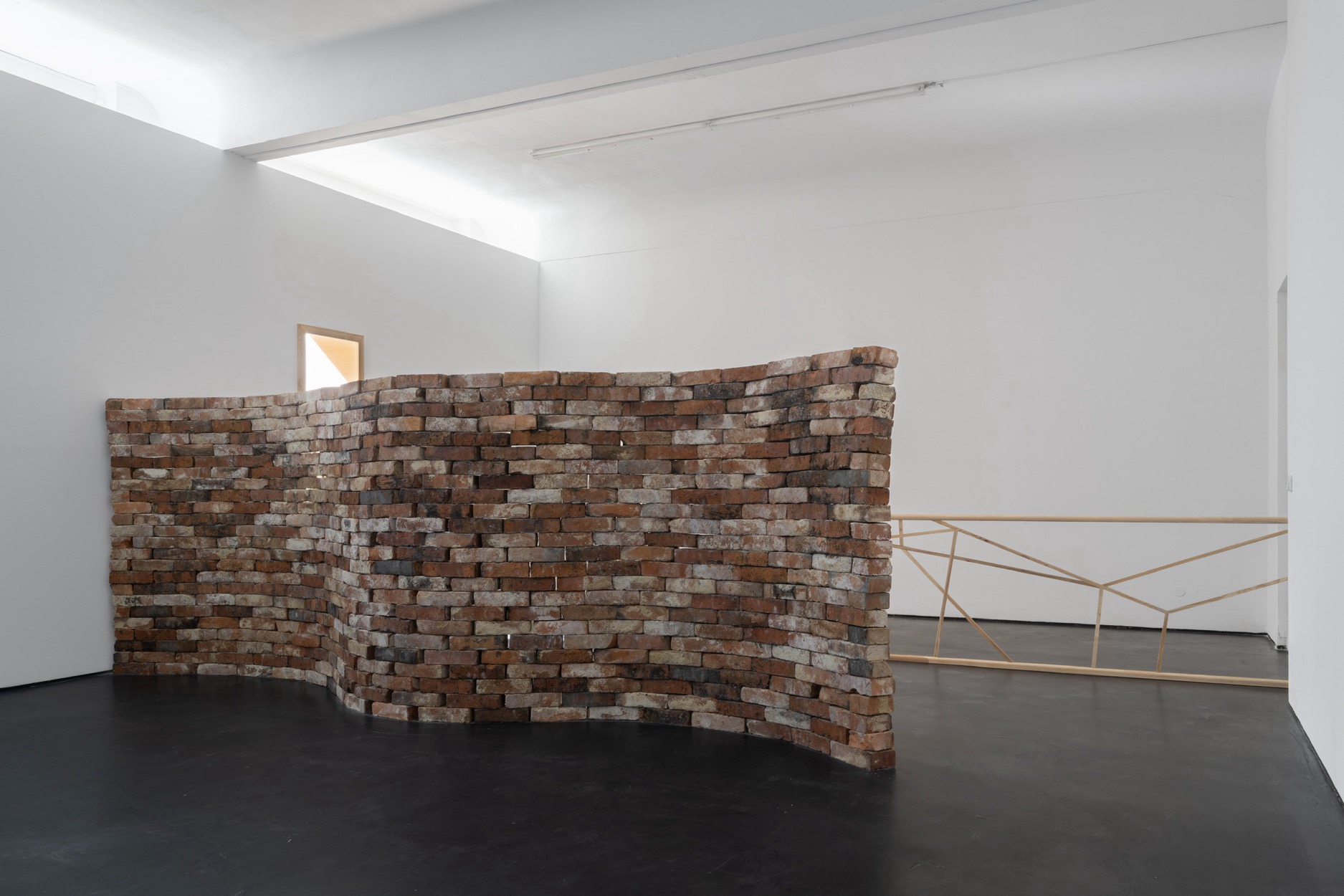
J: Since the beginning we knew it was going to be difficult due to the political situation in the Czech Republic and in Slovakia. The Slovak National Gallery and the Slovak institutions were already deconstructed by the far right. We expected the same thing to happen in the Czech Republic — which is happening right now. We understood that if we entered the competition, we would have to face a lot of forces against us. Which also happened.
J: During this whole year we experienced different tensions and threats — just so that we wouldn’t be as critical at the opening, and wouldn’t support any protest during the Biennale. And we also faced censorship pressure during the preparation of the catalogue.
J: We helped Pussy Riot with their protest, because we didn’t agree with the presence of the Russian pavilion. We were seeking a way to do something, and the most meaningful thing was to help with infrastructure, to help Pussy Riot bring technical equipment and their people to the Giardini. We felt like spies from a seventies espionage movie. Plus we decided to close the pavilion in support of Palestine, against the Israeli pavilion. Which was also considered an unpopular decision, given that the Czech perspective on the discussion is super pro-Israeli, and it’s really difficult to be critical at all on this topic.
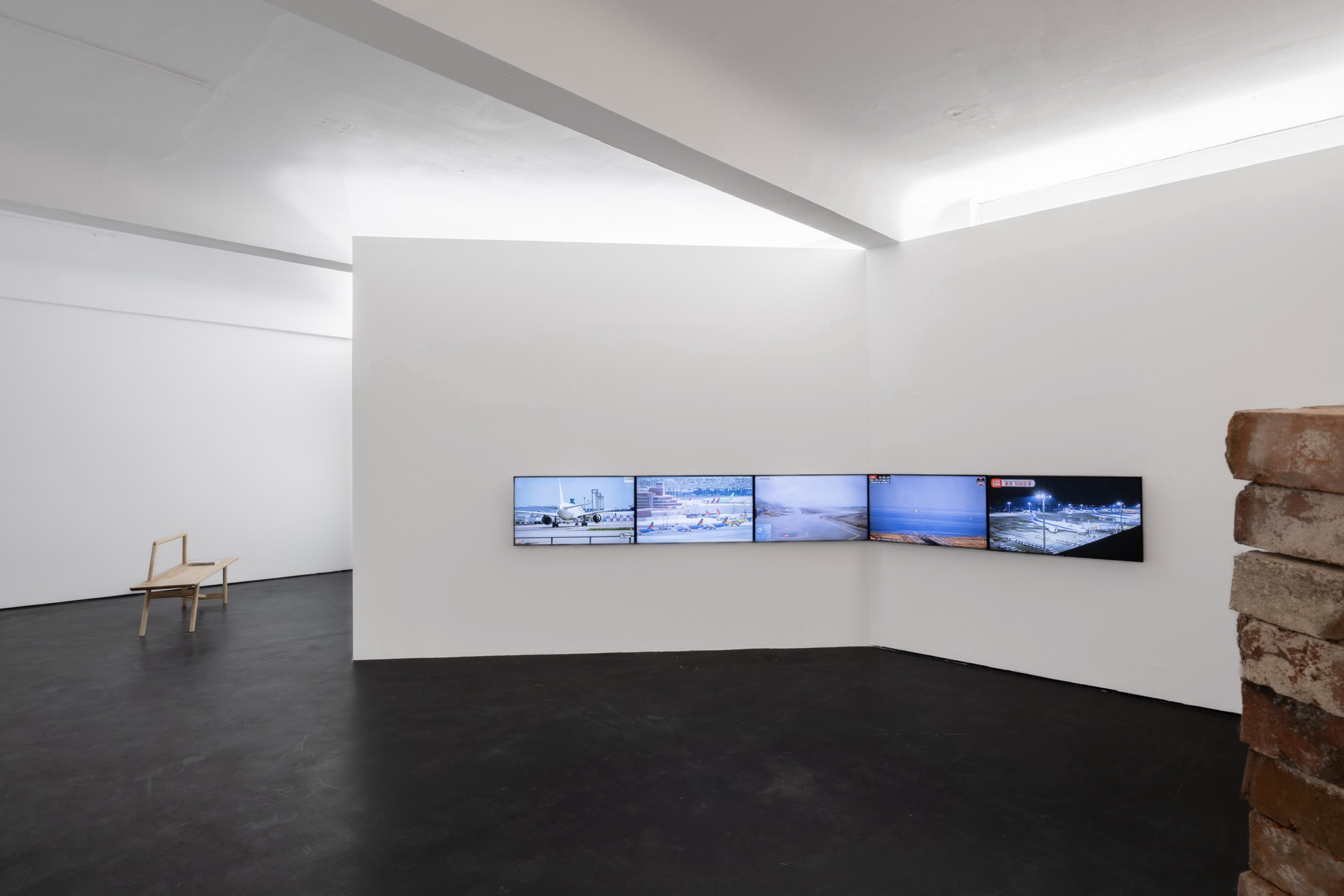
J: We did it as a team. It was a shared presentation of Czechs and Slovaks. It was the hundred year anniversary of the pavilion. And that was actually the first time after 1989 that Czechs and Slovaks collaborated on a show with a unified concept that was brought together by Alex Selmeci and Tomáš Kocka Jusko, and the curator Peter Sit and Me. We wanted to talk about what happens to imagination when it falls into the hands of soft power. In fact, the whole project is about national representation in times of political darkness.
The main character of the pavilion is the Mole, referring both to the famous Czech animated figure and to Franz Kafka. It is also about silence: at one point, the instruments through which the Mole communicates fall silent. The question, then, is whether silence can become a gesture of protest, or whether it ultimately represents a failure.
J: I think it perfectly illustrates what we are experiencing in everyday life, in the current global political situation, from the perspective of Central Europe. All of these elements which trigger you in everyday political reality were so physically present in one place, in the Giardini, in one moment. It felt like a movie scene. All of that allegorical power of the Biennale, representing global issues while simultaneously bringing in local perspectives, everything was present at once. I don’t even know if it could be more illustrative than this. Of course there was a lot of drama. The drama took a lot of attention away from the art itself, and from the artists. But for me it was completely understandable why and how it’s happening. I didn’t select this situation. I would rather live in a world that is easygoing and everyone is chill, sure. But this is not where we are. We’re in the middle of madness. So I don’t think it could have happened in a different way. Of course it’s not comfortable, but it’s more and more real.
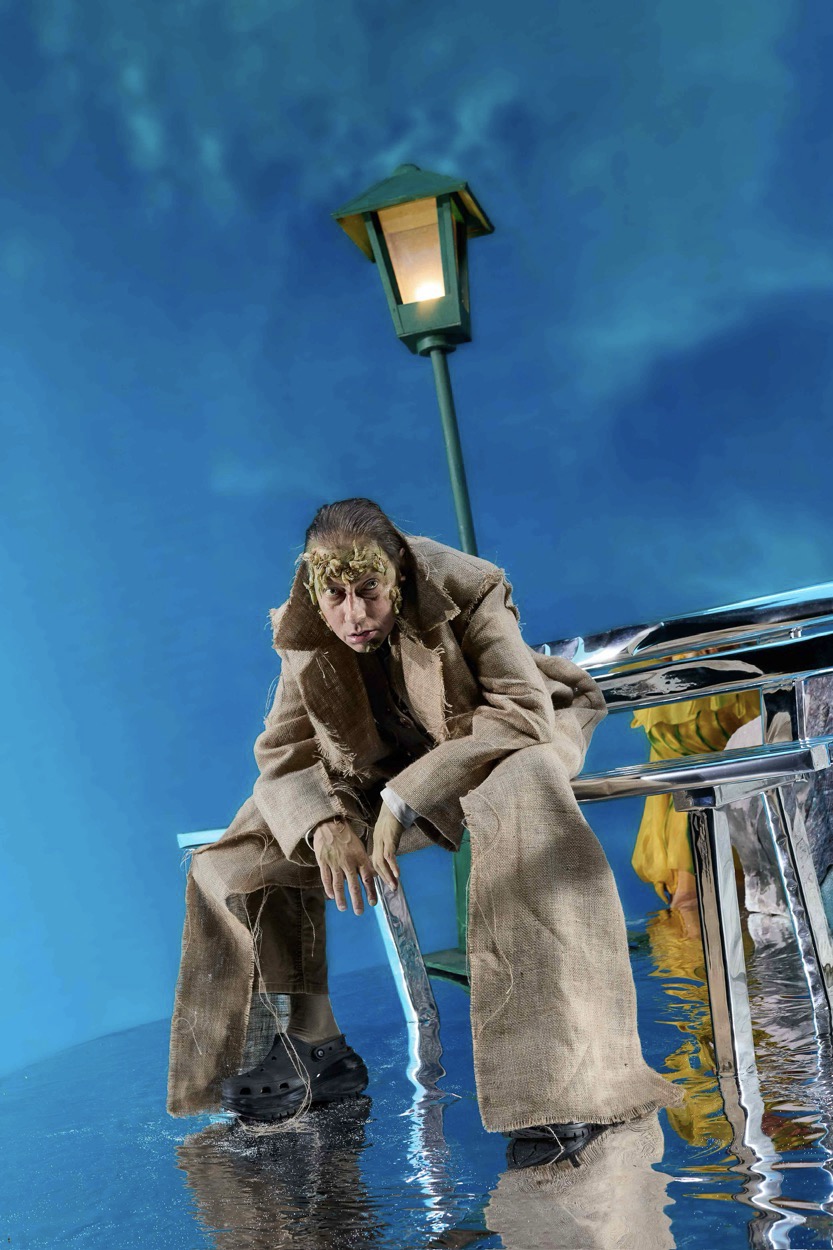
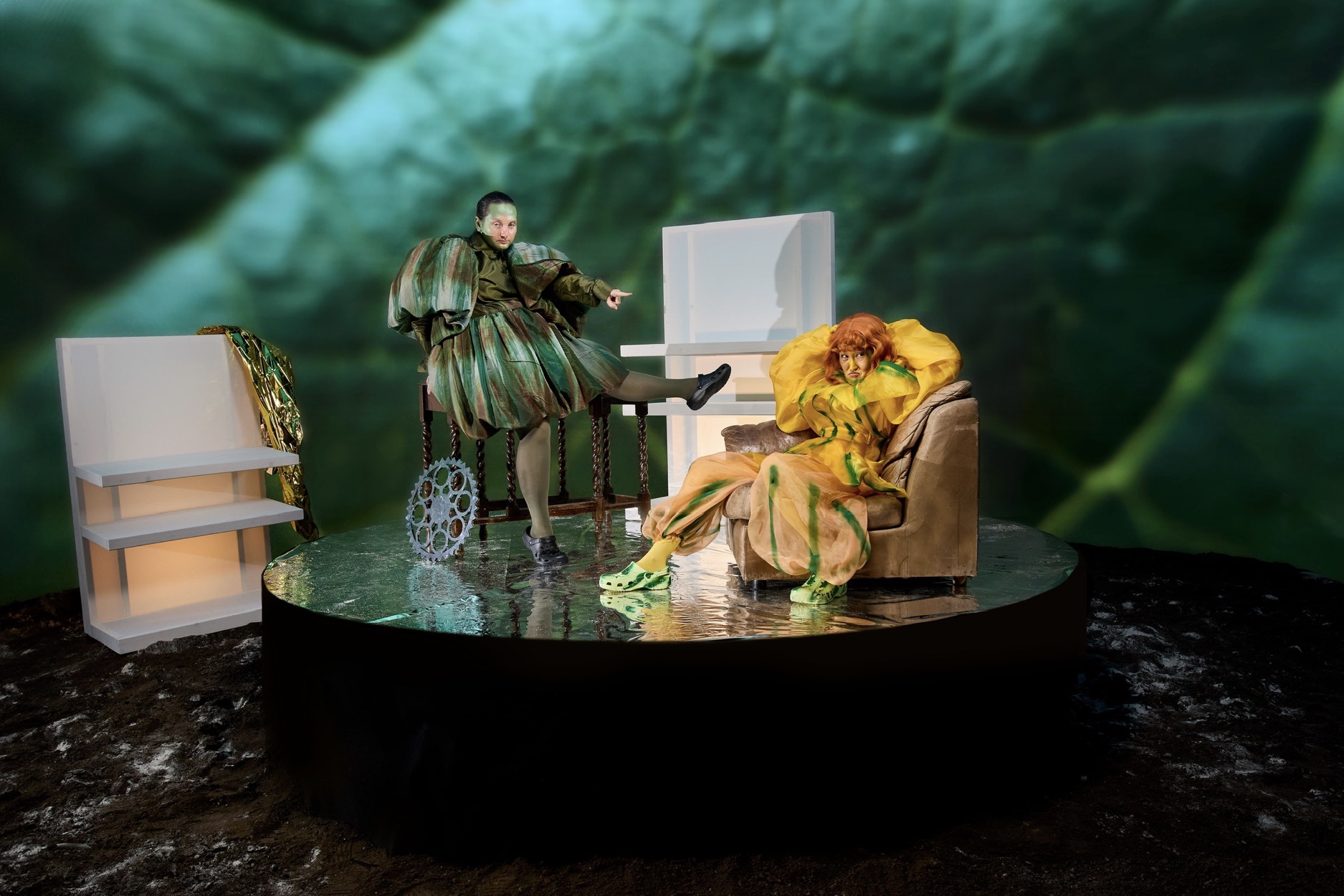
J: It’s purely a political allegory and satire, which, I don’t know how that even happened, but it’s based on the world of vegetables. It started as a one-day improvisation: I had twenty euros as my budget and decided to produce the show in one day, bought the celery root, and invited the Czech philosopher Kamil Nábělek, who gave a memorable lecture on the ontology of the celery root. That’s how we introduced the celeriac into the new upcoming story.
J: We were exploring what a celeriac can be, and what the problems of the celeriac are. The biggest problem is a class issue between celeriacs and avocados. Avocados are established, highlife, expensive, fancy, hipster, and with their own Avocado toast. And celeriacs are below, always invisible, doing the hard work in the broths and creams taking care of the flavor, even though nobody sees them as flavorful. So there was a class tension. This notion completely disappeared from a public Czech discussion after 1989. The rise of the populist far-right agenda is also founded on this invisible presumption we have in society, because we cannot discuss class without being targeted as a communist.
J: Since the beginning I felt that the project would be like therapy through alter egos. Issues from my personal life, plus something I need to experience in this shared political universe. In “Shame to Pride” I took the role of the villain Avocado, because I didn’t want to compromise any of my friends. Haha. Yes, I do work with friends – non-actors. They are mostly people I know from real life, with special rhetorical skills, or they are just incredibly funny. With this particular film, though, the trickiest part was that I was performing in it while directing it at the same time. When you have a crew and other performers on set, it’s incredibly challenging to bring everything together. I’ll probably come back to it at some point, once I start missing the adrenaline again.
J: He started as a meta commentator, became a character, and then he became a character of a meta commentator. But he also became my partner in crime for a while. We were travelling from one biennale to another. In pre-pandemic times, in 2018, I had around twelve shows a year, travelling to Athens, to New York and other places together with Kamil and a backpack full of celeriacs. Kamil was performing at the openings and during the shows. In many shows he was even present during opening hours. But he had no costume, he had no name on his chest, so nobody could recognise him as the official performer. There were no announced hours. But, he was also something like my philosophical coach, helping me all the time to take distance from the story and myself.
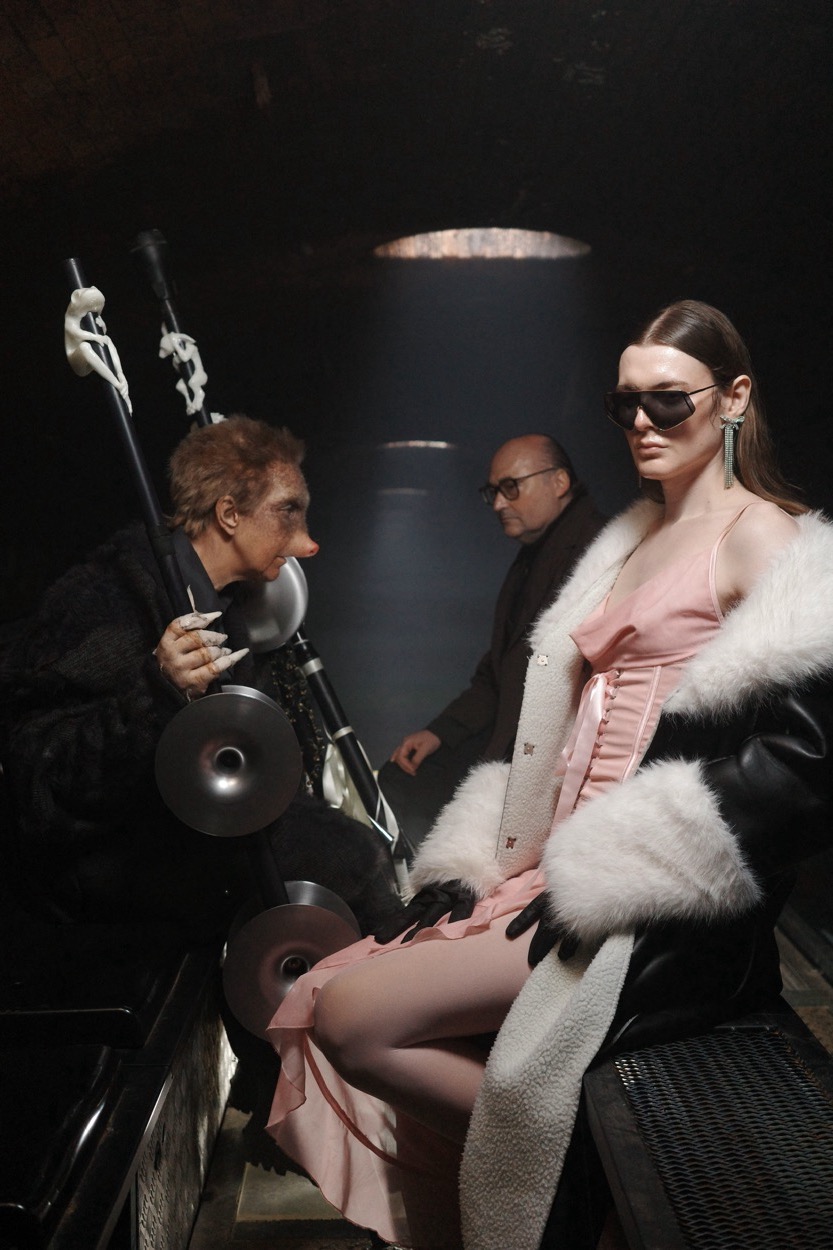
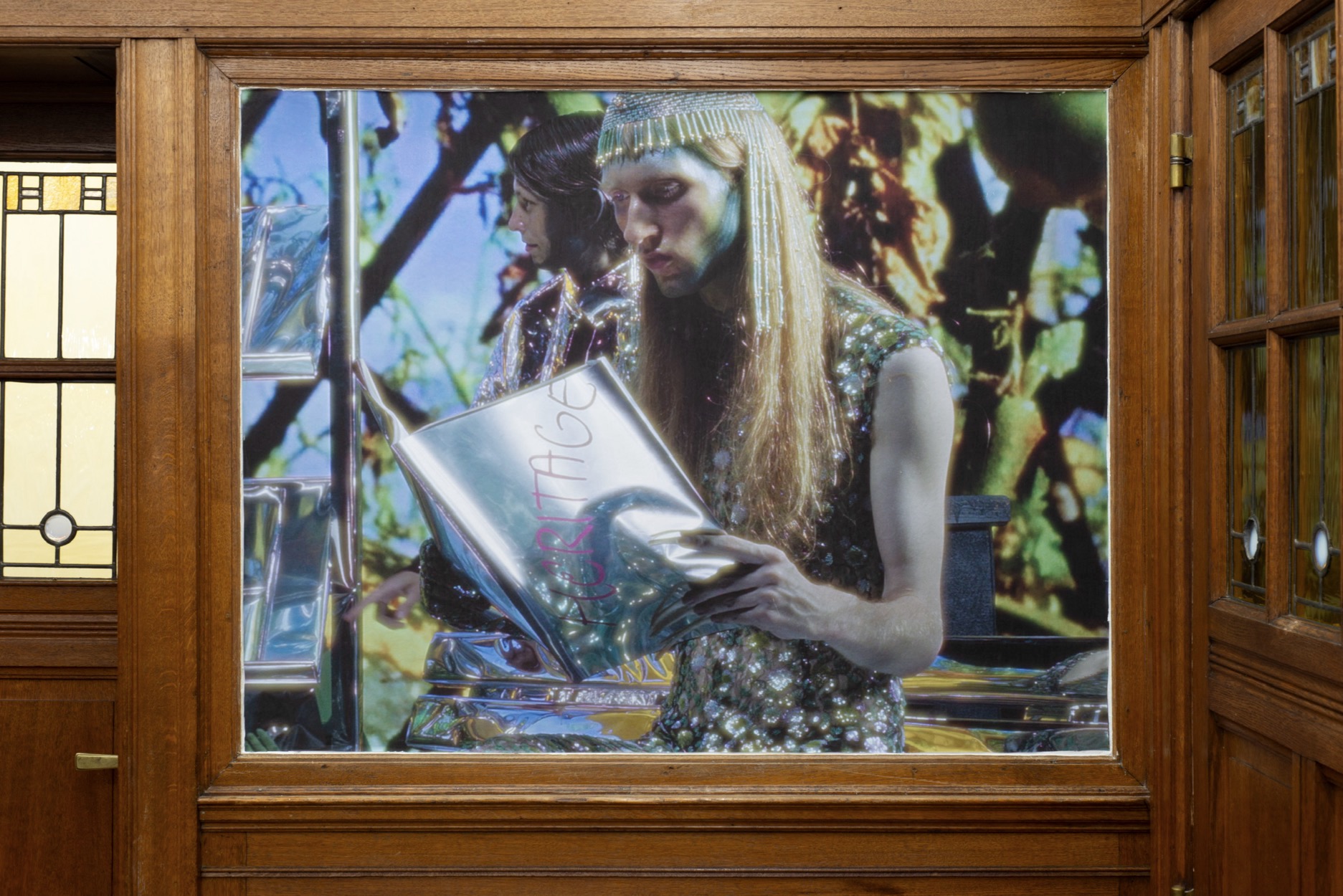
J: I remember one thing from my childhood. I went to school in a small town, so everything was more or less conservative. Then I found a CD of a Czech singer who is quite specific, quite absurd, quite respected and disrespected as well. His name is Daniel Nekonečný — Daniel Neverending. He’s somewhat of an eccentric figure from nineties pop culture in the Czech Republic. His music was full of South American appropriations. It was fantastic and horrible at the same time. But when you played his music, it was a reimagination of what it could be to live in Rio de Janeiro — for Central Europeans. He had super colourful costumes, feathers, using glitter, colourful nails and necklaces. He was always shining, and that was his personal agenda: to shine. In the Central European context I always felt that the strategy of deciding to shine also covers some kind of deeper frustration or depression. You’re living in a world which is black and white, greyish. Nothing shines. So to pretend that you want to shine is a kind of self-declaration which is super strong. But you also want to overtake your own background, your own conditions and live in some kind of imaginary world. When you live in darkness your dreams will likely not be black and white. So for me, colours and vivid shininess represent the strategy of how you want to beat the depression. And it’s really difficult for me to read the works of other artists who use a lot of colour. When I see a colorful painting, I definitely read it as: okay, this person is really depressed.
J: When I brought his CD to school, they immediately called my parents to ask if I’m gay. It was absurd. Since then I was like: okay, maybe I’m not gay, but I love colours, I love nails, I love glitter. Maybe a hetero person doesn’t have to follow this whole hetero construction. Maybe you can wear a pink shirt even in a small town. For me it was a symbol of courage and self-realization.
J: I don’t have an answer. But what I see is that we are constantly adapting to all of these new tools and structures. We’ve been fighting the overwhelm of information for the last ten, fifteen years. Now Instagram, all the social medias, are facing trials where people frame them as dangerous for our health as cigarettes. Maybe, if this concept wins, all of these addictive algorithms will be regulated a bit more like smoking in a public space. The same for AI. I hope we will find a way to regulate all of these things. And if we don’t find a way to regulate them on a global scale, maybe there’s still the option to turn off your phone for a week, completely by your own will.
IN CONVERSATION WITH IMAN TAHERI & CONROY CHAN
In conversation with Numéro Berlin, Conroy Chan and Iman Taheri discuss creative…
WEEKEND MUSIC TIP PT 114 BRUNO KAWELKE
What if you could travel through time without ever leaving the present? On his debut album…
IN DIALOGUE
An exchange of creative perspectives. For Numéro Berlin, Pia Momo reinterprets a…
WEEKEND MUSIC TIP PT 113 VERSACER
Since 2020, VERSACER has been shaping a sound somewhere between indie pop, ’80s jangle…
IN CONVERSATION WITH ADRIANO SACK
Adriano Sack’s "In die Sonne fliegen" explores the glamour, ambition and darker sides of…
IN CONVERSATION WITH NEUSWANSTEIN
Neuswanstein brings together indie rock, hip-hop and electronic production in a sound…