
TO WATCH “POSSIBLE LOVE” BY LEE CHANG-DONG
In "Possible Love", Lee Chang-dong explores the distance between social classes and the…


THE FREEDOM TO BELIEVE, THE RIGHT TO CHOOSE
Few things test our convictions like a choice we cannot understand. “Los Domingos” explores the space between belief, doubt and acceptance.
Seventeen-year-old Ainara (Blanca Soroa) is about to finish school, with her whole future ahead of her. At that age, the possibilities seem endless. A gap year, a semester abroad, working as an au pair, university, internships or jumping straight into the corporate world. Some of us dream of a comfortable life, a steady income and a family of our own. Others prioritize personal fulfillment and choosing to live on their own terms, even if that means getting by with less. These decisions can still change well into our twenties, when we’re figuring out who we are and what we want from life. And then there is seventeen-year-old Ainara, who wants to leave all these possibilities behind and become a nun.
Ainara is the eldest of three daughters raised by her widowed father, Iñaki (Miguel Garcés), who seems more preoccupied with his restaurant and new girlfriend than with his children’s lives. Instead, after his wife’s death, his sister Maite (Patricia López Arnaiz) has become one of Ainara’s closest confidantes. When her niece tells her that she wants to enter a convent after finishing school, Maite is shocked. An atheist herself, she struggles to accept that someone so young would make such a life-changing decision. She wants Ainara to experience the world before committing herself to a life defined by faith, discipline and seclusion.
Maite persuades Iñaki to join her in speaking to Ainara’s spiritual guides at school, Padre Txema (Víctor Sainz) and the Madre Priora (Nagore Aranburu). For Maite, who is unfamiliar with finding comfort in religion, their influence is difficult to understand. Initially, she and her brother seem united in their concern. But when Iñaki discovers that Ainara’s stay at the convent will not cost him anything, his reservations seem to disappear. Desperate to change her niece’s mind, Maite even tells the Madre Priora Ainara’s private business, hoping to disrupt her plans, even at the risk of damaging their familial bond. But Ainara remains steadfast in her love for God.
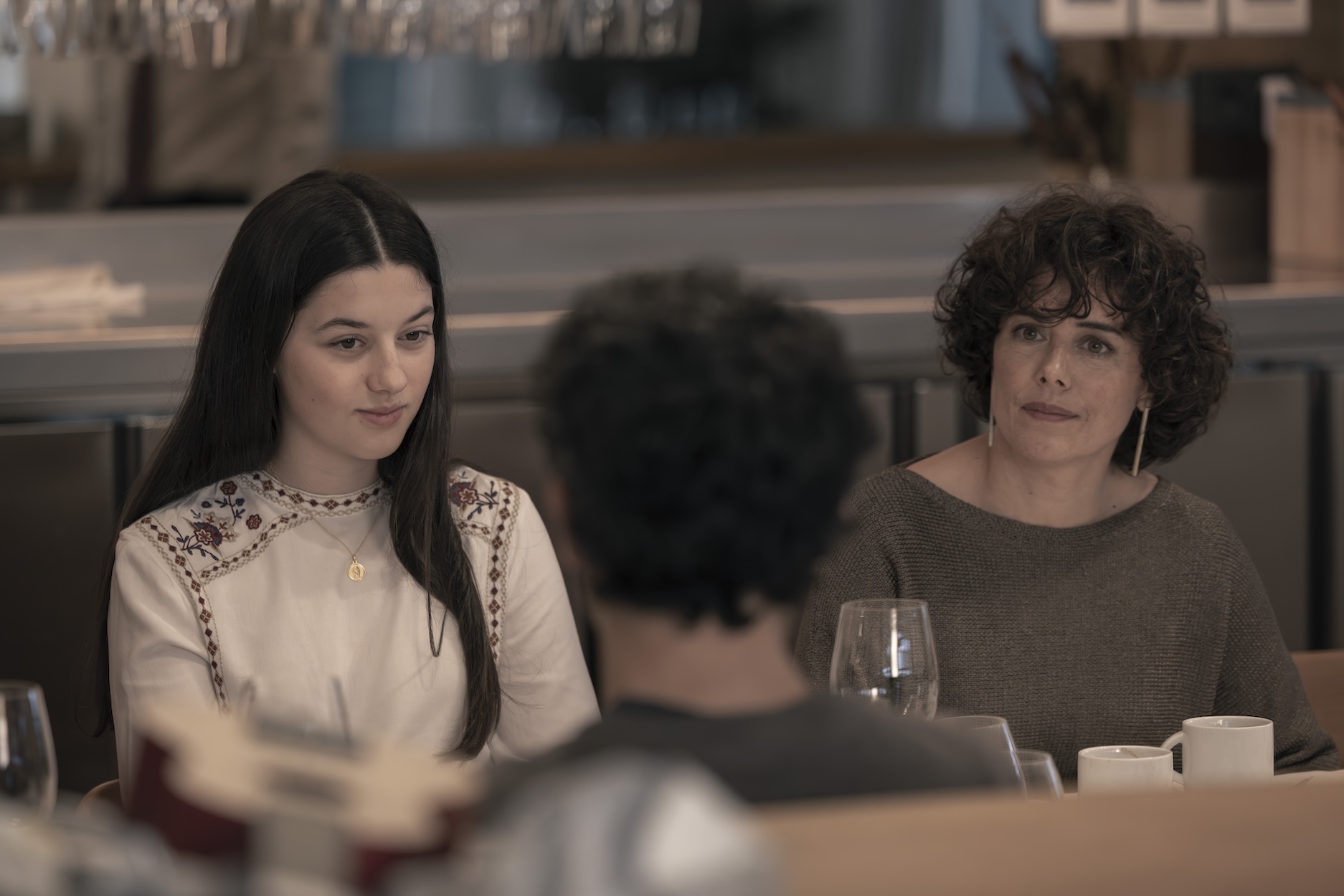
The film places us right in the middle of a conflict between respecting someone’s choices and questioning whether a seventeen-year-old can fully understand the consequences of a decision that will shape the rest of her life. Some might applaud Iñaki for allowing his daughter to follow her own path. Others might wonder whether his acceptance has less to do with trust than with the convenience of having one less responsibility to shoulder. For Ainara, the convent seems to offer more than a religious calling. There is a sense of order, a set of rules and a community with a shared purpose. She seems remarkably untroubled by the prospect of giving up much of the freedom most people her age take for granted. Is this the life she genuinely wants, or does its structure offer something she feels is missing elsewhere?
“Los Domingos” never quite resolves these questions, and that is precisely what makes it so compelling. Maite eventually runs out of ways to persuade her niece, Iñaki seems content with Ainara’s decision, and Ainara herself appears certain that she is ready to devote her life to God. But we are left wondering what might have happened if she had waited a little longer and experienced more of the world. At the same time, who are we to say that her conviction is any less genuine simply because she is seventeen?
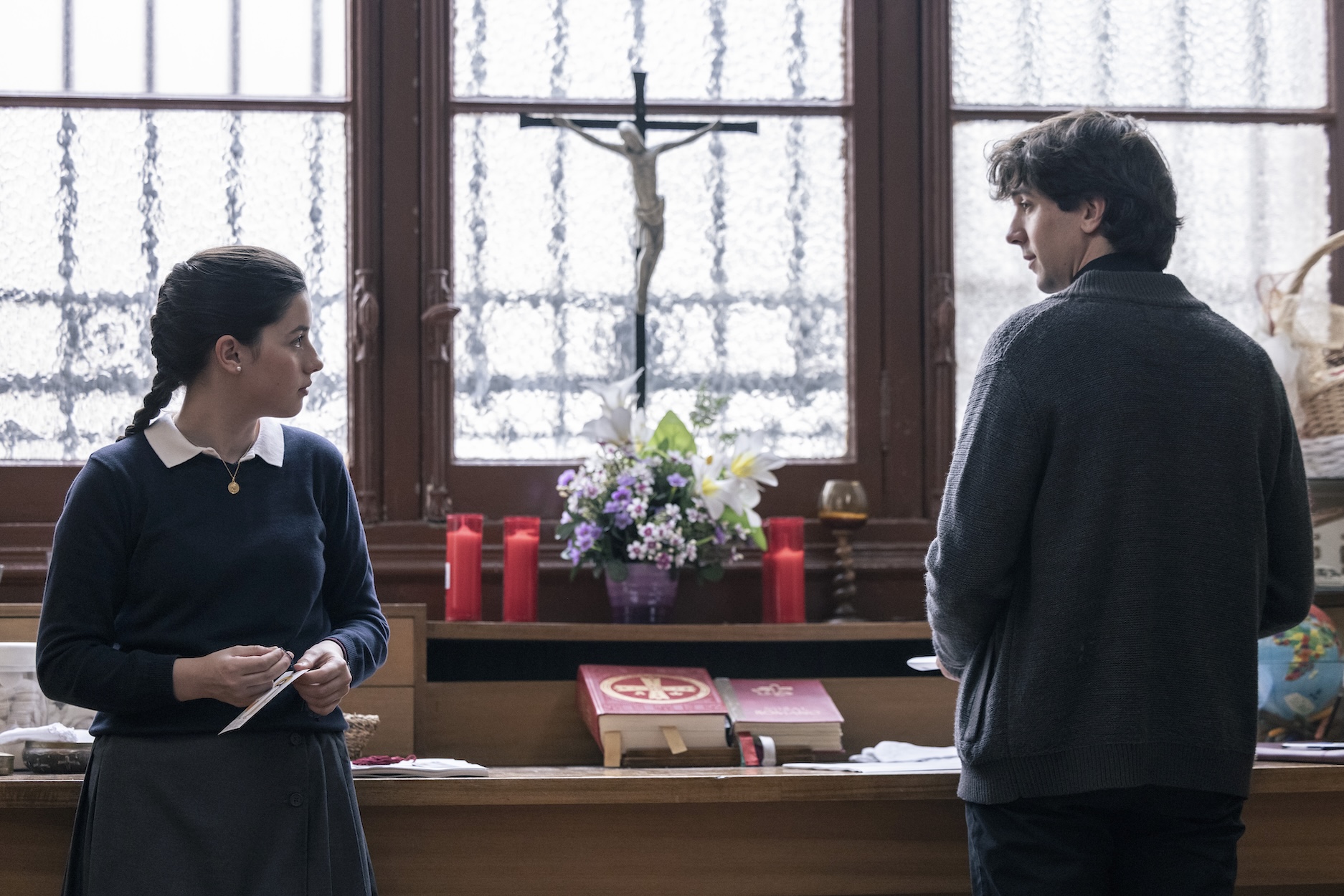
The dialogue is particularly strong, and the film makes sparing use of its soundtrack, allowing the conversations and silences to carry much of the emotional weight. The choral pieces woven into the story feel all the more significant against this restraint. Patricia López Arnaiz delivers a remarkable performance as Maite, whose position in the family shifts from trusted confidante to someone Ainara increasingly shuts out. Her frustration is understandable, even when her attempts to intervene become intrusive. Neither does the film present Ainara’s faith as an uncomplicated virtue. Rather than telling us what to think, Ruiz de Azúa asks us to consider how far we are willing to respect a choice we cannot understand.
“Los Domingos”, released in Germany under the title “Glaube” (Faith), opens in German cinemas on 29 October 2026.
In "Possible Love", Lee Chang-dong explores the distance between social classes and the…

In conversation with Numéro Berlin, Conroy Chan and Iman Taheri discuss creative…

In Sebastian Brameshuber’s "London", a series of seemingly incidental car rides becomes…