

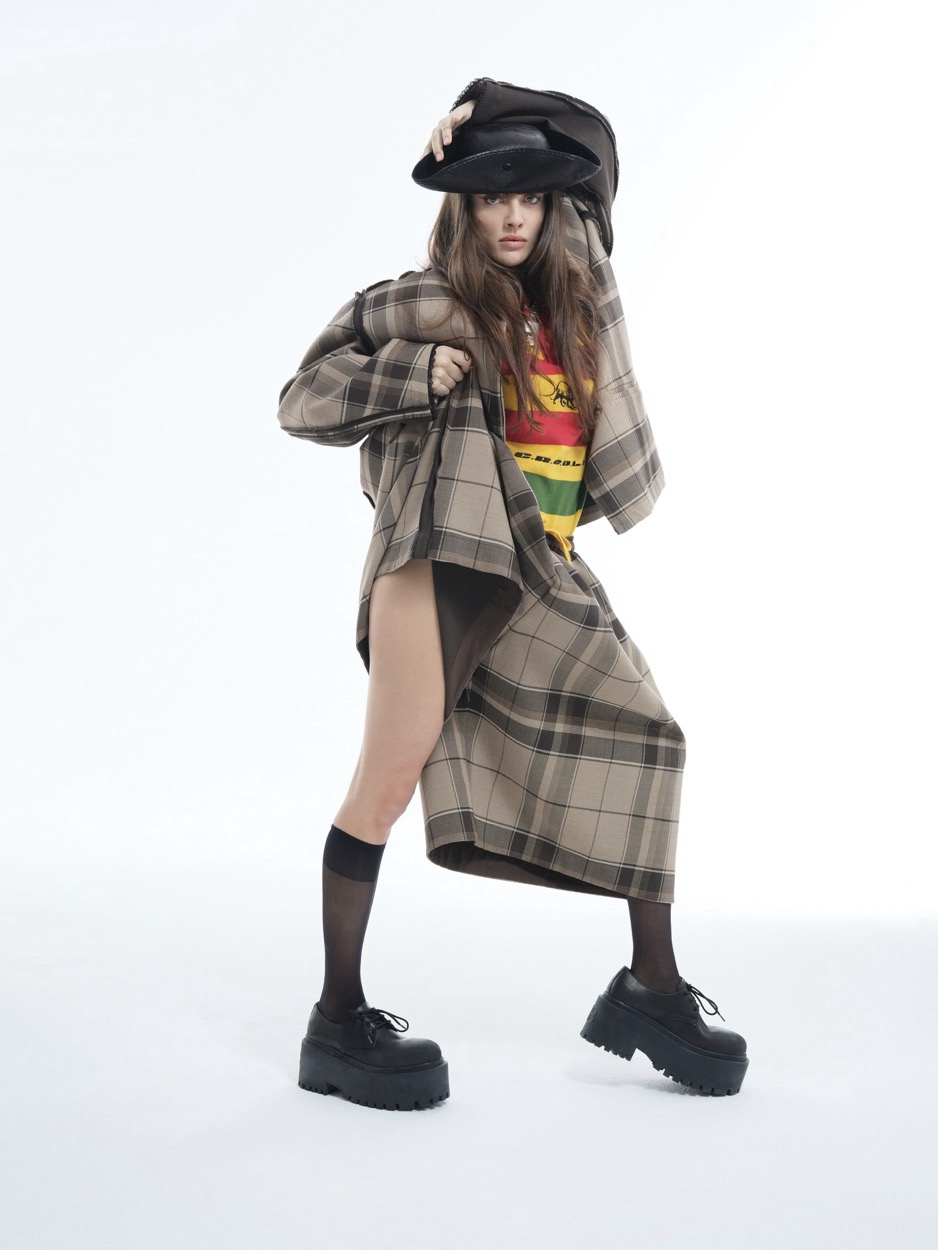
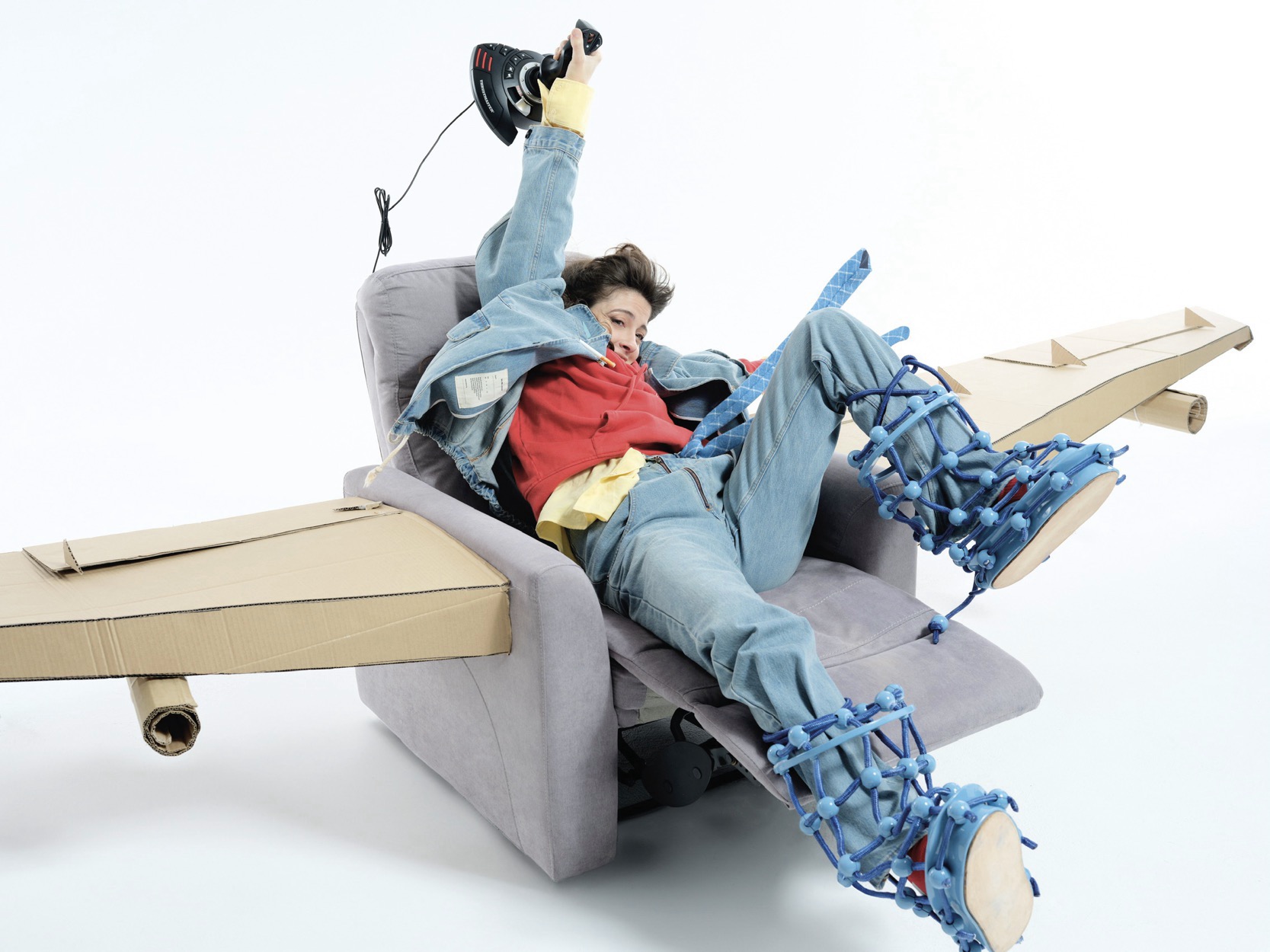
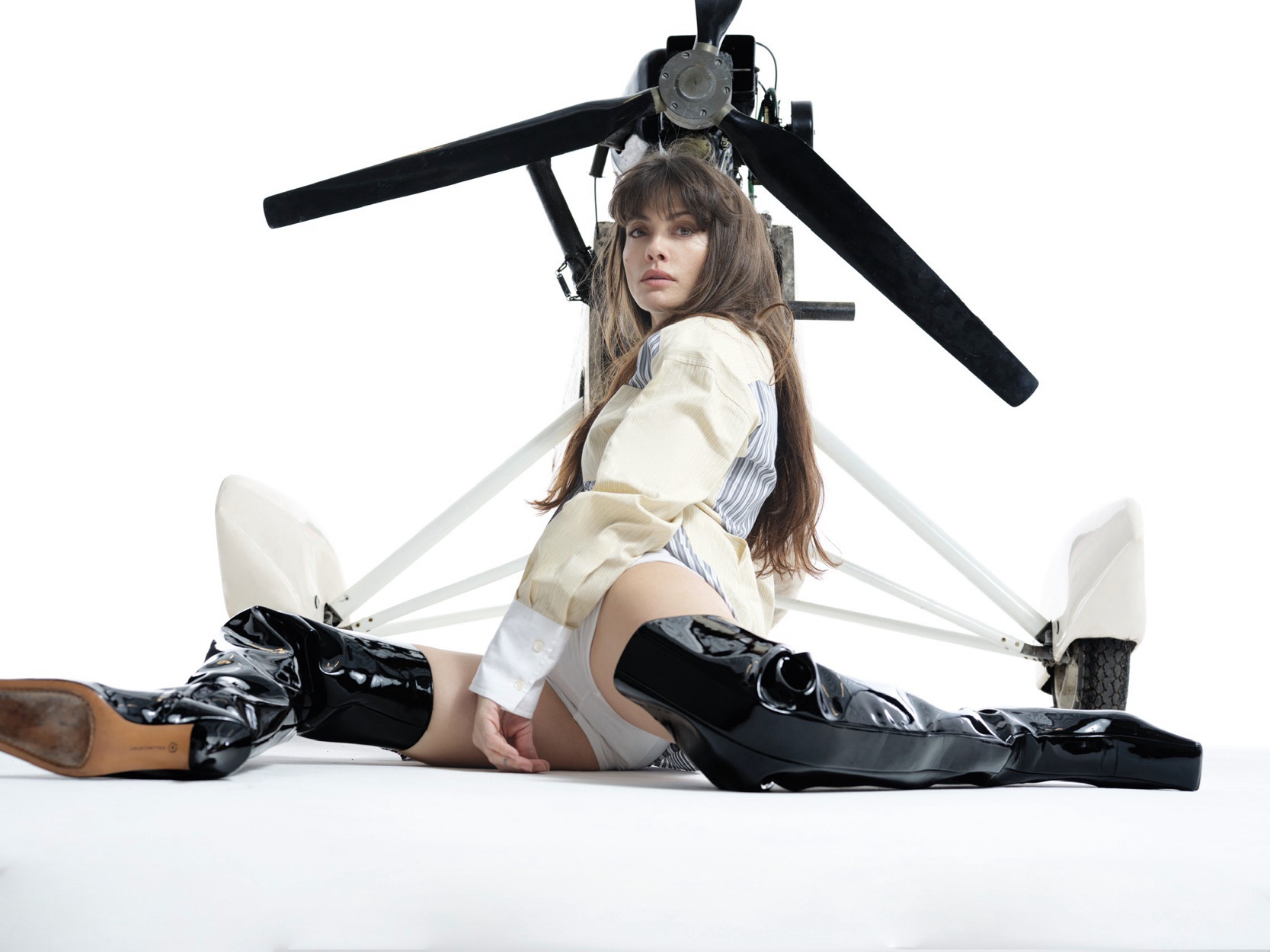
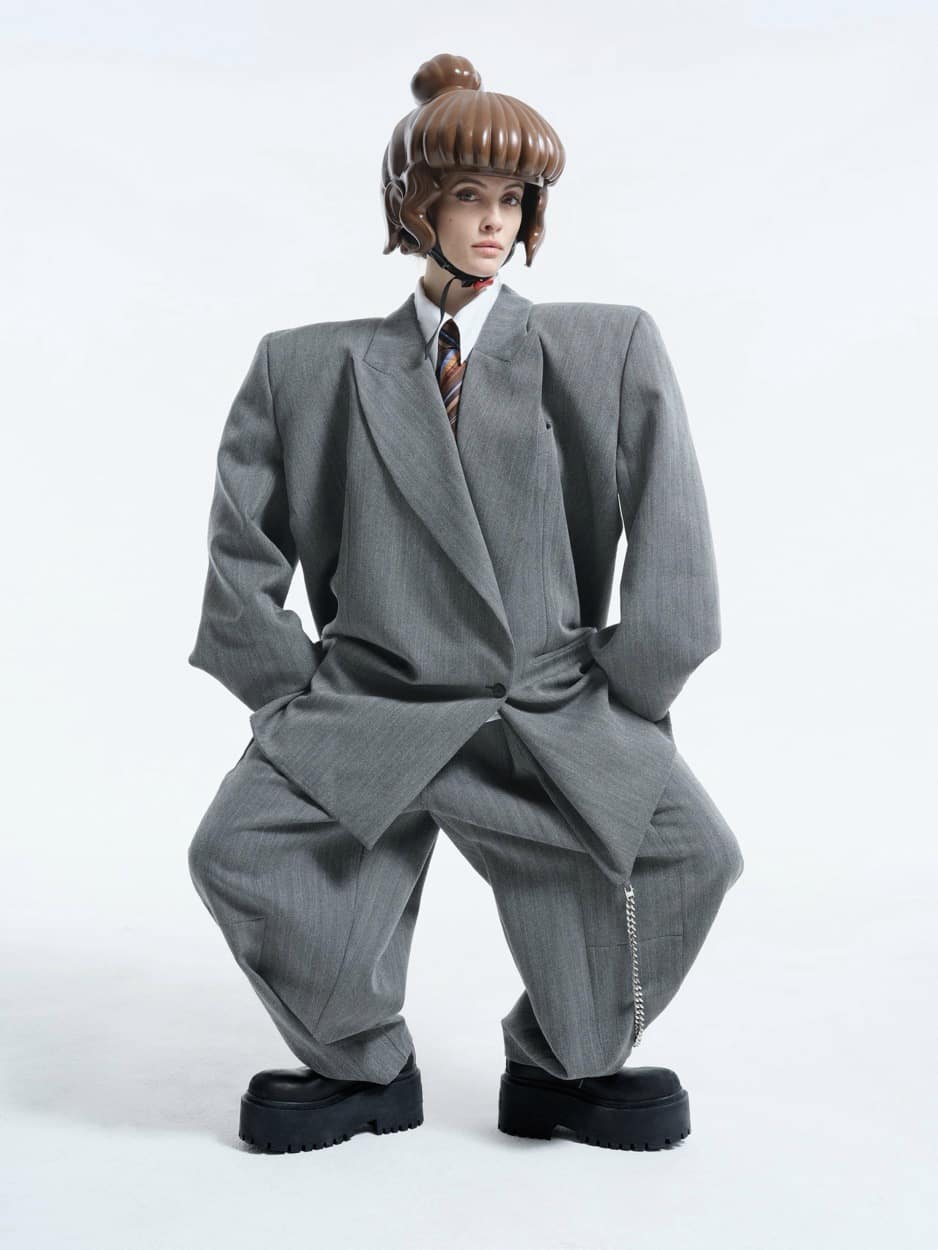
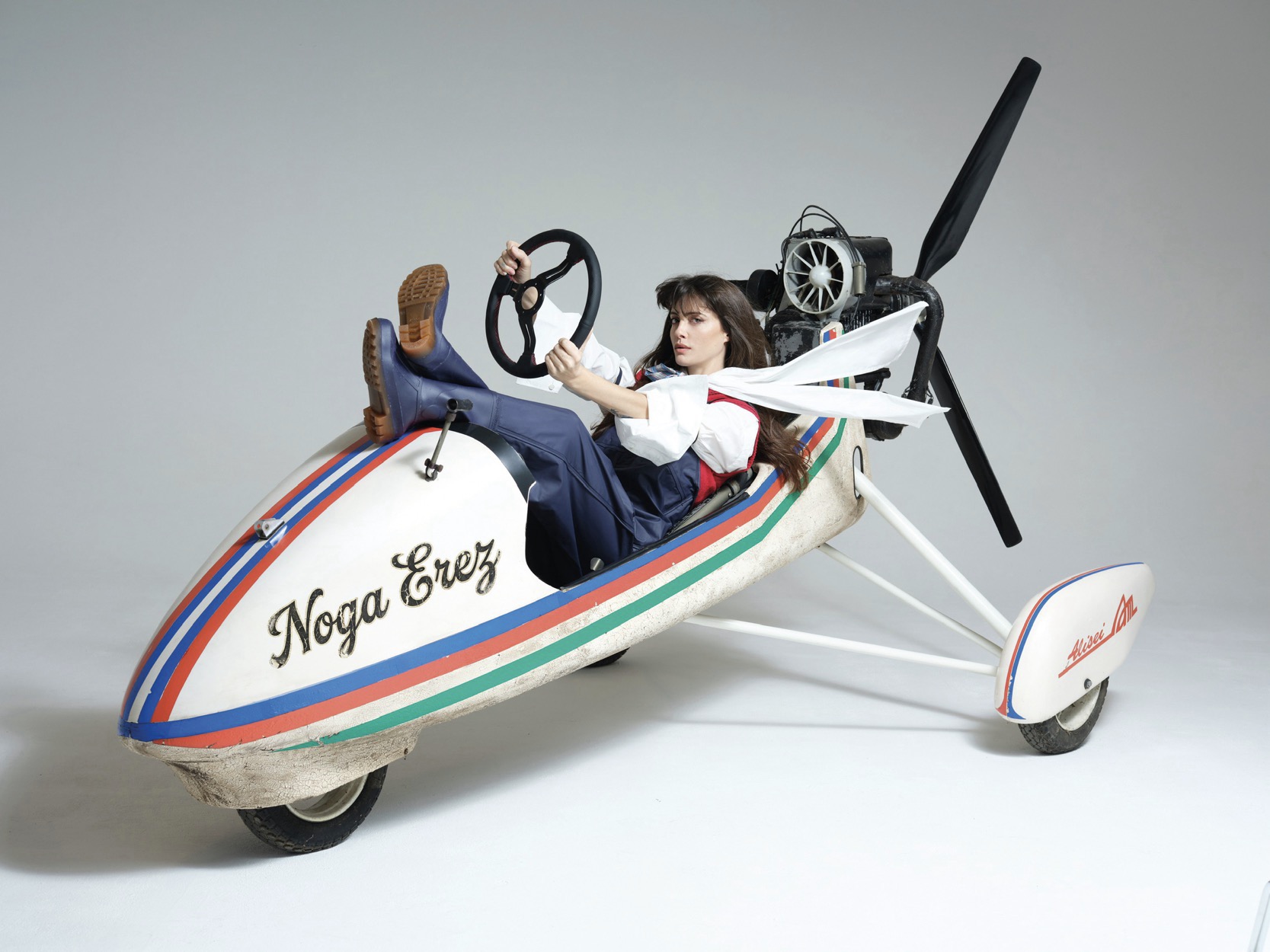
NOGA EREZ: “IDENTITY IS SHAKY AS FUCK“
Noga Erez doesn’t move like most artists. She speaks up. Not to fill the silence, but to hold up a mirror to herself and to the people listening. For the musician, songwriter, and producer, it has never been about being liked by everyone. She’s mad, and you can hear it. That restlessness follows her into the studio, pushing her to explore sound without limits. Together with her partner and producer Ori, the Tel Aviv-born artist moves across genres, following her curiosity wherever it takes her. No matter what others expect from her or her music. And still, she’s one of us. With doubts, expectations, and insecurities. She has simply learned to work with them instead of against them.
NOGA EREZ:
There wasn’t a single cinematic moment. It was more like a quiet accumulation. Suddenly, people I didn’t know were singing words I wrote alone in the room with Ori. From a practical standpoint, I began earning real money when my music was used in a major Apple ad campaign.
NE:
The first time someone told me a lyric helped them name a feeling they were kinda weirded out by. Music did that for me. Made me feel less awkward about myself and the things I feel.
NE: I don’t think there’s anything special about it. I’ve been meeting a lot of creatives recently. In some of these rooms, I felt like I was different just because of my perspective, and in some because of how I look for a different way to express something.
But in my head, the creative process is like an argument between different sides of the self. What comes out is a compromise (in the best way) found after debating. I kinda feel like it’s not uniquely my experience.
NE: I don’t. I probably should have. I used to think rituals are whack. Now I really understand that they are ways to unlock your brain so it’s more in sync with where you’re going. I want something like that in my life.
NE: Motherhood. It’s too raw, too close. I don’t want to aestheticize it before I understand it. Right now, the song I can write about it would be the stupidest, shallowest love song for the perfect creature that I’m staring at for hours every day. But we don’t need songs like that!
NE: Nowadays, it’s mainly in rooms where confidence and conviction are mistaken for aggression. I learned early on how to soften myself to let other people know they are safe around me.
It’s not performative. We all have to tweak ourselves to be more understood.
NE: That pretending protects you short-term, but it gets to you later on. So, it’s also about being surrounded by people who get the way I am.
NE: Good one. Because identity is shaky as fuck, and performance gives us the illusion of control.
NE: I’ve recently learned that I don’t quite understand Noga Erez the public persona as other people do. But I think most people might think I’m more serious than I actually am.
NE: Yes! Let some pop continue to be naive and some be woke and full of confrontation. We can’t afford to lose the basic, pure joy of music just being a fun thing.
NE: Just enough to keep everyone from the creator to the audience engaged, on their toes, interested, and open for change.
NE: It’s knowing what you want and going for it without apologizing, it’s being difficult but so comfortable in your own skin, it’s about being vulnerable and open.
NE: When I’m fully present.
NE: When it doesn’t try to be sexy. When it’s skillful but restrained. When it’s self-aware and funny.
NE: Some of it, yeah. But not in a gross way. Also, I make music with the man I make love with. It’s in there.
NE: The voice and sexuality are very connected. I can feel whether a song has that flavor when I record vocals. But then, it doesn’t necessarily manifest itself every time I perform it. I have a very “sexy” song called AYAYAY. Very rarely do I feel sexy while performing it, because of the expectation.
NE: Exposed, vulnerable and powerful at the same time. Sometimes it’s lit, sometimes it’s nerve-wracking. If I don’t burn myself out touring, it continues to be a world full of so much emotion. A metaphor of life. A capsule of my existence. When I get very psychological about it, it all feels like a big lab to try out how life would feel on speed.
NE: Well, I am a female artist, and I don’t use sex to sell my music. I think that is becoming somewhat rare. I see artists start like, “Hey I’m a human,” and then after a few years be like, “I sell sex, too.”
Sex is a very important part of life and also a tool that can be used in playful ways. It can make you feel empowered and vulnerable. But why do only us girls get naked?
It’s hard to imagine being brought up in a world that’s different from the one we have now, where sexuality is utilized mainly by women for men.
When it’s just so unequal, I can’t help but wonder, is it a power that we have and choose to use, or is it a disadvantage?
Back to the question, my sense of sensuality has remained quite the same throughout my 11 years of career. It’s only used when it is actually there, never fake. It’s never there to help me sell my music.
NE: Yes. Songs allow contradictions. Real life doesn’t.
All of my opinions, thoughts, vibes are in my song. None of them are there on social media.
NE: For sure. But I always found that the people I’m trying to be liked by, hence they don’t naturally like me, will never be a true audience for my type of shit, so it’s all good, and I just keep writing mad stuff that some people like.
NE: I think I listen. And then some days I’d be chasing something that someone told me, and some days I’d be on my “stronger” side and more like, “It’s good to hear that, but imma stay right here.”
The expectations of myself are when it gets complicated. And that’s one thing I can say about having my one-year-old, Tony. I don’t have the same privilege to overthink, so I rarely get so in my head. And it’s good because it keeps me moving, and I sweat out the bullshit as I go.
NE: Doubt on a day-to-day basis is a quality control system. Yes. But then the real doubt that comes in every now and then is more like, why am I doing this? Does it make a difference? Is it worth the effort? It’s sometimes so big that it creates real crisis. I want out of music a lot. I continue to question whether using my biggest love in life as my breadwinner is a smart move. But I just keep coming back. So here we are.
NE: It’s exactly what they are sometimes. But sometimes my lyrics are just a load of crap that sounds cool.
I do it all.
I recently started doing this exercise: whenever I overthink, I write about overthinking, and then I get bored, and I move the fuck on.
NE: I think I enjoy a very perfect amount of fame at the moment, where I mostly get the good stuff but not the bad stuff that comes with it. It also has a lot to do with how much I engage and most of it is still within my control.
NE: Being an artist is the most privileged life, and I am insanely lucky to be able to do it.
I am ‘forced’ by my own job to continue to keep in check with myself and things around me, analyze situations to the bone. Because I analyze and overanalyze for a living, I have, by this point, a perspective on things, and on the very act of analyzing itself. The zoom in and out motion itself is being looked at. Being made into sound and words. Being laughed at and ridiculed.
It helps to give the side of me that thinks it’s not all that serious a bigger space in my life.
I don’t think my thinking brain would have done very well in any other place. I get to be many versions of myself. I am free.
EDITORIAL
With Built to Belong, designer and stylist Elisabeth Kiko explores the idea of creating…
ON OUR RADAR
Numéro Berlin’s weekly collection of the most exciting news about fashion, music, and…
BOY London America S/S 2027
BOY London America explores surveillance, power and protection for Spring/Summer 2027.…
MEET THE B JEAN, GUESS’ NEW LOW-RISE ICON
Becky G makes a striking appearance in GUESS’ latest campaign for the new B Jean, a…

ON OUR RADAR
Numéro Berlin’s weekly collection of the most exciting news about fashion, music, and…
IN CONVERSATION WITH ADRIANO SACK
Adriano Sack’s "In die Sonne fliegen" explores the glamour, ambition and darker sides of…