
THE MOST DEMOCRATIC FASHION SHOW: ANNA RINGSTAD WITH “MAINTENANCE MELANCHOLIA“
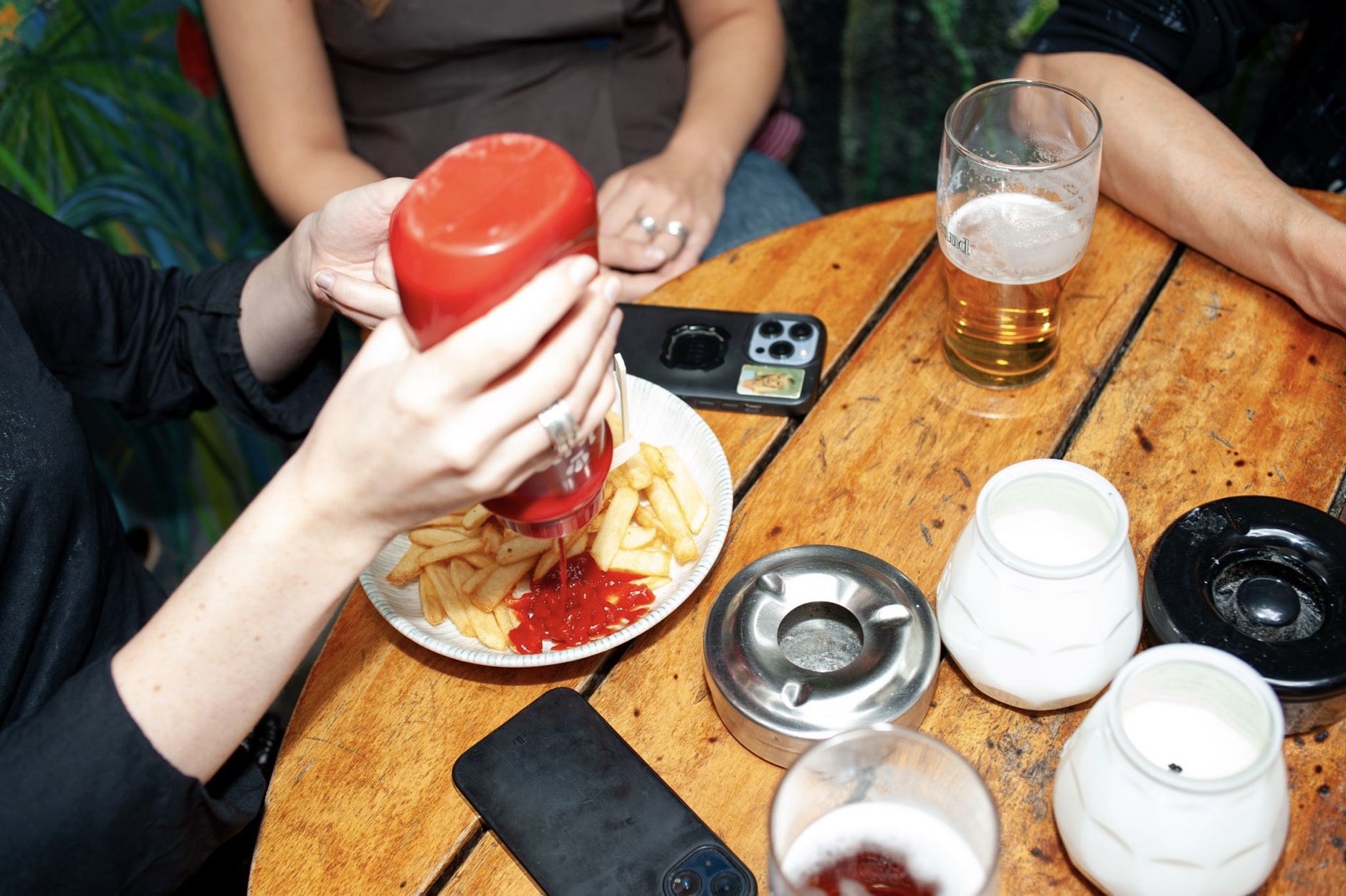
As the beautiful chaos of Oslo Runway slowly comes to an end, the crowd gathers for one of the last shows in Café Sara. On arrival, I’m not sure if I’m in the right place: an old-fashioned café on the street corner, “the most democratic café in Oslo,” as I would learn later. People sit outside at the tables, having promising-looking lunch inside and an early beer here and there.
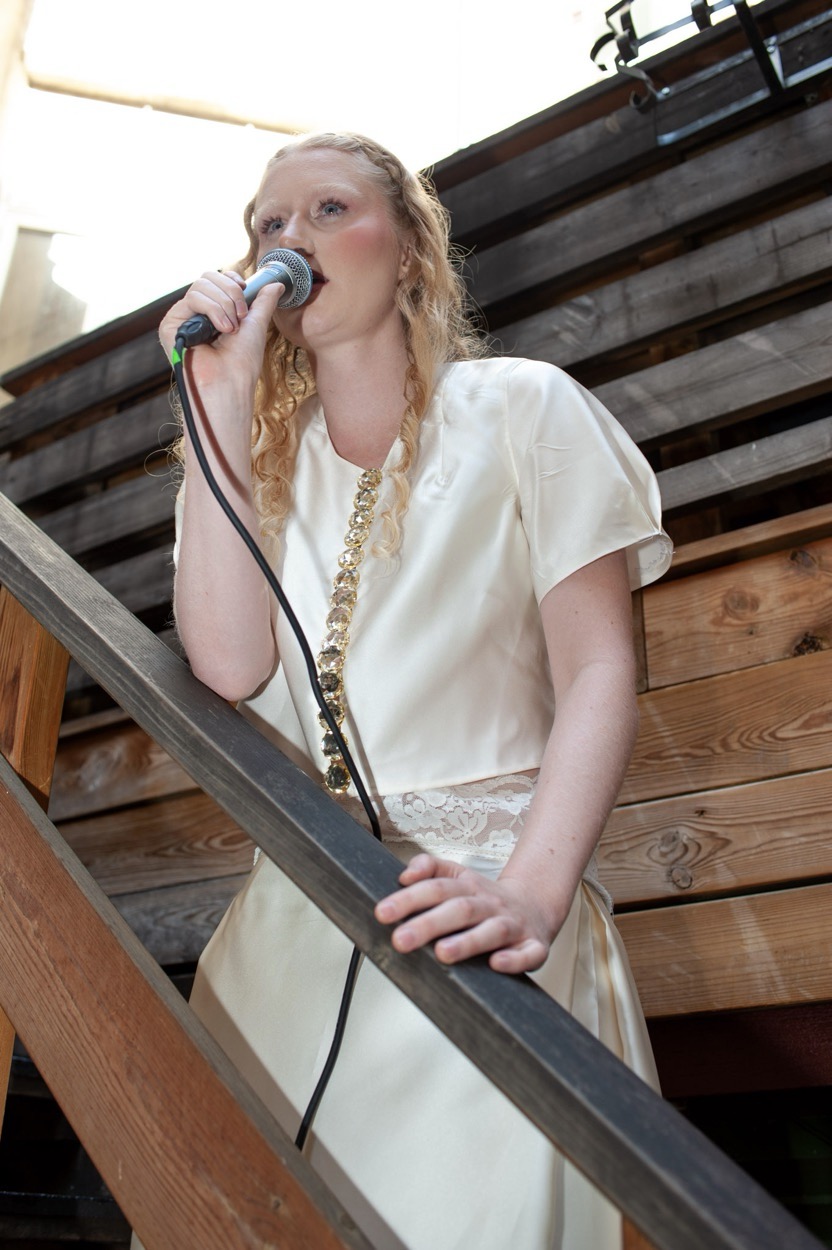
I find a seat in the backyard and wait with the rest of the fashion crowd for what’s to come. Lene3000 enters the stage, a Norwegian artist who has recently gained attention for her dreamlike, mythical vocals, often set amidst Norwegian nature. She climbs the improvised stage on the little balcony of the backyard and slowly lulls the crowd into the creative world of Anna Ringstad.
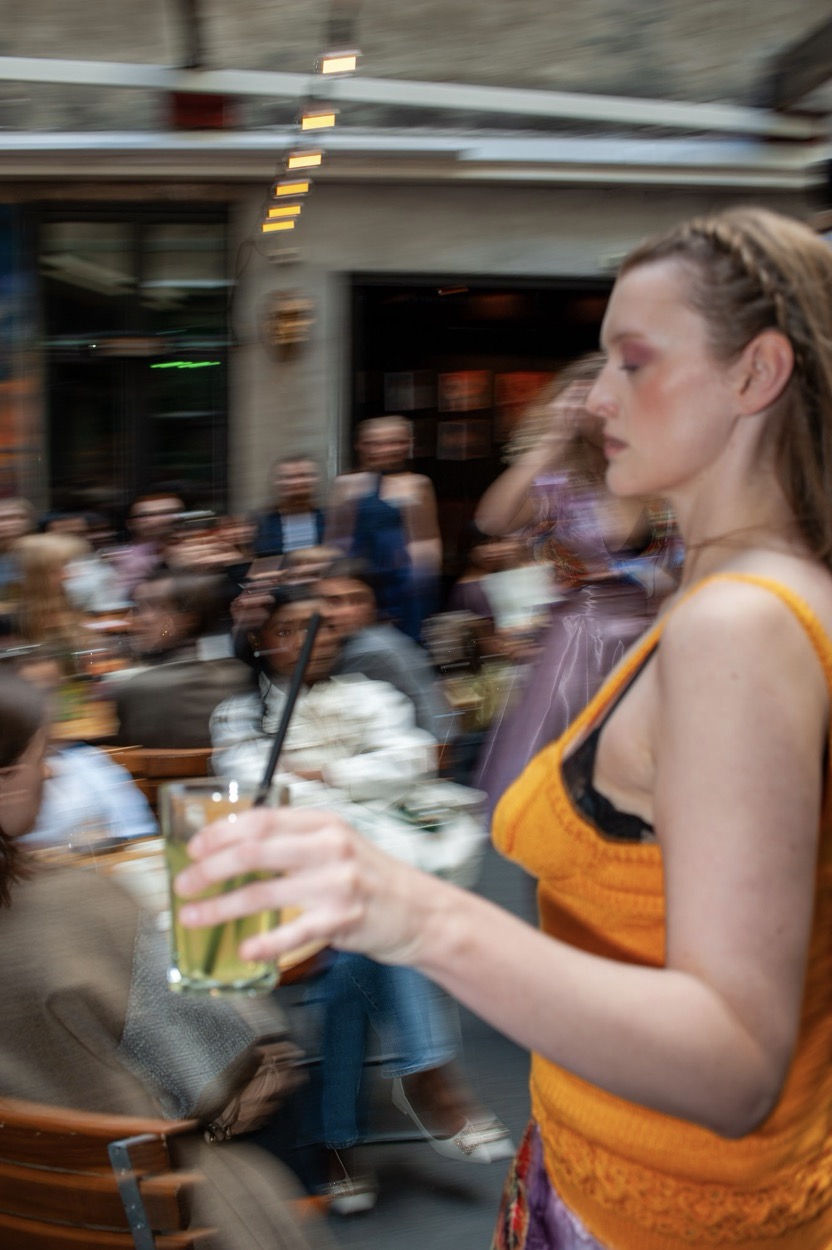
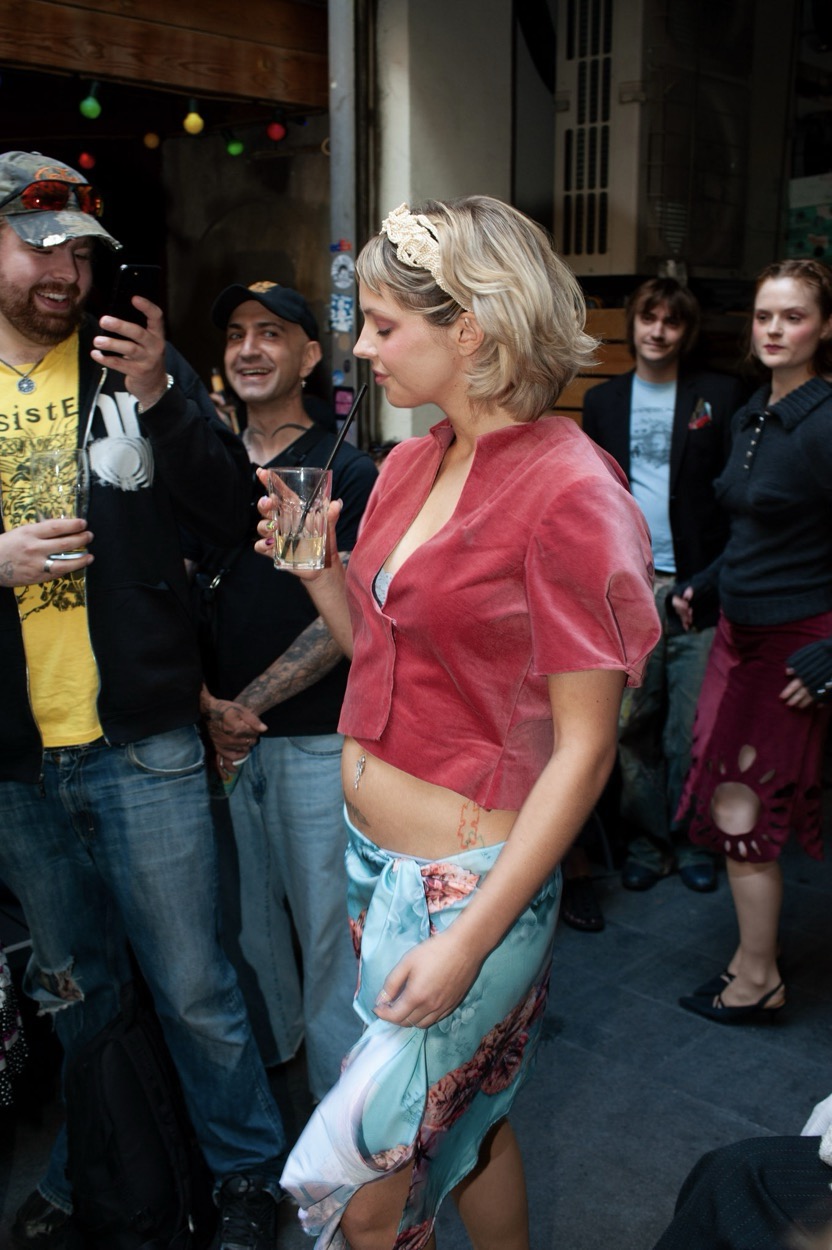
As waiters are still bringing out fries and drinks to the tables, the first models appear in the yard, blending in so well that I almost missed that we had already started. They carefully maneuver through the tight tables, seeming almost out of this world. On their faces: expressions of great strain, confusion. They pose in completely exaggerated ways, actually asking the audience to take pictures of them as they arch their bodies. They vividly long for our attention, begging the photographers to take their picture, who gladly play along, desperately trying to catch these ever-moving models.
As they rush to bring drinks to the table, they dash through the tables, spilling drinks on the mesmerized crowd. Their smiles are overpitched, lost in absurdity, all underlined by Lene3000’s singing.
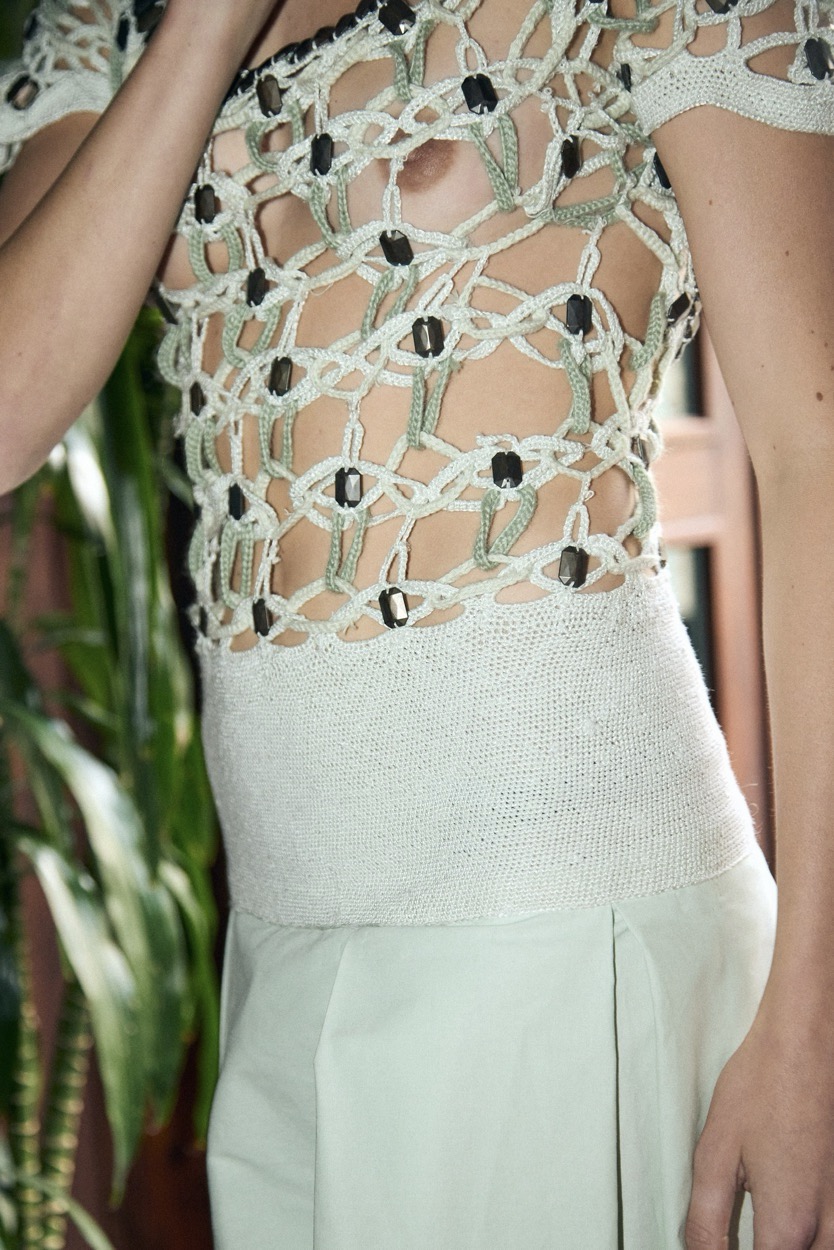
The looks presented entail the same romantic bizarreness: a lot of carefully crafted knitwear, lace, braided hair, loudly screaming floral prints, heels, silk and mostly dresses or skirts.
As suddenly as they appeared, the models disappear from the backyard, leaving a fascinated yet slightly confused crowd. After the applause follows a silent anticipation – everyone is curious to see the designer, the mastermind behind a show that turned into such an intricate play.
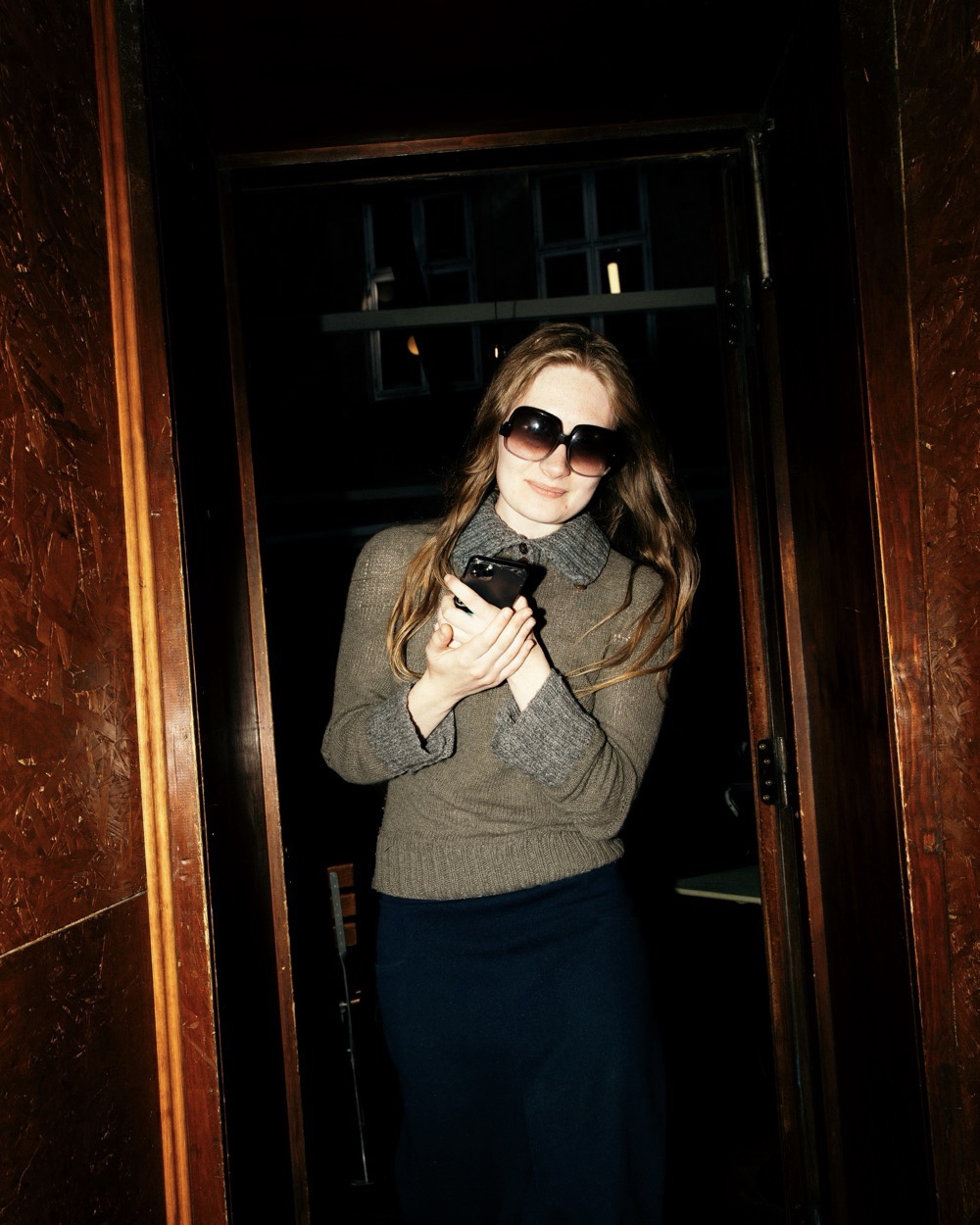
With a similar whimsicalness as her performers before, Anna Ringstad quickly runs through the tables, hiding between huge sunglasses.
She is, next to WILHELMINA, the winner of the NEXT award, a sponsorship program by Oslo Runway to lift up emerging talent with financial support, creative feedback and industry exposure throughout the year.
Numéro Berlin caught Anna Ringstad right after her show to sit down with her and ask what on earth this was all about.
“I want people outside of this sphere to find it interesting and intriguing.“
Anna Ringstad:
So, the thing with this is that it’s sort of meant to look like it’s improvised, like, “Oh, we’re just doing it on improvisation and seeing what’s happening,” but we’ve been practicing to make it look like improvisation. The whole collection and the whole show is sort of this attempt to be a perfect collage of the casting, the location, the choreography, and the music.
The umbrella theme is about when you try a bit too hard to become this “pretty girl.” You’ve done all the research, you have your list of things you need to check out: you’ve got your hair, you have the floral dress, blah blah blah. But when you have all of these points perfectly checked out, that’s where it sort of falls down. You can really see that you tried too hard, and then it becomes vulnerable. You can see how self-conscious they are.
With the whole location, I find it to be the most democratic bar in Oslo, where everyone can be sitting here: the most famous director and the local guy who drinks beer. For me, it’s important when doing my first runway show to make it into a place that has a connotation that it’s not for the fashion industry or the fashion bubble. I want people outside of this sphere to find it interesting and intriguing.
That’s also why the casting is all non-models, but they’re all performers in a sense: they’re actors, dancers, musicians. They all work with stage presence for a living, which makes them able to create this group dynamic, and they take choreography quite well. We’ve been talking a lot about references and rehearsing and figuring out, like, how does this girl actually walk in heels when she’s so hyper-aware that her walk becomes terribly bad?
With this casting, everyone in the city has a connotation to these girls because they’re kind of local it-girls or celebrities. It’s quite interesting to see those two girls who are usually humorists, or that one dancer girl, now in this context. You become intrigued and want to see what’s happening. That’s sort of my fishing aim: to pull all the people who don’t really care about fashion into this sphere and, in that context, make them interested in fashion.
AR: Yeah, they’re actors, dancers, humorists. They all work with the stage.
AR: It started when I was on a residency in North Macedonia, where it became quite interesting. I’m also half Russian, so I was thinking, “Okay, they’re Baltic, I am one of them, we have a lot of things in common.” But they really embodied this kind of trying too hard with the biggest pride. They went to the hairdresser for two hours before every event we went to. At the fashion week we saw there, it was all corsets, lace gowns – everything was so overly done.
I was also catching myself thinking, as a Scandinavian, I consider myself a free feminist. I don’t shave my armpits, I don’t wear a bra, and I was kind of looking at them with pity at some point, thinking, “I feel so bad for them, feeling like they have to wear all these lashes and corsets.”
But then I came to the conclusion that I’m not above them in any way. They’ve decided to dress this way just as much as I’ve decided to dress the way I’m doing. In a way, I can really appreciate that they actually want to look like they put in the effort. For me, that’s kind of where I become too self-conscious. I think it’s a bit embarrassing, or maybe I’m not confident enough to be walking around in a corset in this full-glam look. So it’s kind of an homage almost to that thing.
AR: We were four Scandinavian designers and four Baltic designers. They were my age, up-and-coming designers, and we were supposed to make some kind of cross-cultural references. But it was really like all the Scandinavians were doing some boxy-cut thing, and they were in full corset, push-up bra. So it’s also this admiration that they actually want to show all the effort they’re putting in.
That’s kind of a reference to the title, Maintenance Melancholia, because here in Scandinavia we have this 28-step no-makeup makeup routine where you have to eat this much protein, and it’s a lot of effort put into looking effortless. Whereas there, you do all the steps and it needs to show what you’re doing.
So it’s kind of a clash and collapse of those two things, and that’s the outcome of this collection.
It’s also implemented into the techniques of the garments, because of the way I use craft and all of these lo-fi, handmade techniques. It’s kind of a mix between, “I want a Chanel dress, but we don’t have the money, so we do it ourselves.” It’s this aspirational dream of getting something, becoming something, looking like something, but also using craft in the context of today and the current digital society, instead of working with craft as this heritage-grounded thing.
To me, it’s so important in how I work because it needs to be slow-paced in order for me to consume all these internet references and get all these things. You have this hyper-quick content that keeps running, and then you have this slow handwork. I think those two things need to exist together in order for this whole craft wave to exist in the future. I think in ten years craft won’t be as relevant if we just keep referring to it as heritage – it’s important, it’s history. It needs some kind of recontextualization into the current.
AR: I think it’s more in the way of – how should I put it? Yeah, I mean, it’s a long stretch of reference, but the way, for instance, pictures circulate through Pinterest and stuff like this. You have the real thing, and then it circulates and circulates and becomes this dupe thing. The dupe of the dupe and the reference of the reference becomes more relevant than the actual thing.
I kind of see craft the same way. You have Loewe making a knitwear sweater on the runway, and then it circulates and circulates and ends up at H&M, and then people are wanting to recreate that as well. Then it becomes this hyper reality, where you don’t know where it starts. It’s kind of like dupe culture in a way.
AR: I mean, it roots down in being able to wear what you’re wearing with the confidence that you have. The thing I’m trying to show with this collection is that none of the girls are supposed to look like they feel natural and at home in the garments. It’s kind of like trying on a dress that sits a bit wrong at the mall, and you’re like, “I don’t know, the breast doesn’t fit perfectly.”
But when you have this thing that, “I’m wearing this garment instead of this garment wearing me,” then it doesn’t really matter if you wear a corset or a tank top without a bra. That’s also the thing with personal style: you need to know how your body wears your clothes.
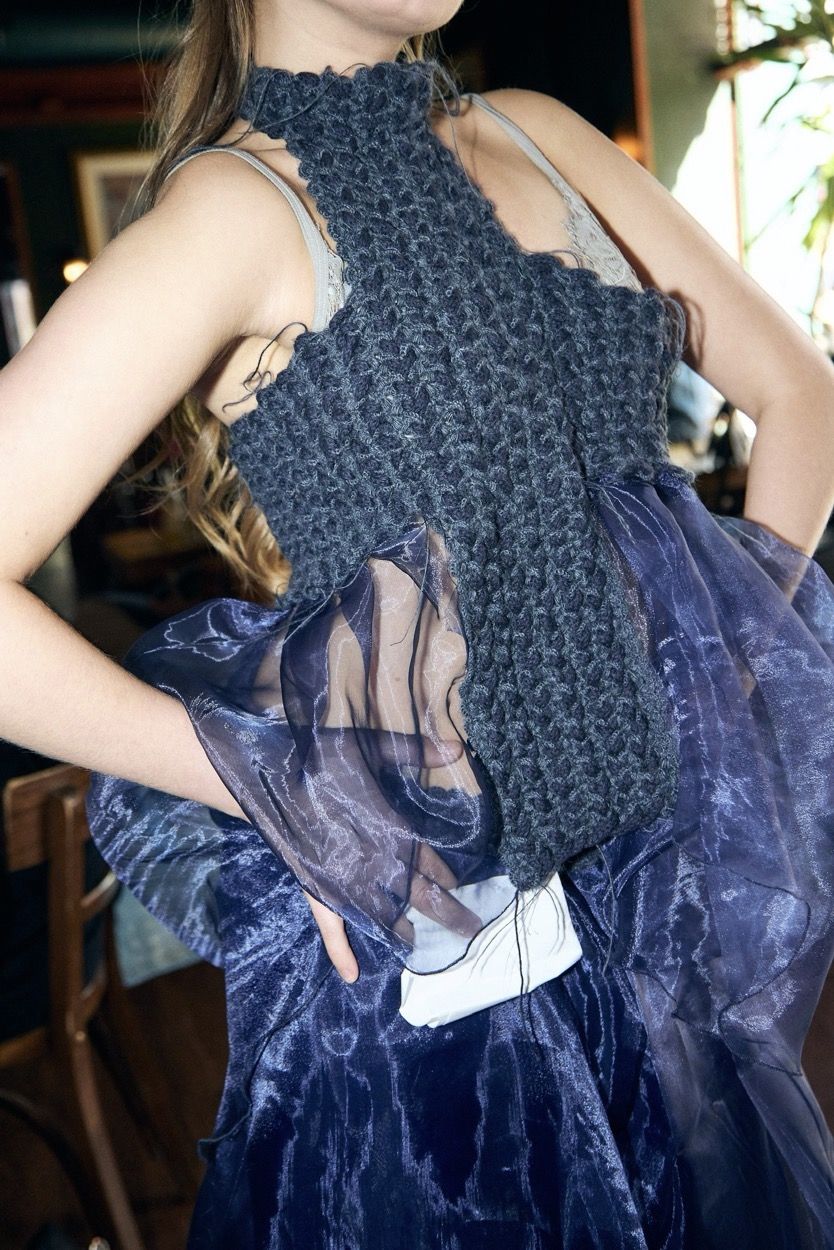
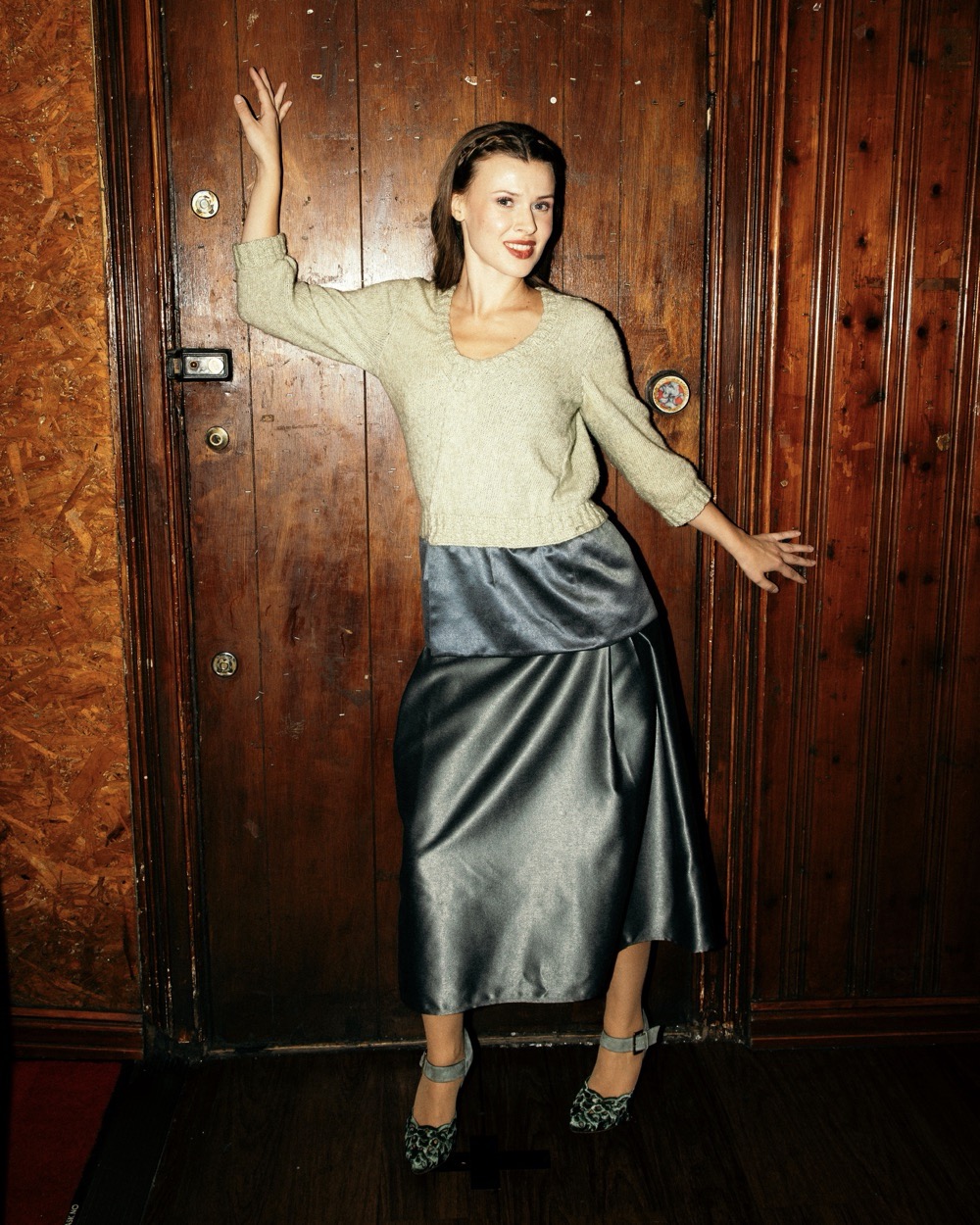
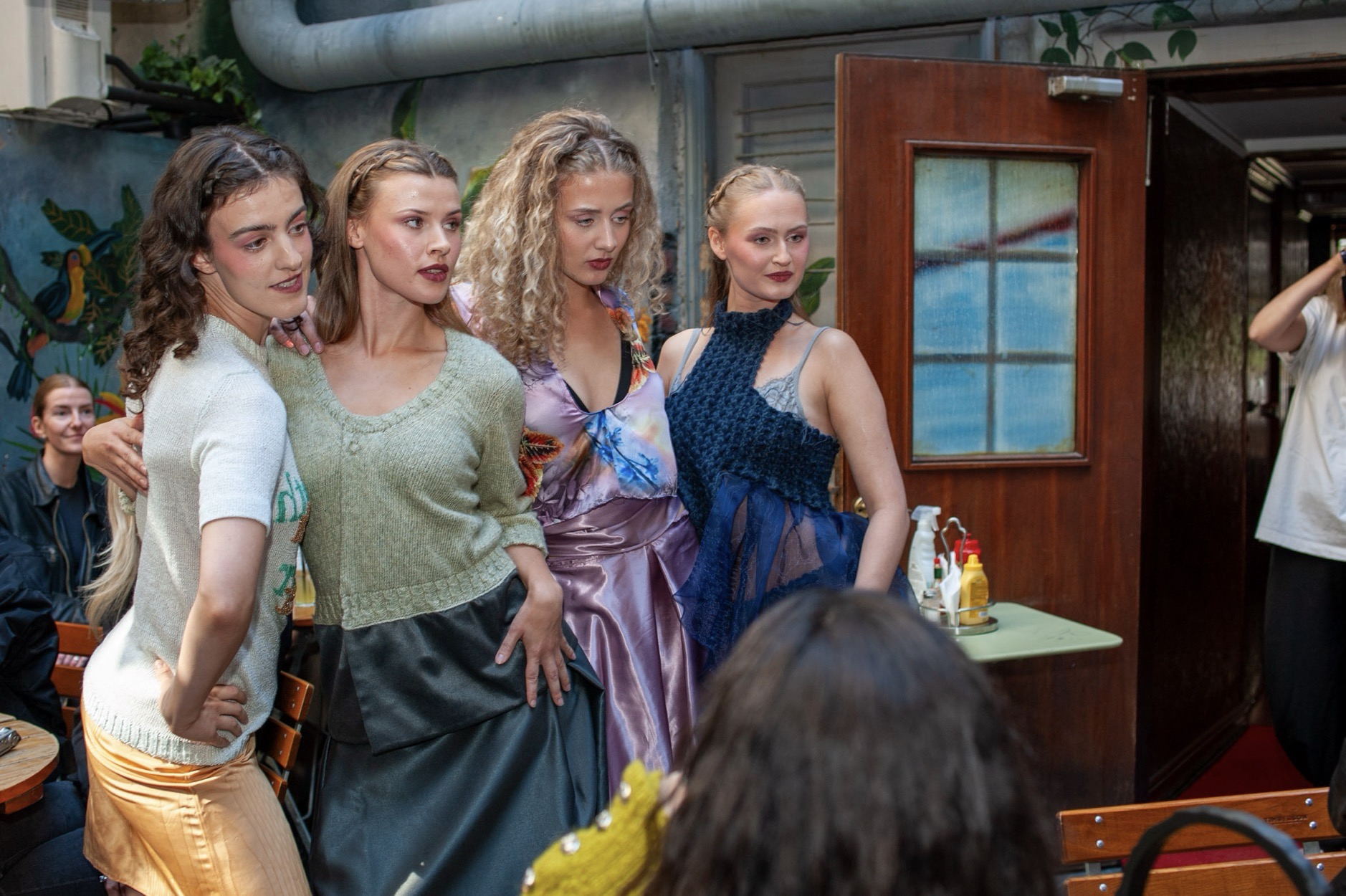
“None of the girls are supposed to look like they feel natural and at home in the garments.“
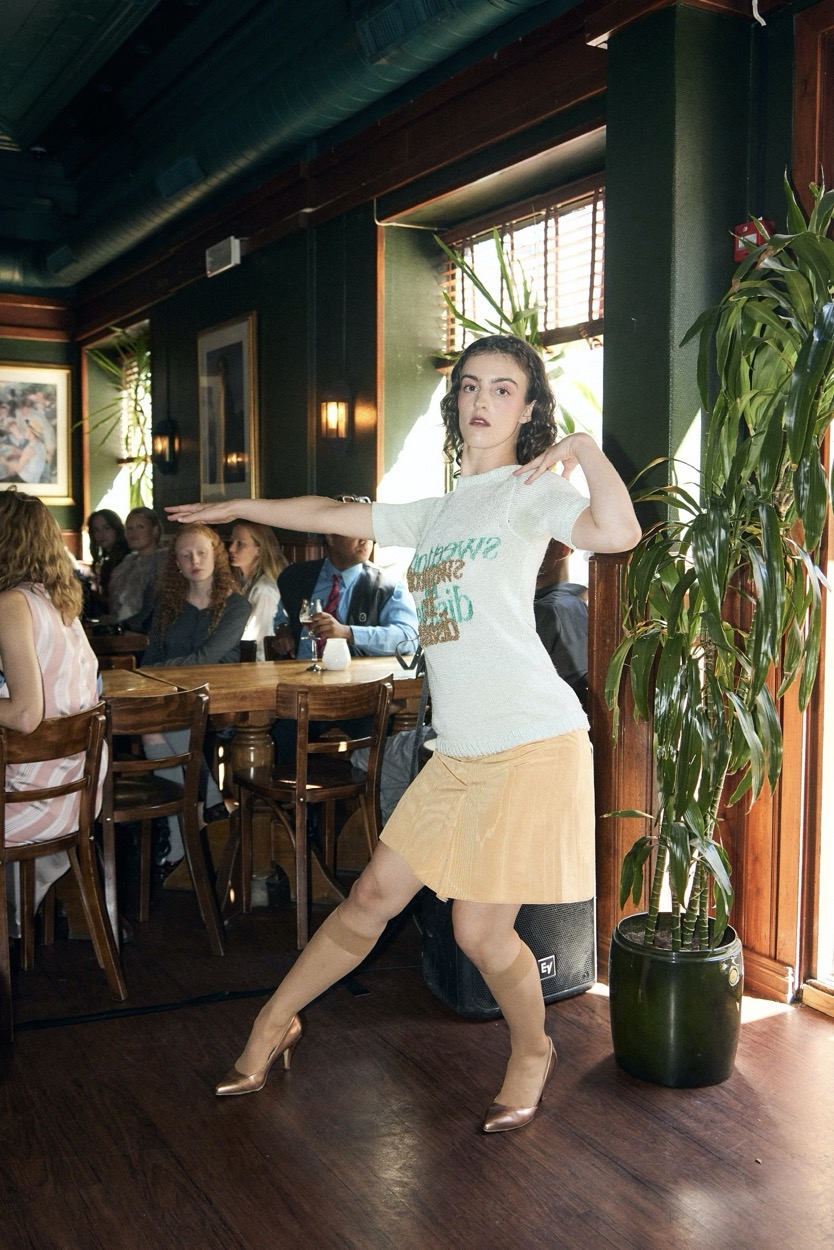
“I think there should be room for the whole spectrum between some crazy, ugly floral prints and a beige cashmere.“
AR: Yeah, for sure. In a way, it’s quite – not an obvious choice, but a choice I’ve taken to do a bit of the complete opposite from Scandinavian minimalism. But it’s not like I want to be contrary or anti. I also want to show that you can do something different than the beige stuff.
I think there should be room for the whole spectrum between some crazy, ugly floral prints and a beige cashmere. I think runway and Scandinavian fashion have room for more things than just plain silhouettes.
That’s also why I want to show in a context like this. Oslo isn’t really established as a fashion city, so I think that also gives you some freedom. You can bend and break the rules a bit instead of, for instance, showing in Paris, where you have these religious rules you need to follow, and if not, you’re out.
Here, no one’s going to fire you or kick you out or never work with you again if you do something like this. This also helps bring more people in the cultural industry into fashion.
It’s also such a small city where the fashion industry can fit around one dinner table. But I look at fashion in the same way as music: as a cultural phenomenon. Music is more generally spread out to everyone. We all have a relation to it, but I don’t think everyone in Norway wants to say they have a relationship to fashion. But they do – they’re just not aware of it.
Doing things like this, I think, also helps open it up. It becomes more democratic, less elitist. Putting in some irony and cringy elements makes it easier for the normal guy in the street to have an opinion and talk about it.
I think this white-box, catwalk runway situation becomes too abstract. It must be difficult for your regular neighbor to be able to have an opinion about it. Then it’s not a conversation; it’s just something circulating within a room of four walls in the fashion industry.
AR: It’s kind of a clash and collapse of this Baltic girl and the Scandinavian she. So I’ve called it “Baltic babe tries to be a Scandinavian chic.”
It’s been this speculative design process where I’ve thought, okay, if I imagine that the character is one of these Baltic girls, and she’s like, “Okay, in Scandinavia they have all these pretty floral gowns, and it’s a lot of knit and crochet,” and you make this list.
But the outcome is that it’s kind of a lost-in-translation thing, where you have the floral prints but they’re digital, and the colors are awful, and it’s incredibly ugly – but on paper, it’s correct.
AR: I actually live in Paris, but I kind of want to have a relation to the fashion world here. Because of what I said earlier, it’s so – I don’t want to say non-existent, but it’s so fluid that you can really become part of changing what it ends up being.
In a way, I find it way more interesting to show in a context like this instead of striving to fit into the Paris calendar, because then you’re just a tiny dot in an ocean.
It’s also a lot about context. I mean, for you it’s probably not like this, but the casting and probably everyone in the crowd has a relation to the casting and the musician, and it all becomes familiar. It’s also about recontextualization. It’s not just about finding great models that look good in the clothes.
AR: Her name is Lene and her artist name is Lene 3000. She performs in the forest, in the middle of nowhere, and she’s become this viral phenomenon where she always sings in either a bridal dress or some kind of ugly ’80s grandma dress. It’s violin and synth, and it’s a bit between quirky, spacey, and fairy-like. Her lyrics are quite – I feel like they fit the vibe of the collection.
She’s amazing, and I feel like her lyrics sound like a stream of consciousness of what the character I want to embody keeps thinking: “Do you like what you see? Focus on my body language.” All of these things that go on repeat.
And since she’s not from Oslo and she’s never really been to Oslo, it makes her kind of the coolest of them all. When she’s here, she doesn’t get any of the references. She’s never been to this bar, but this bar is kind of a place where everyone comes to. You never know if you’ll see all your exes, all your lovers, all your enemies and best friends. But she doesn’t get that context, so she’s kind of glitching the matrix.
Everyone knows her from social media, but she’s not a face you see in the city. So that kind of makes her, I feel like, come in like a hologram avatar.
And I feel like she’s going to become huge, so it’s also such a blessing. Before I even got the whole Oslo runway thing, I was kind of daydreaming since January: “I really want to work with her, but what should the project be?” And then it ended up fitting really great.
AR: Yeah, when I did my BA in Clothing and Costume Design, I did a lot of specialization in knitwear. I’ve also interned at a lot of different brands in Paris, where I was a knitwear design assistant and helped out on the knitwear atelier team.
It’s also something I learned from my mom and my aunt. Those are the Russian ones in my family who work with it. The whole thing with craft and knitting was kind of my way of playing.
My aunt from Russia used to come and be like, “I bought so much yarn for you, and now we’re going to knit all summer.” So to me, it’s kind of this thing I do when I’m a bit stressed out or need to think, or when I’m consuming new content and stuff.
EDITORIAL
With Built to Belong, designer and stylist Elisabeth Kiko explores the idea of creating…
ON OUR RADAR
Numéro Berlin’s weekly collection of the most exciting news about fashion, music, and…
WESTWING | VICTORIA BECKHAM “DINING COLLECTION”
Victoria Beckham makes her homeware debut with Westwing, bringing her signature minimalism…
BOY London America S/S 2027
BOY London America explores surveillance, power and protection for Spring/Summer 2027.…
MEET THE B JEAN, GUESS’ NEW LOW-RISE ICON
Becky G makes a striking appearance in GUESS’ latest campaign for the new B Jean, a…
ON OUR RADAR
Numéro Berlin’s weekly collection of the most exciting news about fashion, music, and…