
IN CONVERSATION WITH JOEL EVEY & NICK FROSST
What happens when AI steps out of the tech world and into Berlin’s creative scene? At…



A WORLD TOO CLOSE TO HOME
Santé, and welcome to a world that doesn’t feel too far removed from today’s reality. A world in which all illness has been eradicated, sanitized, organized and most importantly: safe. Or at least that’s what it promises to be. Where your health is your most important concern. An order, imposed by the state you live in. And welcome to the life of Mia Holl (Hannah Herzsprung), a neuroscientist in the system, thankful for the order in her life and her artificial home assistant who asks about her day and plays her favorite music. A bodiless voice, comparable to certain virtual assistants already present in some people’s homes. It already sets the tone of the film. Current, threatening and omnipresent.
A society where everything is based on the “Method”: laws, security, privacy. Even the central dating agency run by the government, based on genetic matches, might seem tempting in a world of failing dating apps. You might even catch yourself weighing the opportunity, only to be scared by your own thought a second later. Surveillance of your every move, and even if it sounds dystopian to us now, the film makes it look almost temptingly harmonious. At least for the first 15 minutes.
Then we get introduced to Mia’s brother, Moritz Holl (Damian Hardung), a free spirit, living by his own rules, rejecting the grip of the “Method” on their lives. You remember, yes, that’s an actual human, we were brainwashed for a second, with all the smooth-running interaction, trains on time and all illnesses eradicated, it seemed too perfect to be true. Because it wasn’t. But then Moritz gets arrested for the crime of rape and murder, which he insists are not true. And yet his DNA matches 100% with the DNA found on the victim.
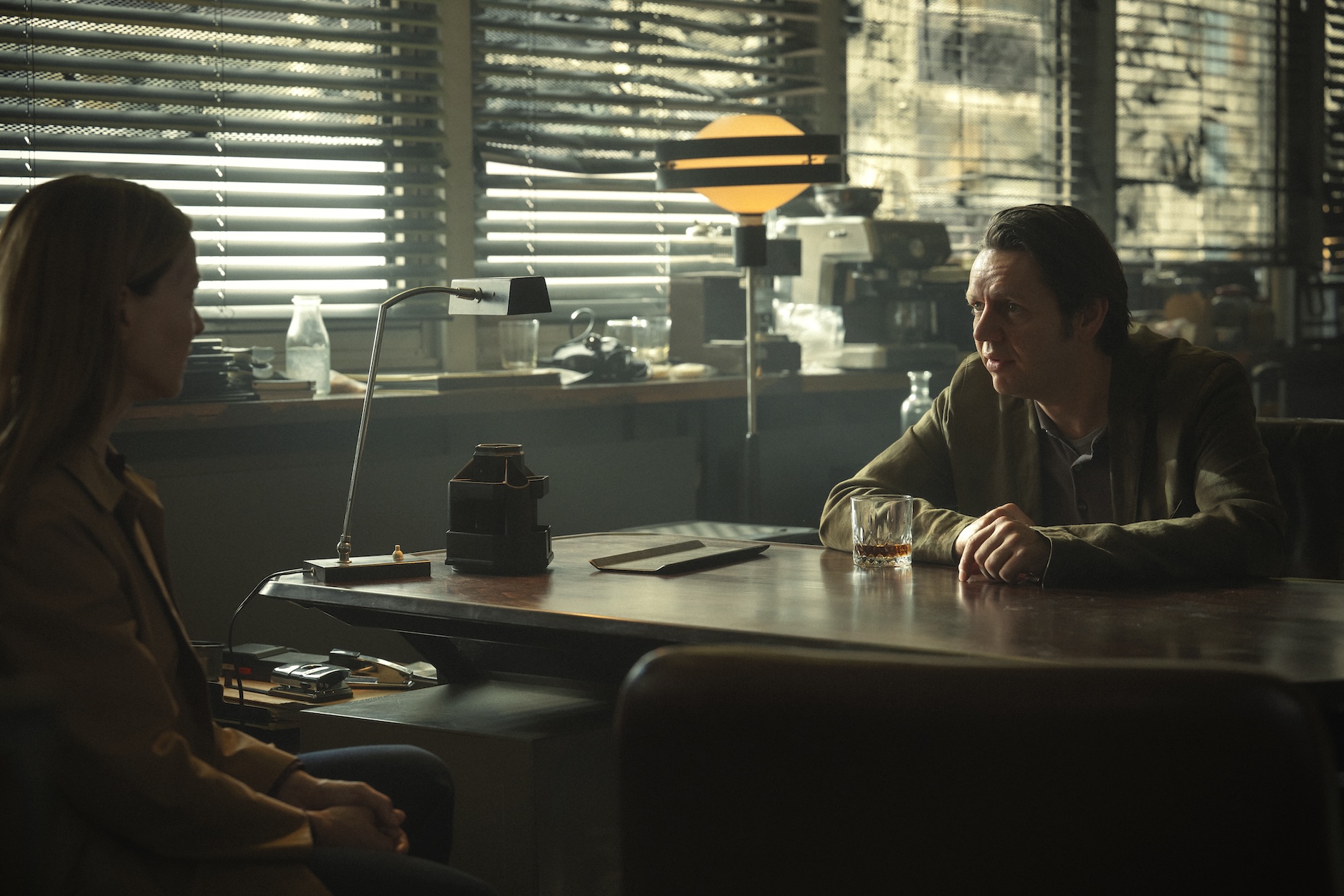
Mia, and with her the viewers, are caught in the middle: on the one hand, she believes in the “Method”, after all, science has declared it infallible; on the other hand, she wants to believe her brother’s words. So she starts questioning the “Method”, something that shakes the foundation of this very society. As she is labelled an “Antimethodist”, not only does her social environment turn against her, her colleagues, her neighbors, society as a whole, but she also gets arrested as a terrorist, a revolutionary without ever wanting to be one, because those who think differently have no place in society.
The film, made by Lena Stahl and based on the play written in 2007 and later developed into a novel by Juli Zeh, is one of Germany’s best-known contemporary dystopian novels. In 2007 she wrote about a dystopian future not too far away, only 50 years away, and looking at it today, in 2026, she might not have been too far from it coming true. The film makes its currency even clearer.
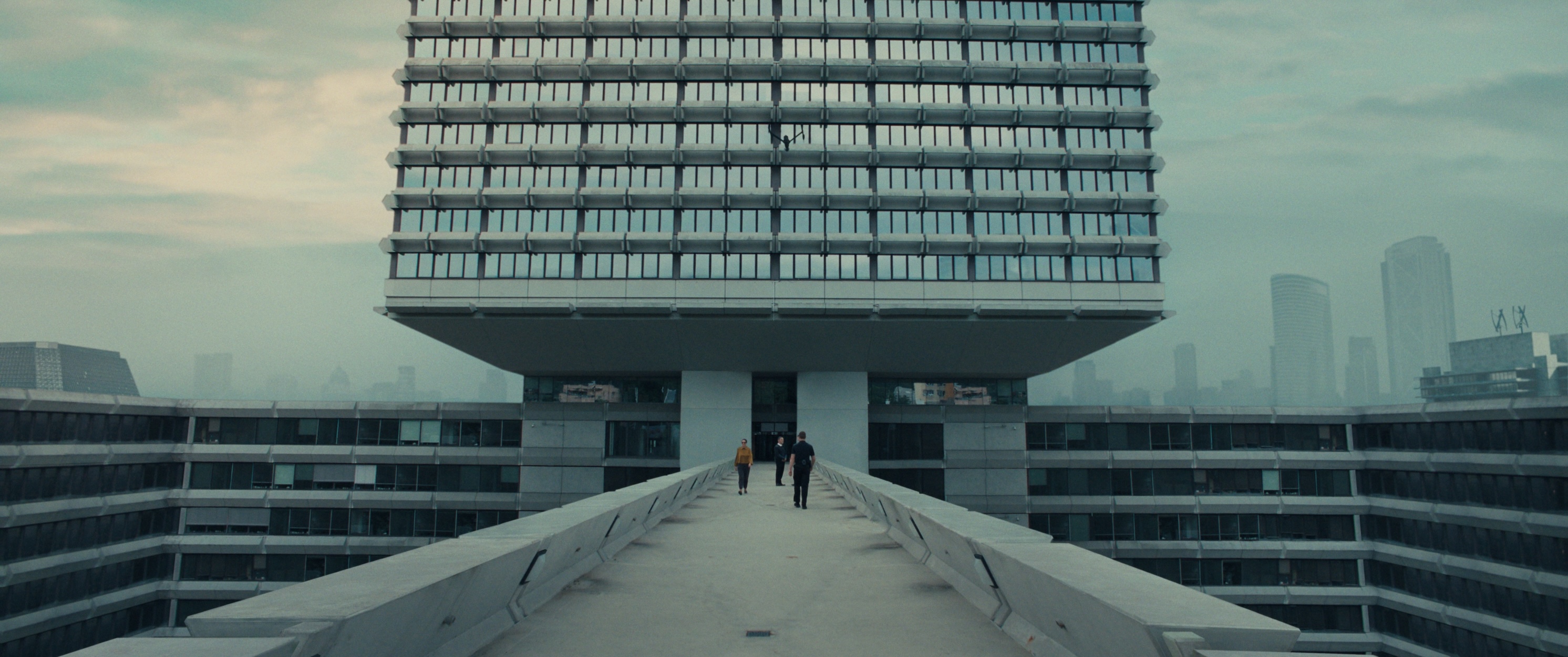
The sets look real, probably because most of it was shot in existing locations that just happen to have a futuristic look to them, the soundtrack by Volker Bertelmann and Lennart Saathoff is minimal but emphasizes the atmosphere throughout the film, from the structured order in the beginning to the gentle moments between siblings to the confusion and anger of the protagonist.
Hannah Herzsprung delivers a convincing, more action-driven character than in the novel, fitting the atmosphere of the film and making the viewer feel with her on her quest to find answers. Damian Hardung makes Moritz feel like a brother we can relate to, while still leaving us to question his trustworthiness in some moments. His character gets a lot more time with our protagonist than in the novel, which enriches the relationship and emotional turmoil of Mia. Haley Louise Jones as a torn colleague turned friend of Mia makes you think of yourself in her position, making the viewer plead with Mia for her help and trust. Christian Friedel as the government-appointed lawyer for Moritz and later on also Mia adds another layer of people working for the government who are fed up with the “Method” but still work within its system, and Alexander Fehling as a journalist, who preaches that he wants to explore the truth and give Mia a voice, yet the audience can never be too certain of his real agenda, intentions and trustworthiness.
The dystopian genre in films was at its height during the early 2010s, yet over the last few years, there have been almost no new ones coming out, possibly to do with the almost dystopian society we experienced during the COVID-19 pandemic in the early 2020s. Now, AI is developing rapidly and is being used so extensively by everyone around us that it appears impossible to escape its spell, “Corpus Delicti” shows a reality that seems closer to what today’s reality looks like than any Hunger Games film we’ve seen so far. “Corpus Delicti” scares us with how real and possible its plot appears, while also leaving the viewer with little closure and plenty of food for thought. “Corpus Delicti” is out in cinemas all over Germany starting October 1st.
What happens when AI steps out of the tech world and into Berlin’s creative scene? At…
What happens when the person you trust most suddenly becomes a stranger? In Marie…

Greengrass´: “The Uprising“ paints a detailed image of the life in England during the…