
THE NEW GUCCI, IN STORE
After Demna took over as Creative Director of Gucci in 2025, attention has been on the house as the designer gradually worked out his vision for one of fashion’s most recognisable names. Following his first runway show for Gucci, “Primavera”, in February of this year, which focused on body-conscious silhouettes and the provocative glamour associated with the house’s Tom Ford years, Demna now brings together the different sides of Gucci he has explored since his arrival. For Spring/Summer 2027, “The Store Show” offers a more complete picture of what Gucci might look like under his direction.
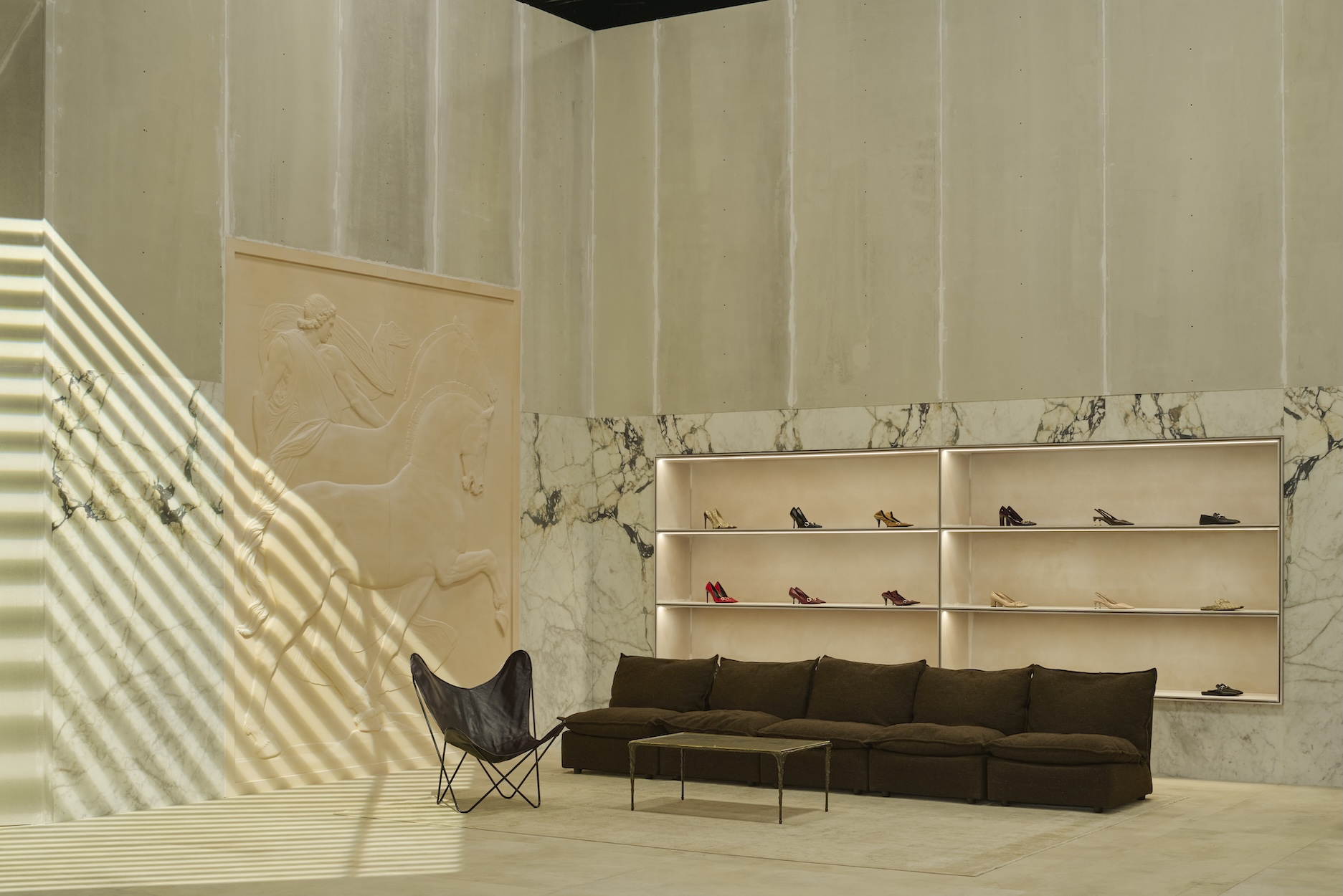
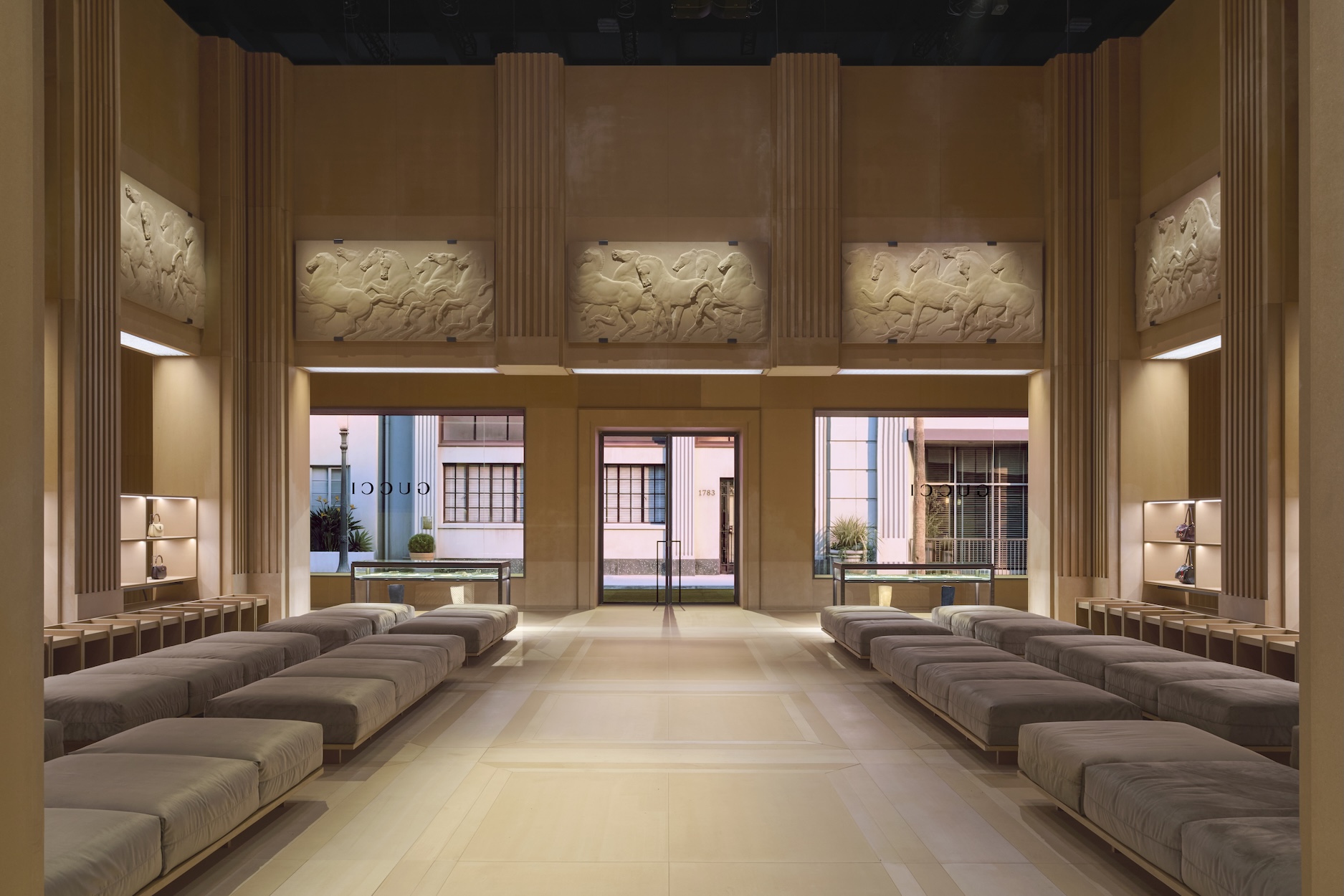
The setting makes the concept immediately clear. Built to resemble Demna’s vision of a Gucci boutique, the space is filled with displays of watches and jewelry, shelves of bags and shoes, and low, velvet-covered seating. The audience sits among the merchandise, while a street scene unfolds on screens behind the store, giving the impression of a boutique embedded in a living city. The runway itself becomes part of the shopping experience, with models entering through the store’s doors, pausing in front of displays and occasionally checking their reflections in mirrors. Rather than treating the setting as a backdrop, Demna allows the clothes and the people wearing them to inhabit it. Menswear and womenswear follow one another as two distinct collections, just as they would occupy separate sections of a store.
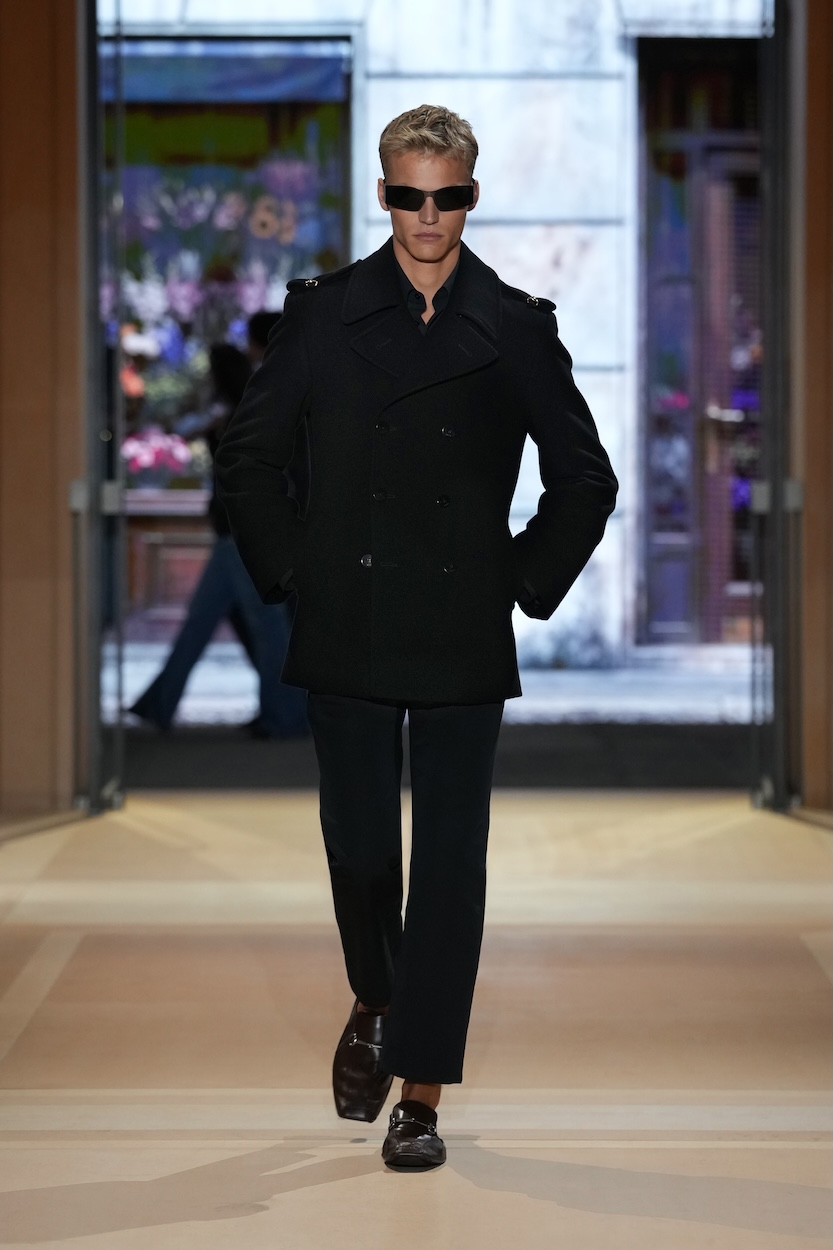
The show opens with menswear, accompanied by an instrumental soundtrack by Gucci Music Director Loki. A bossa nova-inspired composition, built around jazz-inflected piano and Brazilian percussion, sets a relaxed tone for the first looks. The opening wardrobe follows suit. Navy, black and muted neutrals dominate, with long trench coats, dress shirts and sharply tailored blazers establishing a polished, distinctly Italian approach to dressing. Cropped trousers worn with loafers and no socks bring an old-school sense of elegance to the runway, while fitted jackets and pronounced shoulders give the silhouettes a sharper edge.
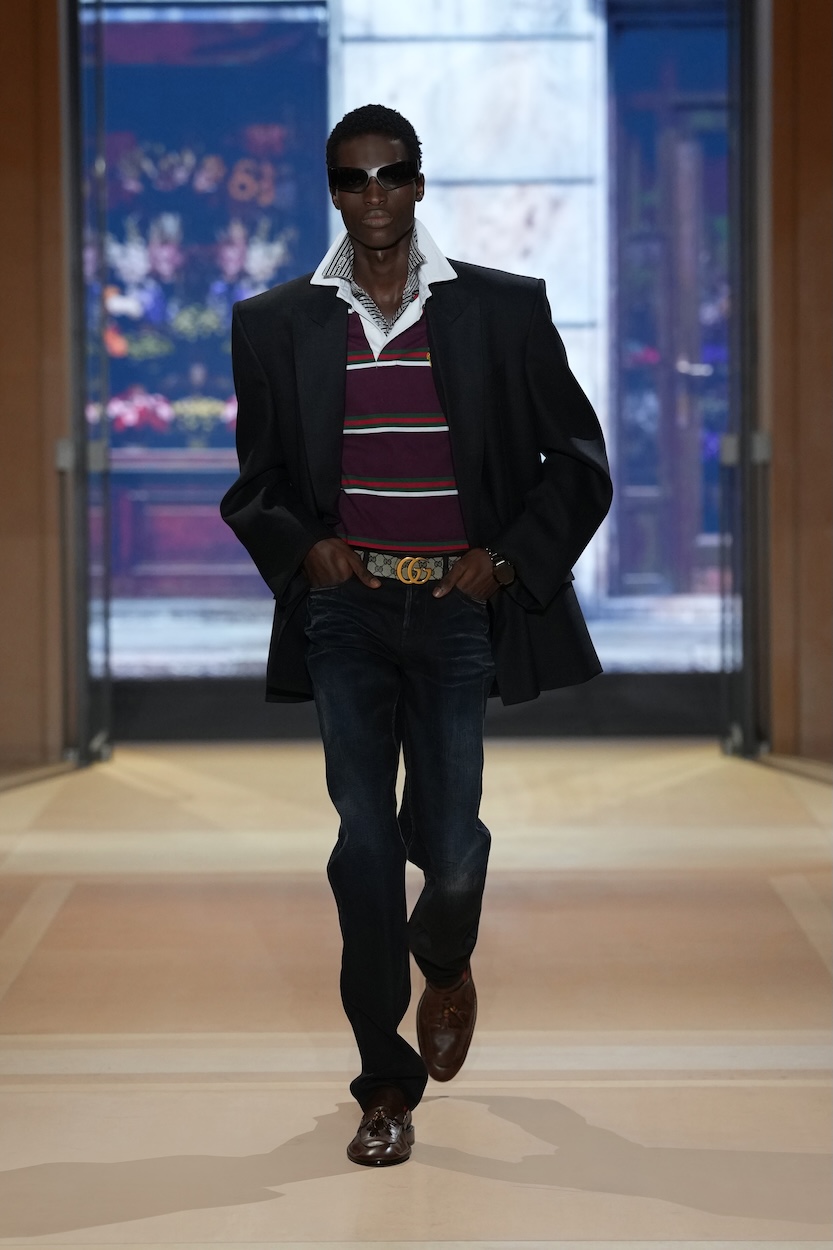
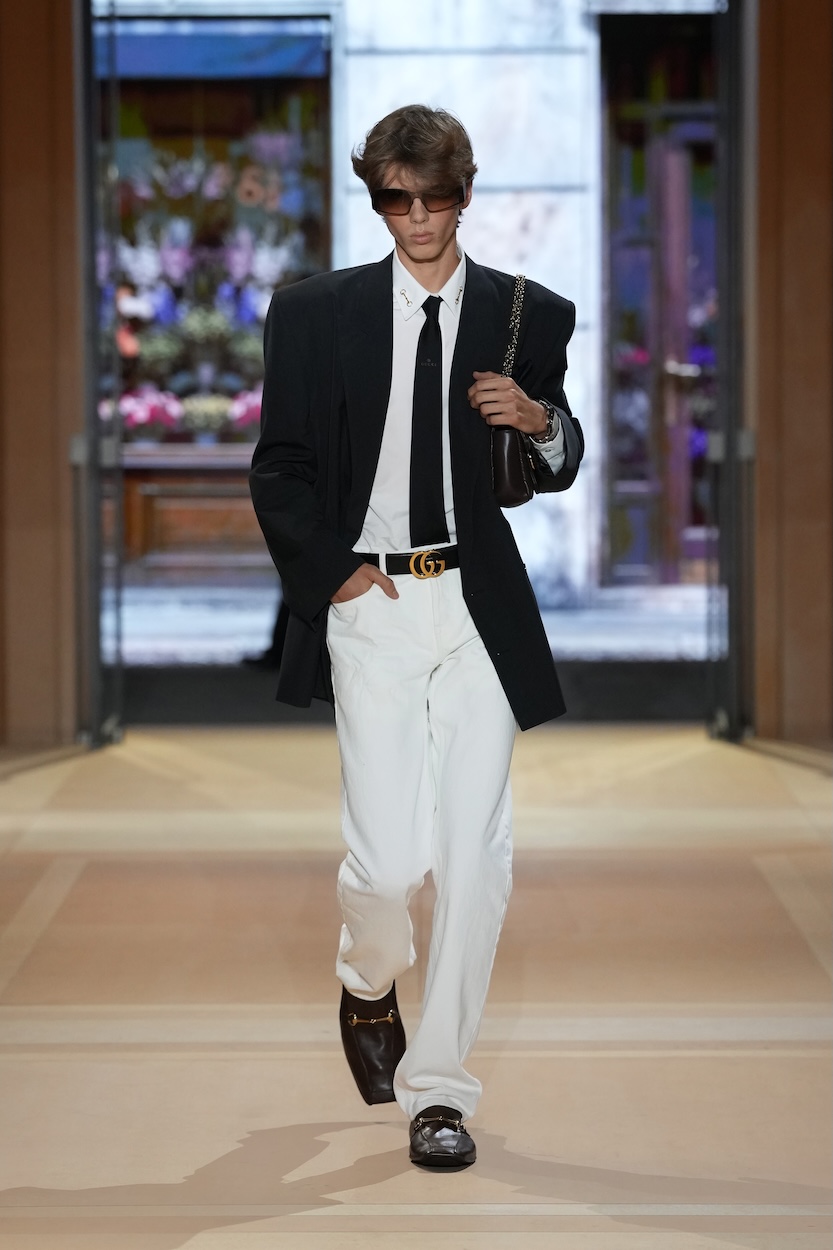
The collection does not remain quite so polished throughout. As the show progresses, proportions become more exaggerated, with puff-shaped outerwear, broader shoulders and slouchy denim interrupting the more restrained tailoring. Some jackets are worn loosely over the shoulders, while other looks lean into layered shirts, rugby tops and more undone styling. These shifts bring a different attitude to the collection, one that feels closer to Demna’s own design vocabulary. The contrast is particularly apparent when a classic Gucci wardrobe is disrupted by oversized outerwear or deliberately dishevelled styling. Rather than introducing an entirely new set of codes, Demna seems interested in seeing how far the existing ones can be pushed.
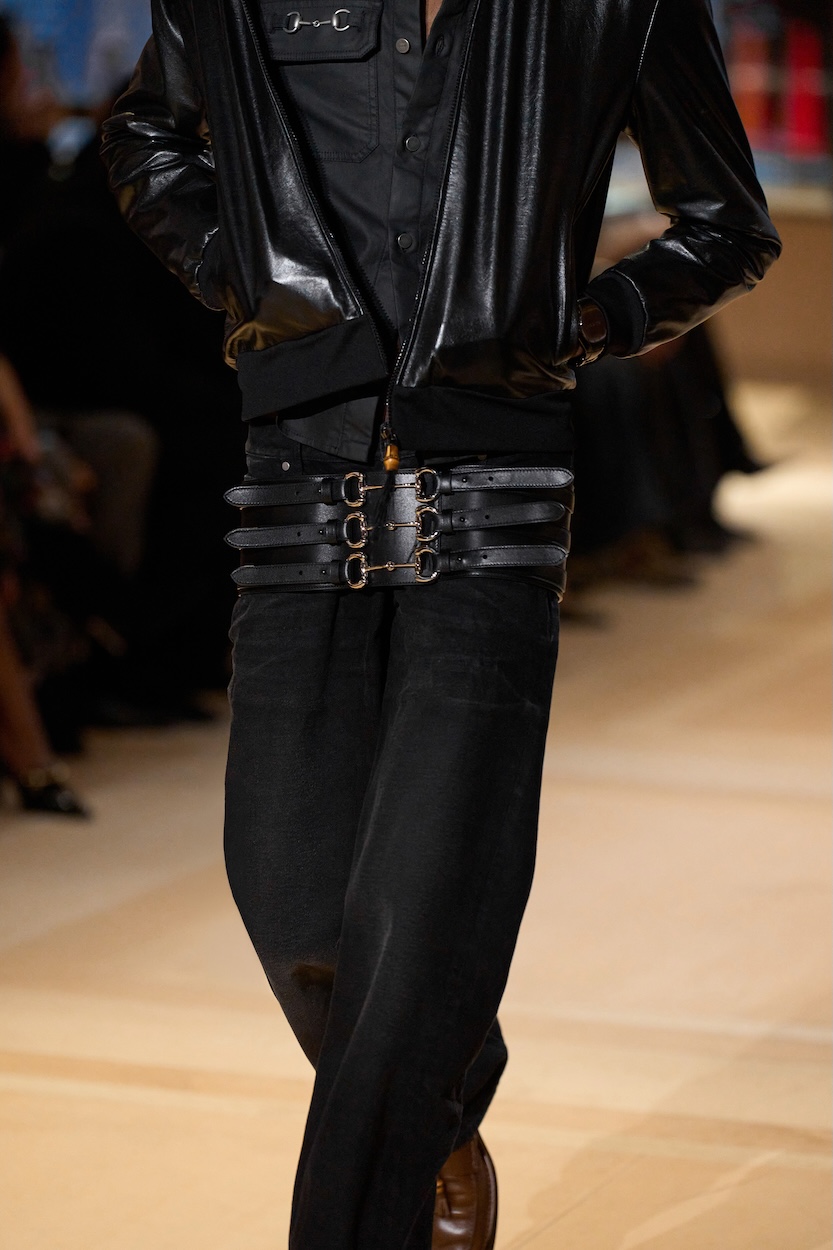
Gucci’s familiar codes quickly emerge. The Horsebit appears on belts and shirt pockets, while the Ophidia returns in both accessories and bags. The new 3X belt, distinguished by its three Horsebit details, makes the house’s equestrian heritage particularly visible. Dark, rectangular sunglasses recur throughout the menswear, adding a degree of Demna’s signature anonymity to otherwise carefully composed looks. There is something almost cinematic about the combination of tailored suits, slick styling and narrow eyewear, with occasional references to the sleek, body-conscious Gucci of the 1990s.
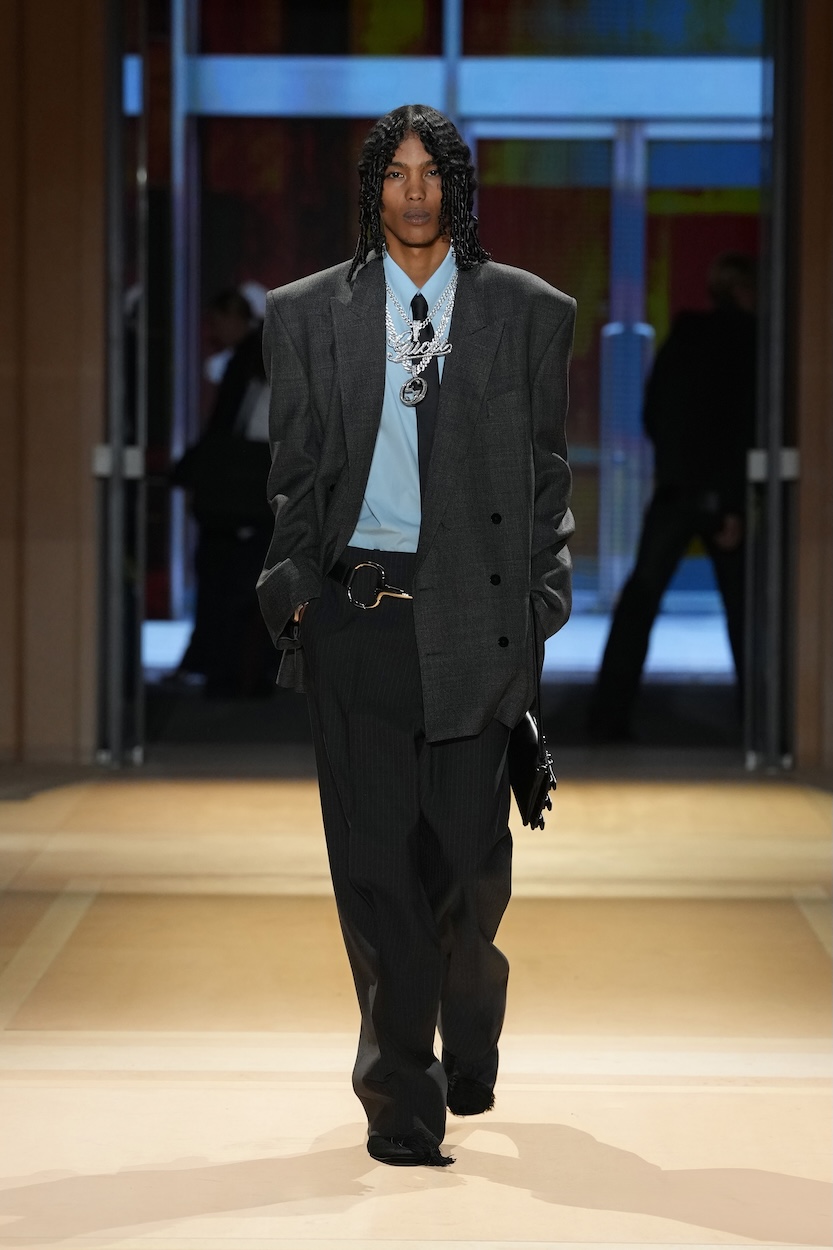
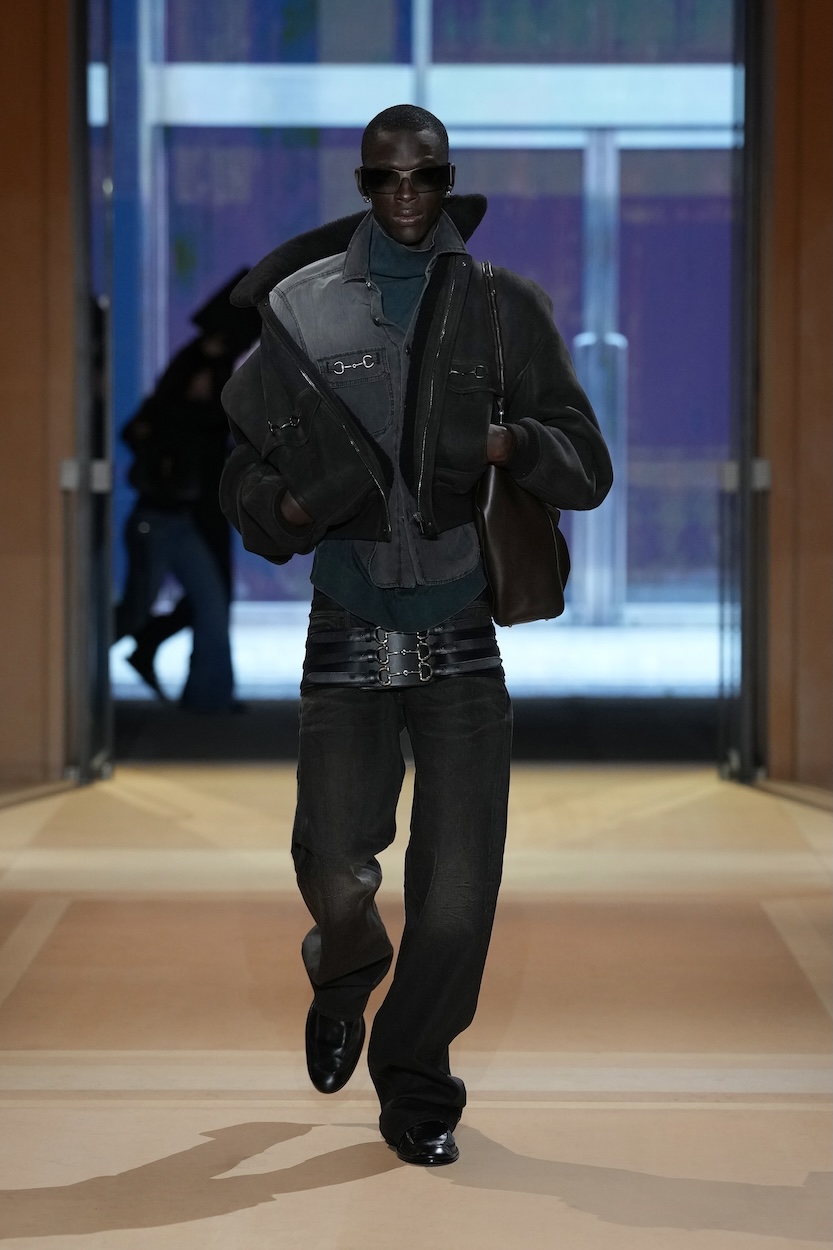
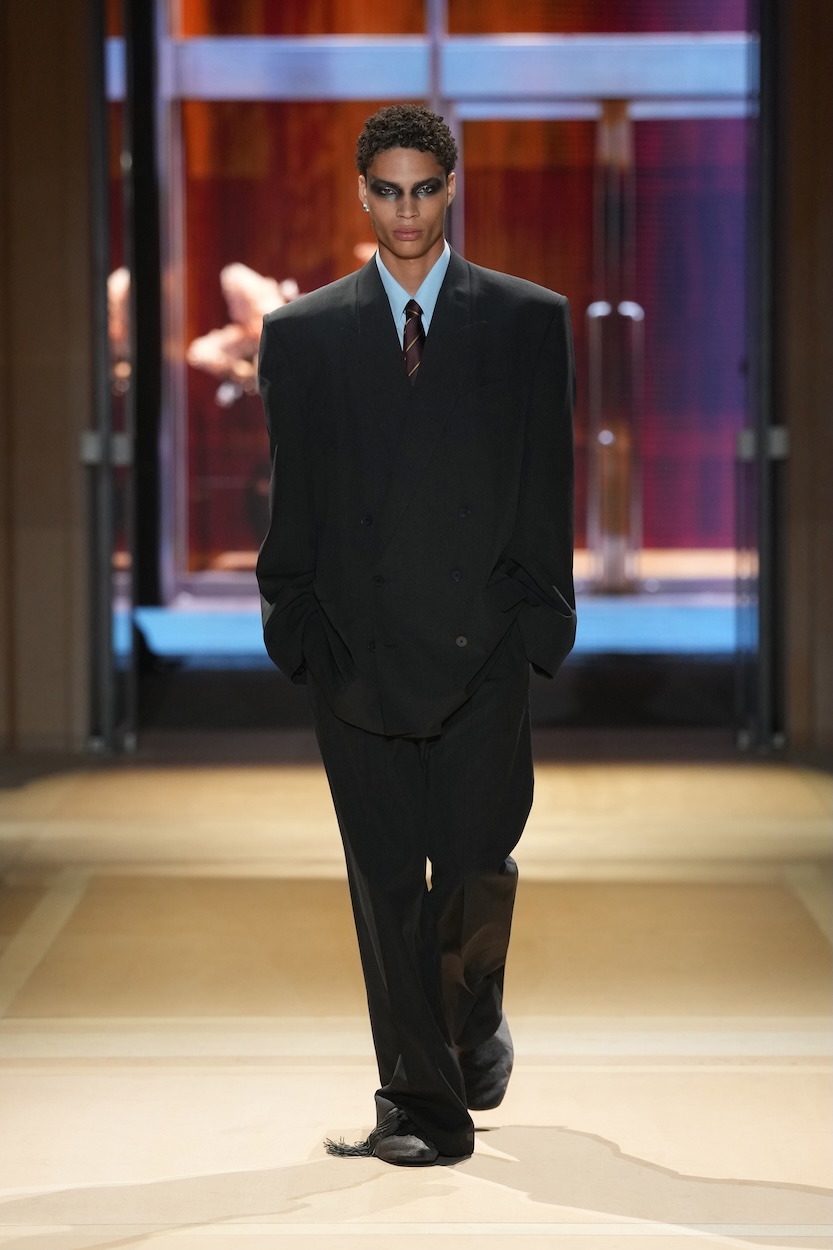
The models contribute just as much to this shifting identity. Their hairstyles, make-up and walks vary from one look to the next, giving the impression that each has arrived at the store with a different idea of what Gucci means to them. Some embody the polished, affluent customer suggested by the tailoring; others feel younger, more casual or deliberately eccentric. This variety reflects the three personalities that shape Demna’s vision of Gucci: “The Rebellious Aristocrat”, “The Snob” and “The Eccentric”. Rather than presenting a single ideal Gucci customer, the collection moves between these characters, allowing different attitudes towards the house to exist side by side.
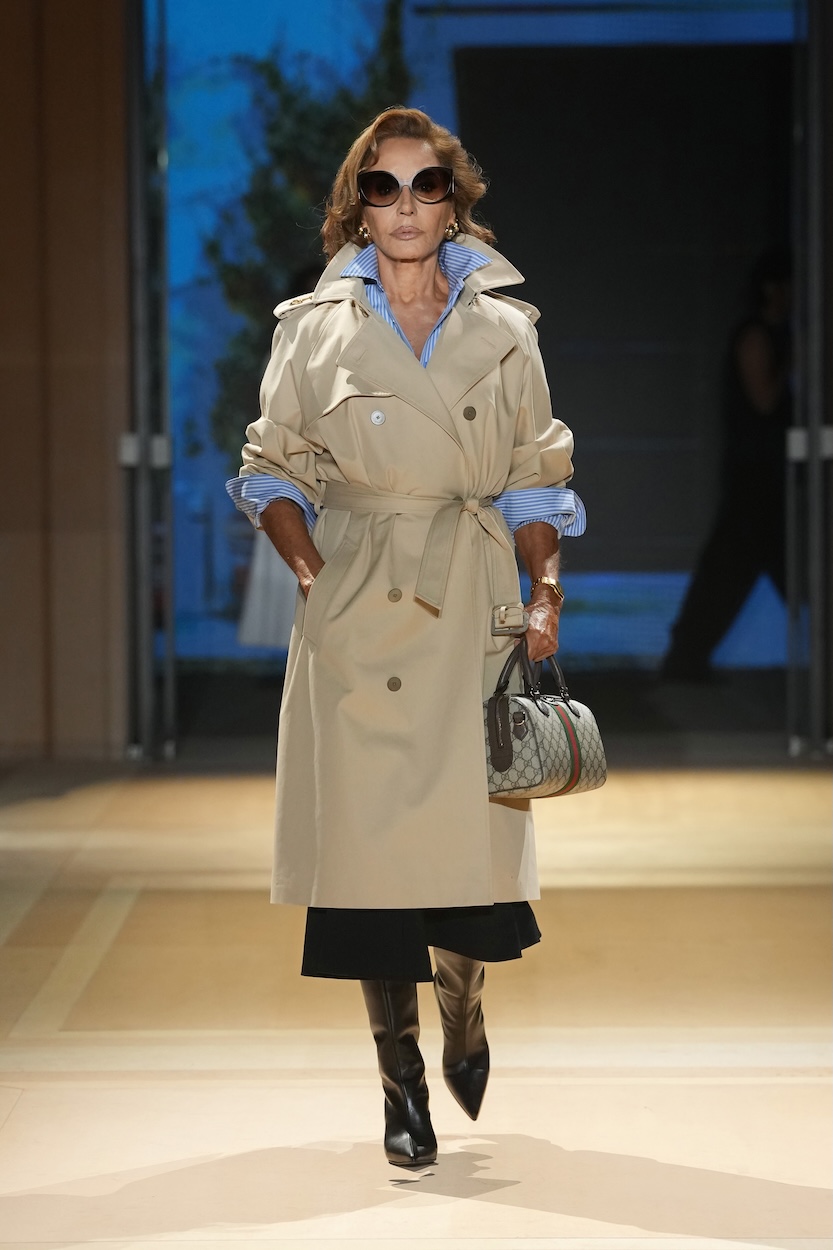
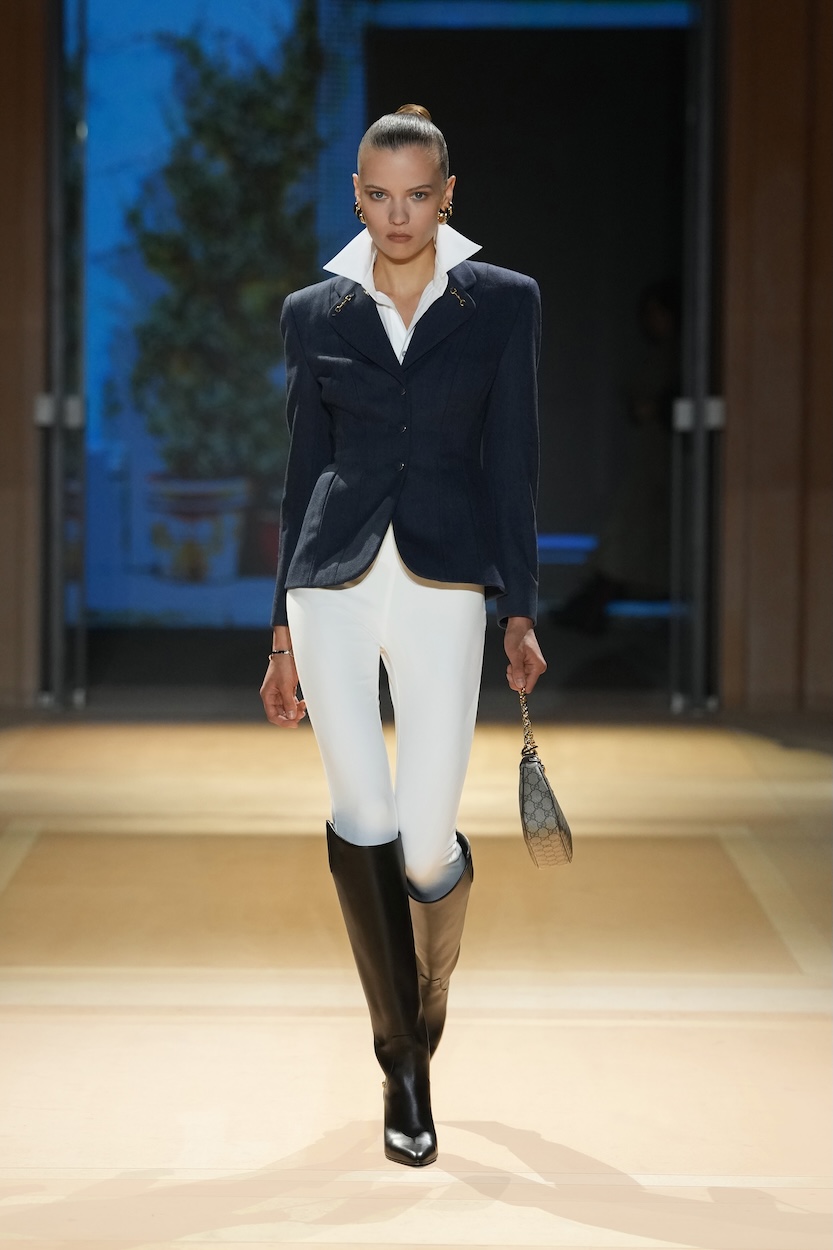
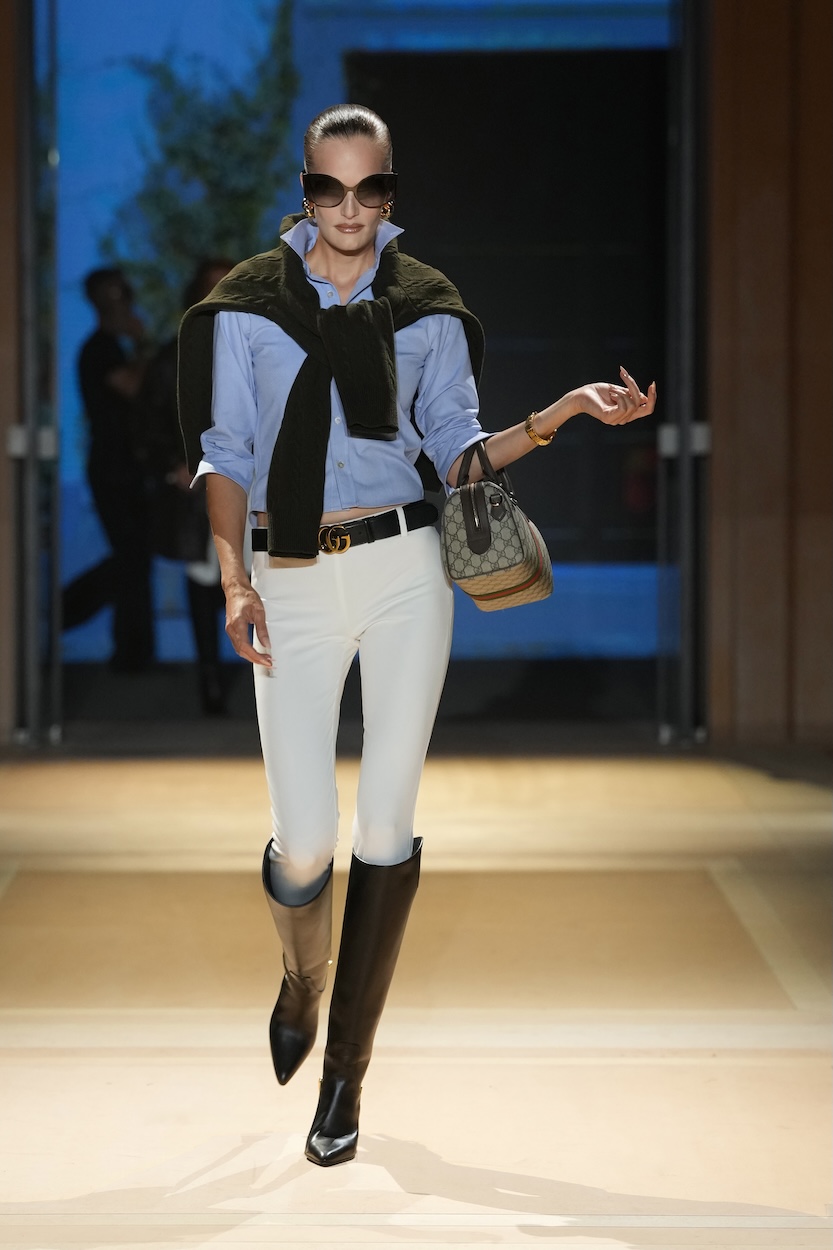
The shift into womenswear is accompanied by a change in the soundtrack. The lighter, jazz-inflected opening gives way to “Tango”, a slower composition that gradually builds in intensity, lending the second half of the show a more sensual atmosphere. It opens with a return to Gucci’s equestrian roots. A riding-inspired look leads into crisp white shirts, sharply tailored blazers, knitwear draped over the shoulders and sleek black riding boots. The styling evokes a distinctly bourgeois wardrobe, with an ease that feels inherited rather than constructed. The Horsebit continues to anchor the looks, while familiar accessories, including the GG Marmont belt and Ophidia bag, reinforce the connection to the house’s established identity.
Yet the collection gradually moves away from this controlled appearance. Rugby tops, Scottish tartan, checked wool, leather and sharply pleated A-line skirts introduce a more rebellious, almost collegiate attitude. Puff-shaped jackets sit alongside masculine shirting, while oversized Horsebit details bring a familiar house symbol into more exaggerated territory. The tension between propriety and irreverence becomes one of the collection’s recurring themes.
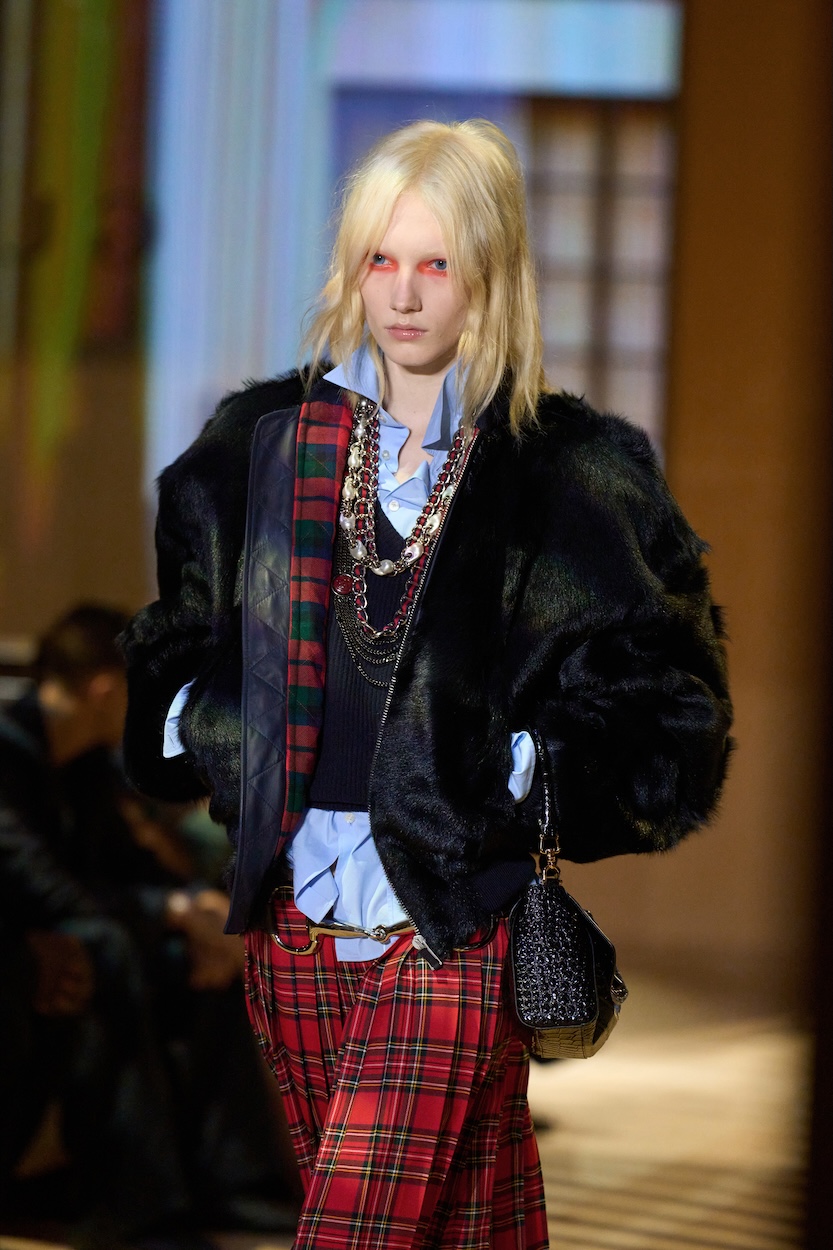
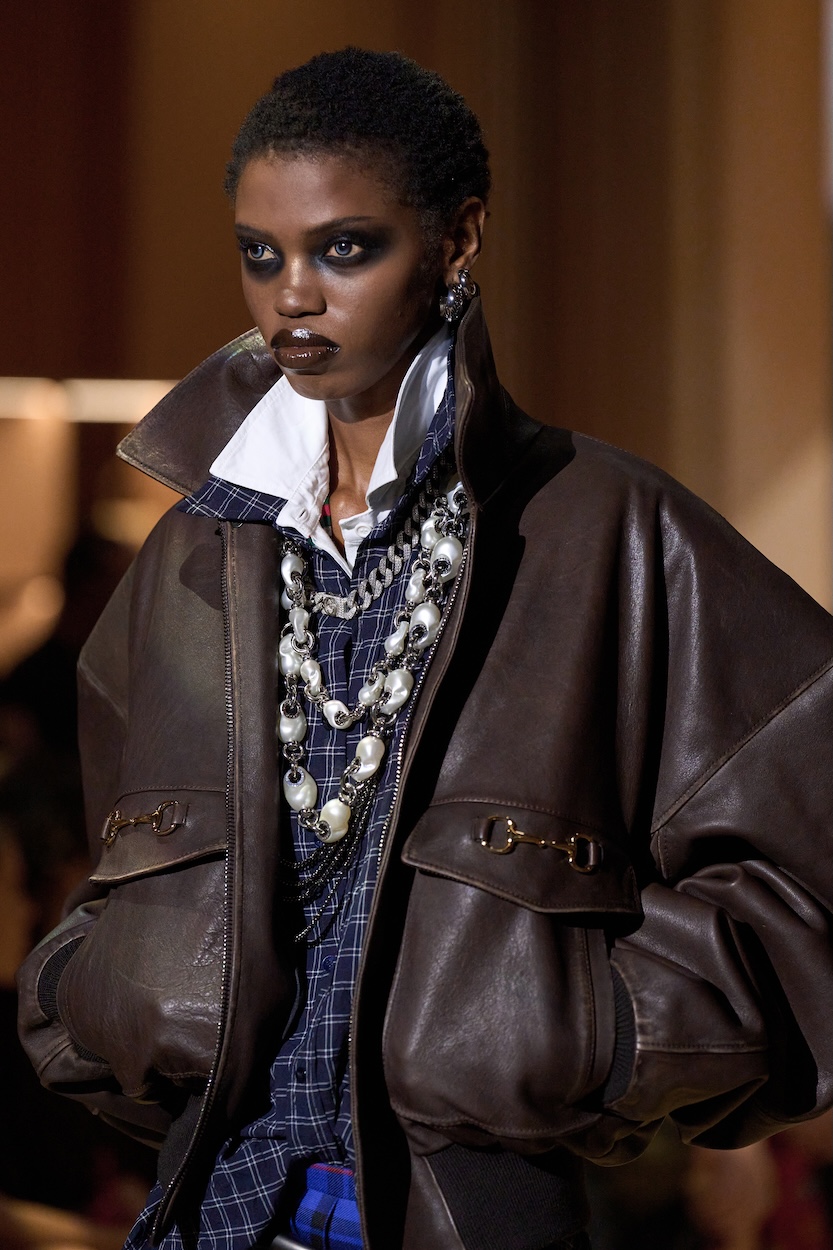
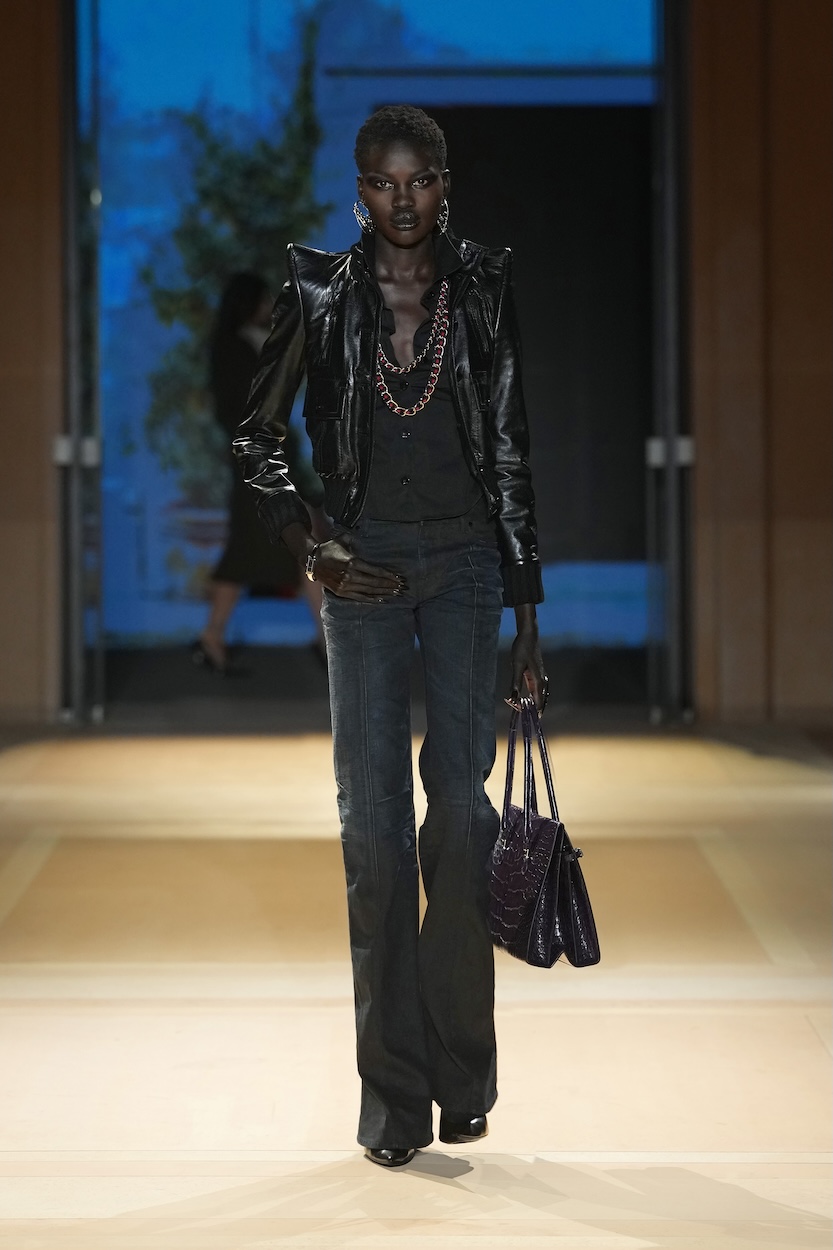
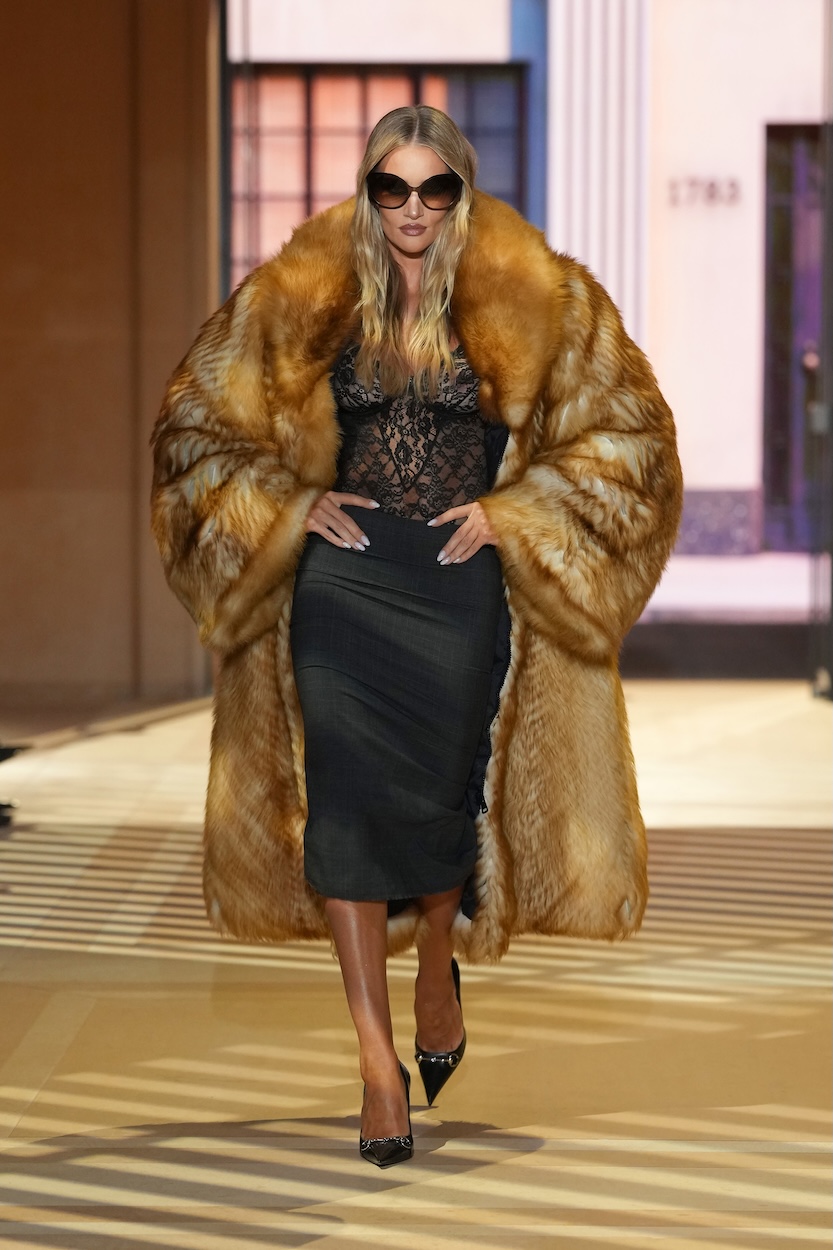
As the womenswear progresses, the atmosphere shifts again. Layered jewelry and sharp-shouldered blouses introduce a more romantic sensibility, before delicate lingerie appears beneath voluminous shearling outerwear. The contrast between the softness of the lingerie and the weight of the outerwear gives these looks a different kind of sensuality from the tightly fitted silhouettes of “Primavera”.
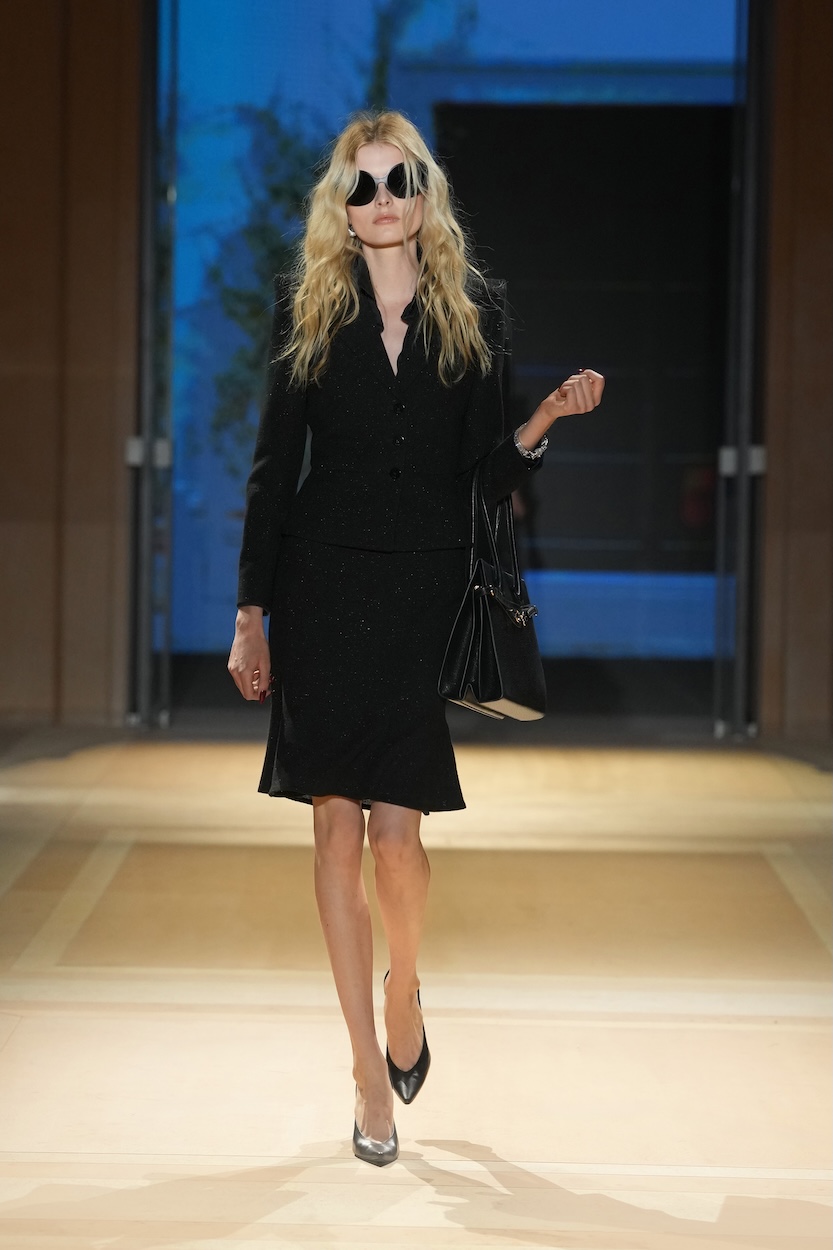
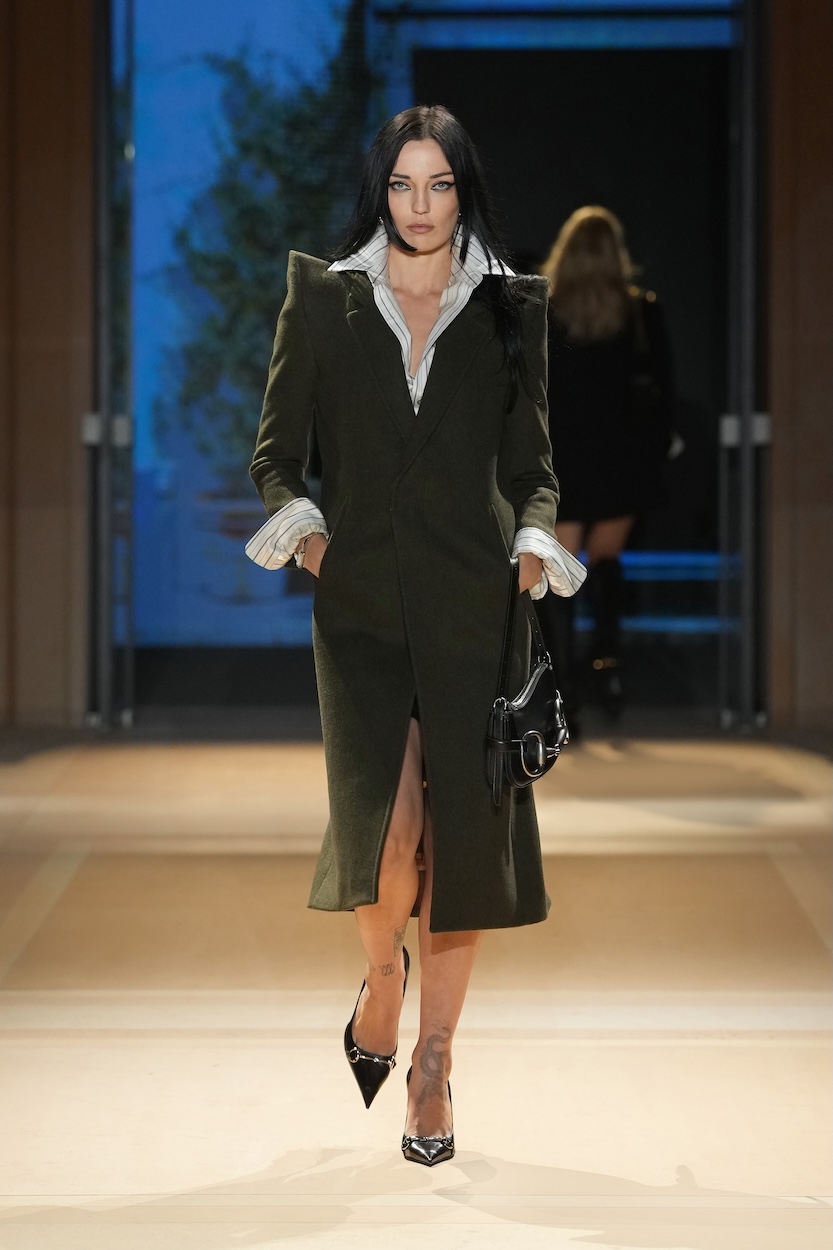
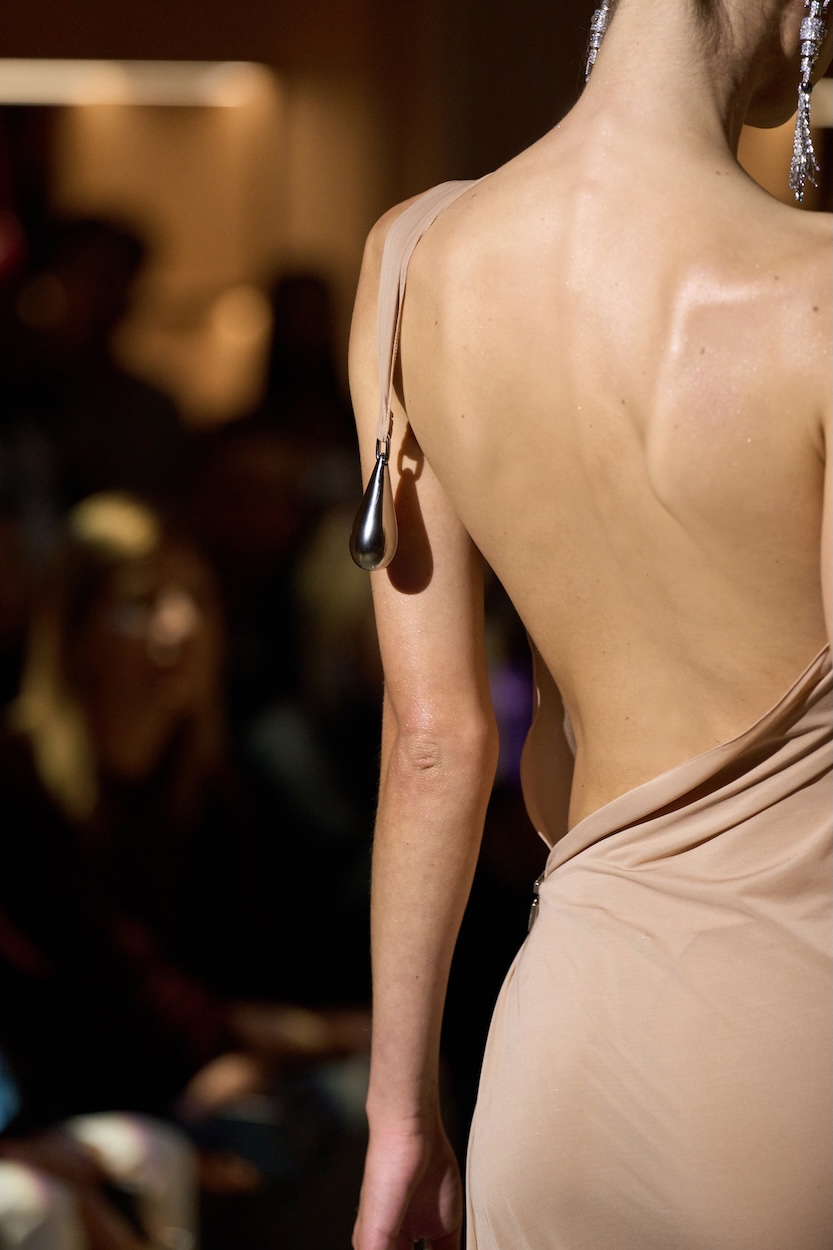
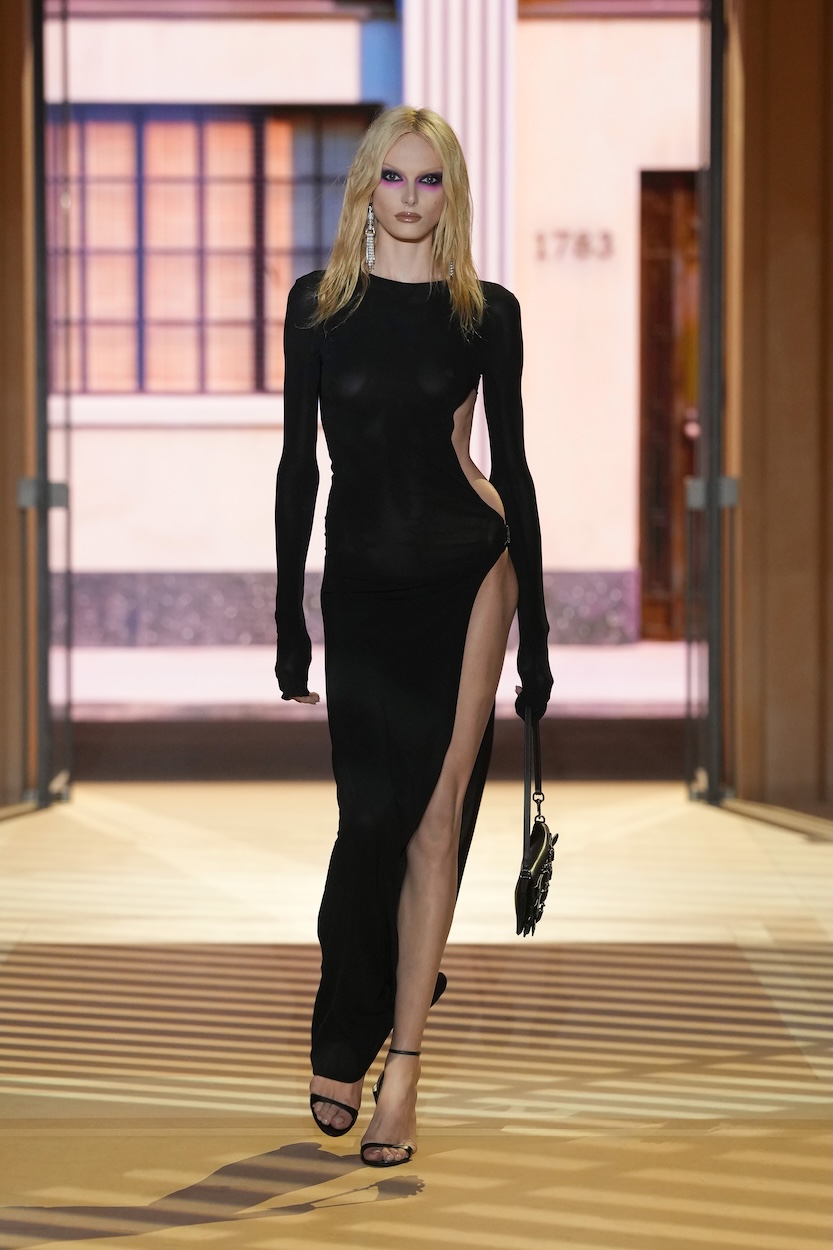
Evening-wear eventually takes over, with fluid dresses and increasingly revealing cuts recalling Gucci’s more provocative past. The final “gravity” gown takes the idea quite literally, a teardrop-shaped metal weight hangs from the dress, pulling the fabric into place as the model moves. The casting reinforces the collection’s range of identities. Different generations and familiar faces from across the fashion industry appear within the same world. The models continue to move through the boutique as though they were customers rather than performers, stopping to look at displays or adjusting their sunglasses in the mirrors. These small gestures make the concept feel more fully realised, allowing the store to function as part of the presentation rather than simply an elaborate set.
The idea also reaches back to the origins of the house. Before founding Gucci, Guccio Gucci worked at London’s Savoy Hotel, where he encountered an international clientele whose different styles and social worlds would shape his understanding of luxury. Demna returns to the hotel as a point of reference for a house that has always moved between different cultural identities. His Gucci is not defined by one particular customer, but by the possibility of several existing side by side.
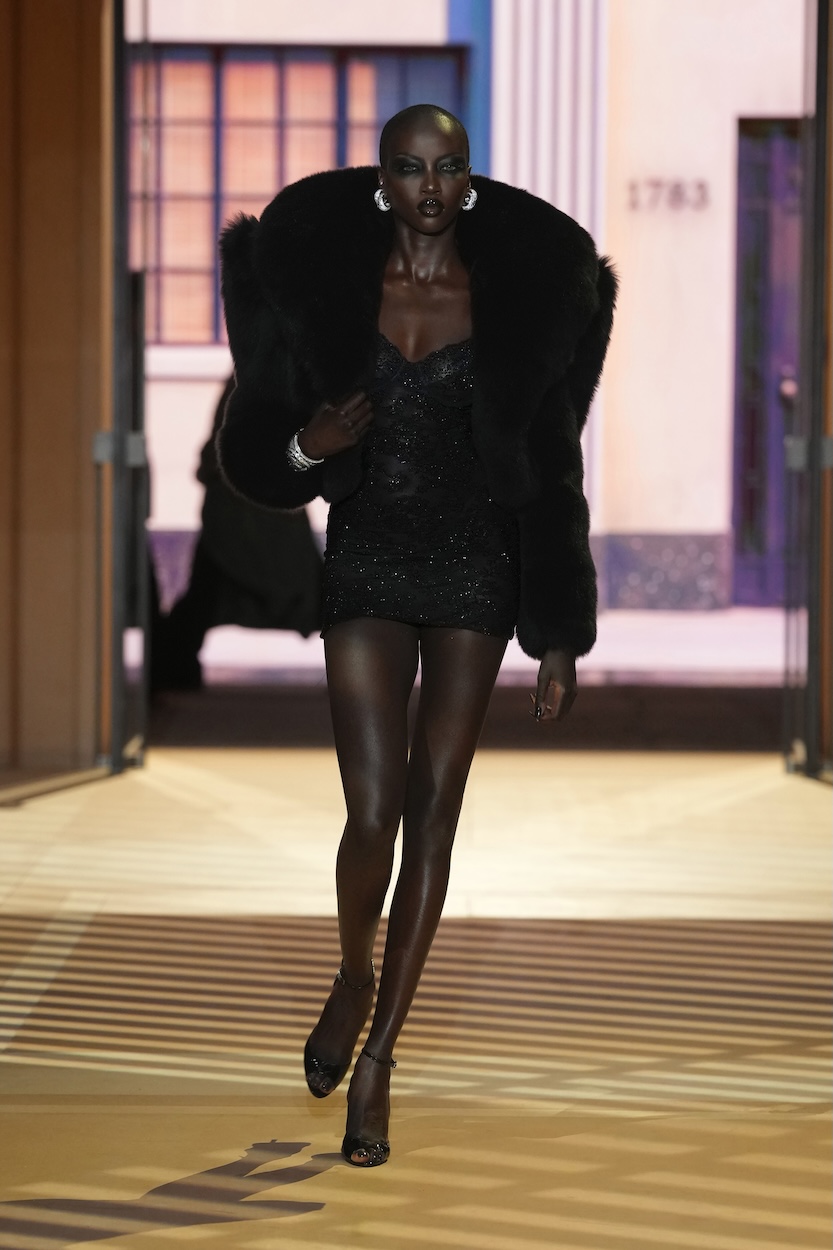
After a year spent exploring different facets of the house, “The Store Show” brings those ideas into closer conversation. Italian tailoring and equestrian references sit alongside slouchy denim, oversized outerwear and the sensuality of evening-wear. Some looks remain close to Gucci’s established codes, while others carry the unmistakable imprint of Demna’s own approach to proportion and styling. By bringing these different wardrobes together, he presents Gucci less as a single aesthetic than as a space in which contrasting personalities can coexist. The store, in that sense, becomes more than a setting for the show. It offers a vision of Gucci in which the question is not who belongs, but which version of the house one chooses to make their own.
IN CONVERSATION WITH SOFIE ROYER
With her new album before/after, Sofie Royer looks at the conflict of you versus you: the…
IN CONVERSATION WITH LEON EMANUEL BLANCK
His work is defined by an inherently asymmetrical approach, working directly from the…

IN CONVERSATION WITH ANNA RINGSTAD
One of the last shows of Oslo Runway invites to Café Sara: It is here where NEXT Award…
IN CONVERSATION WITH AARON PIERRE
There is a certain inevitability to Aaron Pierre’s relationship with BOSS. His career…

IN CONVERSATION WITH JULEZ SMITH
Julez Smith - despite coming from a truly musical family, the 21-year-old tried his hand…
ON OUR RADAR
Numéro Berlin’s weekly collection of the most exciting news about fashion, music, and…