
“EMOTION IS MORE IMPORTANT THAN PERFECTION”
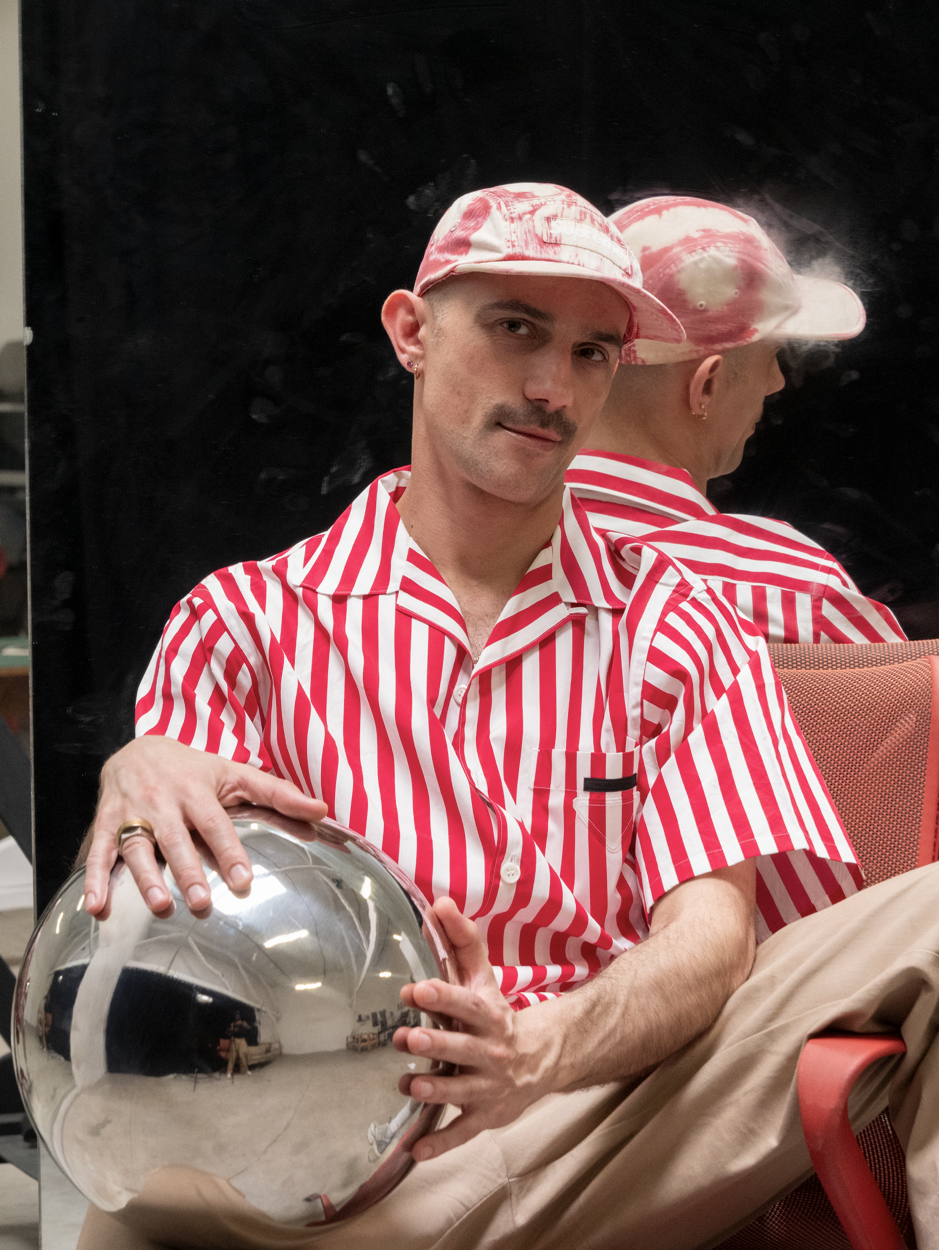
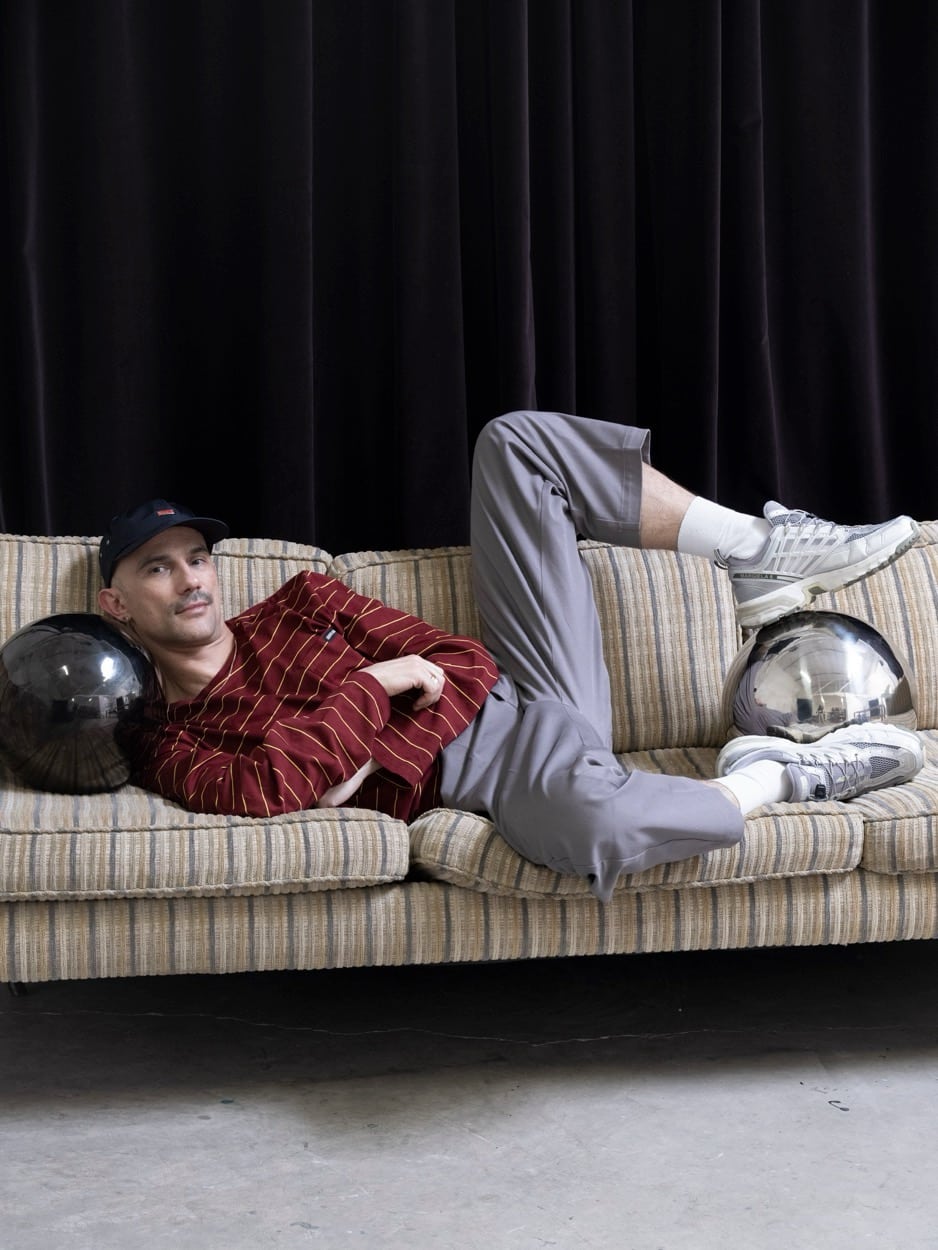
Milan-born and Berlin-based producer, DJ, and label owner Massimiliano Pagliara has spent the last two decades building a musical universe entirely his own. Blending Italo disco, house, dream house, synth-pop, and techno with effortless ease, his productions are driven by curiosity, emotion, and an unmistakable love for the dancefloor. Before dedicating himself fully to music, Pagliara worked as a professional dancer and choreographer, a background that still echoes through the movement and physicality of his sound.
Earlier this month, Pagliara celebrated 20 years of music production with a special anniversary compilation released on his own label, Funnuvojere Records. Bringing together 20 previously unreleased tracks and collaborations with artists including Maja, Ben Holz, Gatto Fritto, Alinka, Fabrizio Mammarella, and the late Aérea Negrot, the collection feels both retrospective and forward-looking. Moving between moments of intimacy and dancefloor euphoria, it captures the many facets of an artist who has never stopped exploring.
For Pagliara, music is more than a collection of genres and influences. It is a space where beauty, desire, nostalgia, and joy can coexist. His latest release reflects not only two decades of artistic evolution but also a continued commitment to discovery, whether through new collaborations, new machines, or simply following a spark of inspiration.
We spoke with Massimiliano about the anniversary compilation, Berlin’s lasting influence, the connection between dance and music-making, and why curiosity still drives him after twenty years of production.
Massimiliano Pagliara:
When I first started making music, everything felt like an exciting discovery. I had been in Berlin for about five years, bought my first analogue machines, and spent countless hours learning through trial and error. Back then, I was very focused on the technical side of things, understanding synthesis, sequencing, and how the records I loved were actually made. Today, my relationship with music is much more intuitive. I trust my instincts more and spend less time questioning myself. Experience has taught me that emotion is ultimately more important than perfection. I still enjoy exploring new techniques, but now I’m more interested in creating something honest and meaningful than proving what I can do technically.
MP: Definitely It’s In Your Eyes, the track I made with my dear friend Aérea Negrot. We originally started it back in 2008, and after her passing, finishing it became an emotional journey. It wasn’t difficult from a musical perspective. It was difficult because it carried so many memories. For years, it remained unfinished, almost frozen in time. Bringing it back to life meant revisiting a very special friendship and a creative connection that meant a lot to me. This track is also a tribute to her artistry and a way of preserving a small piece of what we created together.
“IT CARRIED SO MANY MEMORIES”
MP:
There are many different reasons. Some tracks were sketches that I never fully finished because, at the time, I didn’t yet have the skills to realise them the way I imagined. Others simply didn’t fit into the projects I was working on back then. Sometimes music gets left behind because you’re already excited about the next idea. When I started reflecting on twenty years of making music, I went through old hard drives and unfinished sessions. I realised there was an entire hidden story there. These tracks may have remained unreleased, but they were still part of my artistic journey. This anniversary felt like the perfect opportunity to bring all those forgotten moments together and give them a home.
MP: Absolutely. Dance taught me how movement creates emotion and how the body responds to rhythm. Even today, when I’m producing, I often think physically rather than intellectually. I imagine how a groove feels rather than simply how it sounds. As a choreographer, I was also interested in tension, release, contrast, and storytelling. Those same principles apply to music. Whether it’s a subtle build-up, a dramatic breakdown, or a simple bassline, I’m always thinking about movement and how people experience music through their bodies.
MP: A bit of both. Sometimes a track arrives with a very clear atmosphere in my mind. It might be a sunrise after a long night, a quiet walk through the park, or even the feeling you get from a film or a book. Other times, it’s much more abstract. What I enjoy most is leaving enough space for listeners to create their own stories. Once music is released, it no longer belongs only to the artist. It becomes part of other people’s lives, memories, and experiences. I love that transformation.
“BERLIN COMPLETELY CHANGED MY LIFE“
MP: It gave me the freedom to reinvent myself, both personally and artistically. When I arrived, the city felt full of possibilities. There was a sense that experimentation was encouraged and that people were genuinely interested in new ideas. The city has changed enormously over the years, but I still find inspiration here. It’s not necessarily the same Berlin I arrived in, but it’s still a place where different cultures, perspectives, and creative communities intersect. That exchange continues to feed my imagination.
MP: Collaboration pushes me outside my comfort zone. When you work alone, it’s easy to repeat familiar patterns. Another artist brings a completely different perspective, different references, and different ways of solving creative problems. I love the unpredictability of that process. Some of my favourite moments in the studio have come from ideas I would never have arrived at by myself. Collaboration is a reminder that music can be a conversation rather than a solitary act.
MP: I follow my instincts. I’ve always been a music lover first and a genre specialist second. My record collection has never been organised around strict boundaries, and neither has my creative process. Of course, influences are always present, but I don’t sit down and decide to make a house track or an Italo track. I simply follow whatever feels exciting in that moment. Sometimes the result fits within a genre and sometimes it doesn’t. That’s perfectly fine with me. I try to remain open-minded and I don’t feel the need to define myself through one specific genre.
MP: I think it’s both. Dance music allows us to escape everyday pressures, but at the same time it can bring us closer to who we really are. On a great dancefloor, people often become more open, more present, and more connected to their emotions. For me, the best dance music creates a space where joy, vulnerability, freedom, and connection can coexist. That’s a very powerful experience.
MP: The possibility of surprise. No matter how long you’ve been making music, there are still moments when something unexpected happens. It could be a melody, a sound, or an emotion that wasn’t there five minutes earlier. That feeling never gets old. Every new project is an opportunity to learn something about yourself and discover a place you’ve never visited before. Curiosity is what keeps me going. In fact, just last night I switched on all my machines and started playing a funky bassline on my Jupiter-4. I became completely absorbed in it. Eventually, I recorded it as a MIDI sequence and sent it through the Minimoog and the Mono/Poly as well. Hearing these three beasts playing the same bassline suddenly made everything feel hot, groovy, and full of energy. Moments like that still excite me enormously.
MP: I think joy is essential. Not as a form of denial, but as a form of resistance and healing. We all carry different worries and pressures, and the dancefloor offers a rare opportunity to be fully present with others.For a few hours, people from different backgrounds can share the same space, the same rhythm, and the same sense of possibility. There is something deeply beautiful about that. Joy creates connection, and connection is something we need now more than ever.
“JOY IS A FORM OF RESISTANCE AND HEALING”
IN CONVERSATION WITH ANDERS DANIELSEN LIE AND MARIE ULVEN AKA GIRL IN RED
Premiering in the Quinzaine des Cinéastes section at the 2026 Cannes Film Festival,…
WEEKEND MUSIC TIP PT 97 – MISS BASHFUL
“I just love being a mother“ - Miss Bashful on her newest album, toxic relationships…

WEEKEND MUSIC TIP PT 96 – 99
German Post Punk Revival paired with rave elements and mystical lyrics - this is 99, band,…
IN CONVERSATION WITH ACHIM REICHERT
Graphic and type designer Achim Reichert in conversation, on letting go in collaborative…

IN CONVERSATION WITH TADASHI KAWAMATA x RUINART
Tadashi Kawamata, Japanese sculptor and photographer, has been chosen to continue…
WEEKEND MUSIC TIP PT 94 – ALEWYA
Alewya releases her debut album „ZERO“ on 26th June, promising an enticing blend of…