
WHAT IT TAKES TO BE HONEST: MEETING CHARLIZE

It takes a good amount of self-reflection and emotional intelligence to recognize your own toxic habits – and even more courage to publicly sing about them. Charlize has both. The Hamburg-born rapper reflects with brutal honesty on insecurities, toxic relationships, and nights that might have lasted a little longer than they should have. A dreamy, ethereal voice floats over a broad range of trap beats, making it almost feel as though Charlize has opened up a new genre within Germany’s hip-hop scene. Listening to her doesn`t get boring, not last because she switches effortlessly between German, Italian, Spanish, and English in her songs.
After her first summer of touring, we can expect an album this winter centered on transformation, inspired by the mythical white swan/black swan metamorphosis.
Charlize: I think, like with many artists, it started in childhood. You kind of “therapize” your parents by constantly making music and singing. For me, it started really, really early. I think Pussycat Dolls was my first CD, and I would always sing along to it. Then I moved out relatively early, and the apartment I lived in had a piano. That’s where I wrote my first songs. I was around 16, and that was definitely when I started writing my own music.
I also started recording around that time. Through friends, it kind of happened that a lot of people around me were a little older and already had studios or parents with studios. I spent a lot of time there, and that’s basically how it all started. It was a long time ago – about ten years now.
C: In the beginning, I didn’t really set myself a big goal. I just did it because I enjoyed it, because it fulfilled me. Honestly, I don’t think I would have survived otherwise. I need to make music. Even if I had no goal and couldn’t make money from it, I would still do it.
So I never really thought about stopping. Of course, it’s different when you enter the industry. There are definitely moments where you think, “What the fuck is all of this?” But I haven’t really had a moment where I wanted to quit.
C: Definitely. I think that’s the case for a lot of people. But I listen to music all the time – I can’t really live without it. I also listen to a lot of my own music. It kind of works as therapy for me.
C: I was making music, but not seriously at first. Then I was in a clinic, and my roommate there – who is now a good friend of mine – introduced me to Thomas. At that time, I was doing my speech therapy training.
If I hadn’t met her, I honestly don’t know if I would be signed today or if any of this would have happened. It wasn’t really my huge goal at the time. Of course, I always wanted to be a superstar – I think everyone imagines that somehow. But it wasn’t like I had been hustling towards it intensely for years. A few things happened where I just thought, “I’ll see where this goes.”
C: Yes.
C: No, I’m still indecisive. Very much so.
Honestly, I don’t think I would have survived otherwise. I need to make music.
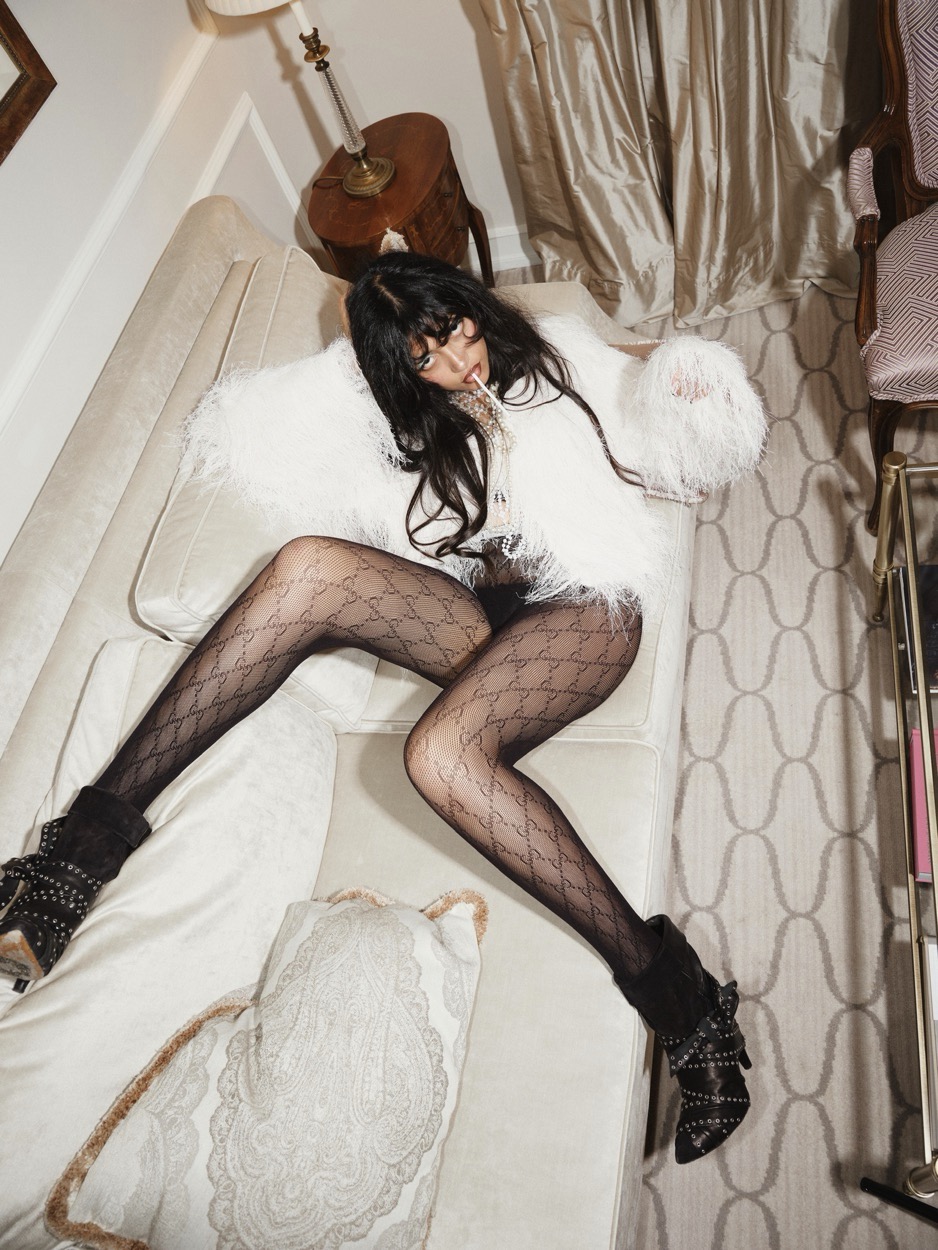
C: Yes, I’ve been working on my album, and it’s almost finished. I call Indecisive Shawty more of a mixtape because it’s a collection of everything I was making at that time.
The album that’s coming now is a real album. Everything fits together thematically, and there’s a clear storyline. It’s coming out in winter.
C: I already touched on having a toxic side on my first EP. I definitely don’t have a problem sharing that in my music. The album is very much about recognizing your toxic traits, realizing that they are toxic traits, trying to let them go, and growing from that.
For example, my next release, which comes out on August 6th, is called Blair Waldorf. Have you watched Gossip Girl?
C: It’s about this moment where you like someone and you just want that person to like you back. But you become obsessed and toxic. Even when you reflect on it, you think, “Why do I actually need another person to like me so badly?” It’s not really healthy. You should be comfortable with yourself and with the people who like you.
For me, it often ends up being about guys, but that’s basically the idea. It’s the beginning of the album: scandalous nights, excess, and then realizing, “Okay, something is a little wrong here.” Then it becomes about understanding what you actually want from life and what really matters.
C: Definitely. And it also tells a story. Not every song is necessarily my own story. I’m telling the story of a swan. It starts as a white swan – white representing toxicity, because drugs are white, and many things that are toxic are associated with white. I also think white can be a color that blinds you.
The swan develops into a black swan that embraces everything that makes it who it is. That’s why all the colors eventually become black
C: Yes – or actually, not officially. The working title is Black Swan Breakthrough, but I might still change it.
C: I’m always unsure about the term “conscious trap.” I just said it at some point. But yes, in a way it is conscious trap because it reflects on deeper topics while still being on trap beats, so you don’t always immediately realize that it’s deep.
For me, the most important thing is just being honest. I don’t want to flex with something that isn’t mine or create something that doesn’t represent me or something I haven’t experienced – whether it’s my own experience or something from people around me. It has to be honest.
I think you can hear that. The highest thing you can achieve with music is making people feel something. You notice it when you show people songs where you really put your emotions into them – they listen differently. It’s a different frequency.
That’s why I always make sure that what I put out isn’t dishonest. Of course, sometimes I accidentally make songs that aren’t like that, but those are usually the ones that don’t get released.
C: Yes, definitely. For example, Therapierraum 3 – if you know that song – I was in a relationship when it came out. It’s obviously a little crazy when your partner knows that you’re a very honest person and that you wouldn’t say things from a perspective that isn’t true.
It’s also difficult when you talk about family or personal things. On this album, there are still some topics I haven’t been brave enough to release yet. Songs that are very, very honest about things that happened.
So yes, there is fear. But you have to try to separate yourself from that. Especially when the songs are good, it’s ultimately not that deep. I just try to tell myself that you have to do it. You have to share it – maybe because it helps someone else.
I think it’s important to stand behind what you do. So yes, the fear is there, but I do it anyway.
C: I pay a lot of attention to phonetics. In German, there are often things you can’t express as beautifully phonetically, so I’ll say them in another language.
And there’s also research showing that people have different personalities in different languages. I think that’s true. When I speak German, I’m not as soft as when I speak Spanish or Italian.
So sometimes it’s probably subconscious – there are things I say in another language because they fit better. And honestly, sometimes it’s also because saying something in German feels a bit cringe.
C: I actually listen to a lot of my own music, especially when I’m working on an album. People around me are always like, “What the fuck, you only listen to your own music?” But when I’m working on something, I want to keep developing it.
I’m listening to a lot of ’80s music right now, but I’m also very inspired by the trap world, like Travis Scott or Lady Gaga. She especially inspired me a lot back then, also with using Auto-Tune.
Right now, because I’m on vacation, I’m listening to a lot of Latin music. I have two songs I play constantly at the moment – but it always changes for me. I really listen to everything: every era, every genre.
C: I would tell her that everything that won’t matter in two years also doesn’t matter now. When you have moments where you don’t know what to do or where you feel stuck, you just have to get through that moment and keep going. Usually, it’s not as deep as it feels.
And I would tell her not to overthink so much. I would also tell my current self that. It doesn’t really help. You just have to try to stay present – even though that doesn’t always work.
C: I want to reach the point where I can say I’m truly happy with what I’m doing. Of course, in terms of size and my musical reach, I definitely want to grow much more and reach many more people.
I think the moment where you can say, “I lowkey made it,” where you stand there and think, “Wow, this is really what I imagined as a little girl” – that’s the moment I’m working towards.
C: No, not at all. Sometimes you have moments where you think, “Wow, this is everything I wished for.” But I haven’t had that one big “I made it” moment yet.
I don’t even know if you ever really have one when you’re a little crazy and keep pushing yourself. But I think I’m still waiting for that moment.
For me, the most important thing is just being honest.

ON TOP OF THE WORLD: HOW YE’S CONCERT REFRAMED ALBANIA’S CULTURAL FUTURE
Few artists have shaped 21st-century culture as profoundly as Ye. The Tirana performance…
WEEKEND MUSIC TIP PT 102 LAVENDER
He has quietly worked his way up through Germany’s underground rap scene, but recently…

HOSTED BY NUMÉRO BERLIN AT TYLKO SPACE: TYLA’S A*POP LISTENING SESSION
South-African Grammy winner Tyla’s new album A*POP is set for release, and Numéro…

WEEKEND MUSIC PT 101 BASHKKA
BASHKKA on WHOLE Festival, Queer Joy and the Power of the Dancefloor

WEEKEND MUSIC TIP PT 100 LOLLAPALOOZA
Lollapalooza Berlin is back next weekend for another celebration of music, culture and…
WEEKEND MUSIC TIP PT 99 – M¥SS KETA
M¥SS KETA under Nonni surveillance - …