
ON TOP OF THE WORLD: HOW YE’S CONCERT REFRAMED ALBANIA’S CULTURAL FUTURE
Few artists have shaped 21st-century culture as profoundly as Ye. Instead of following cultural conversations, he is shifting it. With his shows he changes how music, art and performance are imagined today. Ye’s recent show in Tirana underscored just how far his influence extends across today’s s cultural landscape.
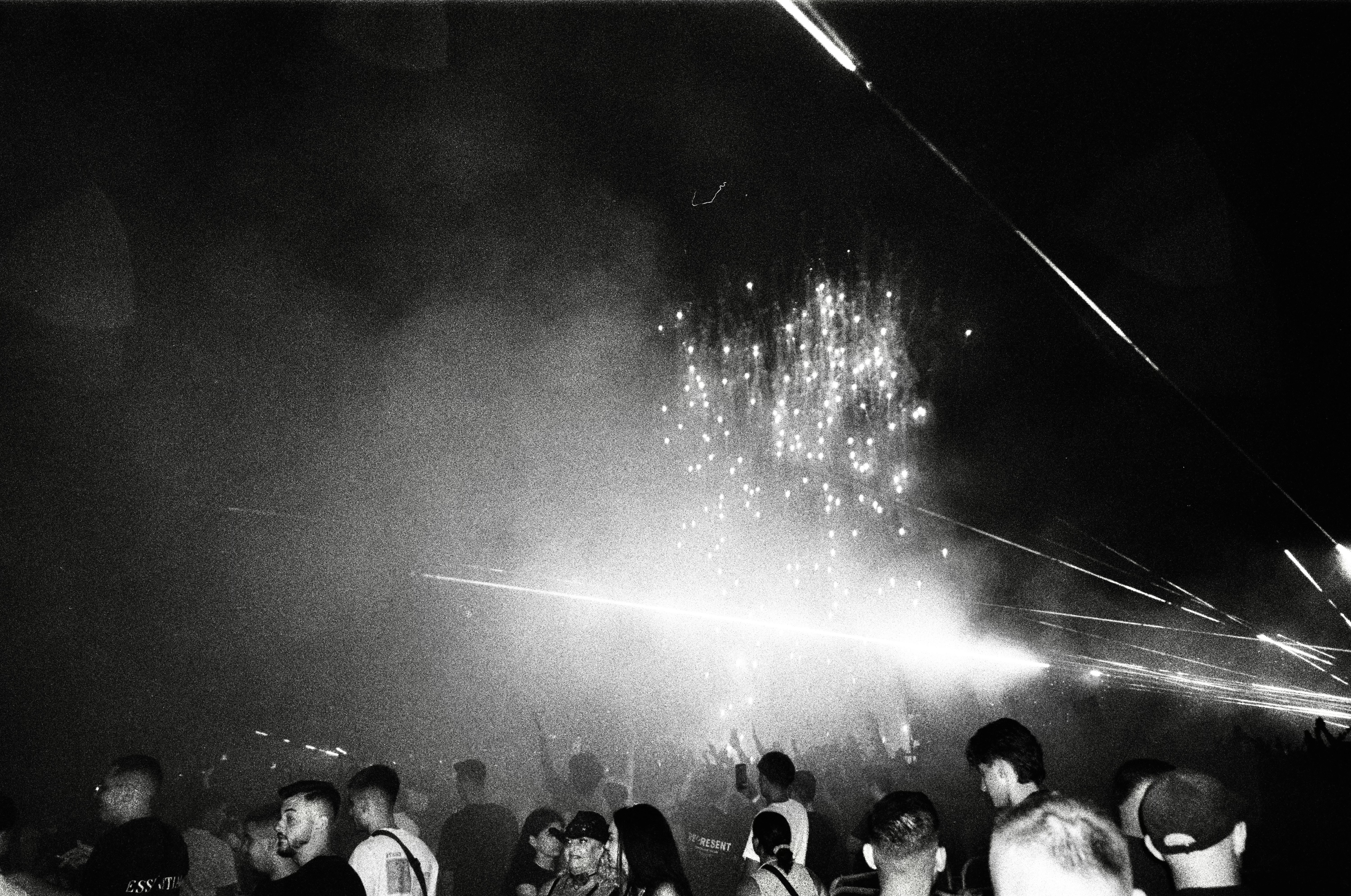
Long before the first sounds echoed across Eagle Stadium, the concert had already become something larger than music. It was a statement about cultural ambition of a country willing to place itself on the international map through one of the most influential figures in contemporary culture. For Albania, this wasn’t simply the biggest concert in its history. It was a declaration that culture can be infrastructure, capable of reshaping perception, attracting investment and accelerating an entire creative economy.
Organised by Berlin based promoter Streetlife in collaboration with Redcloud, the event brought thousands of visitors from more than 80 countries to a purpose-built venue outside Tirana. Prime Minister Edi Rama described the concert as an investment expected to generate close to €100 million in economic activity—a figure that remains a projection, but one that reflects a broader strategy increasingly adopted by countries positioning themselves through cultural capital rather than conventional tourism campaigns.
Yet what ultimately distinguished the evening wasn’t only its scale. It was the way Ye’s visual language settled into the Albanian landscape.
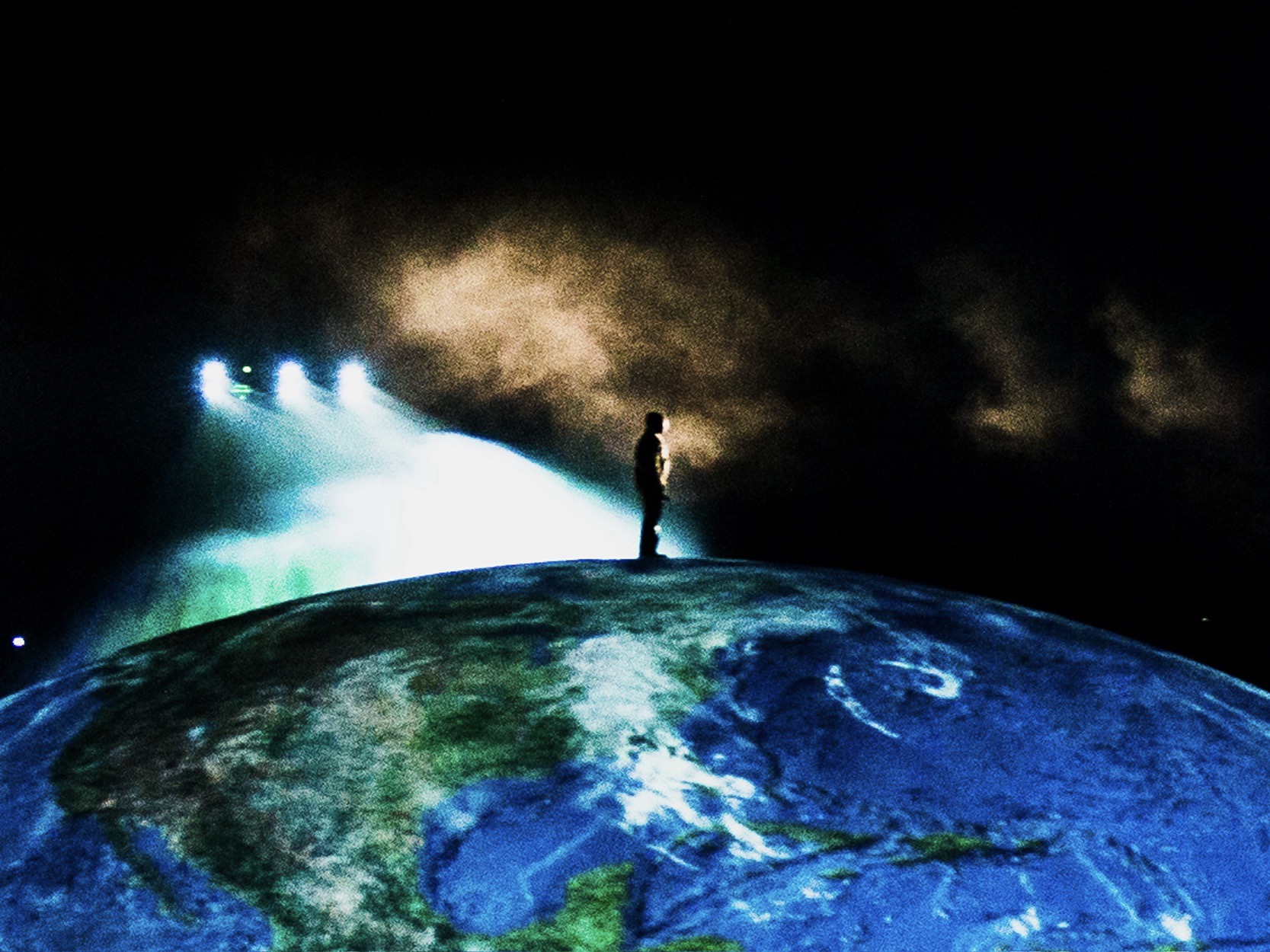
The monumental globe installation, first unveiled during Ye Live at SoFi Stadium in Los Angeles in April 2026 – which was the highest grossing concert ever reached by a hip-hop artist with Ye making history again – serves as the visual centerpiece of the tour supporting his latest album, BULLY. It was developed with longtime creative collaborator and artist Aus Taylor, who began working with Ye in 2021, directing the „Free Larry Hoover Benefit Concert“, a joint show by Ye and Drake, but also the Vultures Tour installation, the Vultures album cover, the Donda 2 livestream and music videos such as „City of God“ are part of their creative collaborations, too.
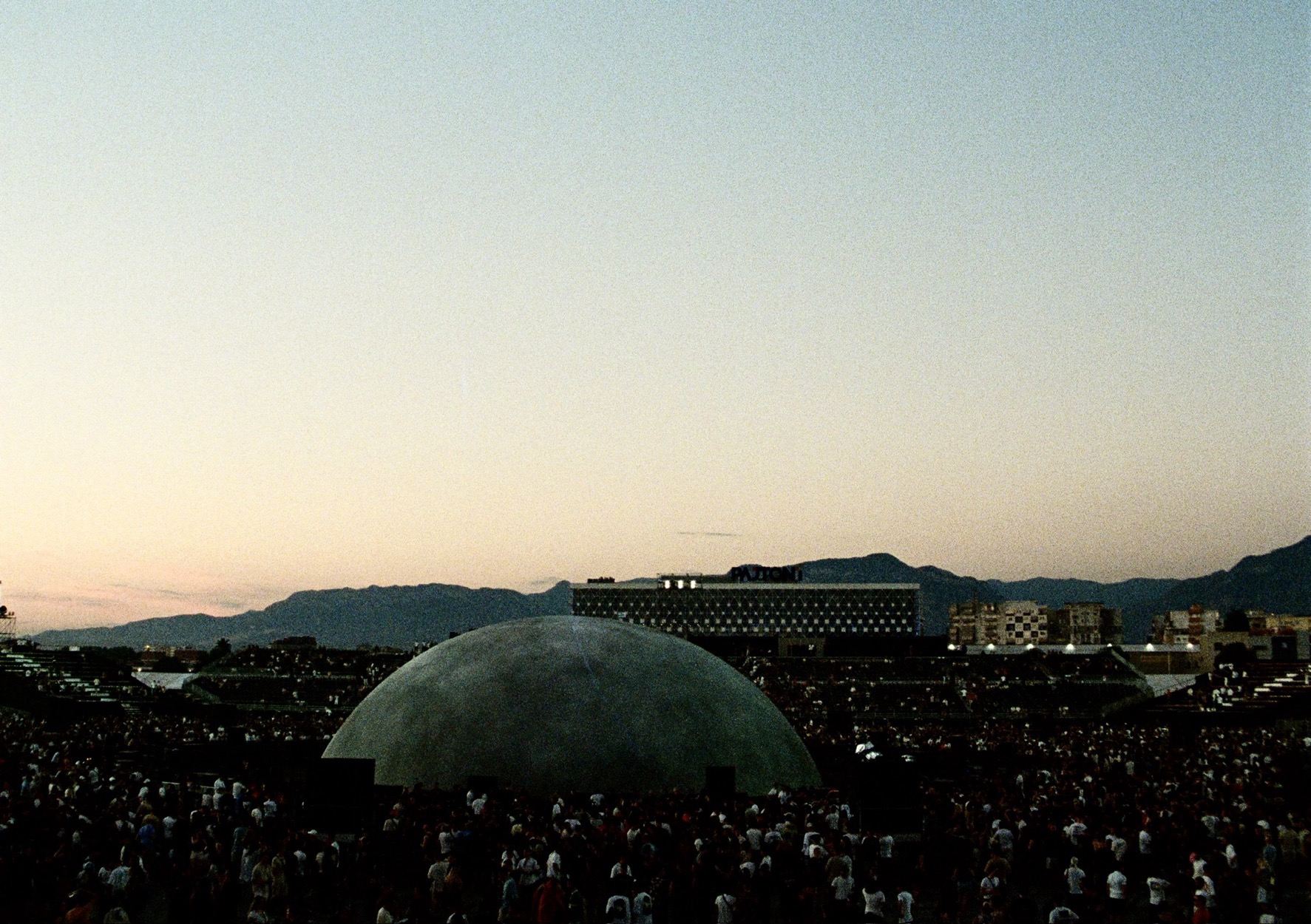
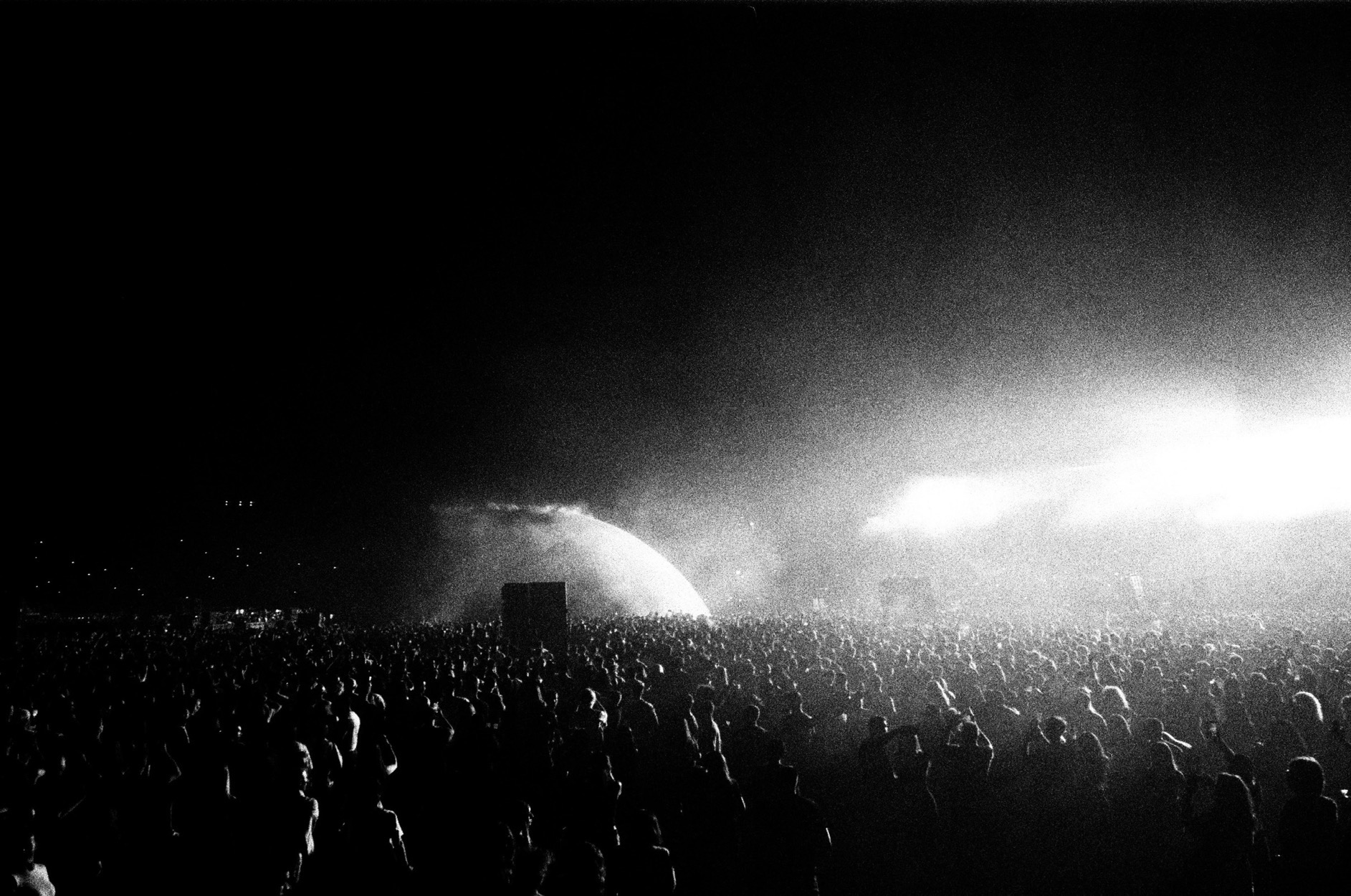

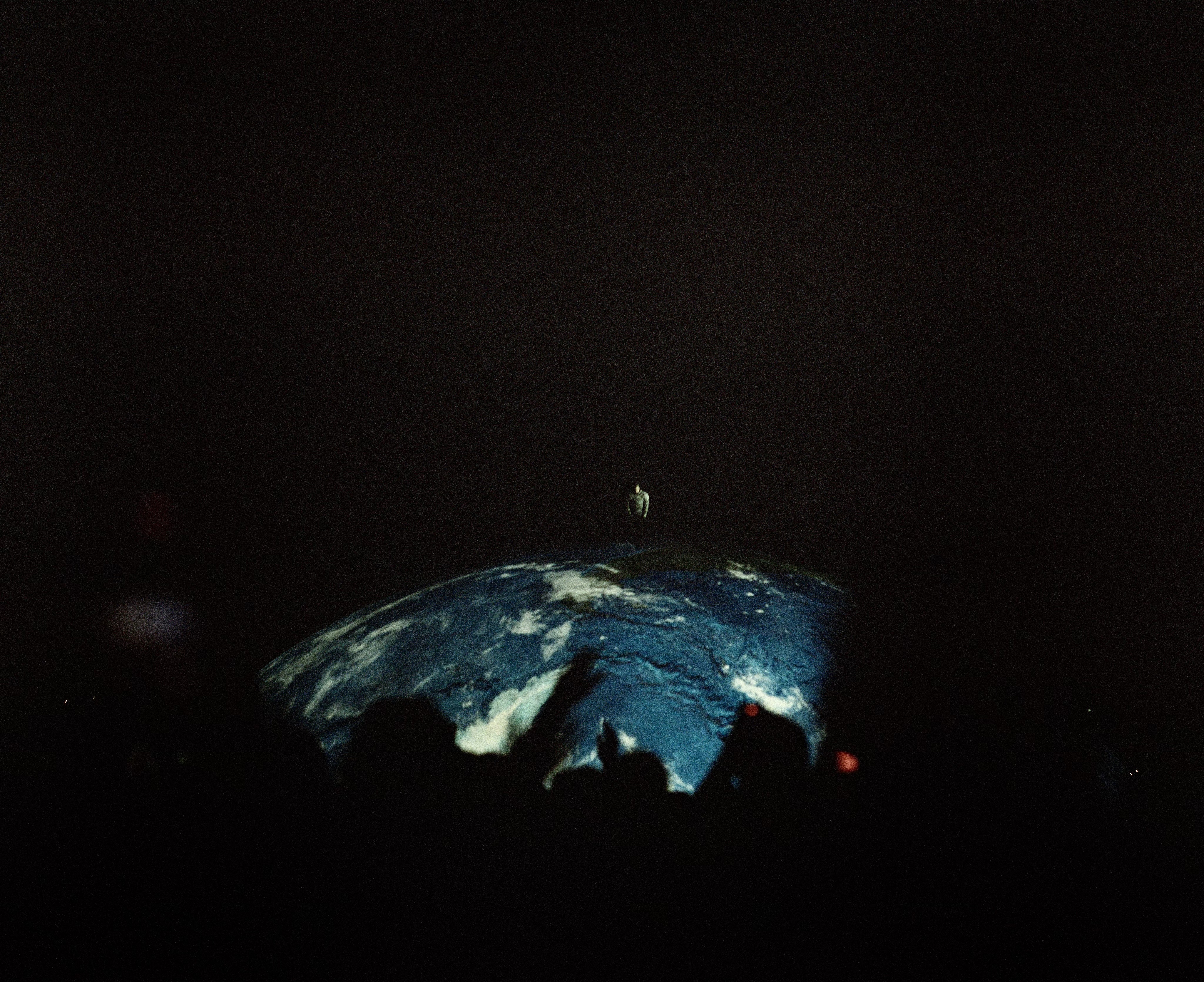
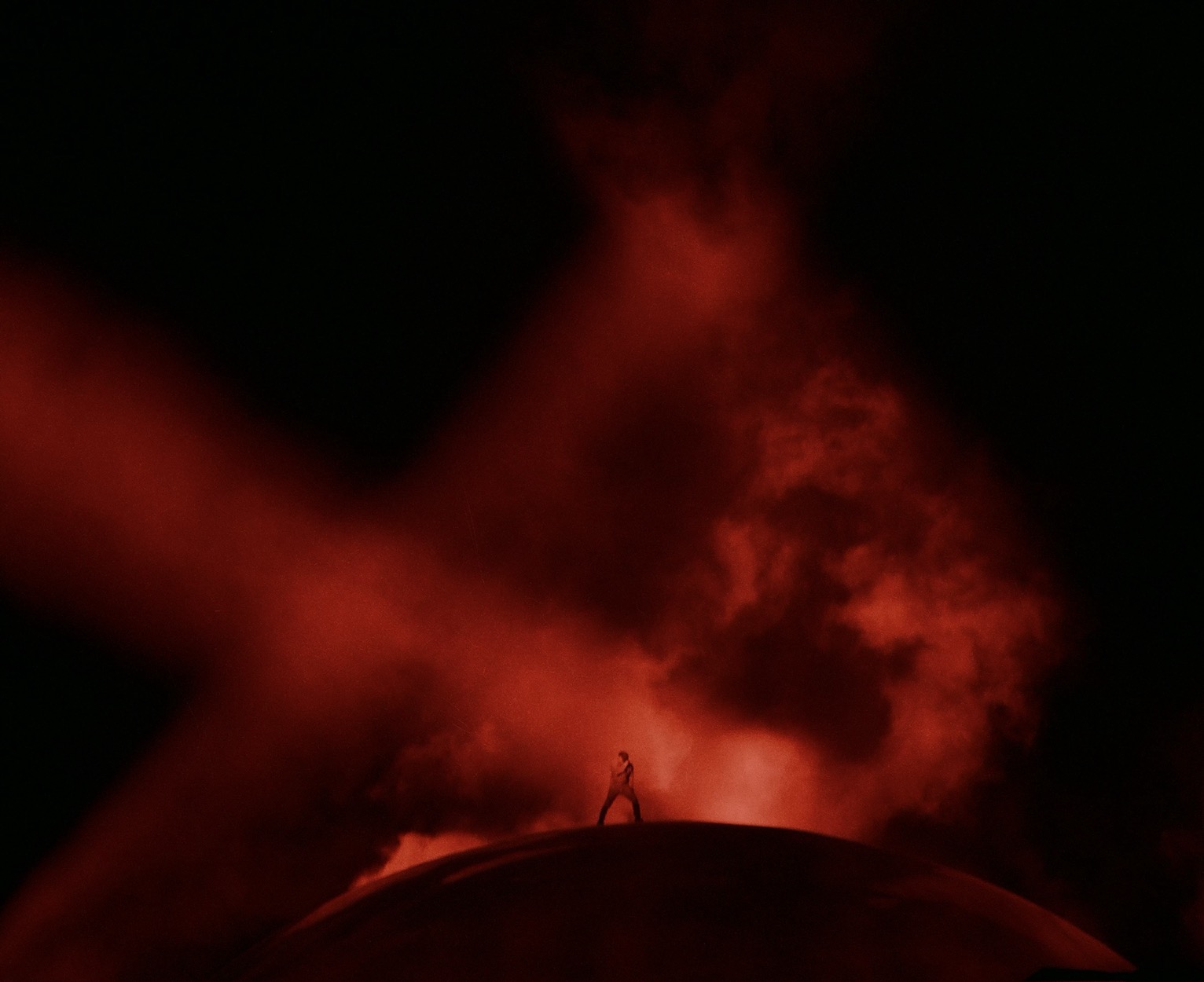
The world stage transforms Ye into a solitary figure suspended above the world rather than a performer standing before it with the stage itself becoming less of a place to perform than a place to observe. Blurring the boundaries between sculpture, architecture and live performance, the installation expands his long-standing exploration of scale, isolation and mythology, heavily inspired by „Akira’s Nuclear Explosion“, Luke Skywalker’s „Star Wars“ Home in Tatooine, Raimund Abraham’s utopian concepts „Living Capsules for the Space City“ and Wieland Wagner’s minimalist stage design.
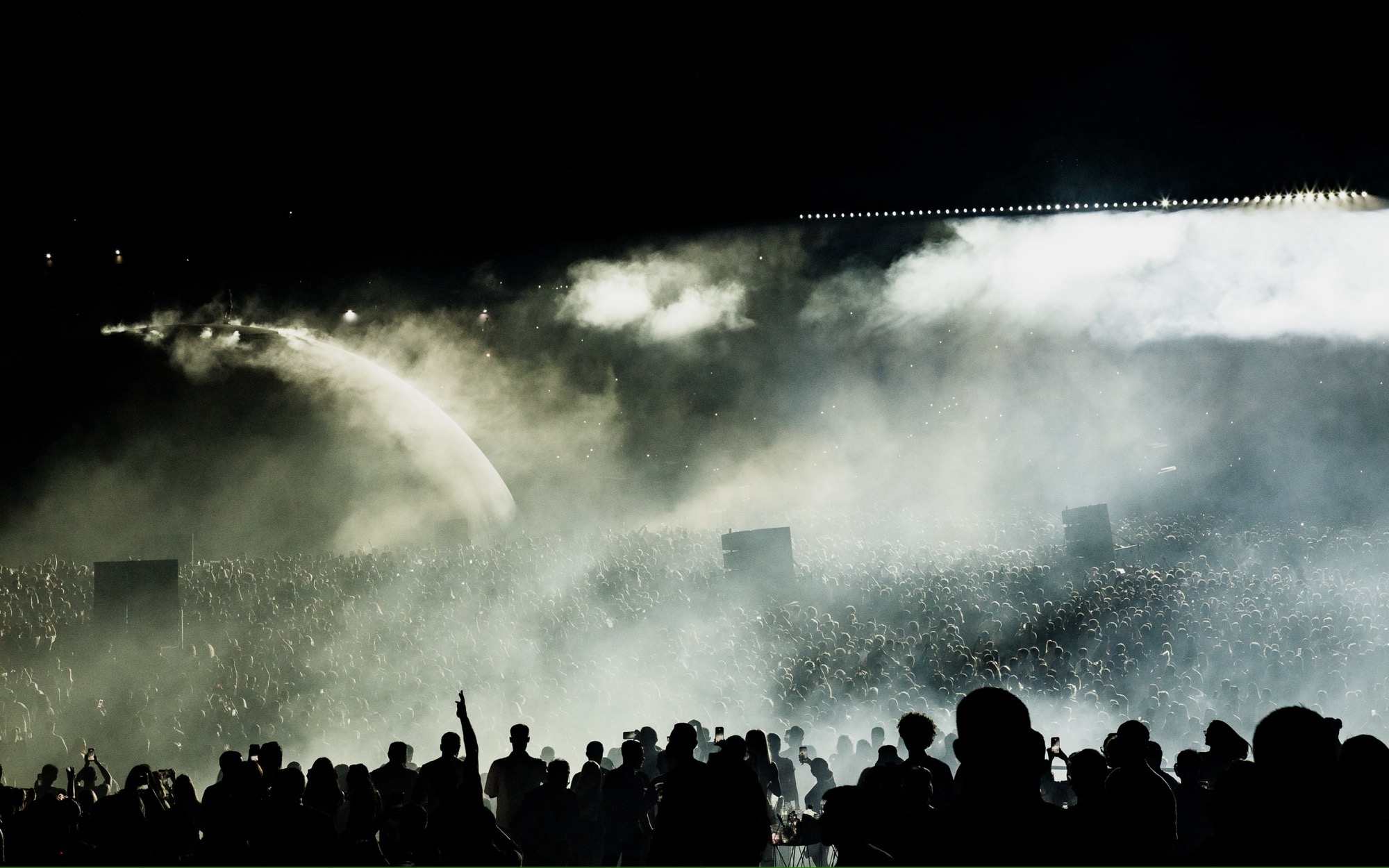
Equally essential to the production was its lighting design, which deliberately resisted the visual overload that has come to define many contemporary stadium shows but focussed on precisely choreographed high-output beam fixtures as architectural elements in their own right. Acting almost like vertical columns or cathedral-like vaults of light, they carved spatial dimensions into the darkness, continuously redefining the relationship between the performer, the audience and the surrounding landscape.
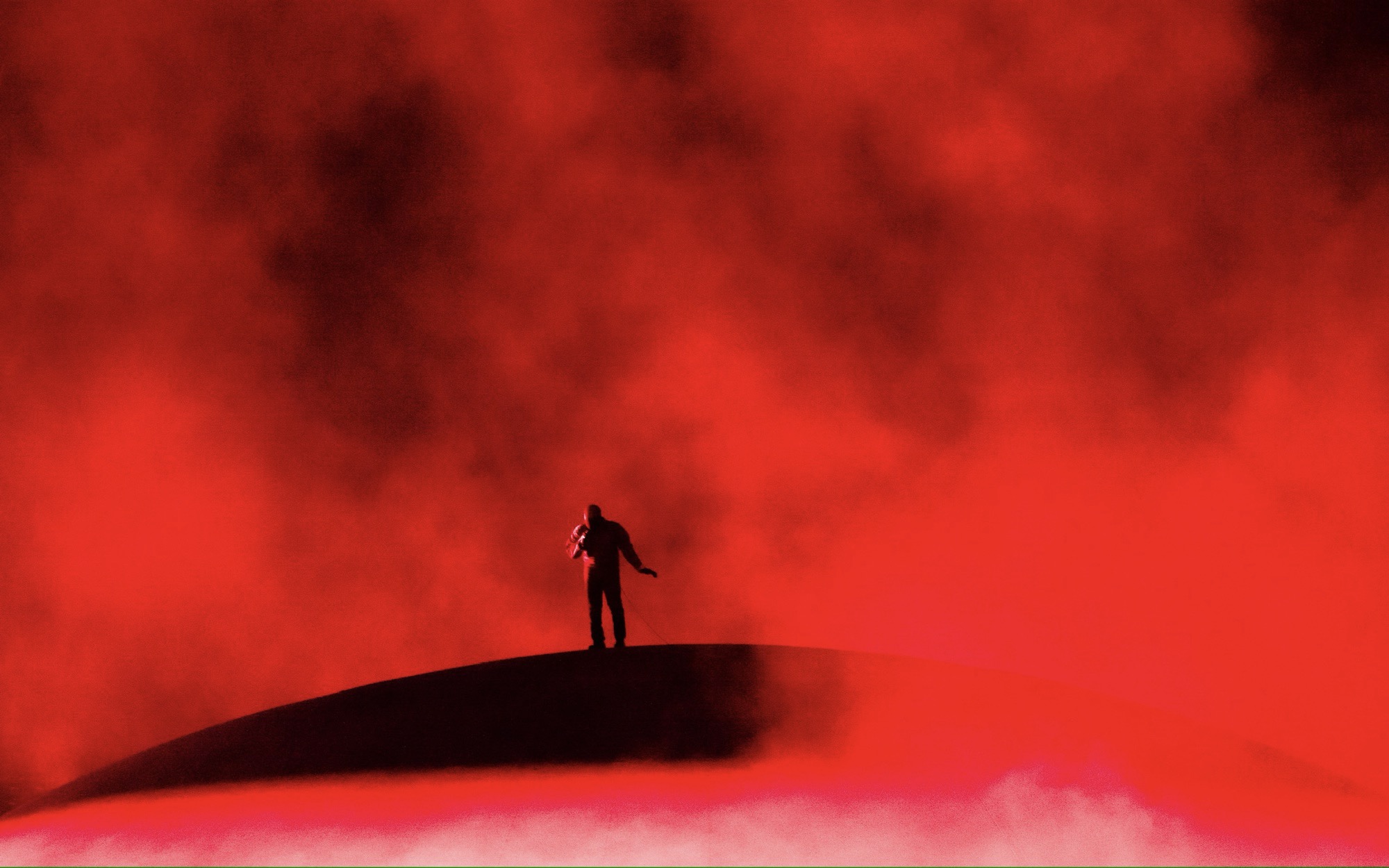
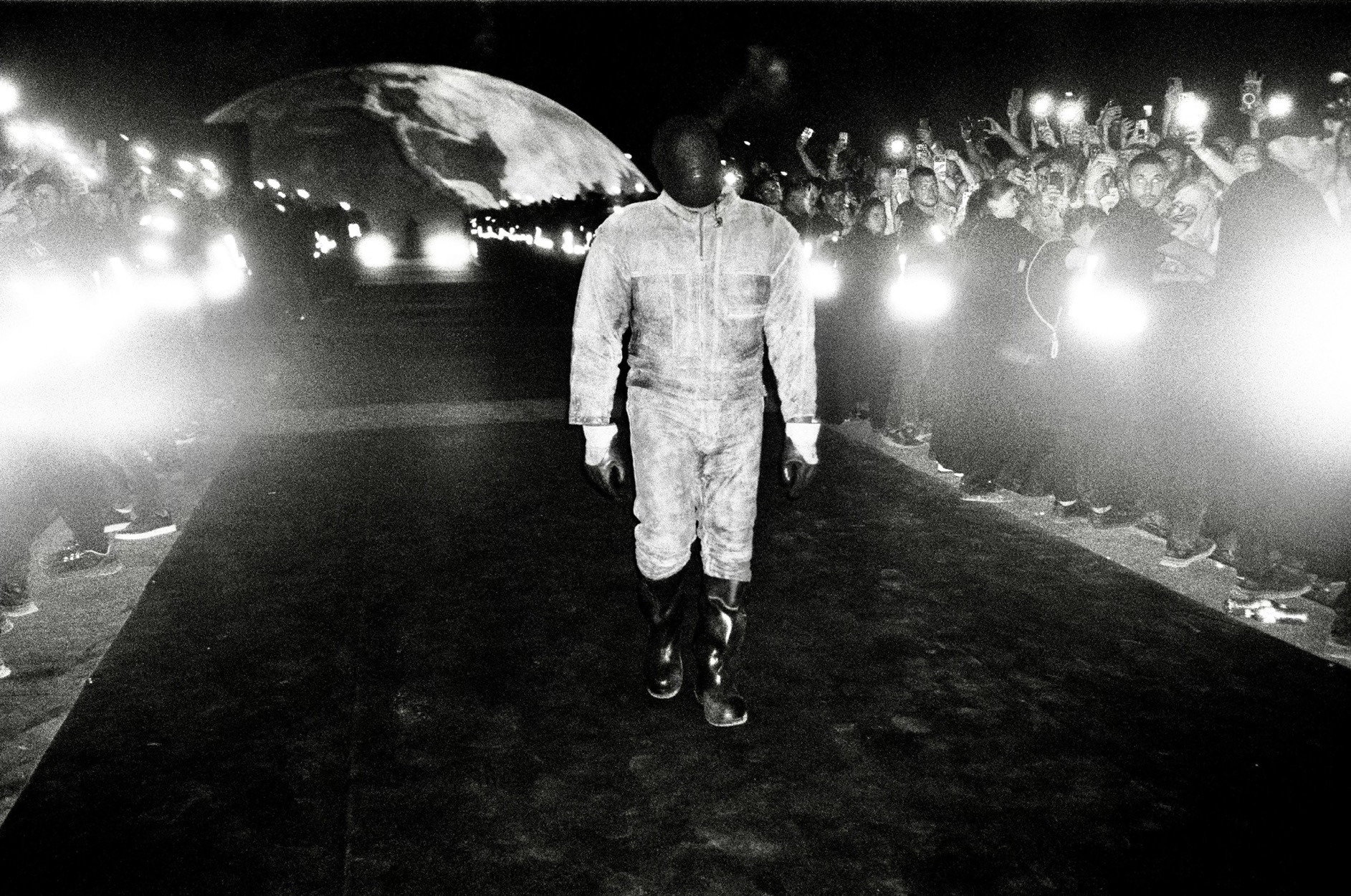
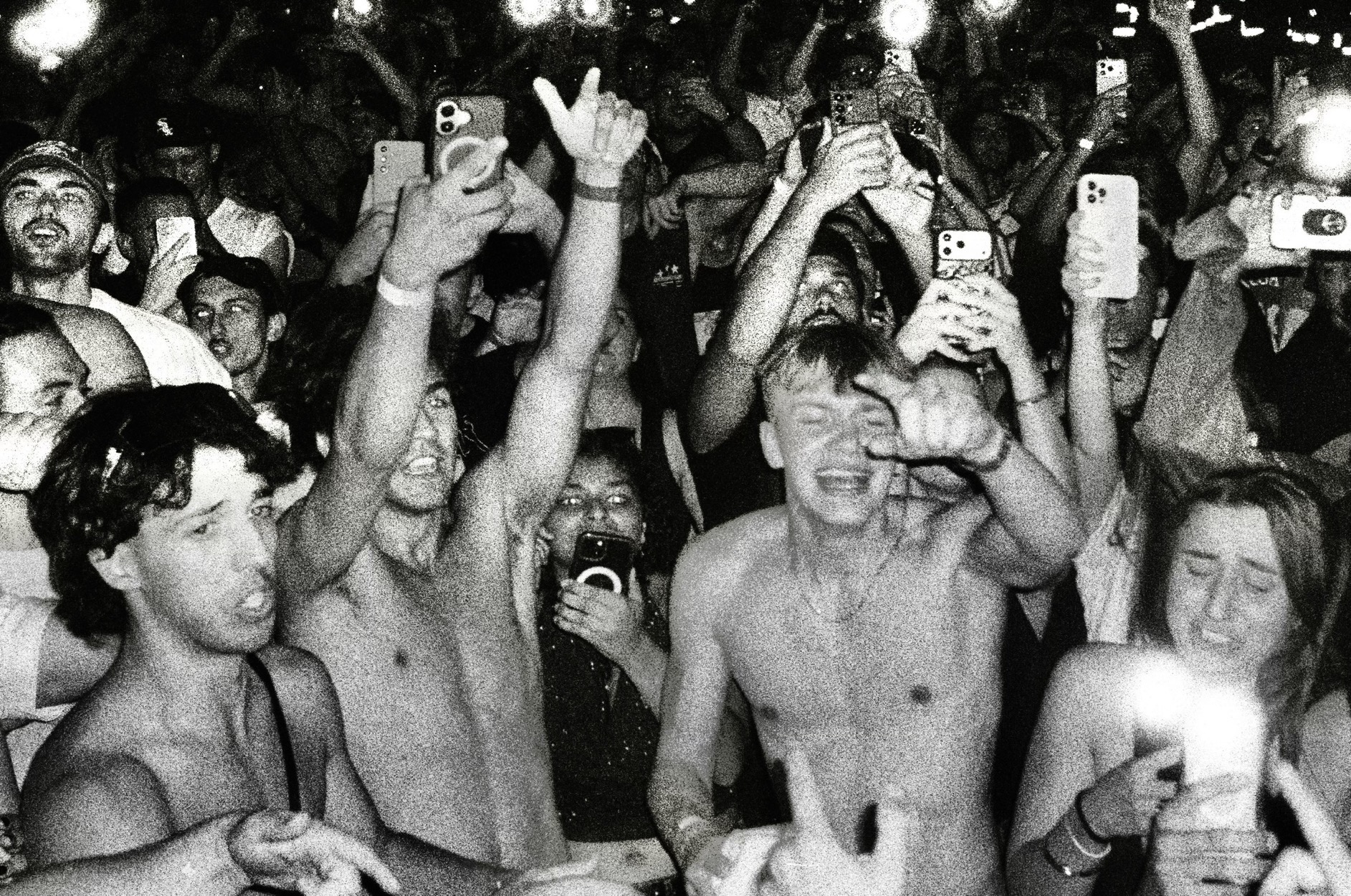
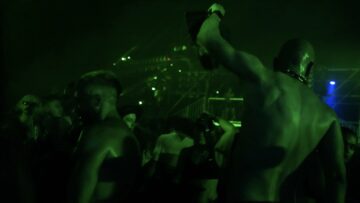
Rather than reinventing the format, Tirana offered something different: context. The temporary Eagle Stadium, rising from an otherwise open landscape between Tirana and Durrës, gave the production an unexpected sense of vastness. Without the visual boundaries of a traditional urban arena, the iconic beams of light appeared almost limitless, dissolving into the night sky and transforming the performance into something closer to environmental installation than stadium concert. Architecture, landscape and performance briefly became one composition. It is the tension between reduction and monumentality that has become one of Ye’s strongest creative tools. Instead of overwhelming audiences with visual information, he allows scale, silence and light to carry emotional weight. The result feels less like conventional entertainment than contemporary performance art. Every emotion feels even more intense. A few days later, an Instagram reel goes viral showing thousands of people singing along to Ye’s „heartless“, and a title reading: Who broke all these people’s heart? I felt that.
Ye continues to occupy one of the most controversial positions in contemporary culture, and the debate surrounding the concert was as present as the performance itself. But that is precisely why the event mattered beyond Albania. It demonstrated that cultural moments capable of shifting international attention are rarely comfortable, and almost never universally agreed upon.
Across more than two decades, Ye has continuously redefined the relationship between music, fashion, architecture and design, turning every album cycle into a broader cultural proposition rather than simply a record release. His influence reaches far beyond hip-hop, informing the work of musicians, designers, architects and creative directors across disciplines.
From reshaping the sound of contemporary rap to challenging the aesthetics of luxury fashion and live performance, Ye has repeatedly shifted the cultural conversation. While his career has become increasingly defined by controversy, his creative impact remains difficult to overstate. Few contemporary artists have altered the visual and sonic language of popular culture with comparable reach or consistency.
The Tirana performance served as another reminder that Ye’s concerts are no longer experienced solely as live shows—they have become cultural events that continue to shape how music, art and performance are imagined today.
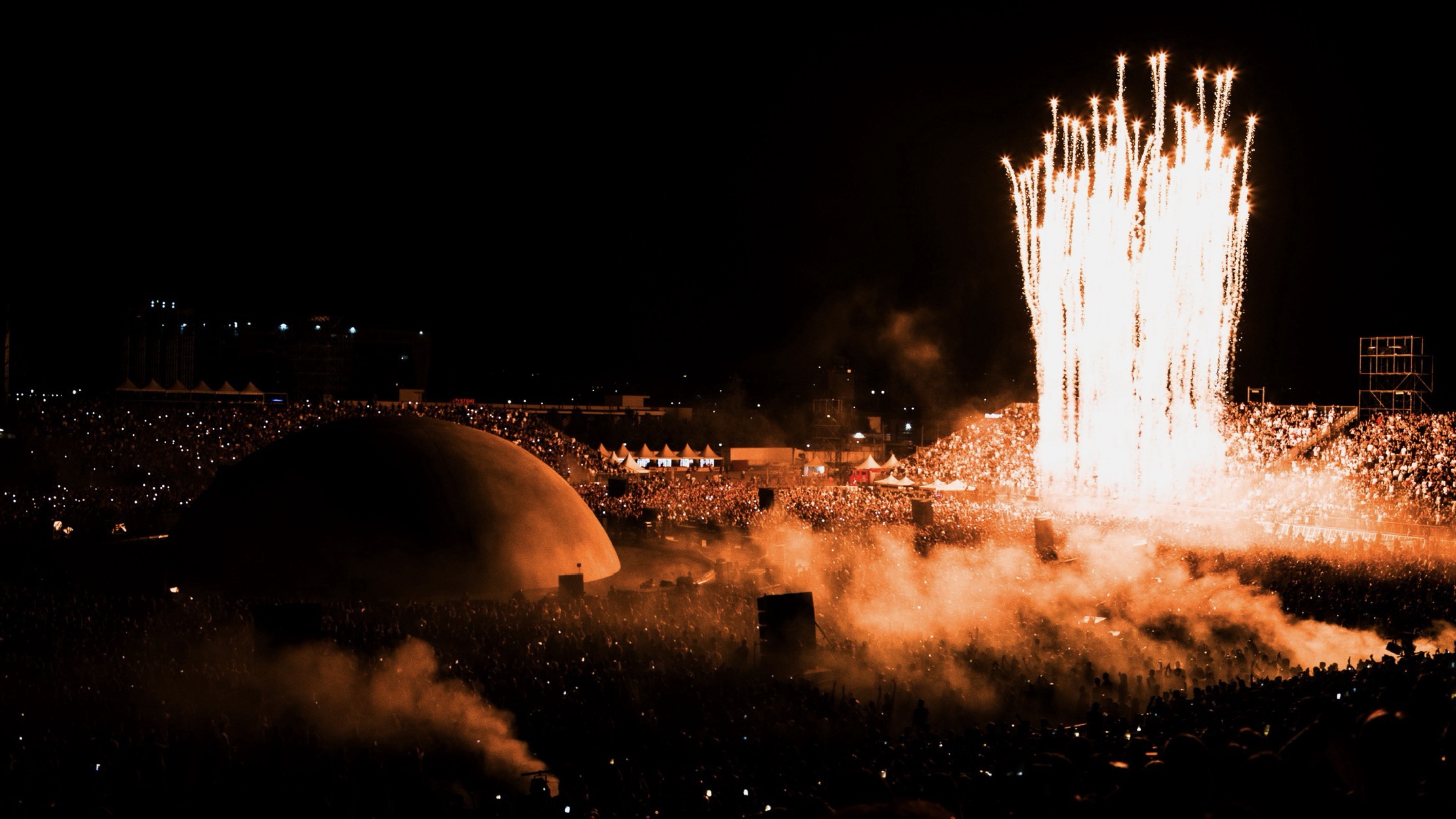
Streetlife deserves particular recognition in this context. Beyond bringing one of the world’s most technically ambitious live productions to the Balkans, the promoter proved that Albania possesses the logistical capacity to host events on an international standard. Nearly 3,500 workers contributed to building the temporary venue and production infrastructure—an undertaking that government officials described as unprecedented for the country.
History shows that landmark cultural events linger in perception. They encourage artists, investors and creative industries to look at a place differently.
For one evening, Albania wasn’t simply hosting one of the world’s biggest artists. It was introducing itself as one of Europe’s most ambitious emerging cultural stages.
WEEKEND MUSIC TIP PT 102 LAVENDER
He has quietly worked his way up through Germany’s underground rap scene, but recently…
W COSTA NAVARINO: A PLACE BETWEEN MYTH AND MODERNITY
Numéro Berlin explored the luxury resort that became one of the filming locations for…
Poetic Narratives: Franka Marlene Foth on Dance, Creation and Authorship
For Franka Marlene Foth, dance was never a decision – it was a condition. In…
HOSTED BY NUMÉRO BERLIN AT TYLKO SPACE: TYLA’S A*POP LISTENING SESSION
South-African Grammy winner Tyla’s new album A*POP is set for release, and Numéro…
WEEKEND MUSIC PT 101 BASHKKA
BASHKKA on WHOLE Festival, Queer Joy and the Power of the Dancefloor

WEEKEND MUSIC TIP PT 100 LOLLAPALOOZA
Lollapalooza Berlin is back next weekend for another celebration of music, culture and…