
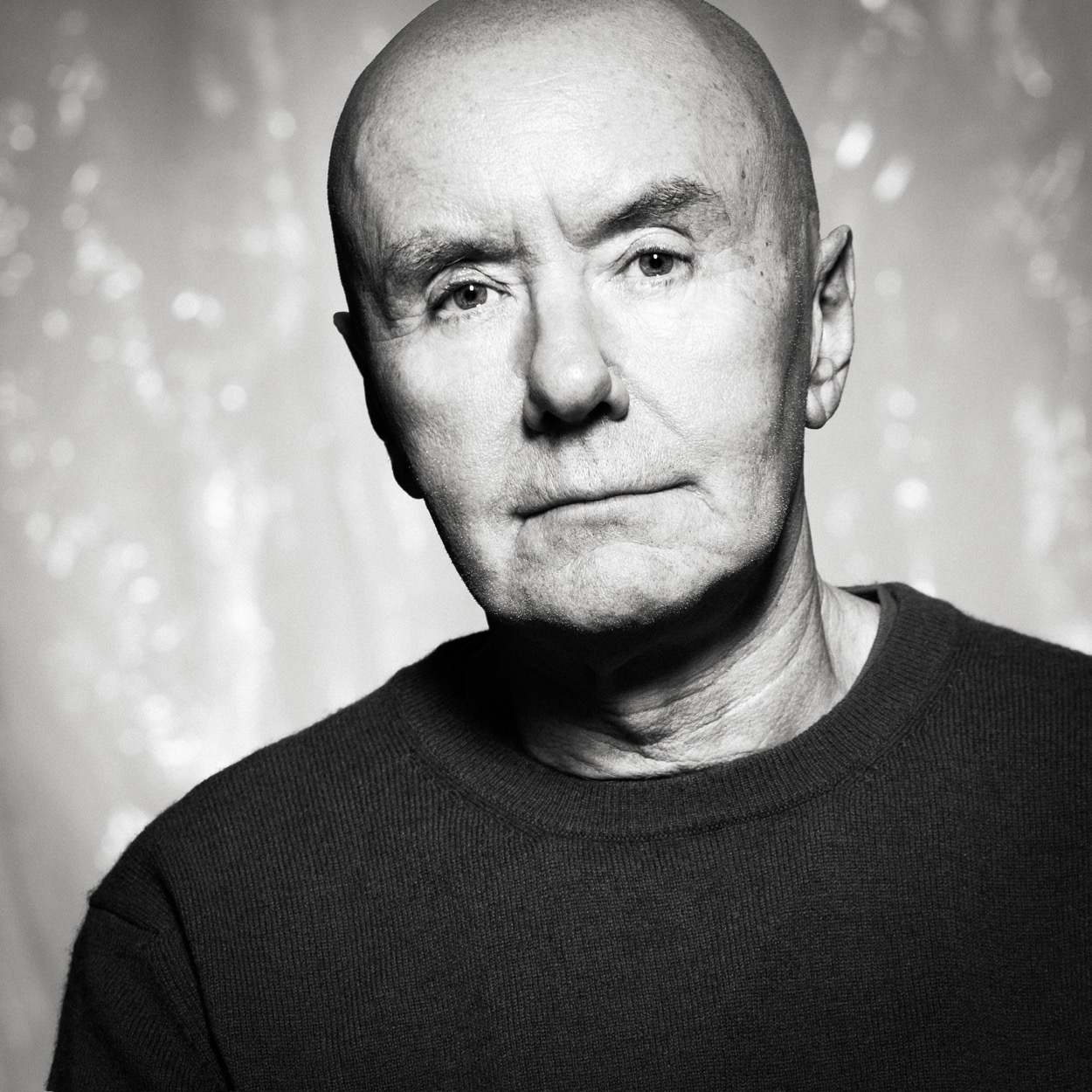
IN CONVERSATION WITH IRVINE WELSH: THE AFTERLIFE OF TRAINSPOTTING
No doubt Irvine Welsh’s Trainspotting has had an afterlife that has crossed generations. From cult novel to film franchise to West End musical, “a stupid thing to do,” according to Welsh himself.
Ahead of his upcoming 2026 novel, Can Nothing Save Us?, I spoke to Welsh about bringing Trainspotting to the stage, the ways technology has transformed addiction and alienation, the shrinking of physical spaces for culture, community, and expression, and why he thinks culture may be heading back offline. We also talked about what today’s generation sees in Trainspotting, and what Welsh, now looking at the world from a very different place, sees in them.
I. The Logistics of “A Stupid Thing to Do”
Irvine Welsh: My music partner, Steve McGuinness, and I just started writing songs and I found that I was writing in the characters of Trainspotting. We just wrote some ballads, and then we took it to the producer who’s been on it for a while to do a musical. So it just came out of that.
Irvine Welsh: Because it’s a silly thing to do, really. It’s just absolutely a stupid thing to do in this environment. It costs loads to put on, theatres are closing down all over the place, shows are shutting down, so it seemed to be the ideal time to do it, basically.
Irvine Welsh: Yeah, basically, I think that’s the main reason to do anything. It’s kind of fun that mushroomed into a serious project.
Irvine Welsh: Financially, it’s silly. We’re in the West End of London now till September. We had planned a big tour, and people just don’t have the money to pay for theater tickets now in the UK, so we can’t go ahead with it. We have over 30 people in the ensemble, cast, and crew, and by the time you factor in transit and accommodation, the cash just isn’t there. We don’t want to compromise the show by merging parts or cutting staff, because then you are giving people outside London an inferior product. If you can’t do it properly, you’re best not doing it, basically.
II. Simulacra, Capitalism, and the Death of Exhibited Culture
Irvine Welsh: When you write a book, it’s an act of giving something away. Any book that I write belongs to the world. Once I’ve written it, it’s not mine anymore, and the world can do what they want with it, basically. I don’t want to be a curator of it. I’m interested in the stories and the characters, so I’ll keep going back to them, but I don’t want to say it’s got to live in a glass case in a museum somewhere. It’s got to be out there in the world and used.
Unfortunately, the culture we live in, the way distribution, exchange, and exhibition work, is a capitalist culture. It’s only going to be exhibited if people think they can make money from it. Once it becomes successful to a certain level, it’s no longer yours. It’s published by a publisher living in a capitalist world; it’s made into a film by a film production company and a distributor for cinemas that are in that world to make money; and the same with stage theatres and stuff like that. That’s the world that you’re in, and there is no other way, literally, to do that. The internet was supposed to be the way that we do all this and connect with each other, but the internet’s been enclosed by the big tech corporations now, so we don’t really have that space anymore. It becomes another place where they do things to us rather than for us.
So there is no real life for any culture outside of capitalism, and that’s why our culture is dying. If you look at the things you’re seeing in cinemas and theatres, it’s the same stuff all over. What the reaction against that has to be is to bring culture back offline. It has to be people doing things in their communities: putting on shows, poetry readings, DJing, making music together, and playing that at raves and parties in their own spaces. It has to be away from all these traditional centres of exhibition. Mainstream culture (or rather, exhibited culture) is dying. We’re actually going to be finding our way back into this again in a very DIY, punk rock, acid house type way.
Irvine Welsh: Yeah, it was a bit cheeky of us to jump into the West End, into the Theatre Royal and all that, but you want to bring these things to a local space. You basically want to have people performing in a public park: build a stage in a public park and have people putting on shows there, like in Shakespeare’s era, basically. It’s going to go back to that because these old-school citadels of exhibition… I can’t really see who’s going to pay for them, because nobody’s got any money. The only people that have got money are billionaires, and there’s not enough of them to fill a theater. Culture can never be top-down; it always has to be bottom-up.
III. What Renton (and a 30-Year-Old Irvine Welsh) Would Think
Irvine Welsh: None of these guys would buy tickets and watch. They would just say that this is some kind of horrible old guy cashing in on our misery, and that they hate it, basically.
Irvine Welsh: Yeah, I was a child novelist, but I’m just beginning to mature slowly. I probably wouldn’t have had the money or the interest, and theater wouldn’t have been on my radar then. You go through phases where you’re engrossed in one kind of art form, and when I started to write Trainspotting at 30, I was obsessed with literature and books. I wouldn’t have been interested in theater shows too much.
IV. Decontextualized Youth, Gangs, and Listening to the Next Generation
Irvine Welsh: It’s very much a mix. They’ve been very enthusiastic, and they get up there and start clapping and singing along with the cast, so it’s quite an uplifting experience. For me, I feel like I have to sneak out the stage door after a performance because people come up to me and get quite emotional about it. A bit like the reaction to the T2 Trainspotting film, people felt like, “We suddenly got older, how did that happen? This is what we used to be.” They feel quite teary about it, so the musical’s a bit like that for older people.
For younger people, because the internet decontextualizes everything, a lot of them feel that this is a book about drugs, youth, and going out (this is their book and their film). They don’t think of it as an 80s or 90s thing; they think of it as a now thing. When I do talks at a college town, for example, it’ll be all young people there, and when I come out, they expect me to be the same age as they are. They see this older guy coming out and go, “What is that? Irvine Welsh?” I say, “This is as good as it gets if you’re very, very lucky.”
So it’s strange the way the internet decontextualizes everything. For young people, Pink Floyd’s Dark Side of the Moon isn’t an album made in 1973; it’s something you listen to after coming back from a rave. I think it’s the same with Trainspotting: it’s one of these books that people just pick up when they get to about 17, thinking, “I’m going to college, I should read Trainspotting,” like I used to do with On the Road or Naked Lunch. You get to a time in your life and think, “I have to read this book,” which is great for me.
Irvine Welsh: It’s an internet culture, a top-down, universal sort of culture. The drug culture is a gangster-ish culture; it’s about districts, turfs, and enforcement. People know the way the system works, but they feel that they can’t really do anything politically to change it, so there’s a powerlessness.
The bad side of that is that youth need compelling drama, and work used to provide that, but it doesn’t anymore. So the compelling drama is on the streets. A lot of clued-up kids in these gangs know that they’re going to have a very limited shelf life, but they want to try and build some kind of little empire and get out while they can. There’s a feeling of, “We’re already doomed, so we’ve got nothing to lose,” and that’s pretty bleak. It wasn’t like that back in the 80s. People still had gangs and there was still violence, but there weren’t guns, there wasn’t that desperation, and there were avenues out of it. You expected you’d just grow out of it, whereas now, people don’t see the opportunity to get married, get a job, a career, or a house. All that’s been taken away from them, so they’re stuck in this place. It’s really sad and bleak.
Irvine Welsh: It’s about opportunity. Nobody wants to get shot at or kneecapped. If you’ve got the opportunity to do a bit of traveling, get an education, get a decent job, meet somebody nice, and build a life together, you’re going to do that. But there’s no opportunity to move into this other space now.
Irvine Welsh: I don’t think I would say anything to them; I would be asking them questions. I would want to find out from them what they think of the world and what they’re up to. There are too many people my age who have too much to say for themselves, and there’s no platform or forum where young people can express themselves anymore, apart from becoming a character on the internet (which is just like an alcoholic voice, the voice of the drug, the embittered, alienated loser voice taking them over). They don’t have a forum where they can articulate how they feel about the world in any way that isn’t cliched or algorithmically dictated. So I’d be more inclined to just sit down, chat, and listen to what they’re saying.

TO WATCH “HIDDENSEE“ BY ANNEKATRIN HENDEL
They say Hiddensee is the kind of place that stays with you: once you have been, you…

IN CONVERSATION WITH RENAUD SALMON
In conversation with Numéro Berlin, Renaud Salmon reflects on building a luxury house…

ADVERTISEMENT: WORLD PRIDE AMSTERDAM 2026 LEVI´S
During WorldPride Amsterdam 2026, Levi’s® highlighted its ongoing support for LGBTQIA+…
TO WATCH “FATHERLAND” BY PAWEL PAWLIKOWSKI
Premiered at the Festival de Cannes, Fatherland (2026) by Paweł Pawlikowski is less a…

PRADA F/W 26: “SIMPLE STORIES”
Prada has long maintained a close relationship with cinema, whether through direct…

TO WATCH “THE ODYSSEY“ BY CHRISTOPHER NOLAN
Homer’s Odyssey is from a time of apparent magic, a homecoming journey full of obstacles…