
Leon Emanuel Blanck about His Craft, His Body of Work and LEB
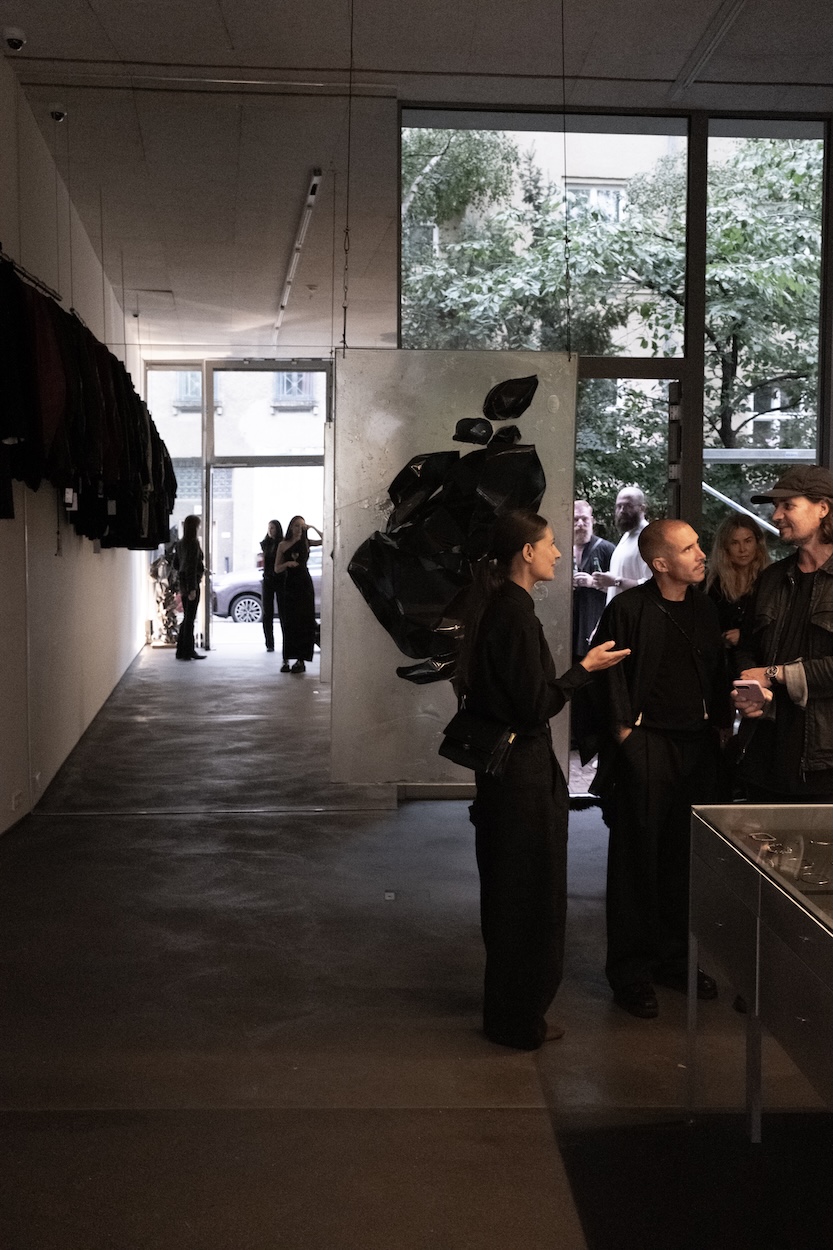
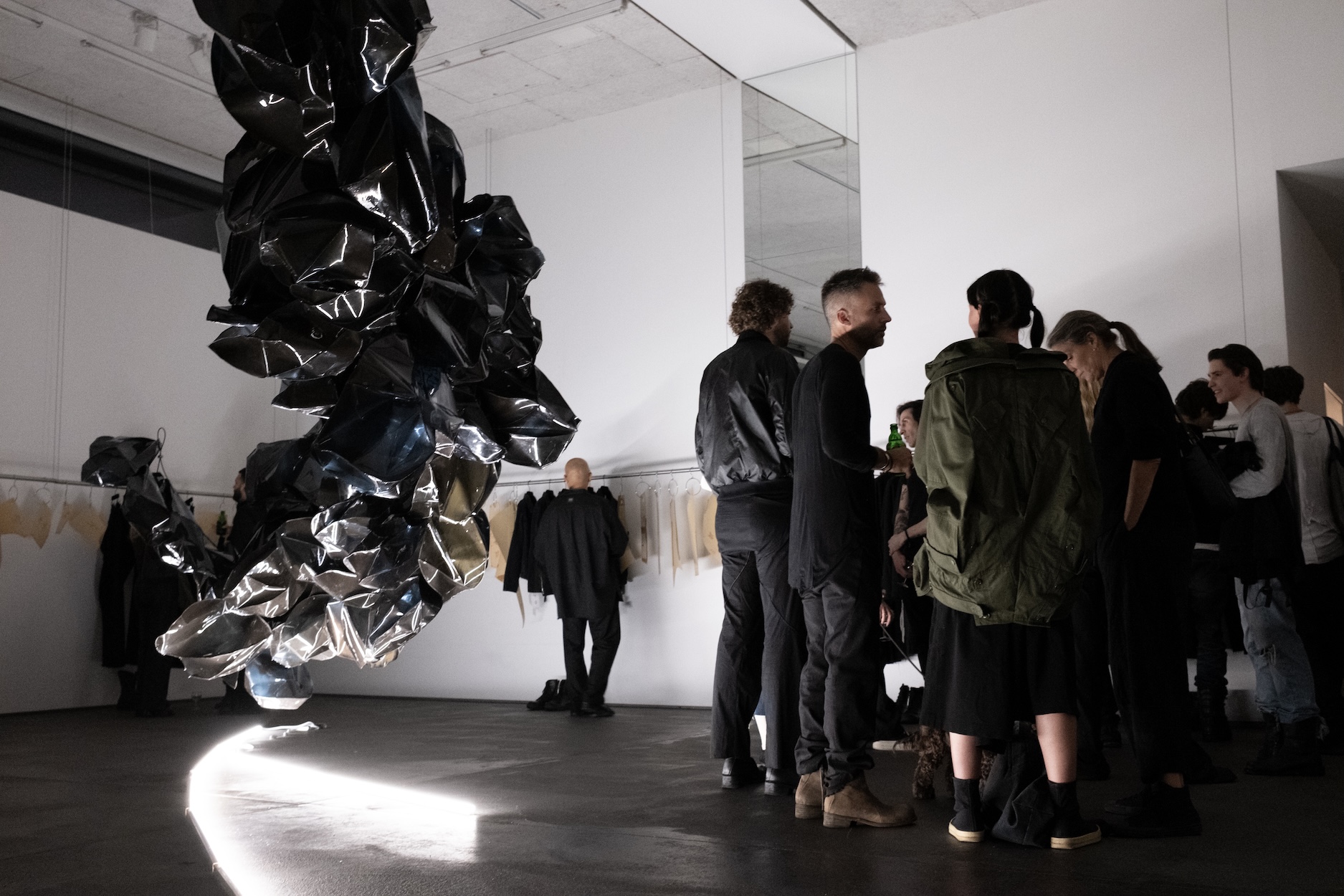
His work is defined by an inherently asymmetrical approach, working directly from the human body, with no pattern piece ever mirrored. When meeting the Berlin-based designer at his collection launch in Berlin, he told us about his work and his clothing line, LEB, a distilled, more focused line that concentrates on the most essential elements of the main collection. In conversation with Numéro Berlin, we got an insight into who he is as an artist and designer and into his way of thinking.
Leon Emanuel Blanck: Perfectionism is not something that gets me anywhere. It also has to do with the technique I have developed. I see the whole process as a kind of Sisyphean task. You work on one side, or on both sides in parallel, and then the piece is finished, so to speak. You put it on again and think, “Okay, this side is a little tighter than the other,” or something doesn’t quite work. Then you work on the other side again, and suddenly that side is different. You could continue forever. At some point, you have to stop, otherwise it will never be finished. In my idea of things, perfection simply isn’t attainable.
LEB: Earlier, actually. I see the entire design and shaping process as a conversation between the body I am shaping, the person, the material and my own input. It’s like a conversation, so to speak. I don’t actually design that much; things happen almost automatically through the movement and the person. Ultimately, the seam lines and the shapes are determined by the natural characteristics of the body. In that sense, it is already something very natural and alive. Then there is another step when someone buys it and wears it, and their character and the character of the garment connect with each other.
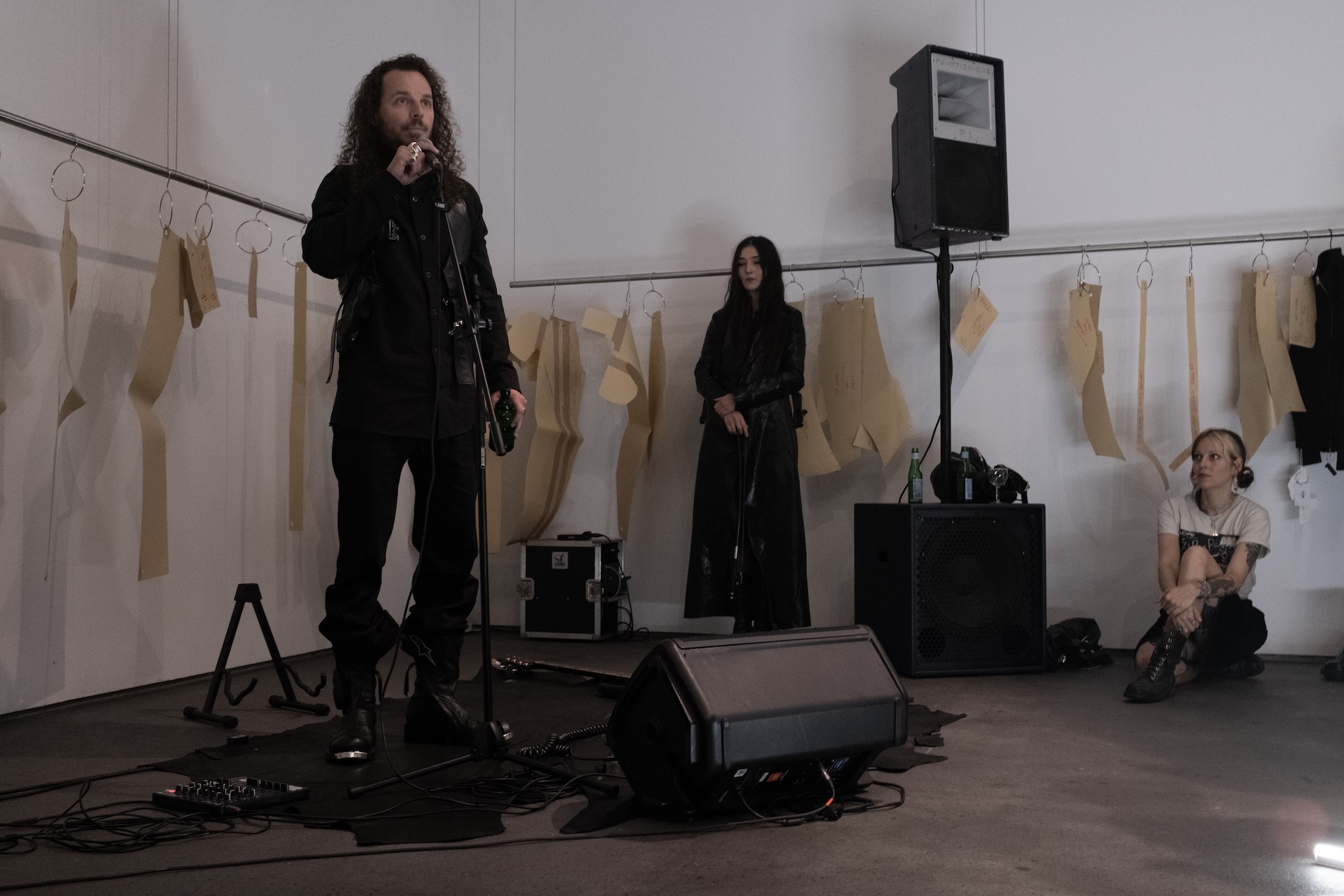
LEB: Everything I touch turns to gold. It’s quite scary. I’m actually always inspired. I don’t really have moments where I think, “I have no idea what to do.” I also don’t see it as, “Now I’m designing something,” or “Now I’m thinking about this.” The day is just the day, you do what you do, and maybe an idea comes to you. Sometimes you just have to start working on something, and then it comes naturally.
LEB: Emotions more than things I see. But I don’t think you can design something while living in a completely white room, isolated from everything. What you surround yourself with, in the broadest sense, will always come back out through you. But it’s not something I actively do. I don’t look at something and think, “I’m going to make this now.” It’s more about how you carry yourself. But emotions definitely play a role.
There is a collection for Leon Emanuel Blanck called Human. It was the winter collection that has now come into stores. During the design phase, it was originally very much connected to a feeling I had. I was quite angry for a while about various things, which isn’t necessarily unusual for me—that is part of my character. I eventually realized that this was coming through in the collection, and it developed from there.
LEB: To feel themselves, and also to feel the difference between left and right—not necessarily the left and right sides, but generally. The nice thing about clothes, or at least what I like about my clothes, is that you always feel something when you wear them. It’s not that classic feeling of, “Wow, this is so light,” or “I don’t feel anything at all.” It’s more that something is happening.
LEB: Another form of design, if I’m being precise. It actually started with taking classics and putting my DNA onto them—whether it’s a trench coat, a five-pocket jean or a trucker jacket. These are all classic pieces that still work when I put my stamp on them. It works without a logo. I put the cut into the foreground, which is kind of a logo in itself, but not actually one.
That’s what I find interesting. If you’re not paying close attention, you simply have a trench coat. But if you have an eye for things, you might think, “Interesting. Why is it made this way? Why is the seam positioned like that? Why are the left and right sides different?” It’s not very loud.
LEB: Clothing is clothing, and artworks are artworks. That’s what’s beautiful about sculptures, for example. They don’t have to fit anyone. Something can be too tight for me, too wide, or simply not suit me. It doesn’t have to.
LEB: It was really funny because I didn’t actually realize how special or great it was until much later, looking back. It wasn’t gone, obviously, but I only really appreciated it afterwards. I thought, “Fuck, that’s amazing.”
In general, I’m not very easily impressed or in awe of other people. Of course, it’s great when people create something amazing, but there are so many people creating incredible things. I’ve never really had that kind of fandom—even as a child, it was never really my thing.

WEEKEND MUSIC TIP PT 109 DAHI
He produced some of the most recognizable hip hop tracks of this century, from Kendrick…

IN CONVERSATION WITH ANNA RINGSTAD
One of the last shows of Oslo Runway invites to Café Sara: It is here where NEXT Award…
IN CONVERSATION WITH AARON PIERRE
There is a certain inevitability to Aaron Pierre’s relationship with BOSS. His career…
THERAPY THROUGH ALTER EGOS
The artist who contributed the Czech half of this year's “Czecho-Slovakian” Pavilion…

IN CONVERSATION WITH JULEZ SMITH
Julez Smith - despite coming from a truly musical family, the 21-year-old tried his hand…
IN CONVERSATION WITH INAN BATMAN X DSCHUNGEL
Götz Offergeld, publisher of Numéro Berlin and Fräulein, is bringing the spirit of…