
BETWEEN BEATS AND BOWSTRINGS
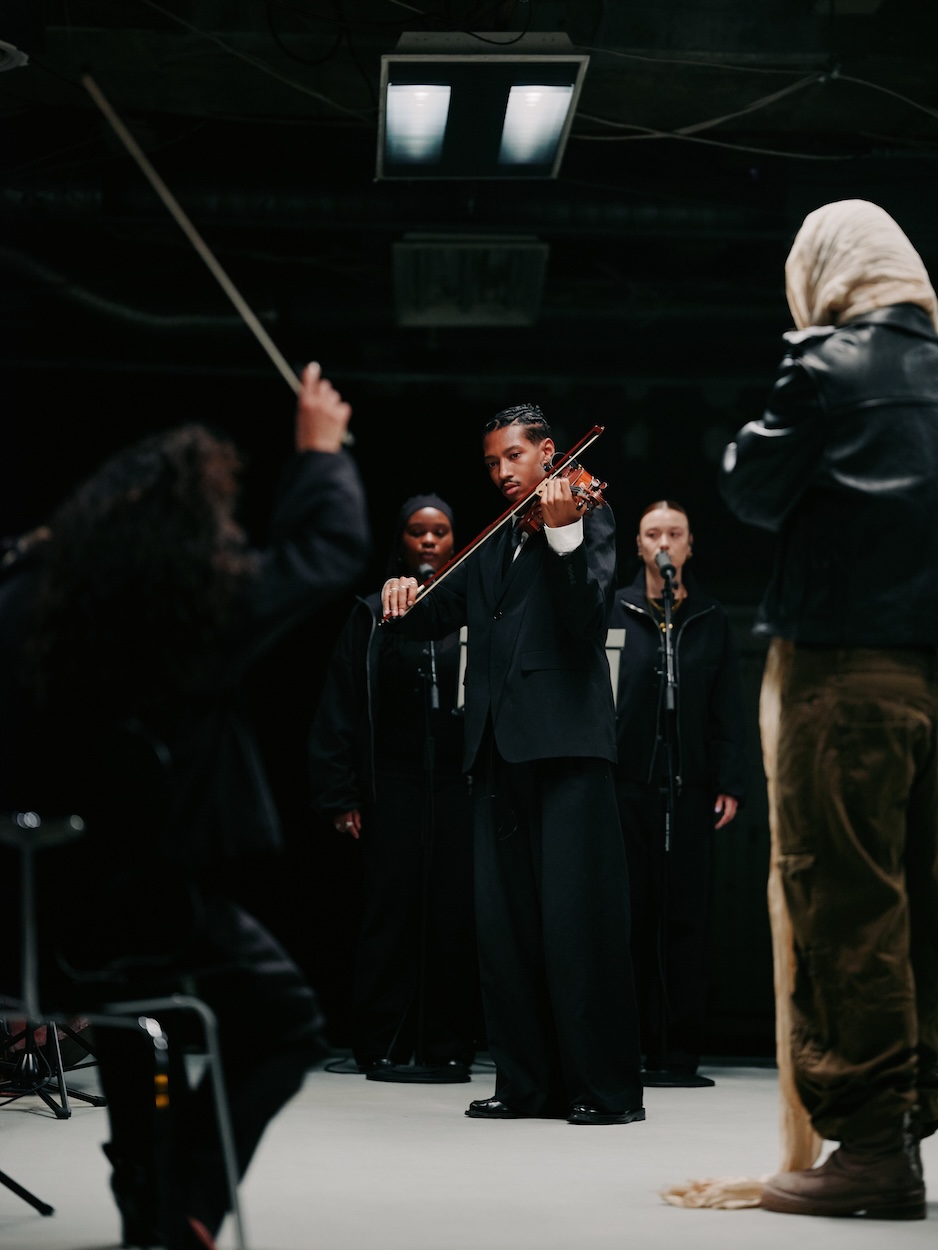
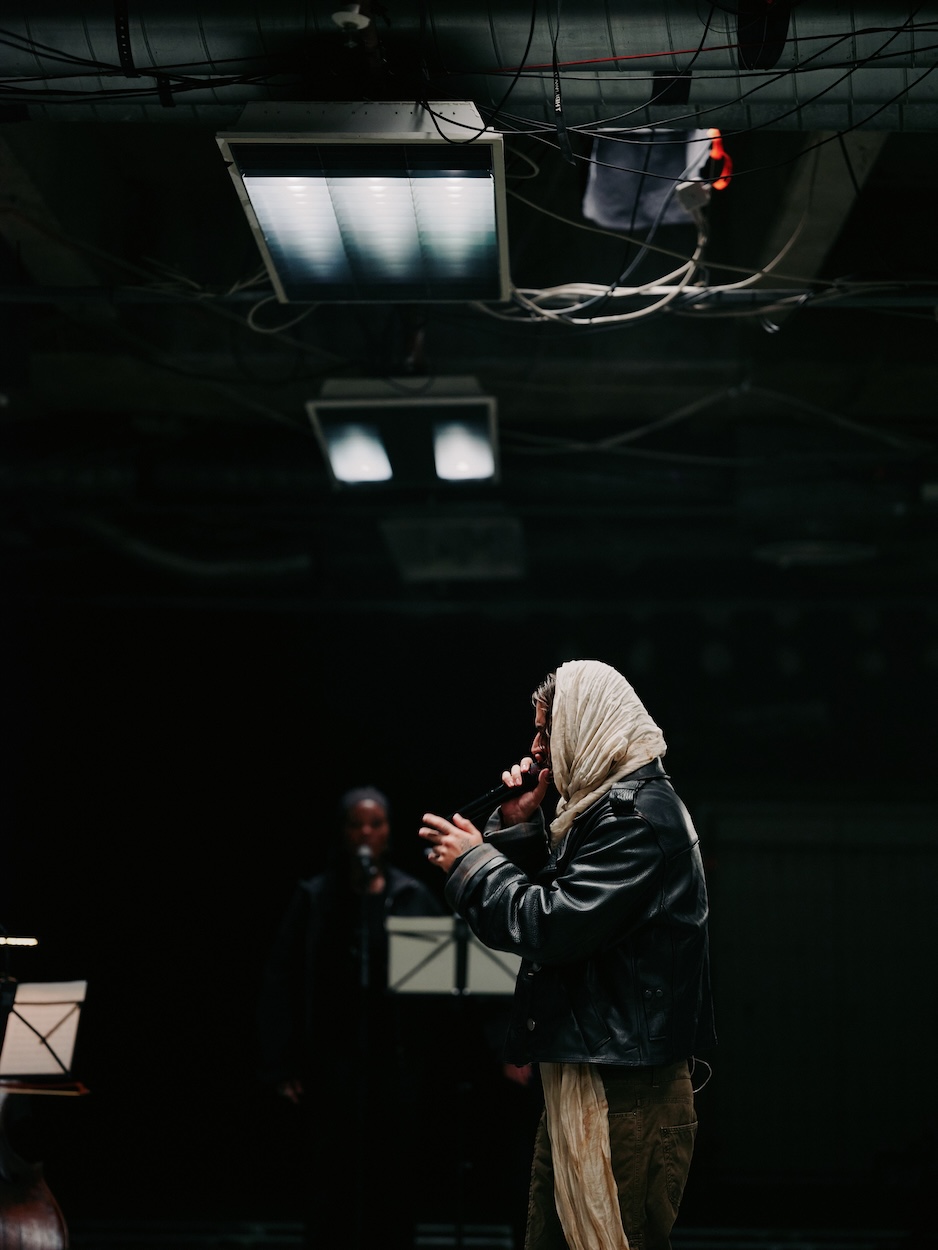
A focused silence fills the spacious halls of CANK, a former department store in Berlin-Neukölln, as Souly begins to breathe the first notes of his song „Maske Weg“ into the mic. The production team of 30+ people listens in awe as the strings join in, turning this song into an almost otherworldly experience. The spotlight illuminates the harsh concrete behind Souly and the seven-piece orchestra, with the expansive interior of this abandoned shopping mall providing a backdrop to new musical innovations as his rap softly harmonizes with the orchestra.
The mastermind behind this?
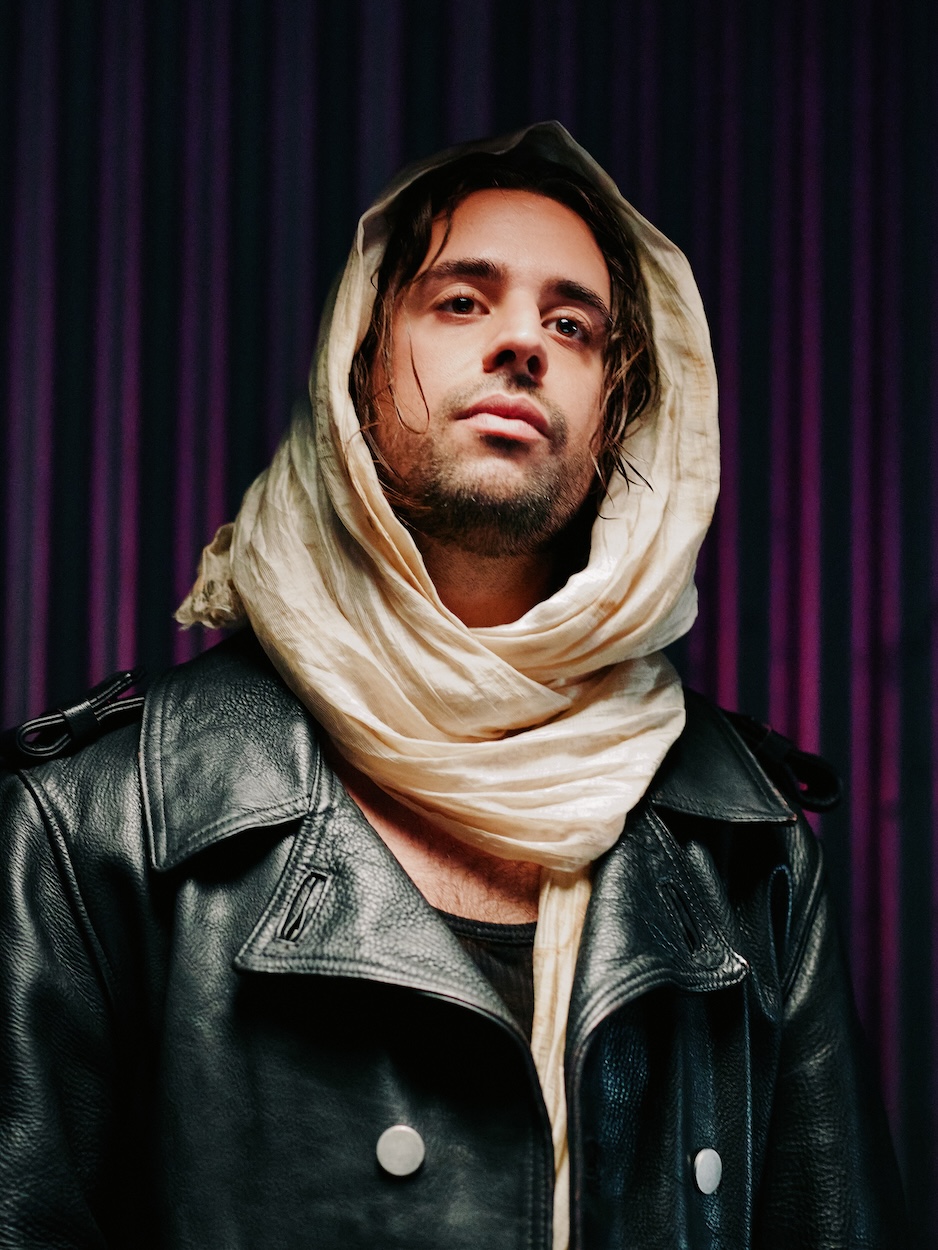
Thomas Horeczko, better known as Braths, a classical music composer and producer from Paris.
He was born into a rich spectrum of cultural influences from the very beginning: His parents are Sudanese and Ukrainian, and he grew up in Paris with a Muslim/Jewish background before moving to Berlin about ten years ago.
No wonder he doesn’t draw harsh lines when it comes to music, either.
Music has been around Braths his whole life, with a classical music education from an early age leading to violin studies at the conservatory in Paris. He moved to Berlin to study audio engineering and jazz composition and released his neoclassical debut album „Ephemeral Memory“ in summer 2025.
Braths builds musical bridges between two genres that seem as opposing as they can get: hip-hop and classical music. In conversation with Numéro Berlin, he explains how the two are not as different as one might think, but are in fact connected by more than just the loop. He has produced and collaborated with several names from Germany’s hip-hop scene, such as Symba and Apache 207.
Proving his point, Braths started „Braths Sessions“ this year, an ARTE-featured format in which he invited seven different artists to perform their songs, rewritten for a seven-piece ensemble. Drawing on his own numerous musical experiences, he explored the fields of memory, identity and belonging more deeply through this project, approaching them from new angles. Each episode focuses on one artist. Braths wrote the score for each song and, during a one-day practice session, the orchestra rehearsed with the artist. Most of them operate within the musical realms of R&B, hip-hop, trap, different variations of soul, but also pop. They underline what he mentioned as his biggest learning from the project: Almost everything can be written for strings.
The format premiered last Sunday on ARTE’s YouTube channel, with Souly’s reinterpreted songs first, followed by Wamen and Allizade. Next up are Vicky Sometani (15.11), RapK (17.11), Kayla Shyx (19.11) and, finally BERWYN (22.11).

Braths:
I mean, as a person, I don’t think it influenced me that much. I guess it just gave me, really early, a large view. My dad’s side is Jewish, and my mother used to be Muslim, but then she converted to Catholicism like 35 years ago. So yes, they’ve been through everything but I was not really aware of that when I was young.
B: Music-wise, it did influence me a bit because my mom was listening to a lot of Arabic and Indian music as well. My dad, he was more into classical music and jazz, so that was just a wide range of music.
B: Yeah, definitely. My dad is still doing music now. I’m working with him a lot.
B: We compose piano songs together. My first record that I recorded, I was 12 years old, I did with him.
B: Yes.
B: I would say it’s the one that I played the longest, which is violin.
B: Probably because I’m playing it the best. It’s the one that I enjoy the most playing because I played since 24 years. So I obviously have more facility to play violin than saxophone.
B: I don’t listen to music that much.
B: Because I used to listen to a lot of music when I was younger, and now I mainly listen to music when I’m driving on the highway to not fall asleep, or when I’m with some friends. When I’m alone, I don’t listen to music that much. I guess I’m like a cook who’s cooking the whole day in the kitchen. When he’s coming back home, he doesn’t want to cook anymore, you know.
B: I would say it’s a mix of both. It depends on the kind of music. For the Arte project, it’s a bit different because it’s music that has already been made. But if it’s for my own music, the beginning is always coming from an emotion. It’s like a musical base that is there, like a tune or a melody. And then I develop it more methodically speaking.
B: Yeah, I love Debussy, for example. Then a lot of contemporary composers, specifically a lot of Jules Massenet. He’s doing a lot of piano-violin compositions and a lot of solo violin parts, like La Méditation de Thaïs, and this is really a big reference for me in terms of dividing piano and violin.
B: At the beginning, two years and a half ago, I went with my manager, and we had the idea to do a remix of my first album, Ephemeral Memory, and then to bring artists like Reezy on there. I flipped the samples, and I made trap beats. Then I showed it to them. They were like, “Yeah, that’s good, but that’s not what they were aiming for.” So after we figured let’s just ask Spilled Milk, the production company who did this project, if they would like to pitch an idea to Arte for a live session with strings, basically. But instead of flipping samples, we would just flip the songs and do it the other way around and put them to classical arrangements. And it took us like one year and a half to pitch it to them, and then they accepted.
B: We had a big range of artists that we could reach out to, but we needed to find artists whose music makes sense with an orchestra. There were a lot of people I wanted to work with, but their music was simply not fitting with strings. In the end, we chose them quite spontaneously, for example with RapK or Souly, because I used to work with them before.
B: Yes. Basically, the people have their songs, I listen to them and I just rewrite them for orchestra.
B: Yeah, I realized that most of the songs can be arranged for strings. And also, I like the strings way because it gives a bigger variety for the different parts of the songs. You can really express the emotion of the song from the artist, if you want to play loud or not too loud, staccato to emphasize certain parts of the song, basically. And with a steady beat you don’t have a much bigger range of emotions. For example, with one of the artists, this French musician, there’s so much emotion especially in the first two songs. A lot of the people on set were crying, especially the French people that understand the lyrics.
B: Luckily, we had this big team. I have two amazing managers, and Roberto, the art director, did a really good job. Everybody that we are working with was really nice and talented, I was worrying more about the music. The music was already done one month before, so me on set, I just had to make sure that my part with the strings worked.
“Giving away your babies in other hands is always a strange feeling but seeing our two worlds coming together like this felt amazing. –
I do have a spot deep inside for classical music – I was raised singing Bach in a choir, strings are my most used samples and the poetric scheme of opera lyrics indeed did inspire me while writing my own.”
Souly on the collaboration with Braths and his orchestra.
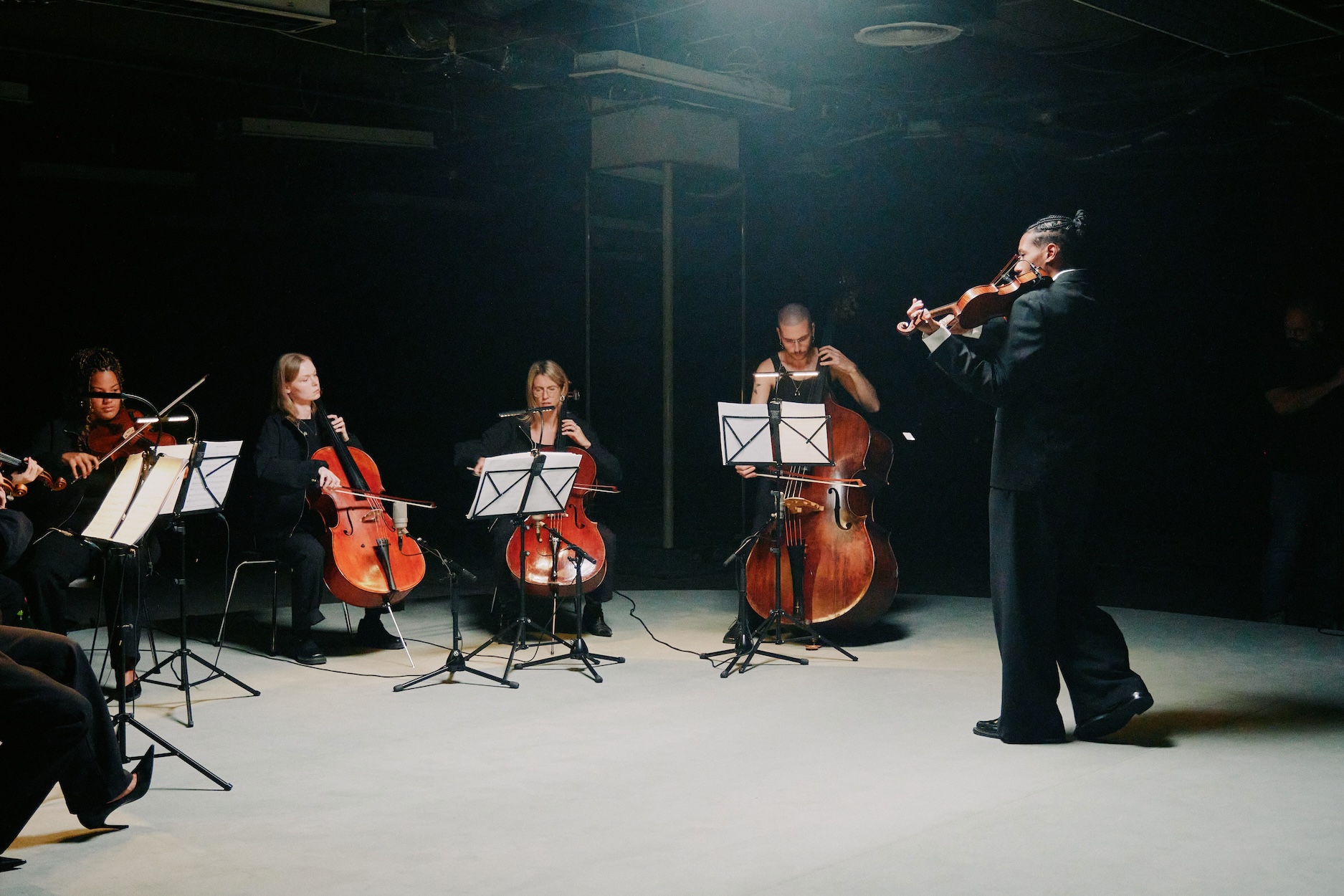
B: The orchestra people that I was playing with, the base of four strings, are who I always play with. Only for the first viola, we took someone else this time, but it is essentially these four people that I always work with, since two years now. And depending on the project, we just bring in people to support them.
B: I feel like it’s going the right way, I would say. I mean, now there’s a bit of a down at the moment. I feel like that for the whole hip-hop industry, everywhere in Europe, everywhere in the world even. But for me, I really liked arriving in Germany and working with German rappers. When I arrived in Germany, it was the moment where the whole new generation was coming in, like Symba, Zackavelli, etc., like a new wave of hip-hop/rap. Luckily, I arrived at the right time, and I had the chance to meet those guys at the right moments.
B: I guess hip-hop is still a strong genre, but just, like, in terms of selling and listening and all of that, I feel like it’s going down compared to, like, five years ago. Streaming-wise, the rise of AI music, bespoke music. So, because I feel like there’s no renewing of it. It’s like it’s been the same since actually four or five years now. So people are getting really tired of this, so they don’t consume it as much as they used to do.
B: From an economical point of view especially, they sell less tickets, it’s harder to go on tour, maybe not for the big ones, but for the smaller, middle-range artists, it’s harder to sell tickets and everything. Because that’s also why we try not to diversify what we’re doing. I feel like people are maybe—not now, maybe, but soon—people are going to be more keen to listen to more strings arrangements and stuff like we’re creating.
B: I mean, musically speaking, they are united anyways. The base of hip-hop songs is not classical music, but it’s usually two- or four-chord progressions. So musically speaking, they are connected already. They use a lot of classical instruments as well such as a piano or violin. There’s a lot of songs that have been sampled from classical songs, and so I don’t think they’re that far from each other. Hip-hop music is just summarizing four chords to make a loop that is not too repetitive, that you just loop again, and let’s say then you put some drums. And classical music is just having this loop and developing the loop endlessly, from, like, a beginning, a middle, and the end. And hip-hop is more like having one loop that’s just stuck with the whole thing, but it’s the same process.
B: Yes, it’s already in the plans. But this time we want to do it with DJs instead of singers.
B: Thank you!
NEW SONG: “MOVING TO L.A. (WITHOUT YOU)” BY DSCHUNGEL AND NEUSWANSTEIN
Advertisement
"MOVING TO LA" is a song about the desire to set out and pursue your desires, but also the…

WEEKEND MUSIC TIP PT 117 FELICITY J LORD
Split between London and Berlin, the members of Felicity J Lord came together for an…
IN CONVERSATION WITH TWO SHELL
Two Shell have always followed their own path, finding freedom in the unknown. In…
IN CONVERSATION WITH JANINE GROSCHE
Sitting in her daylight-flooded atelier, Janine Grosche tells us about her work with…
WEEKEND MUSIC TIP PT 116 JAY PARK AND LNGSHOT
From shaping the K-pop scene to mentoring the next generation, Jay Park is taking LNGSHOT…

WEEKEND MUSIC TIP PT 115 ACID PAULI
Martin Gretschmann, better known as Acid Pauli, has spent decades moving between musical…