


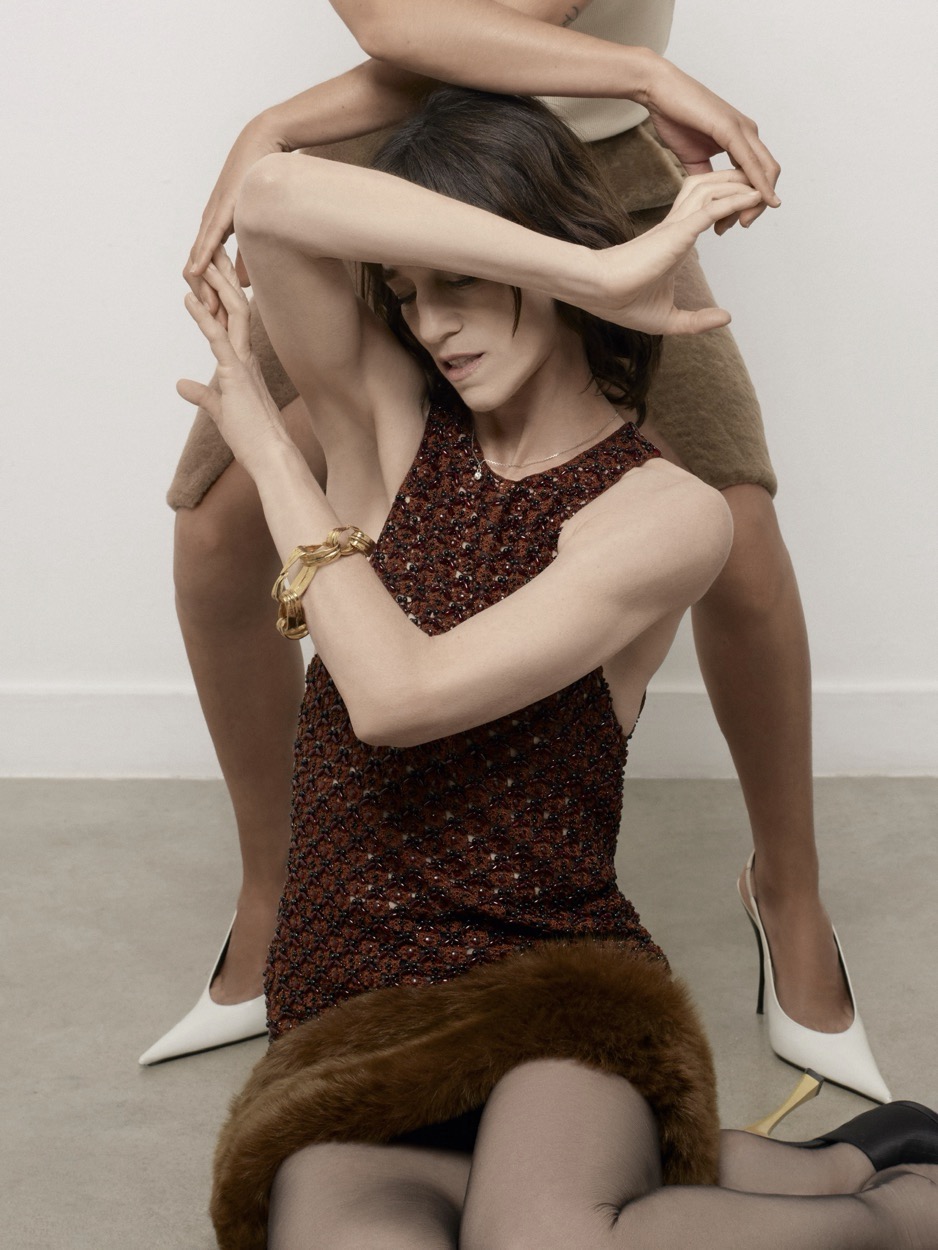

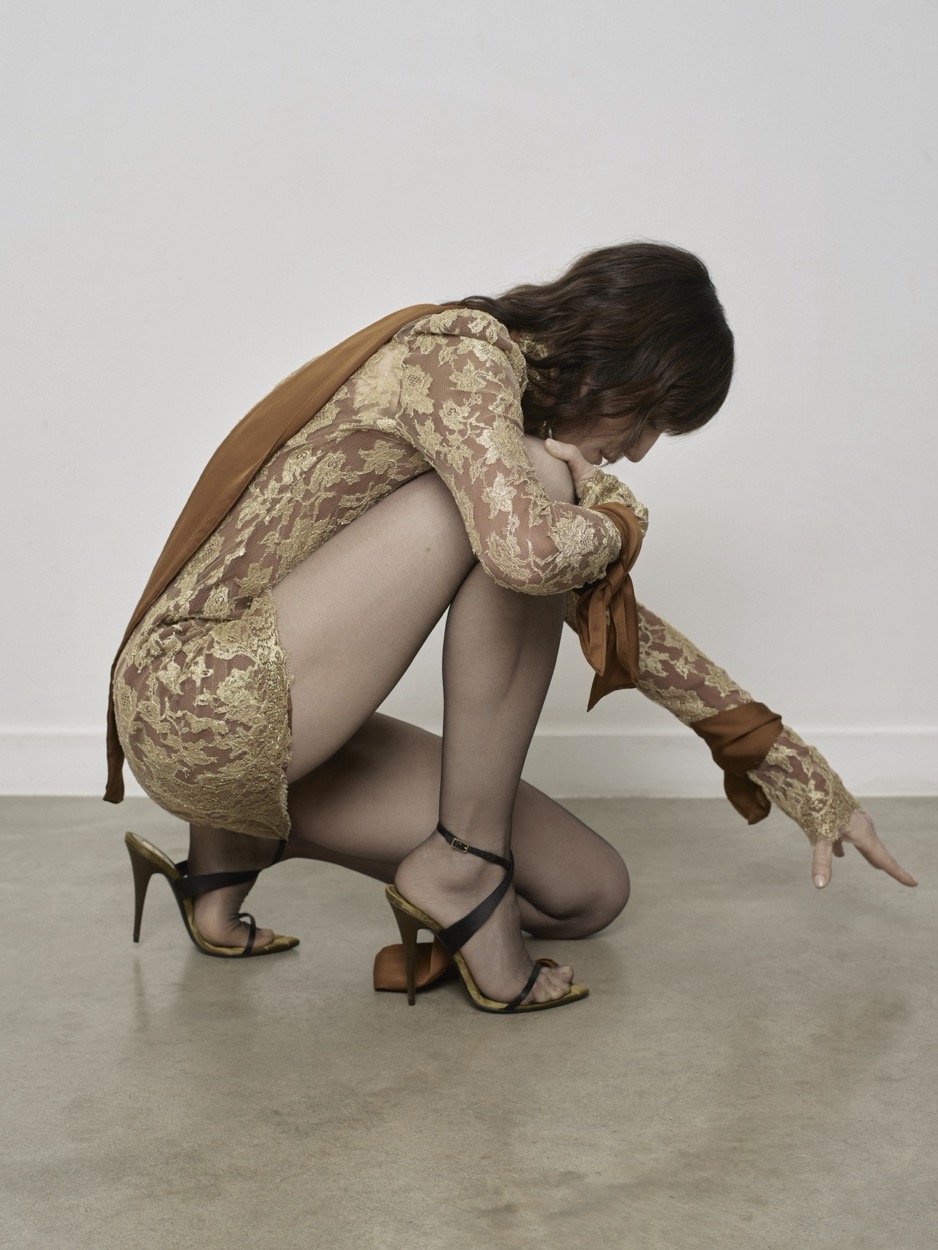


The Last Mystery Girl – Charlotte Gainsbourg in conversation with Ann-Kathrin Riedl
There is something almost paradoxical about Charlotte Gainsbourg. For decades she has existed at the very center of culture – fashion campaigns, controversial films and songs, iconic parents, red carpets – and yet she has always remained strangely untouched by the machinery surrounding her. While modern celebrity culture demands constant visibility, oversharing, and self-construction, Gainsbourg still moves through the world with a rare kind of quiet resistance.
When we speak over Zoom ahead of her appearance at the Cannes Film Festival, she appears exactly as one would imagine: thoughtful, self-deprecating, sharp, and deeply uninterested in turning herself into a performance. What begins as a conversation about her understated red carpet appearance quickly unfolds into something much larger: a reflection on shyness, beauty, provocation, social media, freedom, aging, and the growing difficulty of remaining spontaneous in a world obsessed with control. In a cultural moment where everyone seems to explain themselves endlessly, Charlotte Gainsbourg still believes in mystery – and that is exactly what makes her so compelling.
Charlotte Gainsbourg: I was really happy about the dress. These kinds of events are always a little difficult when they don’t come naturally to you. So it’s wonderful to feel comfortable in something that doesn’t seem like too much effort. Anthony was very sweet in the sense that he didn’t want to disguise me. He didn’t want me to wear something that would feel fake.
CG:
That’s true. And I think Anthony understands that it’s stronger for me to stay in my own shoes than to try to become some kind of model. It’s important for me to stay close to my personality. And I think that approach is also not far away from the spirit of Saint Laurent itself.
CG:
It’s natural in the sense that I would be really embarrassed to think of myself as someone important in the fashion world. I don’t think about fashion in that way at all. I simply need to feel comfortable because I come from a very, very shy past. The fact that I’m now able to do red carpets and enjoy myself is something very new for me.
I think people understand that shyness in me, so they don’t expect me to become somebody else. I tried that a few times, and it didn’t suit me. I love playing different characters in films, but not in real life. And red carpets, even if they’re extreme in some ways, are still real life. It’s still you.
CG:
Yes, but now that I’m older, I finally feel okay with myself. It took such a long time. And sometimes I almost regret how much time I lost being stuck inside my own head, looking at myself so much. It consumes an enormous amount of attention.
Now I think: that was time I could have spent looking at other people instead. It’s strange to realize how much time you waste being trapped in that self-consciousness.
CG:
It simply was what it was. I think because my parents were so well known, and because I started acting so early, people looked at me constantly. And that happened at exactly the age where I wanted to disappear.
I loved making films. I loved the work itself. But I hated public life. So yes, shyness was already part of my personality, but because I was exposed publicly so young, it became even harder.
CG:
The funny thing is that people actually respected my shyness because it was so strong. Of course I had to do press and television very young, but when I sometimes watch old clips of myself now, it’s embarrassing. I made no effort at all.
I remember a press agent who has known me since childhood telling me later that journalists found me impossible because I wouldn’t help them. I wouldn’t search for words or try to entertain. I was silent.
CG:
I just care less now. I have the body and face that I have. For a very long time I felt ugly. I had many complexes and beauty issues. Today I’m more at peace with the way I look, and because of that other aspects feel less dramatic too. That helped a lot.
CG:
Personally, I never really felt deprived of freedom as a woman, probably because of the environment I grew up in. But through discussions around women’s rights and so-called “woke” issues, I started looking more closely at these questions.
And yes, of course women’s roles are still often less interesting than men’s roles in cinema. That’s true. Of course we still have a long way to go as women, and we still have to fight for our place. But we’re getting there.
CG:
Provocation has become very tricky and dangerous. Less and less people are brave. People are scared because you can suddenly be erased or lose your voice entirely.
We live in a culture of denunciation now. People anonymously accuse others or expose them without realizing the responsibility they carry. And I find that climate very scary. I’m about to go to Cannes and do press, and sometimes it feels like people are simply waiting for you to make a mistake.
But as an artist, I personally never ask myself whether I can or cannot do something. I would shoot Antichrist or Nymphomaniac again and again. Absolutely. I grew up with provocation because of my father – and I say “thanks to my father” because I think provocation is important.
Especially today, when everything has become so serious. Humor is necessary. Provocation is necessary. A world without it feels sinister. It’s frightening.
CG:
Much more innocence. Much more carelessness – in a charming way. My parents had fun. They partied constantly, but they were also incredibly creative. They enjoyed life. Of course we live in difficult times now, with wars and crises everywhere. But my father also lived through war. Maybe that gave him a completely different perspective on life.
CG:
Sex is everywhere visually, of course – social media, images, exposure all the time. But at the same time it often feels fake. The freedom we’re supposedly living in isn’t entirely real.
What I find especially terrible today is the conformity of beauty. Before, originality was exciting. The stranger and more individual people looked, the more fascinating it was. Now everybody wants to look the same. Filters erase age. Girls all want tiny noses and huge lips. Sexiness often has only one face – and I find that incredibly boring.
What I find especially terrible today is the conformity of beauty. Filters erase age. Girls all want tiny noses and huge lips. Sexiness often has only one face – and I find that incredibly boring.
CG:
Instagram was a real dilemma for me. It goes against my instinct because I never wanted to share every detail of my life – what I’m eating, where I’m going, what I’m doing every day. Privacy has always been very precious to me.
At the same time, social media is an incredible tool because it allows you to promote films or albums differently. For people who enjoy using it, it’s great.
But I’m not naturally good at it. I forget to post, then suddenly remember I probably should. It feels empty to me sometimes. More like an obligation than something joyful.
CG:
Absolutely. And I admire people like her who never really gave in to social media.
For young people today it’s much harder. Especially in music, social media has become almost unavoidable. It’s no longer just promotion – it becomes part of your identity. And that means constantly asking yourself how you want to present yourself. What image you want to create.
I think that can destroy spontaneity. Some artists function through public perception, but for others it kills creativity because you’re constantly judging yourself in advance – not only your work, but your whole life.
CG:
I couldn’t continue if I thought too much about the outcome. Otherwise I wouldn’t do anything anymore.
It’s a little like having children. If you think too much about it, maybe you’d never do it. You need a certain naivety. A certain trust in the future.
If you think too much about every move you make, creativity dies. Especially if fear enters the process. If you judge yourself too early, it becomes impossible to move forward.
Artists are fragile. Creativity itself is fragile.
CG:
I think what I treasure most now is imperfection.
Especially in creativity. With AI and technology, perfection is becoming very easy to achieve. But there’s nothing human about perfection. What interests me are mistakes, accidents, imperfections.
I trust accidents very much. That’s something I learned from my father, even though I didn’t understand it at first. He never liked technically perfect singers with huge voices. He preferred people who didn’t really know how to sing because there was vulnerability there. Now, with the voice I have, I finally understand what he meant.
CG:
I don’t really think about myself that way. I don’t have a fixed idea of how I want to be perceived.
Actually, I like change. I like the idea that my answers might change from one day to the next. If I were to say, “I wish people knew this exact thing about me,” it would suddenly make me feel too fixed. And I don’t want to be fixed.
CG:
Thank you. Hopefully we’ll talk again soon.

IN CONVERSATION WITH IRVINE WELSCH
No doubt Irvine Welsh’s Trainspotting has had an afterlife that has crossed generations.…

SEXY ISSUE VOL ABC
Photography ALICE ROSATI

ON HUMAN CONNECTION: DOLCE & GABBANA´S F/W CAMPAIGN BY STEVEN MEISEL
D&G’s newest Fall/Winter campaign beautifully explores the chemistry of human…
Photography JORRE JANSSENS
Photography JORRE JANSSENS

IN CONVERSATION WITH RENAUD SALMON
In conversation with Numéro Berlin, Renaud Salmon reflects on building a luxury house…

SEXY ISSUE VOL ABC – LUKE ABBY
Photography LUKE ABBY