
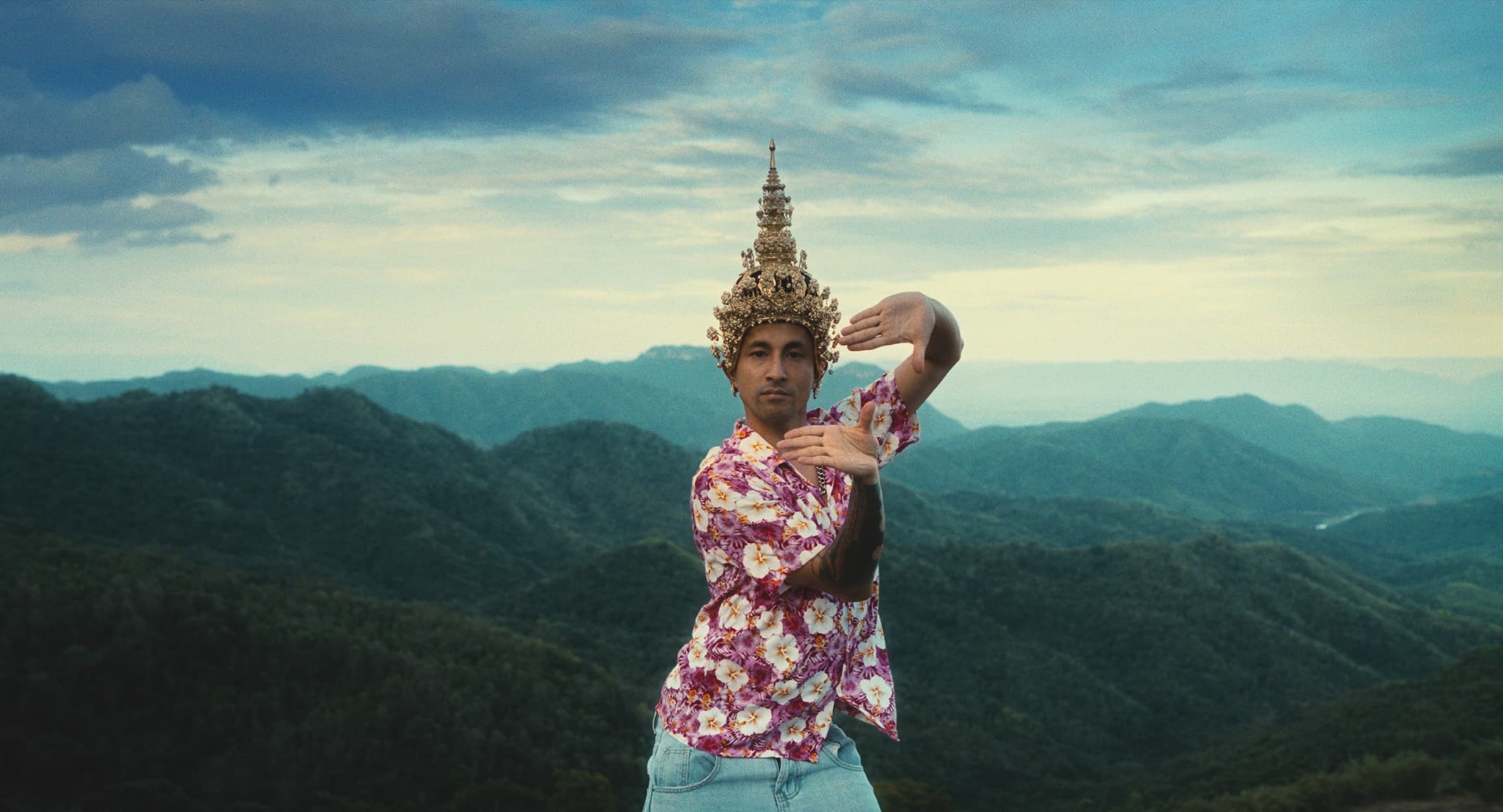
DO YOU UNDERSTAND THE LANGUAGE?
Ballroom was born in New York in the early 70s: It was here where members of the Black trans community opened their own spaces, escaping the hatred, violence, and discrimination faced by queer folks on New York’s streets. Drag Icons like Crystal LaBeija created spaces for mostly Black and Latin American drag queens to express themselves, present themselves to each other, consult one another, and dance together.
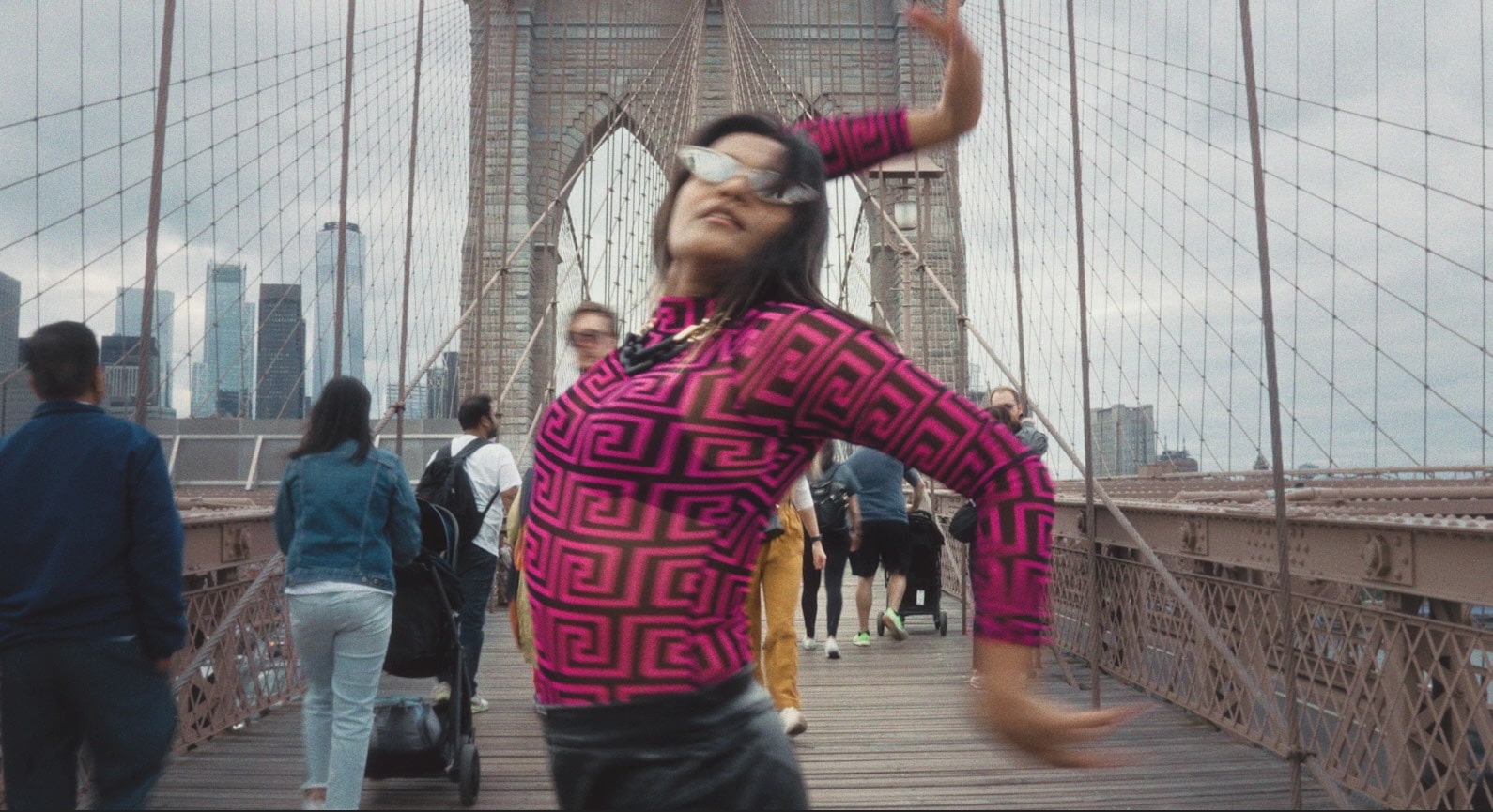
Decades later, this vibrant, explosive scene has reached Southeast Asia. Teddy in Malaysia, Xyza in the Philippines, and Sun in Thailand are introduced and accompanied on their journeys in “The Beauty of Ballroom”. All three are trailblazers for the scene in their respective countries, working against all obstacles to create, but also maintain, safer spaces for the entire community.
The documentary is directed by Chan Sze-Wei, who has a captivating way of observing and documenting alternative stories, identities, and social issues. They manage to zoom in on the pains and beauties of the portrayed characters in a really intimate way, whilst never coming across as too intrusive. The battles these protagonists are fighting are tiring. They talk about homophobia from family members, hate crimes, and police raids on the scene. When the police raid an event in Malaysia, many members are arrested for the night. The reason? “They are impersonating women.” And what women! No one has entered an arrest with more grace and attitude.
Against these dark episodes, the ballroom seems even brighter, loud, and expressive. It celebrates beauty, gender expression, and looks that break away from anything known, basically rewriting what it means to be a man, a woman, neither, or everything in between.
But the whole scene isn’t only about dancing, cheering, and looking good: it is a new home provided to young queer people. In the “houses,” they can find the love and compassion that they are often missing in their original homes. Every house has a “mother” and “father” – the founders and more experienced members who guide and support the younger ones. And this is an aspect that Sze-Wei captures beautifully: the mutual support and understanding between members that comes through in many scenes.
Numéro Berlin had the chance to talk to Aurora Sun LaBeija, pioneer of the Thai Ballroom scene and one of the three protagonists. As the name gives away, he is a member of the legendary House of LaBeija and the first person from Thailand to walk international balls and bring home trophies. After taking a cheap dance class, purely out of curiosity, Sun was quickly drawn into this world. He travelled abroad to learn from the legends and found that people back in Thailand showed huge interest in voguing. After teaching for years, he also started his own Kiki House, similar to a Mainstream House but even more community-focused, offering a low-pressure space for young LGBTQIA+ members to find their chosen family.
“Some of the kids, they don’t want to walk ball, they just need a gay father.”
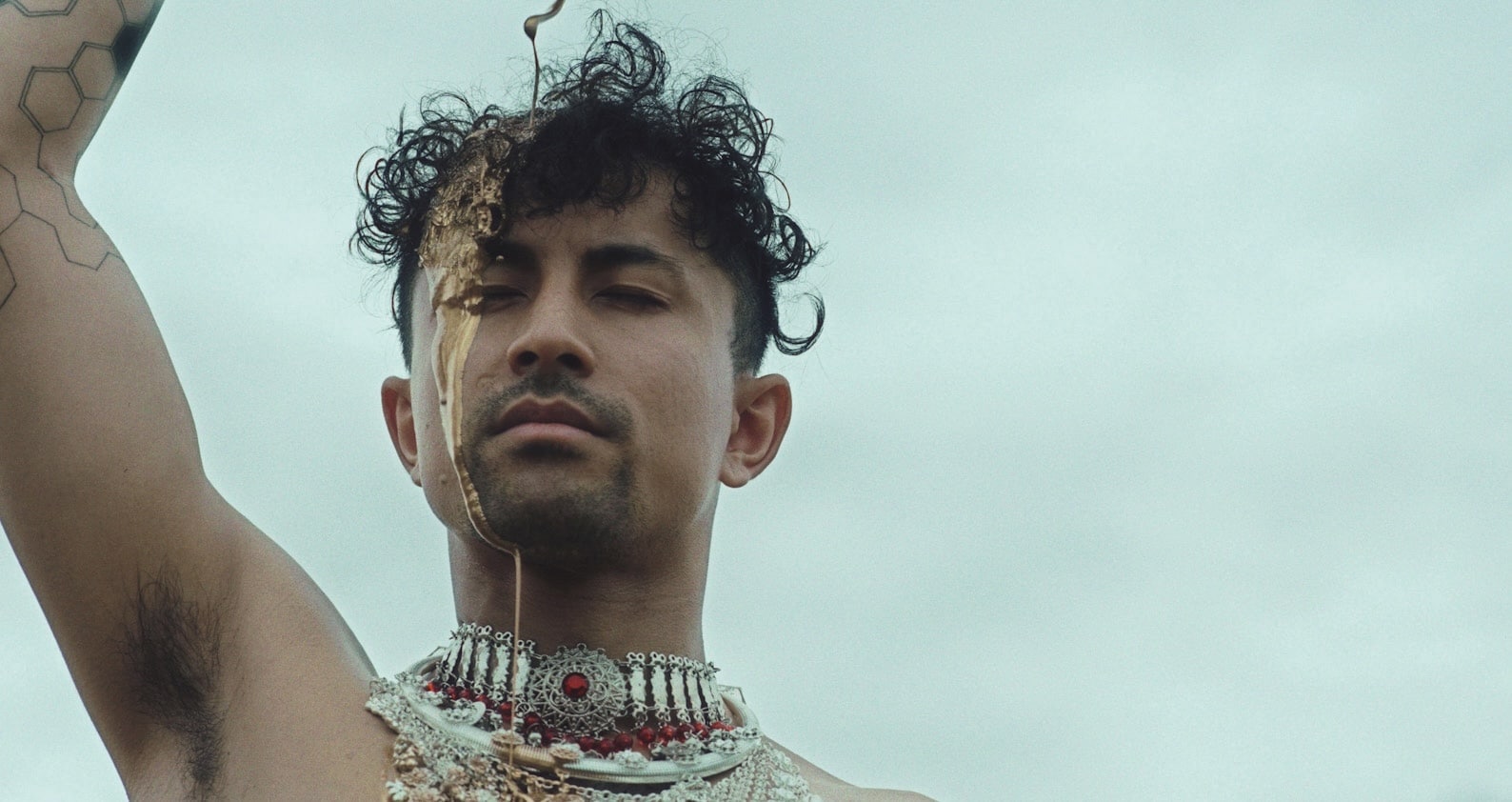
Sun:
Correct. I was born in Thailand. I moved to Norway when I was three.
S:
First of all, I would say it’s a little bit boring in Norway.
Norway has 5 million people. Just Bangkok itself is 7 to 10 million people.
It’s a lot. It can be very overwhelming. I love it actually, growing up in Norway, and I didn’t grow up in Oslo, I grew up in the countryside. Oh my god, it’s so quiet. It’s probably like less than 20,000 people where I was growing up, but Bangkok is very exciting to me. I moved to Thailand in 2012 then you really learn as a gay man what life’s about.
The thing with Bangkok is that there’s so much queer community present, plus all the gay people traveling to Bangkok that I think for hundreds of years historically it’s been quite normalized.
Thailand recognizes over 20 genders. I don’t know what they all, are but it’s very interesting.
Going to Bangkok, you would notice that the visibility of trans women is amazing. It’s still not equal, for instance, I’ve never seen a trans woman work as a flight attendant. But you see them working in the shopping mall, pharmacies, restaurants, service industry.
And also the gay district is quite huge. We have this kind of like a small mall. It’s open 24-7. It’s beside a gay club. I bought a straight friend there before from Indonesia, he’s very open-minded, he was so gagged, he was like “90% are gay men coming here!”
I think the difference is really, that Norway may have the equality but I feel there’s much more homophobia and transphobia in Norway.
In Thailand everyone has at least one trans person in their life. It’s pretty normal.
S:
More than in Thailand. The thing that Norwegians are good with is keeping it inside. But I can feel it, and I heard of some situations.
In Thailand it’s better, there are bullies in schools of course, but I feel adults are quite respectful and tolerant to each other. In Thailand everyone has at least one trans person in their life. It’s pretty normal.
S:
Yes, I mean from my own experience and perception, I would say because Buddhism is the majority religion or practice. And I think Thai people really are taught and learn to really focus on kindness and compassion and good practices, being a good person. Thai people are really afraid of having bad karma because it’s gonna fuck up your life. So in a way I think that also has contributed to that.
Being trans is not wrong, it’s a part of nature. To respect that and judge how they are as a person, not their gender identity or how they express themselves. In Buddhism and just in general Thai people believe in karma: you do that, you get that, you do good, you get good.
S:
I will be honest – at first I didn’t really think too much about it yet if it was necessary or not. I started abroad to learn and walk balls and then came back to share my knowledge in Thailand, where there was no scene yet. I threw the first kiki ball and to be honest, it was more as an interest for the kids, the youth.
But now I’ve been thinking a lot about it after that and thinking of whether it’s necessary or not. In a way I feel there are already a few safe places in Thailand. But ballroom is necessary because it is a safer space for a lot of people, especially trans women.
But in Thailand, like I just shared to you, trans women are kind of safe, and quite tolerated in Thailand. It’s really individual, that’s for sure, but for some it will be very safe.
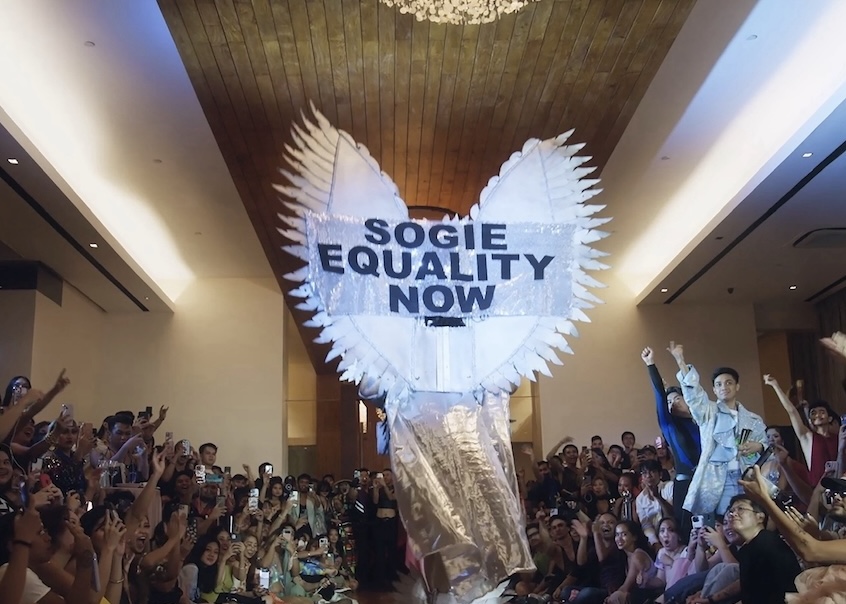
I think the biggest contrast is that for most black trans women in the U.S., you don’t know whether the next day you are alive or not.
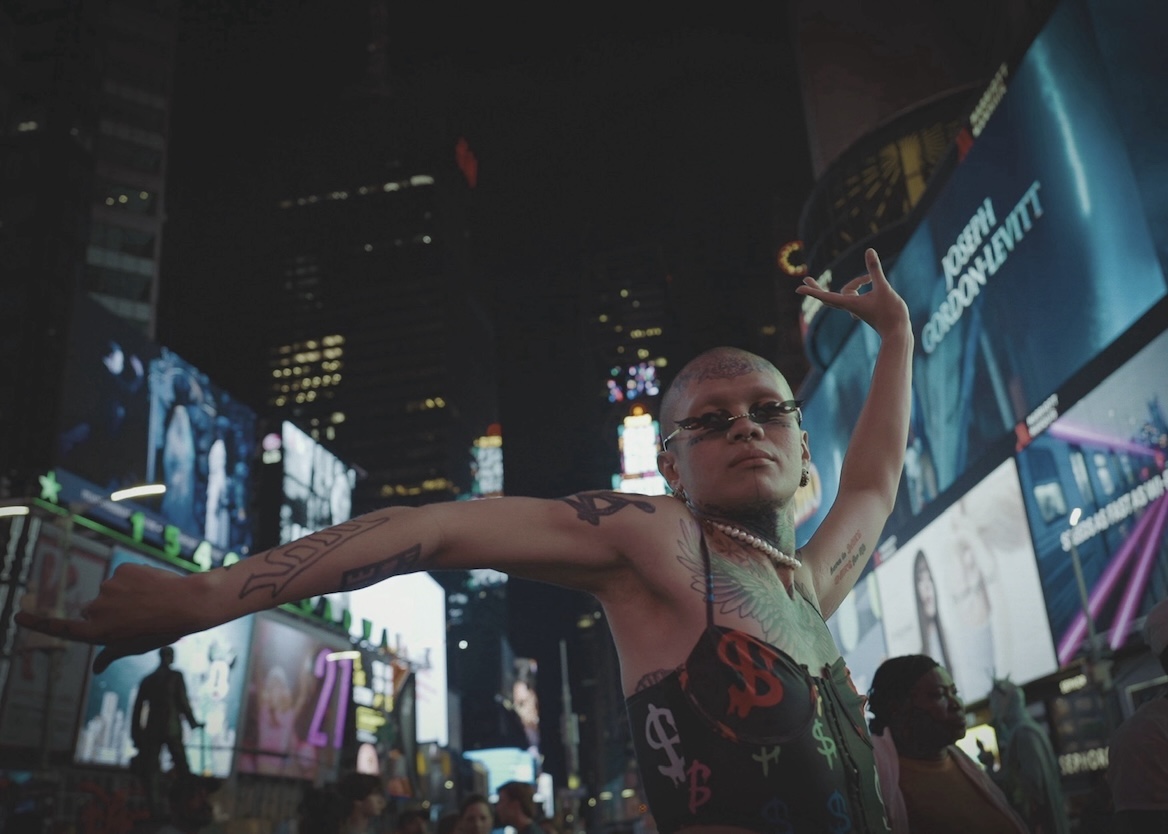
S:
I think the biggest contrast is that for most black trans women in the U.S., you don’t know whether the next day you are alive or not. I think that’s a real concern for a lot of the black trans community in the U.S.
But in a country like Thailand, trans women can go around and not really be afraid of that.
A more functional difference, I would say balls in Asia will start more on time.
And of course the scene in New York has a lot of trans women, it’s really a space for them, because first it was created by a trans woman for trans women so it’s still very made by them for them. Of course nowadays it’s also a lot of gays, the butch queens. But the dolls, the femme queens, there’s a lot of them in the U.S. . In Thailand even though the visibility of trans women is very high, we don’t have many in Thailand’s ballroom scene.
S:
In the beginning, it was the gays and actually the cisgender girls. A lot of the cis girls know me through dancing and then they saw that I started voguing and they wanted to come and contribute to this scene too because it just started and we were not that many and we are of course open to allies.
But at some point you also need to adjust and also understand that, hey, okay, I think together we need to do a better job. It looks weird that it’s going to be more straight girls in the scene and then we don’t have any trans girls.
S:
I think somehow also naturally the cis girls just left the ballroom scene.
Now we have a Thailand ballroom leader, she’s a trans girl and she’s doing it pretty well and she has her trans daughters who she brought into the scene.
Because of her, there are more femme queens, trans girls in the scene. Because I don’t do the Thailand scene anymore actually. I only did it in the beginning until maybe like two, three years ago. Sometimes there is drama happening and stuff, so I left the local scene and I focused more on Southeast Asia.
S:
Correct, yes, especially in Indonesia after what happened recently this year where there were straight people attacking trans girls. There were people filming boys running after trans girls. It’s really bad and because I think their government has been showing support of anti-trans and anti-gay which has for sure contributed to the people not respecting LGBTQ.
But thankfully there’s still Bali. The majority there is Hindu, a lot of Indonesian LGBTQ actually either move to Bali or Jakarta. Jakarta has become more open minded, certain places. But Indonesia is so big, there’s a lot of people and definitely a lot LGBTQs are still like hiding.
S:
From Norway I came from like a more contemporary dance background, but when I moved to Thailand I found happiness in the hip-hop scene in the street scene.
So I started to learn that. I was with a lot of street dancers and it was one week, there was a lot cheap classes, different street dances. One of the classes was vogueing and I never heard of that. It was done by a very famous Thai singer, she’s really good friends with a lots of street dancers. She had been to a workshop in LA, actually it was a workshop by Javier Ninja, icon Javier Ninja, and so she just wanted to share with us because no one was voguing in Thailand. It was 2013.
After the class she was teaching elements like duck walk and cat walk and the dip and I thought that was really cool. I felt very happy and excited to try these moves.
So I went home on YouTube, did more research, and that’s when I discovered some of the icons from New York, like Icon Naomi, Icon Da Sean.
Because of that class I really got more into voguing first and then I knew about the culture later. It was really like “oh my god i want to do all these moves including these dips!“.
I was saving money just to travel to Taiwan to learn more vogueing. And that’s also where I walked my first ball, it was in December 2015, “Kick ass ball five”.
S:
Ooh, the essence.
We have three different styles right and so of course each style has their own essence but I think for me it’s really this idea of carrying experiences, that come from your ancestors in ballroom, like your parents, Ballroom parents, the icons, the legends that lived before us. That’s a part of the essence too.
Voguing is a practice of, like any other practices, especially traditional practices, traditional Asian dances, classical Asian dances. What is passed hundreds of years through the masters, the gurus.
So I would say it’s the same in ballroom, that it’s passed down through your parents, the icons, the legends in the ballroom scene and I think that’s really a lot of the essence for me in the three different voguing styles. It’s about if you understand what they went through. Because of the political issues that happened in New York back then, do you get how they managed? They brought that to the floor, to the balls, to do the voguing.
Especially Vogue Femme, you know, is feeling like a woman, it is feeling feminine, its feeling pussy and cunt, and that’s also a very essence of Vogue Femme.
And of course, there’s diversity of that kind of sense and feelings, and that’s why I said, that’s when it’s also even more important to understand the language of the icons and legends and our parents who come from this very marginalized community in USA. Do you understand where your place is in ballroom?
So that’s why I would say for me vogueing, of course a lot of the movements are very physically, not just challenging, but it demands a lot from your body as well. Even though you’re a strong ass bitch, you might not have the essence. Then it’s not gonna work on the runway. They’re gonna see right through you and be like, sorry, like you’re just mocking this culture.
S:
Correct.
S:
It still exists. In the Kiki scene, I founded a Kiki house, Kiki House of Sun. It was the first Kiki house in Thailand, but it also got spread to Vietnam, Singapore, Indonesia, the Philippines, and we have one member in Nuremberg.
Kiki House of Sun still exists, not in Thailand anymore but around Southeast Asia and then we have a chapter in Seattle, also in USA now.
Even though you’re a strong ass bitch, you might just not have the essence.
S:
I started in the Kiki scene later, and I also didn’t know about the Kiki scene until then. When I started the scene in Thailand is when I learned more about it.
I wanted to create a Kiki house for the local kids who didn’t have the opportunity to travel. Sometimes it is hard to join a mainstream house if you cannot travel.
But it was really just to have it for the kids locally who don’t have the same opportunities like I do, I can join a house just because I can go abroad.
Also I did not want to scare them away because ballroom can be quite rough sometimes, and also having a Kiki house helps you to mentor them and give them a lot of advice.
Some of the kids, they don’t want to walk ball, they just need a gay father, they just need a gay role model because at home they won’t talk about gay things or queer things to their parents.
S:
My Thai mom, she’s very open-minded, so she was just curious what is this, and she was supportive.
But I also used to live in a foster home in Norway. When I came out to my foster mom, she was crying. She was like, she just worried about a lot of things. That was different.
I think she was just curious, asking me, “Why are you wearing all these heels, you’re not trans, right?“ She’s not a bad person, it was just all new to her because also she comes from the more countryside in Norway. But other than that, actually, they’re quite supportive. I would say my Thai mom is the one most supportive, again, I guess because of Thai culture. She already grew up with queer people, LGBTQ people around her since young age. So it wasn’t new to her.
When I came out to her, she was like “Yeah, I mean. I mean!“
S:
No, never. Actually, I have a twin, and he’s a straight dude. And when we were 6, she dressed me up as a girl, and then him as the boy, and she was taking photos of us. It’s in the documentary actually. So obviously she kind of knew.
And she said, like, when me and my twin, we both were very little, she said like, you were different. You were not like a boy.
S:
I never expected there would be such a movie and the fact that I was blessed enough to be one of the protagonists as well. I have to say, it’s been really special.
After studying contemporary dance in Norway, my idea was always just, I’m going to dance in performances, on the stage, like box theaters, whatever. But then I did more things after I moved to Thailand.
Just the fact that I could be a trailblazer of a ballroom scene having my own ballroom kids and all that! And now on top of that there is also this film that archives how the ballroom has started in Thailand and Southeast Asia.
Some people have been commenting, calling it the Asian “Paris is burning”. I feel like we’re still in the beginning but it’s all very special and exciting.
S:
Well, I definitely hope they will be free in some countries like Indonesia and Malaysia as well. I don’t have kids there but countries like these two, where there is a majority Muslim society, that it will be safer for them, especially the dolls.
It doesn’t really look hopeful, but it’s just something we have to go through together and wish for the best and hopefully that the allies in those countries really come together to support.
So yeah, generally I hope for ballroom to become a safer space. That they will be more accessible to the youth as well. Of course less drama – if it’s possible. Sometimes they say like “it’s just ballroom” but that, you know, it really must be built on compassion and kindness because i feel that’s really what a lot of the kids still need, someone who supports them.
And of course hopefully also more sponsors and donations. I keep seeing balls without any budget, they lose a lot of money to organizers. I’ve always been dreaming of NGOs supporting the balls, that’s what I hope for.
Because that’s what they do in the US, I heard, especially Kiki Balls, they get funding among grants from certain systems. That’s why you also will see a lot of Kiki balls in schools and stuff.
I just hope it can be another safer space for a lot of LGBTQ community members and that we keep going on about spreading the awareness about sexual education, PrEP, HIV, hormone treatments for the trans girls. Just taking care of each other.

IN CONVERSATION WITH SOFIE ROYER
With her new album before/after, Sofie Royer looks at the conflict of you versus you: the…

IN CONVERSATION WITH JOEL EVEY & NICK FROSST
What happens when AI steps out of the tech world and into Berlin’s creative scene? At…

IN CONVERSATION WITH LEON EMANUEL BLANCK
His work is defined by an inherently asymmetrical approach, working directly from the…

WEEKEND MUSIC TIP PT 109 DAHI
He produced some of the most recognizable hip hop tracks of this century, from Kendrick…

IN CONVERSATION WITH AARON PIERRE
There is a certain inevitability to Aaron Pierre’s relationship with BOSS. His career…

THERAPY THROUGH ALTER EGOS
The artist who contributed the Czech half of this year's “Czecho-Slovakian” Pavilion…